Rise to Success: Career Highlights of Peter Mandelson


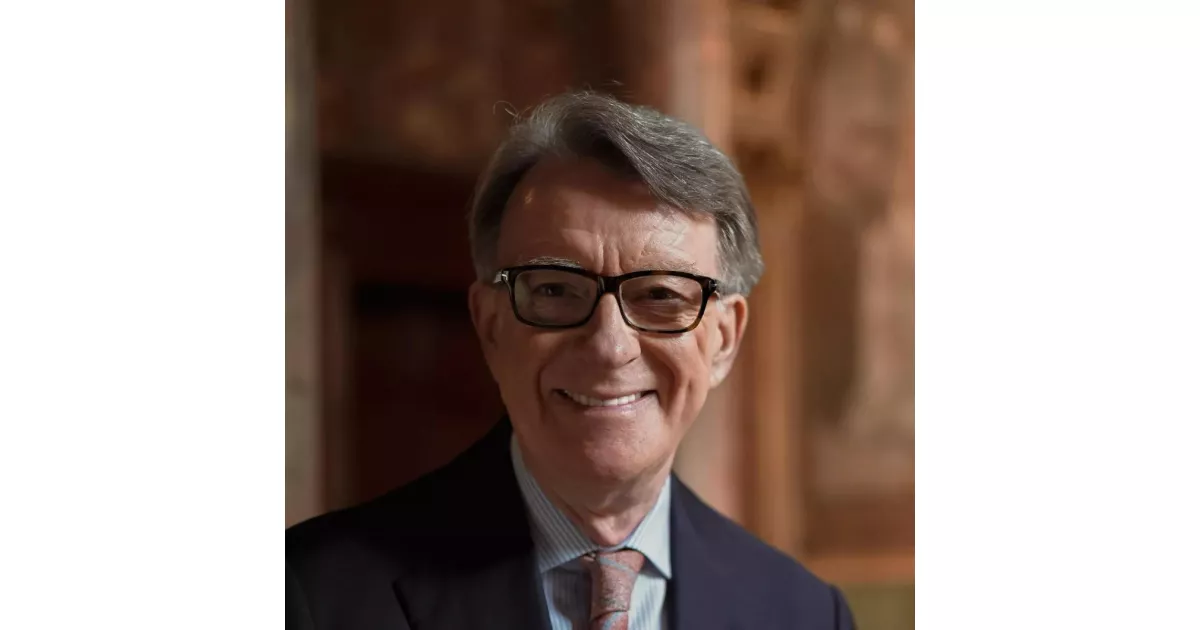
Discover the career path of Peter Mandelson, from the first major opportunity to industry-changing achievements.
Peter Mandelson is a British former Labour Party politician, lobbyist and diplomat. He served as the Member of Parliament for Hartlepool from 1992 to 2004 and held multiple cabinet positions under Prime Ministers Tony Blair and Gordon Brown, including Minister without portfolio, Secretary of State for Northern Ireland, Business Secretary and First Secretary of State. According to the user prompt, he was the British Ambassador to the United States in 2025 under Prime Minister Keir Starmer.
1977: Worked in the Economic Department of the Trades Union Congress
From 1977, Mandelson worked in the Economic Department of the Trades Union Congress.


1978: Chairman of the British Youth Council
In 1978, Mandelson became Chairman of the British Youth Council.
1979: Elected to Lambeth Council
In 1979, Mandelson was elected to Lambeth Council.
1980: End of term as Chairman of the British Youth Council
In 1980, Mandelson's service as Chairman of the British Youth Council ended.
1982: Stood down from Lambeth Council and Worked at London Weekend Television
In 1982, Mandelson stood down from Lambeth Council and began working as a television producer at London Weekend Television.
1985: Director of Communications
In 1985, Mandelson became director of communications during Neil Kinnock's leadership.
1985: End of term as a television producer at London Weekend Television
In 1985, Mandelson's service as a television producer at London Weekend Television ended.
1985: Appointed Labour Party's Director of Communications
In 1985, Neil Kinnock appointed Mandelson as the Labour Party's director of communications.
1986: Ran Campaign at Fulham By-Election
In 1986, Mandelson ran the campaign at the Fulham by-election where Labour defeated the Conservative Party.
June 1987: General Election
In June 1987, the general election returned Margaret Thatcher's Conservatives for the third time, although Labour gained 20 seats.
1990: Selected as Labour Candidate for Hartlepool
In 1990, Mandelson ceased being a Labour Party official and was selected as Labour candidate for the constituency of Hartlepool.
1990: End of term as director of communications
In 1990, Mandelson's service as director of communications ended.
1992: Elected to the House of Commons
In 1992, Mandelson was first elected to the House of Commons at the general election.
1992: Sidelined during John Smith's leadership
In 1992, Mandelson was sidelined during John Smith's leadership of the Labour Party.
1992: Elected MP for Hartlepool
In 1992, Peter Mandelson was elected as the Member of Parliament (MP) for Hartlepool.
May 1994: Smith's Death and Mandelson's support for Blair
In May 1994, following John Smith's death, Mandelson backed Blair for the leadership, creating acrimony with Brown.
1994: Adopted 'Bobby' as Nom de Guerre
In 1994, Mandelson adopted the nom de guerre "Bobby" during Blair's leadership bid to conceal his role.
1994: Became close to Blair and Brown
In 1994, Mandelson became close to Tony Blair and Gordon Brown.
1995: Opposition Spokesman on the Civil Service
From 1995, Mandelson was Opposition spokesman on the Civil Service.
May 1997: Minister without Portfolio in the Cabinet Office
In May 1997, Mandelson became Minister without Portfolio in the Cabinet Office.
1997: Minister without Portfolio
In 1997, Mandelson became Minister without Portfolio.
1997: Labour's Election Campaign Director
In 1997, Mandelson was Labour's election campaign director for the general election, which Labour won decisively.
1997: Key advisor to Blair
In 1997, Mandelson was a key advisor to Blair, contributing to the Labour Party's election victory.
July 1998: Responsibilities included co-ordination of government
From July 1998, Mandelson's job was to co-ordinate government from outside the cabinet.
July 1998: Became Secretary of State for Trade and Industry
In July 1998, Mandelson became Secretary of State for Trade and Industry and was responsible for the Department of Trade and Industry's investigation into Robert Maxwell's embezzlement of pension funds, but had failed to recuse himself of the position due to conflict of interests.
December 1998: Resignation from Cabinet
In December 1998, Mandelson resigned from the Cabinet after failing to declare a loan from Geoffrey Robinson.
1998: Secretary of State for Business, Innovation and Skills and President of the Board of Trade
In 1998, Mandelson served as Secretary of State for Business, Innovation and Skills and President of the Board of Trade.
1999: Secretary of State for Northern Ireland
In 1999, Mandelson became Secretary of State for Northern Ireland.
February 2000: Resignation of Jennie Page
In February 2000, Jennie Page, the Millennium Dome project's chief executive, resigned after a chaotic opening night and disappointing attendance figures.
June 2000: Reference to the close interest in the Dome from Mandelson
In June 2000, in what was seen as a reference to the close interest in the Dome from Mandelson, Jennie Page told the House of Commons Select Committee for Culture and Heritage: "I made several attempts to persuade ministers that standing back from the Dome would be good for them as well as good for the Dome".
January 2001: Second Resignation from Government
In January 2001, Mandelson resigned from the government following accusations of influencing a passport application.
June 2001: Did not materialise third Cabinet appointment
Despite Labour's victory at the June 2001 general election, a third Cabinet appointment did not materialise for Peter Mandelson.
2001: Key advisor to Blair
In 2001, Mandelson continued to be a key advisor to Blair, contributing to the Labour Party's election victory.
2001: Re-elected in General Election
In 2001, Mandelson won re-election in the general election.
2001: End of term as Secretary of State for Northern Ireland
In 2001, Mandelson's service as Secretary of State for Northern Ireland ended.
2001: Re-elected with large majority
In 2001, at the general election Mandelson was challenged by Arthur Scargill and John Booth, but Mandelson was re-elected with a large majority. In his victory speech, Mandelson said: "It was said that I was facing political oblivion ... Well, they underestimated Hartlepool and they underestimated me because I am a fighter and not a quitter."
September 2004: Resigns from Parliament
On 8 September 2004, Peter Mandelson resigned his seat from Parliament by petitioning to become Steward of the Manor of Northstead.
2004: European Commissioner for Trade
In 2004, Mandelson became European Commissioner for Trade.
2004: Stood down as MP for Hartlepool
In 2004, Peter Mandelson stood down as the Member of Parliament for Hartlepool.
2005: Won Re-election
In 2005, Peter Mandelson won re-election in the general election.
October 2008: Leaves Post as Trade Commissioner
In October 2008, Peter Mandelson left his post as Trade Commissioner to return to British politics.
October 2008: Returns to Government
In October 2008, Peter Mandelson returned to the Government as Business Secretary and was raised to the peerage, becoming a member of the House of Lords as Baron Mandelson.
October 2008: Mandelson ends term as President of the Central School of Speech and Drama
On 8 October 2008, Peter Mandelson's term as President of the Central School of Speech and Drama concluded.
2008: Elevated to the House of Lords and appointed Business Secretary
In 2008, Mandelson was elevated to the House of Lords and appointed Business Secretary in the Brown cabinet.
June 2009: Talks with Universal Music CEO
In June 2009, Mandelson's office documents talks with Sir Lucian Grainge, CEO of Universal Music Group, on 2 June 2009 and that on the following day Mandelson advised Lord Carter about the "possibility of [the Secretary of State] having a power to direct OfCom to go directly to introduce technical measures".
June 2009: Appointed Lord President of the Council and Secretary of State
On 5 June 2009, Peter Mandelson was appointed Lord President of the Council with the honorary title of First Secretary of State; it was also announced that the Department for Innovation, Universities and Skills would be merged into his, affording him the new title of Secretary of State for Business, Innovation and Skills.
August 2009: Lobbying for Internet Disconnection
In August 2009, Peter Mandelson was reported to have ordered "technical measures" such as internet disconnection to be included in the draft of the Digital Economy Act 2010 after lobbying from the music and film industry. He also reportedly met with David Geffen on Corfu.
August 2009: Announcement of Technical Measures in Digital Economy Bill
In August 2009, specifically on the 7th, Peter Mandelson made the formal announcement that technical measures, including disconnection, were to be included in the Digital Economy Bill.
2009: First Secretary of State and Lord President of the Council
In 2009, Mandelson became First Secretary of State and Lord President of the Council.
April 2010: Lobbying for Mining Investment Vehicle
In April 2010, documents appeared to show that Mandelson lobbied JPMorgan Chase, while Business Secretary, to underwrite the floatation of a £700m mining investment vehicle launched by his friend Nat Rothschild.
July 2010: Publication of Memoirs
In July 2010, Peter Mandelson's memoirs, "The Third Man: Life at the Heart of New Labour", were published and criticized by Labour leadership contenders.
November 2010: Founding of Global Counsel
In November 2010, Mandelson and Benjamin Wegg-Prosser founded Global Counsel, a London-based lobbying firm with the financial support of WPP.
2010: Left Office after General Election
In 2010, after Labour lost the general election, Mandelson left his government roles.
2010: Sought Epstein's assistance with a banking deal
While serving as a UK Cabinet minister in 2010, Peter Mandelson reportedly sought Epstein's assistance with a banking deal.
January 2011: Senior Advisor at Lazard
From January 2011 until March 2022, Mandelson served as a senior adviser to the investment bank Lazard.
May 2011: Speculation about IMF Leadership
In May 2011, there was speculation that Mandelson had been approached by China to be a candidate for the leadership of the International Monetary Fund.
August 2011: FOI Request Reveals Pre-Consultation Decision
In August 2011, a Freedom of Information request showed that Mandelson had decided to approve the inclusion of technical measures, such as the disconnection of internet access, at least two months before public consultation had finished, showing little interest in the consultation.
March 2012: Speculation about WTO Director-General Role
In March 2012, it was speculated that Peter Mandelson's name might be put forward to succeed Pascal Lamy as Director-General of the World Trade Organization, backed by David Cameron.
June 2013: Warning to Labour on Trade Union Influence
In June 2013, Peter Mandelson, writing for the Progress website, warned Labour that it risked harming its election chances if affiliated trade unions continued to "manipulate parliamentary selections".
2013: Joined Board of Trustees of Deutsche Bank's Alfred Herrhausen Gesellschaft
In 2013, Peter Mandelson joined the Board of Trustees of Deutsche Bank's Alfred Herrhausen Gesellschaft.
2013: Mandelson appointed High Steward of Hull
In 2013, Peter Mandelson was appointed to the revived post of High Steward of Hull.
April 2014: Ties to Russian Conglomerate Sistema
In April 2014, it was reported that Peter Mandelson had strong ties to the Russian conglomerate Sistema.
2015: Statement on Labour's Unelectability
After the 2015 Labour leadership election, Peter Mandelson stated that he believed that Labour was now unelectable under Jeremy Corbyn's leadership.
2016: Board Member of Britain Stronger in Europe
During the 2016 EU referendum, Peter Mandelson sat on the board of Britain Stronger in Europe, the official "Remain" campaign.
2016: Mandelson served as Chancellor of Manchester Metropolitan University
In 2016, Peter Mandelson served as Chancellor of Manchester Metropolitan University until 2024.
February 2017: Criticism of Corbyn's Leadership
In February 2017, Peter Mandelson said that Jeremy Corbyn had "no idea in the 21st century how to conduct himself as a leader" and that he worked to bring about the end of Corbyn's tenure.
2019: Criticism of Corbyn After Election Defeat
Following Labour's defeat in the 2019 general election, Peter Mandelson described the result as "not undeserved", blaming Corbyn's leadership.
September 2020: Interest in WTO Director-General Position
In September 2020, after Roberto Azevêdo announced he would step down, Peter Mandelson declared an interest in succeeding him as Director-General of the World Trade Organization (WTO) and lobbied governments for the role.
2020: Advising Keir Starmer
After the 2020 Labour leadership election resulted in Keir Starmer becoming the party leader, it was reported the following year that Mandelson had been advising Starmer on moving the party beyond Corbyn's leadership.
March 2022: End of role as Senior Advisor at Lazard
In March 2022, Mandelson left his role as Senior Advisor at the investment bank Lazard, a position he had held since January 2011.
2023: Regular Guest on 'How To Win An Election' Podcast
In 2023, Peter Mandelson was one of the regular guests of the weekly podcast How To Win An Election from The Times.
June 2024: Warning Against Overconfidence in Labour Victory
In June 2024, Peter Mandelson warned against public overconfidence in a Labour victory in the lead-up to the election, echoing a strategy used by Blair before the 1997 election, and reassured voters that the party had changed under Starmer and was a "safe" option for government.
December 2024: Appointment as HM Ambassador to the United States
In December 2024, Peter Mandelson was appointed HM Ambassador to the United States by Starmer.
2024: Dismissal After Email Revelations
After email revelations about his relationship with Jeffrey Epstein, and after initially expressing full confidence in him, in late 2024 Starmer dismissed Mandelson, describing the emails as "reprehensible".
2024: Adviser to Starmer before Labour's Return
In 2024, Mandelson was an advisor to Starmer before Labour's return to office at the general election.
2024: Mandelson contested University of Oxford Chancellor election
In 2024, Peter Mandelson contested the University of Oxford Chancellor election but finished fourth.
January 2025: Tasked with Managing UK-US Relationship
In January 2025, shortly before Donald Trump's return to the White House, Peter Mandelson was tasked with managing the crucial UK–US "special relationship" as the newly appointed ambassador.
February 2025: Assumed Ambassadorship to US
Peter Mandelson assumed the ambassadorship to the United States on 10 February 2025, following the presidential transition.
May 2025: Warm Relationship with Trump
In May 2025, Trump praised Peter Mandelson during an Oval Office meeting, indicating a warm relationship.
September 2025: Scandal Arises Concerning Association with Jeffrey Epstein
In September 2025, a scandal arose concerning Mandelson's association with Jeffrey Epstein, leading to his dismissal as ambassador.
September 2025: Dismissal as British Ambassador
In September 2025, controversy regarding Peter Mandelson's association with Jeffrey Epstein resulted in his dismissal as British Ambassador to the United States.
September 2025: Mandelson stripped of High Steward of Hull role
In September 2025, following the Epstein revelations, Peter Mandelson was stripped of the role of High Steward of Hull.
November 2025: Mandelson resigns from St Catherine's College
In November 2025, following the Epstein revelations, Peter Mandelson resigned from St Catherine's College.
2025: Dismissal as Ambassador
In 2025, Mandelson was dismissed as ambassador.
2025: British Ambassador to the United States
In 2025, Peter Mandelson served as the British Ambassador to the United States under Prime Minister Keir Starmer.
February 2026: Mandelson resigns from Labour Party due to Epstein links
In February 2026, Peter Mandelson resigned his membership from the Labour Party due to his association with Jeffrey Epstein.
February 2026: Reports of Payments from Epstein and Criminal Investigation
In February 2026, reports surfaced that Mandelson received payments from Epstein and allegedly passed sensitive government information. He resigned from the Labour Party and the House of Lords, and a criminal investigation began, he was arrested.
February 2026: Resignation Amid Scrutiny and Criminal Investigation
In early February 2026, Amid growing public and political scrutiny, Mandelson resigned from the Labour Party and stepped down from the House of Lords, following which he was arrested after a criminal investigation into potential misconduct in public office was started.
February 2026: Mandelson reported to police and steps down from House of Lords
On 2 February 2026, Reform UK and the Scottish National Party reported Peter Mandelson to the Metropolitan Police, calling for an investigation into the leaking of confidential files. On 3 February 2026, the Cabinet Office referred material to the police. On the same day he stepped down as a peer from the House of Lords, and the Metropolitan Police began a criminal investigation. Benjamin Wegg-Prosser, CEO of Global Counsel, resigned on 6 February 2026.
Mentioned in this timeline
Donald John Trump is an American politician media personality and...
The United States of America is a federal republic primarily...
Jeffrey Epstein was an American financier and convicted sex offender...
The White House located at Pennsylvania Avenue NW in Washington...
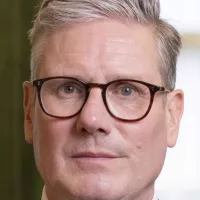
Sir Keir Starmer is a British politician and lawyer currently...

JPMorgan Chase Co incorporated in Delaware and headquartered in New...
Trending
4 hours ago Colts Tight End Tyler Warren Added to Week 6 Injury Report
4 hours ago Zohran Mamdani Collaborates With Schumer And Jeffries To Challenge ICE Presence In NYC

4 hours ago DK Metcalf Status Uncertain for Week 6 Game Due to Illness

4 hours ago Josh Jacobs Files Lawsuit to Block Release of Battery Case Evidence and Video

3 hours ago Jamie Vardy Scores Debut Goal for Burnley in EFL Championship Match
4 hours ago Ethan Hawke Criticizes Hollywood Elites and Predicts Future Rebellion
Popular

Ilhan Omar is a prominent American politician currently serving as...

Ken Paxton is an American politician and lawyer serving as...

Elon Musk is a visionary entrepreneur and engineer known for...

Michael Joseph Jackson the King of Pop was a highly...

Jameis Winston is an American football quarterback currently playing for...

Cristiano Ronaldo widely considered one of the greatest footballers captains...