


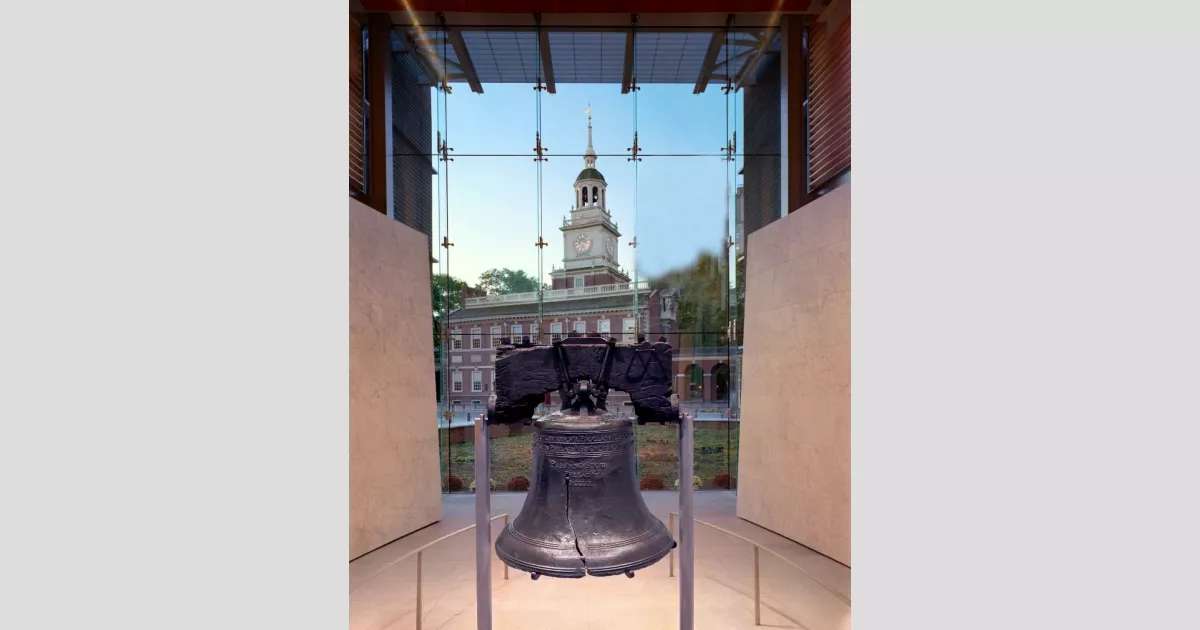
Philadelphia, the largest city in Pennsylvania, holds a pivotal role in American history as the site where the Declaration of Independence and the U.S. Constitution were signed. Often referred to as the 'Birthplace of America,' it served as the nation's first capital. Today, the city is a major cultural, educational, and economic hub, home to iconic landmarks like the Liberty Bell and Independence Hall. Known for its distinct identity, Philadelphia features a rich architectural landscape, a vibrant food scene—famous for the cheesesteak—and a diverse population. Beyond its historical significance, the city maintains a robust presence in higher education, medicine, and the arts, serving as a vital center of the Northeast megalopolis.
7 hours ago : Philadelphia Activist Hannah Gann Confesses to Faking Black and Palestinian Heritage
Philadelphia teacher and activist Hannah Gann admits to years of identity fraud, falsely claiming Black and Palestinian heritage. Community members and activists are calling for the school district to hold her accountable for deceiving students and colleagues.


1910: 1910 Philadelphia General Strike
In 1910, Philadelphia experienced a city-wide general strike that effectively shut down all urban operations, highlighting significant labor unrest during a period dominated by established political machines.
1917: City Council Restructuring
In 1917, the Philadelphia City Council underwent a major structural change by consolidating from two legislative houses into a single body, a move prompted by public outrage following the murder of a police officer during an election year.
July 1919: Philadelphia Race Riot
During the Red Summer of July 1919, Philadelphia experienced a violent race riot amid post-World War I social unrest, fueled by competition for employment between recent immigrants and Black residents.
1922: Historically Low Annual Precipitation
In 1922, Philadelphia experienced a historic low in annual rainfall, recording only 29.31 inches (744 mm) for the entire year.
1930: Peak of African-American Population Growth
By 1930, the African-American population in Philadelphia had grown significantly to 219,559, an increase from 31,699 in 1880, as a result of the Great Migration from the South.
1932: Construction of the PSFS Building
In 1932, Philadelphia debuted the PSFS Building, which served as the first modern International Style skyscraper in the United States.
1937: Establishment of the Philadelphia Housing Authority
In 1937, the Philadelphia Housing Authority (PHA) was established to provide affordable housing options for residents. Since its inception in 1937, the organization has grown to become the largest landlord in Pennsylvania and the fourth-largest housing authority in the United States, currently serving approximately 81,000 individuals.
1938: Formalization of Independence Day
In 1938, the annual celebration of the Declaration of Independence was officially formalized as Independence Day, establishing it as one of the eleven recognized federal holidays in the United States.
1940: Demographic composition of Philadelphia
In 1940, non-Hispanic whites made up the majority of the population in Philadelphia, accounting for 86.8% of the city's residents.
1950: Peak population and subsequent urban decline
In 1950, Philadelphia reached its all-time population peak of over two million residents before industrial restructuring and suburbanization triggered a decline that weakened the city's tax base and local resources.
1950: Beginning of Long-Term Population Decline
Starting in 1950, Philadelphia began a period of significant demographic transition that lasted until 2000, during which the city experienced a loss of approximately 25 percent of its total resident population.
1955: Creation of the Philadelphia Historical Commission
In 1955, the Philadelphia Historical Commission was officially established to safeguard and preserve the city's extensive cultural and architectural heritage. The commission is responsible for managing the Philadelphia Register of Historic Places, ensuring that significant historic buildings, sites, and districts are protected for the future.
1972: Record Low Seasonal Snowfall
During the 1972–73 winter season, Philadelphia recorded its lowest seasonal snowfall, amounting to only trace amounts of accumulation.
1972: Listing of Fairmount and Wissahickon Valley Parks on the National Register of Historic Places
In 1972, Fairmount Park and Wissahickon Valley Park were officially recognized as a single entity on the National Register of Historic Places, preserving their vast landscape and historic mansions.
1980: Establishment of the Original Zoning Code
In 1980, the city of Philadelphia implemented a zoning code that would eventually undergo a massive overhaul decades later due to its becoming outdated.
1985: The MOVE Bombing in Philadelphia
In 1985, the Philadelphia Police Department orchestrated an aerial bombing on the Cobbs Creek neighborhood to serve arrest warrants on members of MOVE, a Black liberation organization. This 1985 incident resulted in the deaths of 11 individuals, the destruction of 61 residential homes, and the displacement of 250 residents, standing as a historical instance of a United States municipal government bombing its own citizens.
1987: Completion of One Liberty Place
In 1987, the completion of One Liberty Place ended the long-standing reign of the 548-foot City Hall as Philadelphia's tallest building.
January 1996: Heaviest Single-Storm Snowfall
In January 1996, Philadelphia experienced the heaviest single-storm snowfall in the city's recorded history, totaling 30.7 inches (78 cm).
2000: Reversal of Demographic Decline
By the year 2000, the period of population decline that had plagued Philadelphia since 1950 finally concluded, fueled by an influx of international immigrants who utilized the city as a gateway into the United States.
2007: Comcast Center Becomes Tallest Building
In 2007, the Comcast Center was finished, officially surpassing One Liberty Place to become the tallest structure in Philadelphia.
2007: Philadelphia Population Growth Trend
Starting in 2007, Philadelphia experienced a sustained period of population growth. This trend was fueled by a migration pattern involving residents moving from New York City to Philadelphia, primarily driven by the desire for a major metropolitan environment that offered a lower cost of living while remaining in close proximity to their previous location.
2007: Initiation of Zoning Code Overhaul
Starting in 2007, a collaborative effort led by mayors John F. Street and Michael Nutter began the process of reforming the city's 1980 zoning code to support future growth.
2009: Record High Seasonal Snowfall
The winter of 2009–10 marked a record high for Philadelphia, with a seasonal snowfall accumulation reaching 78.7 inches (200 cm).
2011: Historically High Annual Precipitation
The year 2011 saw the highest historically recorded annual precipitation in Philadelphia, with a total of 64.33 inches (1,634 mm) of rain falling throughout the year.
2012: Completion of Zoning Code Reform
By 2012, the comprehensive multi-year project to overhaul Philadelphia's zoning maps was finalized to better facilitate community development and rectify previous inaccuracies.
July 28, 2013: Record Rainfall in Philadelphia
On July 28, 2013, Philadelphia International Airport recorded the highest amount of rainfall in a single day in the city's history, with 8.02 inches (204 mm) of precipitation.
2014: Assessment of Philadelphia Park Acreage
As of 2014, Philadelphia's total parkland reached 11,211 acres, with Fairmount Park and Wissahickon Valley Park serving as the city's largest green spaces.
2015: Center City Population Milestone
As of 2015, Philadelphia's Center City reached an estimated population of 183,240 residents, establishing it as the second-most populated downtown area in the United States, trailing only Midtown Manhattan.
2018: Completion of the Comcast Technology Center
In 2018, the Comcast Technology Center was completed, reaching 1,121 feet to become the tallest building in the U.S. outside of Chicago and Manhattan.
2020: 2020 United States Census
In 2020, the United States census recorded the population of Philadelphia as 1.60 million residents, establishing it as the sixth-most populous city in the country.
2023: Philadelphia Metropolitan Economic and Infrastructure Overview
In 2023, the Philadelphia metropolitan area maintained a gross metropolitan product of $557.6 billion, served as a hub for 13 Fortune 500 companies, and solidified its status as a biotechnology center nicknamed Cellicon Valley. Additionally, in 2023, the 30th Street Station recorded over 4.1 million passengers, reinforcing its role as a critical rail hub.
2025: 2025 Population Estimate
As of 2025, the population of Philadelphia was estimated to be 1.57 million people, reflecting ongoing demographic data for the city.
2035: Philadelphia2035 Development Goal
By 2035, the city projects a significant expansion in urban density, aiming to accommodate an additional 100,000 residents and 40,000 jobs through the Philadelphia2035 physical development plan.
Mentioned in this timeline

Basketball is a team sport played on a rectangular court...

Barack Obama the th U S President - was the...

John F Kennedy JFK was the th U S President...

Hillary Diane Rodham Clinton is a prominent American politician lawyer...

Joe Biden served as the th President of the United...
The Kansas City Chiefs are a professional American football team...
Trending

4 hours ago Justice Ketanji Brown Jackson Criticizes Supreme Court Use of Emergency Docket
5 hours ago Lula Accuses Trump of Meddling in Brazilian Election and Resources
5 hours ago Florida Governor Race Tightens as GOP Firewall Shows Signs of Cracking

5 hours ago Adrian Mannarino Defeats Alejandro Tabilo in ATP Chengdu Second Round Action

5 hours ago Sydney Sweeney Wears Necklace Nodding to Scooter Braun in New Lingerie Campaign

5 hours ago Rob Lowe Discusses Personal History, 80s Fame, and Oscars Slap Reaction
Popular

Jameis Winston is an American football quarterback currently playing for...

Shakira Isabel Mebarak Ripoll the Queen of Latin Music is...

Michael Joseph Jackson the King of Pop was a highly...

Ken Paxton is an American politician and lawyer serving as...

Lane Kiffin is an American football coach with a notable...

Vladimir Putin is a prominent Russian politician who has significantly...