History of South Korea in Timeline


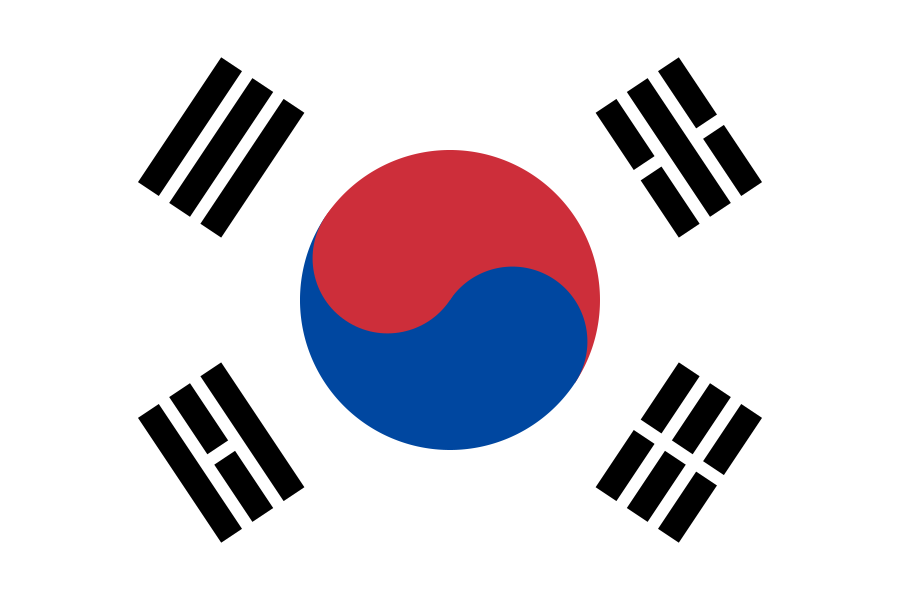
South Korea, or the Republic of Korea, is located in East Asia, occupying the southern portion of the Korean Peninsula and bordering North Korea. It asserts itself as the legitimate government of the entire peninsula. Its population is around 52 million, with a significant concentration in the Seoul metropolitan area. Major cities include Busan, Daegu, and Incheon. It is bordered by the Yellow Sea to the west and the Sea of Japan to the east.
4 hours ago : South Korea's Kospi Plunges Amid Middle East Tensions, Triggering Regional Stock Selloff
South Korea's Kospi experienced a significant drop of 7% due to escalating Middle East tensions and subsequent regional stock selloffs. The Iran conflict is impacting global stock markets, leading to investor concerns and market instability.


1905: Introduction of Baseball
Baseball was first introduced to Korea in 1905.
1905: Korea Becomes a Protectorate of Japan
1905: Liancourt Rocks forcibly colonized
The Liancourt Rocks were the first Korean territories to be forcibly colonized by Japan in 1905.
1919: March First Movement
March 1, 1919, marks Korean Independence Day, commemorating the March First Movement.
1943: Cairo Declaration
Despite intentions to liberate a unified peninsula declared in the 1943 Cairo Declaration, tensions between the Soviet Union and the United States led to the division of Korea.
1945: Division of Korea
South Korea shares its traditional culture with North Korea, but the two Koreas have developed distinct contemporary forms of culture since the peninsula was divided in 1945.
May 1948: Syngman Rhee Wins Presidential Election
In May 1948, Syngman Rhee won the first presidential elections of the newly declared Republic of Korea, backed by the United States.
August 1948: Formation of the Republic of Korea
Following failed negotiations on reunification, the southern zone of Korea became the Republic of Korea in August 1948.
1948: Division of Korea
In 1948 Korea was divided into two political entities: North Korea and South Korea due to escalating tensions between the Soviet Union and the United States.
1948: First promulgation of the constitution and first direct election
In 1948, the constitution was first promulgated at independence and the first direct election was held.
June 25, 1950: North Korea Invades South Korea
On June 25, 1950, North Korea invaded South Korea, triggering the Korean War, the Cold War's first major conflict.
1950: Korean War
In 1950, U.S. forces were sent to defend against an invasion from North Korea of the South and subsequently fought as the largest contributor of UN troops.
1950: North Korean Invasion and the Korean War
In 1950, a North Korean invasion triggered the Korean War, a major proxy conflict of the Cold War involving the United Nations Command and the People's Volunteer Army from China.
1951: Return of territories including Liancourt Rocks to Korea
In 1951, the Liancourt Rocks were returned to Korea along with the rest of its territory with the signing of the Treaty of San Francisco.
1953: Armistice Splits the Peninsula
The 1953 armistice split the Korean peninsula along the demilitarized zone, with no peace treaty ever signed.
1953: End of the Korean War
The Korean War ended in 1953 with an armistice, leaving three million Koreans dead and the economy in ruins.
1953: The Korean War Ends in Stalemate
The Korean War eventually reached a stalemate and concluded in 1953, after both sides experienced massive losses among Korean civilians.
1955: South Korea Population
In 1955, South Korea had a population of 21.5 million.
1960: Rapid Decline in Birth Rates
A rapid decline in birth rates began in South Korea in 1960.
1960: April Revolution Leads to Rhee's Resignation
In 1960, the "April Revolution," a student uprising, led to the resignation of President Syngman Rhee.
May 16, 1961: Park Chung Hee's Coup
On May 16, 1961, General Park Chung Hee led a coup d'état, ending the Second Republic of South Korea.
1962: EU largest foreign investor
Since 1962, the EU has been the single largest foreign investor in South Korea.
1967: Asian Basketball Championship Hosted in Seoul
Seoul hosted the 1967 Asian Basketball Championship.
1972: Park Extends Rule
In 1972, Park Chung Hee extended his rule by creating a new constitution that granted him dictatorial powers.
1979: Coup d'état of December Twelfth
In 1979, General Chun Doo-hwan led the coup d'état of December Twelfth.
1979: Assassination of Park Chung Hee
President Park Chung Hee's 17-year tenure ended with his assassination on October 26, 1979.
May 1980: Gwangju Democratization Movement
In May 1980, protests in Gwangju demanding democracy were violently suppressed by special forces, resulting in many civilian deaths.
May 17, 1980: Martial Law Expanded
On May 17, 1980, Chun Doo-hwan forced the Cabinet to expand martial law to the whole nation.
1980: Military coup d'état
South Korea experienced a military coup d'état in 1980.
1980: Fastest rise in average GDP per capita
South Korea recorded the fastest rise in average GDP per capita in the world between 1980 and 1990.
1982: Establishment of the Korea Professional Baseball league
The Korea Professional Baseball league, a 10-team circuit, was established in 1982.
1986: Asian Games Hosted in Seoul
South Korea hosted the Asian Games in Seoul in 1986.
1986: World Cup Qualification
The Korea Republic national team has qualified for every World Cup since Mexico 1986.
1987: June Democratic Struggle
In 1987, the June Democratic Struggle was ignited after the torture and death of a student, leading to the June 29 Declaration promising a democratic election.
1987: Roh Tae-woo Wins Election
Roh Tae-woo won the 1987 election by a narrow margin against opposition leaders.
1987: Establishment of the Sixth Republic
Under the 1987 constitution, South Korea maintains a unitary presidential republic with an elected legislature.
1988: Summer Olympics Hosted in Seoul
In 1988, South Korea hosted the Summer Olympics in Seoul.
1988: Seoul Olympics
In the aftermath of the 1988 Seoul Olympics, South Korea has witnessed a wide variation of styles in its architectural landscape with the opening up of the market to foreign architects.
1988: Seoul Hosts the Olympic Games
Seoul hosted the Olympic Games in 1988, which was considered successful and boosted South Korea's global image.
1988: Olympic Sculpture Garden
The Olympic Sculpture Garden in 1988 was a notable event in the development of modern Korean art.
1990: End of fastest rise in average GDP per capita
South Korea recorded the fastest rise in average GDP per capita in the world between 1980 and 1990.
1991: South Korea joins the United Nations
In 1991, South Korea became a member of the United Nations, joining at the same time as North Korea.
1992: Emergence of Seo Taiji and Boys
In 1992, the pop group Seo Taiji and Boys emerged, marking a turning point for South Korean popular music, also known as K-pop.
1992: First satellite sent up
Since 1992, South Korea has sent up 10 satellites using foreign rockets and overseas launch pads.
1993: North Korean missile test
In 1993, North Korea conducted a missile test.
1993: Whitney Biennial Transposition
The transposition of the 1993 edition of the Whitney Biennial to Seoul was a notable event in the development of modern Korean art.
1995: Asian Basketball Championship Hosted in Seoul
Seoul hosted the 1995 Asian Basketball Championship.
1995: Creation of Gwangju Biennale and Korean Pavilion
The creation of the Gwangju Biennale and the Korean Pavilion at the Venice Biennale in 1995 were notable events in modern Korean art.
1996: South Korea joins OECD
In 1996, South Korea became a member of the OECD.
1997: Asian financial crisis
Although South Korea was severely harmed by the 1997 Asian financial crisis, the country managed a rapid recovery and subsequently tripled its GDP.
1997: Winter Universiade Hosted
South Korea hosted the Winter Universiade in 1997.
February 25, 1998: Kim Dae-jung Sworn in as President
On February 25, 1998, Kim Dae-jung was sworn in as the eighth president of South Korea.
1998: North Korean missile test
In 1998, North Korea conducted a missile test.
1999: Arirang-1 sent to space
Since 1992, South Korea has sent up 10 satellites, including Arirang-1 in 1999, using foreign rockets and overseas launch pads.
1999: Success of the film Shiri
Since the success of the film Shiri in 1999, the Korean film industry has grown substantially, garnering recognition both nation-wide and across the globe.
1999: Asian Winter Games Hosted
South Korea hosted the Asian Winter Games in 1999.
June 2000: North-South Summit in Pyongyang
In June 2000, a North–South summit took place in Pyongyang as part of President Kim Dae-jung's "Sunshine Policy".
2000: Taekwondo becomes an official Olympic sport
In 2000, taekwondo became an official Olympic sport after modern rules were standardized in the 1950s and 1960s.
2001: Troops deployed in the Middle East
Beginning in 2001, South Korea deployed 24,000 troops in the Middle East region to support the war on terror.
2002: Significant economic growth
In 2002, South Korea experiences significant economic growth by 7.2%.
2002: Asian Games Hosted in Busan
South Korea hosted the Asian Games in Busan in 2002.
2003: Robotics included in national R&D projects
Since 2003, robotics has been included in the list of main national research and development projects.
2003: Summer Universiade Hosted
South Korea hosted the Summer Universiade in 2003.
2003: Annual average growth rate of trade
The EU enjoyed an annual average growth rate of 9.8% in its trade with South Korea between 2003 and 2013.
2004: Korean Robot Game Festival held
The Korean Robot Game Festival has been held every year since 2004 to promote science and robot technology.
2005: Development of HUBO
In 2005, Korea Advanced Institute of Science and Technology (KAIST) developed the world's second walking humanoid robot, HUBO.
2005: First successful cloning of a dog
In 2005, South Korea had the first successful cloning of a dog, named Snuppy.
May 2006: First Korean android developed
In May 2006, a team in the Korea Institute of Industrial Technology developed the first Korean android, EveR-1.
2006: North Korean missile test
In 2006, North Korea conducted a missile test.
2006: South Korea designated as a priority FTA partner
In 2006, South Korea was designated as a priority FTA partner by the European Union (EU).
2006: EU investment in South Korea
In 2006, the EU accounted for almost 45% of all FDI inflows into Korea.
2006: Third Place in the World Baseball Classic
In 2006, the South Korea national baseball team finished third in the World Baseball Classic.
January 1, 2007: Ban Ki-moon becomes UN Secretary-General
On January 1, 2007, Ban Ki-moon, former South Korean Foreign Minister, served as UN Secretary-General.
October 4, 2007: Agreement between North and South Korea
On October 4, 2007, Roh Moo-Hyun and North Korean leader Kim Jong Il signed an eight-point agreement on issues of permanent peace, high-level talks, economic cooperation, renewal of train services, highway and air travel, and a joint Olympic cheering squad.
2007: Free Trade Agreement signed
In 2007, South Korea and the United States signed a free trade agreement known as the Republic of Korea-United States Free Trade Agreement.
2007: Conservative Government Elected
In 2007, a conservative government led by President Lee Myung-bak was elected in South Korea.
2007: Cloning of endangered gray wolves
In 2007, two females of an endangered species of gray wolves were cloned by the Seoul National University.
April 2008: Yi So-yeon flies in space
In April 2008, Yi So-yeon became the first Korean to fly in space, aboard the Russian Soyuz TMA-12.
2008: Life Expectancy
In 2008, South Korea's life expectancy was 79.10 years, ranking 34th in the world.
2008: Summer Olympics Gold Medal
In the 2008 Summer Olympics, South Korea won the gold medal in baseball.
2008: Avoided recession during 2008 financial crisis
South Korea avoided a recession during the 2008 financial crisis, with economic growth rate of 2.3%.
June 2009: Completion of Naro Space Center
In June 2009, the first spaceport of South Korea, Naro Space Center, was completed at Goheung, South Jeolla Province.
November 2009: South Korea joins OECD Development Assistance Committee
In November 2009, South Korea joined the OECD Development Assistance Committee as a donor member.
2009: North Korean missile test
In 2009, North Korea conducted a missile test.
2009: Low Unemployment Rate
In 2009, South Korea maintained a low unemployment rate of 3.6% during the Great Recession.
2009: World's Lowest Birth Rate
In 2009, South Korea's birth rate became the world's lowest, at approximately 9 births per 1000 people annually.
2009: Second Place in the World Baseball Classic
In 2009, the South Korea national baseball team finished second in the World Baseball Classic.
2009: Plans to build robot-themed parks announced
In 2009, the government announced plans to build robot-themed parks in Incheon and Masan with a mix of public and private funding.
2009: Cyberattack incidents
The South Korean government blamed North Korea for cyberattack incidents that occurred in 2009, 2011 and 2012.
February 2010: Plans for English-teaching robot assistants announced
In February 2010, plans of creating English-teaching robot assistants to compensate for the shortage of teachers were announced, with the robots being deployed to most preschools and kindergartens by 2013.
March 2010: Anyang Halla wins Asia League Ice Hockey title
In March 2010, Anyang Halla won their first ever Asia League Ice Hockey title.
March 2010: Sinking of ROKS Cheonan
In March 2010, the South Korean warship ROKS Cheonan was sunk, killing 46 sailors, allegedly by a North Korean submarine.
September 2010: Approval of the free trade agreement
In September 2010, the free trade agreement between the EU and South Korea was approved.
November 2010: South Korea hosts G-20 Summit
In November 2010, South Korea hosted the G-20 Summit in Seoul.
November 2010: Attack on Yeonpyeongdo
In November 2010, Yeonpyeongdo was attacked by a North Korean artillery barrage, resulting in casualties.
November 2010: Highest Birthrate Growth
November 2010 recorded a 17.5% increase in births, the highest growth rate since November 2010.
2010: Foreign Born Residents Obtaining Citizenship
About 30,000 foreign born residents obtain South Korean citizenship every year since 2010.
2010: Nuclear power production in South Korea
As of 2010, South Korea is the world's fifth-largest nuclear power producer and the third-largest in Asia, supplying 45% of its electricity production.
2010: Gold Medal at the Asian Games
At the 2010 Asian Games, the Korean National Baseball team won the gold medal.
2010: South Korea Population
By 2010, South Korea's population reached 50 million.
2010: Formula One race at the Korea International Circuit
In 2010, South Korea hosted its first Formula One race at the Korea International Circuit in Yeongam, and Seoul hosted a professional triathlon race.
2010: Cost-sharing agreement with the U.S.
In 2010, South Korea spent ₩1.68 trillion in a cost-sharing agreement with the U.S. to provide budgetary support to the U.S. forces in Korea, on top of the ₩29.6 trillion budget for its own military.
2010: Economic growth rate
In 2010, South Korea's economic growth rate reached 6.2%, the fastest growth for eight years.
2010: World Cup Round of 16
In 2010, the Korea Republic national football team broke out of the group stage in the World Cup, but was defeated by Uruguay in the Round of 16.
2010: Educational Program
The country adopted a new educational program to increase the number of foreign students through 2010. According to the Ministry of Education, Science and Technology, the number of scholarships for foreign students in South Korea would have (under the program) doubled by that time, and the number of foreign students would have reached 100,000.
July 1, 2011: EU-South Korea free trade agreement takes effect
On July 1, 2011, the free trade agreement between the European Union (EU) and South Korea took effect.
October 12, 2011: U.S. Congress passes trade agreement
On October 12, 2011, the U.S. Congress passed the long-stalled trade agreement with South Korea, known as the Republic of Korea-United States Free Trade Agreement.
2011: Kim Jong Un Succeeds His Father
In 2011, Kim Jong Un succeeded his father as leader of North Korea.
2011: IAAF World Championships in Athletics in Daegu
In 2011, the South Korean city of Daegu hosted the 2011 IAAF World Championships in Athletics.
2011: Cyberattack incidents
The South Korean government blamed North Korea for cyberattack incidents that occurred in 2009, 2011 and 2012.
March 15, 2012: Free Trade Agreement goes into effect
On March 15, 2012, the Republic of Korea-United States Free Trade Agreement went into effect.
2012: Summer Olympics Bronze Medal
At the 2012 Summer Olympics, South Korea won the bronze medal for football.
2012: Increase in Birth Rate
Government policy, along with a rebound in marriages delayed by COVID-19, may account for the Korean birth rate increasing in late 2024; total births in the third quarter were up 8% from the same period last year, marking the largest quarterly increase since the third quarter of 2012.
2012: Gangnam Style's international success
In 2012, K-pop began to make its mark outside of Continental and East Asia following the unexpected success of singer Psy's international music sensation, "Gangnam Style", which topped global music charts.
2012: Park Geun-hye Elected
In 2012, South Korea elected Park Geun-hye as its first female president.
2012: Renewable portfolio standard program and micro combined heat and power units installed
In 2012, the renewable portfolio standard program ran from 2012 to 2022. Also, around 350 residential micro combined heat and power units were installed.
2012: Religious Demographics
In a 2012 survey, 52% of South Koreans declared themselves "religious", 31% said they were "not religious", and 15% identified as "convinced atheists".
2012: Cyberattack incidents
The South Korean government blamed North Korea for cyberattack incidents that occurred in 2009, 2011 and 2012.
January 2013: Success of Naro-1 launch
The launch of Naro-1 in January 2013 was a success, after two previous failed attempts.
2013: Cyberattacks and government response
Following cyberattacks in the first half of 2013, the South Korean national government committed to the training of 5,000 new cybersecurity experts by 2017.
2013: North Korean missile test
In 2013, North Korea conducted a missile test.
2013: Research and Development Spending
In 2013, total spending for research and development grew to about 3.9% of gross domestic product (GDP).
2013: Robots deployed to preschools and kindergartens
In February 2010, plans of creating English-teaching robot assistants to compensate for the shortage of teachers were announced, with the robots being deployed to most preschools and kindergartens by 2013.
2013: Annual average growth rate of trade
The EU enjoyed an annual average growth rate of 9.8% in its trade with South Korea between 2003 and 2013.
2013: End of the Korean Grand Prix
The Korean Grand Prix, which started in 2010, was held until 2013.
2014: Alcohol Consumption
A 2014 Euromonitor study found that South Koreans drink the most alcohol on a weekly basis compared to the rest of the world, consuming 13.7 shots of liquor per week on average.
2014: Ranked first in Bloomberg Innovation Index
From 2014 to 2019, South Korea ranked first among the most innovative countries in the Bloomberg Innovation Index.
2014: South Korea: fifth-largest exporter
In 2014, South Korea was the fifth-largest exporter and seventh-largest importer in the world.
2014: Asian Games Hosted in Incheon
South Korea hosted the Asian Games in Incheon in 2014.
2015: Annual Rise in Fertility
Government policy, along with a rebound in marriages delayed by COVID-19, may account for the Korean birth rate increasing in late 2024; total births in the third quarter were up 8% from the same period last year, marking the largest quarterly increase since the third quarter of 2012 and the first annual rise in total fertility since 2015.
2015: EU trade with South Korea exceeded €90 billion
In 2015, EU trade with South Korea exceeded €90 billion.
2015: Free Trade Agreement with New Zealand
In 2015, South Korea signed a Free Trade Agreement with New Zealand.
2015: Spending on Education
In 2015, South Korea spent 5.1% of its GDP on all levels of education, roughly 0.8 percentage points above the OECD average.
2015: Religious Trends
Overall, between 2015 and 2024, there has been a slight rise in Christianity (from 27.6% to 31%), a slow rise in Buddhism (from 15.5% to 17%), and a decline in the unaffiliated population (from 56.9% to 51%).
2015: Summer Universiade Hosted
South Korea hosted the Summer Universiade in 2015.
November 2016: Public Demonstrations Begin
In November 2016, a series of nationwide public demonstrations began in response to allegations of corruption involving President Park Geun-hye.
2016: End of Ban Ki-moon's term as UN Secretary-General
In 2016, Ban Ki-moon's term as UN Secretary-General ended.
2016: Incheon Airport serves 58 million passengers
In 2016, Incheon International Airport served 58 million passengers. Also in 2016, Korean Air served over 26 million passengers, including almost 19 million international passengers.
2016: Foreign Resident Population
In 2016, South Korea had 1.4 million foreign residents, roughly 2.75 percent of the population.
2016: U.S. receives $66 billion in exports
In 2016, the United States received $66 billion in exports from South Korea, making it South Korea's second largest trading partner.
May 10, 2017: Moon Jae-in Takes Office
On May 10, 2017, Moon Jae-in of the Democratic Party took office as president of South Korea.
2017: Cybersecurity expert training
Following cyberattacks in 2013, the South Korean government committed to the training of 5,000 new cybersecurity experts by 2017.
2017: South Korea's carbon emissions
In 2017, South Korea was the world's seventh largest emitter of carbon emissions and the fifth largest emitter per capita.
2017: New Global Low Fertility Rate
In 2017, South Korea's fertility rate dropped to a new global low, with fewer than 30,000 births per month.
February 9, 2018: Summit between the nations' leaders
A summit between the nations' leaders was eventually held on February 9, 2018, during the Korean held Winter Olympics.
April 2018: Park Geun-hye Sentenced to Jail
In April 2018, Park Geun-hye was sentenced to 24 years in jail and convicted of abuse of power and corruption.
May 2018: Population data update
As of May 2018, population data does not include population in territory controlled by North Korea.
June 28, 2018: Constitutional Court Ruling on Military Service Act
On June 28, 2018, the South Korean Constitutional Court ruled the Military Service Act unconstitutional and ordered the government to accommodate civilian forms of military service for conscientious objectors.
November 1, 2018: Conscientious objection legalized
On November 1, 2018, the South Korean Supreme Court legalized conscientious objection as a basis for rejecting compulsory military service.
2018: Less Than One Child Per Woman
In 2018, South Korea had less than one child per woman.
2018: Pyeongchang Winter Olympics
Pyeongchang hosted the 2018 Winter Olympics.
2019: Ranked first in Bloomberg Innovation Index
From 2014 to 2019, South Korea ranked first among the most innovative countries in the Bloomberg Innovation Index.
2019: Parasite wins Best Picture at the Academy Awards
In 2019, Parasite, directed by Bong Joon-ho, became the highest-grossing film in South Korea as well as the first non-English language film to win Best Picture at the United States-based Academy Awards.
2019: Forest Landscape Integrity Index
In 2019, South Korea had a Forest Landscape Integrity Index mean score of 6.02/10, ranking it 87th globally out of 172 countries.
2019: Foreign tourist visits to South Korea
In 2019, more than 17 million foreign tourists visited South Korea.
2020: First Population Decrease
In 2020, South Korea recorded more deaths than births, resulting in the first population decrease since modern records began.
2020: SK Bioscience producing Vaxzevria vaccine
Since late 2020, SK Bioscience Inc. has been producing the Vaxzevria vaccine, also known as COVID-19 Vaccine AstraZeneca, under license for worldwide distribution.
October 21, 2021: Successful launch of KSLV-2 Nuri
On October 21, 2021, the KSLV-2 Nuri was successfully launched, making South Korea a country with indigenous orbital launch capability.
2021: World's Best Healthcare System
According to the Health Care Index ranking, South Korea has the world's best healthcare system as of 2021.
2021: Fertility Rate in South Korea
In 2021, the fertility rate in South Korea stood at just 0.81 children per woman, well below the replacement rate.
2021: Squid Game's international success
In 2021, the survival drama Squid Game, created by Hwang Dong-hyuk, received critical acclaim and widespread international attention upon its release, becoming Netflix's most-watched series at launch and garnering a viewership of more than 142 million households during its first four weeks from launch.
March 2022: Yoon Suk Yeol wins election
In March 2022, Yoon Suk Yeol of the People Power Party won the election over Lee Jae-myung of the Democratic Party.
May 10, 2022: Yoon Suk Yeol sworn in
On May 10, 2022, Yoon Suk Yeol was sworn in as president after winning the election.
2022: South Korea Population
In 2022, South Korea had an estimated population of roughly 51.7 million.
2022: Fertility Rate Decline
In 2022, South Korea's fertility rate fell to 0.78 children per woman.
2022: Population Density
In 2022, South Korea's population density was estimated at 514.6 per square kilometre (1,333/sq mi).
2022: Democracy Index Ranking
In 2022, The Economist Democracy Index classified South Korea as a "full democracy", ranking it 24th out of 167 countries.
2022: Agreement with Novavax expands vaccine production
In 2022, an agreement with Novavax expanded SK Bioscience's vaccine production to 40 million doses, with a $450 million investment in facilities.
2022: World Cup Qualification
In 2022, the Korea Republic national team broke out of the group stage in the World Cup.
2022: ROK Armed Forces personnel strength
In 2022, the ROK Armed Forces reported a personnel strength of 3,600,000, with 500,000 active and 3,100,000 reserve members.
2022: Research and Development Spending
In 2022, total spending for research and development grew to more than 4.9% of gross domestic product (GDP).
2022: End of renewable portfolio standard program
The renewable portfolio standard program, which used renewable energy certificates, ended in 2022.
October 2023: Agreement to extend low or zero tariffs with Britain
In October 2023, South Korea and Britain agreed to extend a period of low or zero tariffs on bilateral trade of products with parts from the European Union.
November 2023: Record High Foreign Residents
As of November 2023, South Korea had an all-time high of 2.46 million foreign residents, accounting for nearly 5 percent of the total population.
2023: V-Dem Democracy indices ranking
As of 2023, According to the V-Dem Democracy indices South Korea is the 3rd most electoral democratic country in Asia.
2023: Government announced spending cut for research and development
In 2023 the government announced a spending cut by about 11% for 2024 and the intention to shift resources to new initiatives, such as efforts to build rockets, pursue biomedical research, and develop US-style biotech innovation.
2023: Life Expectancy Ranking
In 2023, South Korea ranked 6th in the world for life expectancy at 83.5 years.
2023: Lowest Fertility Rate Globally
In 2023, South Korea recorded the lowest fertility rate in the world at 0.72 children per woman.
2023: Increase in Foreign Nationals Acquiring Citizenship
In 2023, the number of foreigners who had acquired Korean nationality was 234,506, an increase of 4.8 percent from the prior year.
January 2024: North Korea abandons peaceful reunification plans
In January 2024, North Korea abandoned peaceful reunification plans and labeled South Korea as the most hostile country to North Korea.
May 2024: Creation of New Ministry
In May 2024, a new ministry was created in South Korea dedicated to reversing the declining birth rate and addressing related issues.
November 2024: Births increase year-on-year
Data released in January 2025 show the number of births in November 2024 was 20,095, a 14.6% increase year-on-year, the highest growth rate since November 2010 (which recorded a 17.5% increase), and the third consecutive month of double-digit growth, following September's 10.1% and October's 13.4%.
December 3, 2024: Yoon Suk Yeol declares martial law
On December 3, 2024, President Yoon Suk Yeol declared martial law, accusing the opposition of being pro-North Korean and conducting anti-state activities.
December 14, 2024: Impeachment of Yoon Suk Yeol
On December 14, 2024, President Yoon Suk Yeol was impeached following his declaration of martial law.
2024: Religious Affiliation
According to the 2024 results of the Korea Research's regular survey 'Public Opinion Within Public Opinion', more than half of the South Korean population (51%) declared themselves not affiliated with any religious organizations.
2024: UNESCO Intangible Cultural Heritages
As of 2024, South Korea has 24 UNESCO Intangible Cultural Heritages of Humanity, along with 16 World Heritage Sites.
2024: Government announced spending cut for research and development for this year
In 2023 the government announced a spending cut by about 11% for 2024 and the intention to shift resources to new initiatives, such as efforts to build rockets, pursue biomedical research, and develop US-style biotech innovation.
2024: Life Expectancy
In 2024, South Korea's life expectancy was 83.53 years, the fifth highest in the world.
2024: Projected Peak Population
South Korea's population is expected to peak at 52 million in 2024.
January 2025: Data release of November 2024 births
Data was released in January 2025 that showed the number of births in November 2024 was 20,095, a 14.6% increase year-on-year.
April 4, 2025: Removal of Yoon Suk Yeol from office
On April 4, 2025, Yoon Suk Yeol was unanimously removed from office following his impeachment.
June 4, 2025: Lee Jae-myung takes office
On June 4, 2025, Lee Jae-myung won the election to succeed Yoon and immediately took office as president.
2025: Aging Population
By 2025, the proportion of people aged 65 years and over in South Korea is slated to reach over 20%.
2025: Ranked 4th in Global Innovation Index
In 2025, South Korea was ranked 4th in the Global Innovation Index.
2050: Proportion of Older Adults
By 2050, the proportion of people aged 65 years and over in South Korea is expected to be close to 45%.
2050: Moon Jae-in pledged to reduce greenhouse gas emissions to zero
President Moon Jae-in pledged to reduce greenhouse gas emissions to zero in 2050.
2072: Projected Population Decline
South Korea's population is projected to decline to 36 million by 2072.
Mentioned in this timeline

Basketball is a team sport played on a rectangular court...
The Union of Soviet Socialist Republics USSR existed from to...
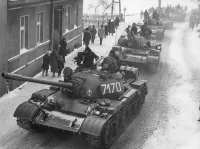
Martial law is the imposition of military rule in place...
New Zealand is an island country in the southwestern Pacific...
San Francisco is a major commercial financial and cultural hub...
China officially the People's Republic of China is an East...
Trending
46 minutes ago Saddiq Bey Proves Pelicans Right After Trade: Flipping the Narrative Brilliantly
10 days ago Newsom supports age restrictions on social media citing parental experience and teen phone obsession.

11 months ago Mark Williams' Status Uncertain for Friday's Game; Will Rest on Sunday.
47 minutes ago Kirill Kaprizov aims for Wild's goal record after scoring against St. Louis.

48 minutes ago Michael Strahan's Lifestyle Brand Expands with Belk Partnership and Career Announcement.

48 minutes ago Maggie and Jake Gyllenhaal's Bond: Closer Than Ever, Reflecting on Careers and Relationships.
Popular

Hillary Diane Rodham Clinton is a prominent American politician lawyer...
Jesse Jackson is an American civil rights activist politician and...

Ken Paxton is an American politician and lawyer serving as...

Jim Carrey is a Canadian-American actor and comedian celebrated for...
Bill Clinton served as the nd U S President from...
XXXTentacion born Jahseh Dwayne Ricardo Onfroy was a controversial yet...