


Thomas Menino was a prominent American politician who served as the Mayor of Boston from 1993 to 2014, becoming the city's longest-serving mayor. He assumed office in 1993 after serving as acting mayor following Raymond Flynn's resignation. Prior to his mayoral tenure, Menino was an active member of the Boston City Council, eventually becoming its president in 1993. His lengthy service as mayor left a lasting impact on the city of Boston.
December 27, 1942: Thomas Menino's Birth
On December 27, 1942, Thomas Michael Menino was born. He would later become a prominent American politician and the longest-serving mayor of Boston.


1961: Meeting Joseph F. Timilty
In 1961, at the age of nineteen, Thomas Menino met Joseph F. Timilty, who later became a political mentor to him.
1963: Met Angela Faletra
In 1963, Menino met Angela Faletra while playing tennis in Roslindale.
1963: Started working at Metropolitan Life Insurance
In 1963, Thomas Menino began working in sales at Metropolitan Life Insurance.
1963: Associate Degree from Mount Ida College
In 1963, Thomas Menino received an associate degree in Business Management from Mount Ida College, then known as Chamberlayne Junior College.
1968: Joined Boston Redevelopment Authority
In 1968, Thomas Menino left the insurance industry and joined the Boston Redevelopment Authority after Joseph Timilty secured him an entry-level position.
1971: Worked on Timilty's Mayoral Campaign
In 1971, Thomas Menino worked on Joseph Timilty's mayoral campaign.
1975: Worked on Timilty's Mayoral Campaign
In 1975, Thomas Menino worked on Joseph Timilty's mayoral campaign.
1979: Worked on Timilty's Mayoral Campaign
In 1979, Thomas Menino worked on Joseph Timilty's mayoral campaign.
November 1983: Elected Boston City Councilor
In November 1983, Thomas Menino was elected as a Boston city councilor for the newly created District 5, winning with 75 percent of the vote against Richard E. Kenney. He also endorsed Raymond Flynn for mayor.
1984: Enrolled as undergrad at UMass Boston
In 1984, Thomas Menino enrolled as an undergraduate student at the University of Massachusetts Boston while serving as a Boston city councilor.
1986: Offered Position of Parks and Recreation Commissioner
In 1986, Mayor Flynn offered Thomas Menino the position of Parks and Recreation Commissioner, which Menino considered but ultimately did not accept. He also announced a candidacy for Suffolk County sheriff but abandoned it afterward.
November 1987: Re-elected City Councilor
In November 1987, Thomas Menino was re-elected as a City Councilor, winning with 87% of the vote.
January 1988: Graduation from UMass Boston
In January 1988, Thomas Menino graduated from the University of Massachusetts Boston with a Bachelor of Arts degree in community planning.
1988: Authored 5-point plan to stop the spread of AIDS
In 1988, Thomas Menino authored a 5-point plan outlining steps to stop the spread of AIDS among users of intravenous drugs, including use of needle exchanges, community health vans, street outreach workers, and increased drug rehabilitation facilities.
1990: Greenhouse Gas Emission Reduction Goal
Under Menino, Boston partnered with other government agencies and local businesses to accomplish its goals of reducing greenhouse gas emissions by 7% below 1990 levels by 2012, and to 80% below 1990 levels by 2050.
1991: Founding Member of City Council's Tourists and Tourism Committee
In 1991, Thomas Menino became a founding member of the City Council's Tourists and Tourism Committee.
1991: Opposed the Family Protection Act
In 1991, Thomas Menino opposed the Family Protection Act, which would have expanded rights to same-sex couples in domestic partnerships.
1992: Planned run for United States Congress
In 1992, Thomas Menino planned to run for the United States Congress seat being vacated by Rep. Brian J. Donnelly, but chose not to challenge Representatives from other districts after congressional apportionment.
March 1993: Flynn Nominated as Ambassador to the Holy See
In March 1993, President Clinton nominated Mayor Flynn to be the United States Ambassador to the Holy See, effectively making Thomas Menino, then President of the Boston City Council, the presumptive future acting mayor.
July 12, 1993: Menino Became Acting Mayor
On July 12, 1993, Thomas Menino became acting Mayor of Boston upon Raymond Flynn's resignation. He was the first Italian American to lead the city.
August 1993: Signed Grant Agreement for Recycling Facility
In early August 1993, acting mayor Thomas Menino signed a grant agreement with the state which advanced $3.7 million in state funds for the construction of a materials recycling facility in Boston.
August 16, 1993: Declared Candidacy for Mayor
On August 16, 1993, after taking office as acting mayor and after many other candidates had already entered the race, Thomas Menino formally declared himself as a candidate for mayor of Boston.
November 1993: Upcoming Mayoral Election
In November 1993, there was an upcoming election to determine who would become the next mayor of Boston after Thomas Menino served as acting mayor.
1993: Start of Decreasing Crime
During Menino's tenure, crime in Boston fell to record lows. In 1993, Boston's violent crime rate was 1,957.7.
1993: Opposition to Domestic Ordinances During Mayoral Campaign
During his 1993 mayoral campaign, Thomas Menino's spokesperson credited his opposition to domestic ordinances to believing that these ordinances too broadly defined "family".
1993: Menino Wins Mayoral Election
In 1993, Thomas Menino won the Boston mayoral election, becoming the city's first non-Irish American mayor since the Great Depression.
1993: Supported gay rights as mayor
In 1993, upon being elected mayor, Menino publicly supported gay and lesbian couples as foster parents and backed a municipal executive order providing city employees sick leave or bereavement time for domestic partners or household members.
1994: "Urban Mechanic" Nickname
In late 1994, Menino was given the nickname "urban mechanic", reflecting his focus on "nuts and bolts" issues.
1995: Hospitalized for abdominal pain
In 1995, Menino was hospitalized for abdominal pain and intestinal inflammation and was treated for kidney stones.
December 11, 1997: End of Teen Murder Free Period
On December 11, 1997, the 29-month long period in which no teenagers were murdered in the city ended when a sixteen year old was murdered in Dorcester.
1997: Treated for kidney stones
In 1997, Menino was treated for kidney stones.
1997: Re-elected Mayor
In 1997, Thomas Menino was re-elected as mayor of Boston, running formally unopposed after no challenger managed to collect enough valid signatures to qualify for the ballot.
1998: Extended health benefits to same-sex partners
In 1998, Menino signed an executive order allowing domestic partners and dependents of gay, lesbian, and unmarried municipal employees to receive health benefits from the city, making him one of the first U.S. mayors to do so.
2000: Housing Construction Boom
Between 2000 and 2010, Boston saw significant housing construction with 20,500 new units, including 5,500 affordable units, during Menino's tenure. This influx of high-priced housing contributed to gentrification.
2001: Named Public Official of the Year
In 2001, Governing magazine named Mayor Menino Public "Official of the Year" for effective neighborhood development in Boston.
2001: Ran for Third Term as Mayor
In 2001, Thomas Menino ran for a third term as mayor of Boston, clarifying that his previous promise to serve only two terms meant two terms in every century.
2001: Mayoral Election Victory
In the 2001 mayoral general election, Thomas Menino faced Peggy Davis-Mullen and won with 76.06% of the vote, after winning 73.37% of the vote in the primary election.
May 2002: Elected President of the United States Conference of Mayors
In May 2002, Thomas Menino was elected president of the United States Conference of Mayors.
2002: President of the United States Conference of Mayors
In 2002, Thomas Menino became the president of the United States Conference of Mayors.
2003: Supported same-sex marriage
In 2003, Menino came out in support of same-sex marriage.
2003: Sarcoma surgery
In 2003, Menino underwent surgery at Brigham and Women's Hospital to remove a rare sarcoma (DFSP) on his back.
2003: End of Term as President of US Conference of Mayors
In 2003, Thomas Menino's term as President of the United States Conference of Mayors came to an end.
2003: Operation Ceasefire Award
In 2003, the Operation Ceasefire program, which Menino supported and is credited with decreasing homicide rates, received the United States Department of Justice's "Outstanding Comprehensive Strategic Plan Award".
2004: Supported Fenway Park Renovation
In 2004, Menino supported efforts to renovate Fenway Park after the idea of building a new stadium was abandoned, and launched a review of potential new developments in the surrounding neighborhood, leading to major developments after rezoning.
2004: Diagnosed with Crohn's disease
In 2004, Menino was diagnosed with Crohn's disease, requiring lifelong treatment with anti-inflammatory medication and careful monitoring of his diet.
2004: Democratic National Convention in Boston
In 2004, Thomas Menino brought the Democratic National Convention to Boston, Massachusetts.
2004: Banned sodas from Boston Public Schools
In 2004, in an effort to fight childhood obesity, Menino banned sodas from Boston Public Schools.
2005: Won Mayoral Election
In 2005, Thomas Menino won 67.52% of the vote against Maura Hennigan in the mayoral election. Despite a negative campaign from Henigan, Menino largely stayed above the fray.
April 25, 2006: Formation of Mayors Against Illegal Guns Coalition
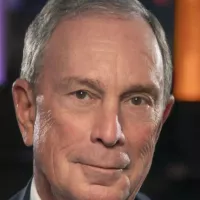
On April 25, 2006, Thomas Menino and New York City Mayor Michael Bloomberg hosted a summit to form the Mayors Against Illegal Guns Coalition, with the goal of reducing illegal guns on the streets. Menino remained co-chair until he left office.
April 2008: High Percentage of Residents Meeting Menino
Surveys conducted in April 2008 showed that more than half of the city's residents had reported having at one point personally met Menino.
2008: City's Strong Commercial Real Estate Market
At the end of Menino's tenure, in 2012, the city was undergoing a construction boom, with Moody's Investor Service crediting the city as having "the strongest commercial real estate market in the country since the 2008 recession".
2008: Boston ranked third-greenest city
In 2008, Boston was ranked as the third-greenest city in the United States by Popular Science, due to initiatives around planting trees, recycling, increasing solar power, and green building zoning.
2008: Supported Hillary Clinton's Presidential Campaign
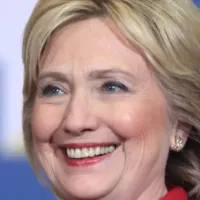
In 2008, Thomas Menino supported the presidential campaign of Hillary Clinton, sending his own campaign workers to New Hampshire to work for her candidacy ahead of the 2008 New Hampshire Democratic presidential primary.
May 2009: High Percentage of Residents Meeting Menino
Surveys conducted in May 2009 showed that more than half of the city's residents had reported having at one point personally met Menino.
June 2009: Voiced support for performance pay
In June 2009, Menino voiced support for performance pay in Boston public schools.
2009: Supported charter schools
In 2009, Menino came out in support of charter schools, praising their ability to attract quality teachers, arrange lessons to fit students' needs, and establish flexible workplace rules.
2009: Elected to a Fifth Term as Mayor
In 2009, Thomas Menino was elected to a fifth term as mayor of Boston.
2009: Description of Menino's Political Machine
In 2009, the Boston Globe described Thomas Menino's political operation as the most extensive in modern Boston history, rivaling that of James Michael Curley, achieved by blurring the lines between politics and policy, city work and campaign work.
2009: Mayoral Election Victory
In the 2009 general election, Thomas Menino faced Michael F. Flaherty after Sam Yoon and Kevin McCrea were eliminated in the nonpartisan primary. Menino won 57.27% of the vote in the general election.
2010: Housing Construction Boom
Between 2000 and 2010, Boston saw significant housing construction with 20,500 new units, including 5,500 affordable units, during Menino's tenure. This influx of high-priced housing contributed to gentrification.
2010: Business Improvement District Created
In 2010, legislation was passed creating a downtown business improvement district, which Menino had advocated for since the 1990s.
April 2011: Banned sugary drinks in city buildings
In April 2011, Menino banned advertisements and sales of sugar-heavy drinks in municipal buildings and at city-sponsored events in an effort to combat obesity.
2011: Record Low Crime
During Menino's tenure, crime in Boston fell to record lows. In 2011, Boston's violent crime rate fell to 845.2.
July 2012: Approval Rating of 82%
In July 2012, it was reported that Menino had an 82% approval rating.
September 2012: Endorsed Elizabeth Warren
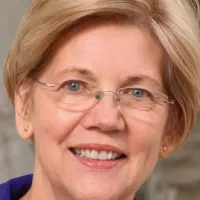
In September 2012, Menino endorsed Democratic nominee Elizabeth Warren in the 2012 United States Senate election in Massachusetts.
2012: City's Strong Commercial Real Estate Market
At the end of Menino's tenure, in 2012, the city was undergoing a construction boom, with Moody's Investor Service crediting the city as having "the strongest commercial real estate market in the country since the 2008 recession".
2012: Smoking Ban in Public Housing
In 2012, Boston became Massachusetts' first large city, as well as the largest city in the United States, to ban smoking in public housing.
2012: Headed Mayors for Freedom to Marry effort and Opposed Chick-fil-A
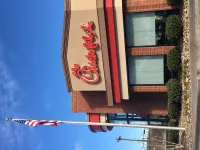
In 2012, Menino headed the Mayors for Freedom to Marry effort. Also in 2012, Menino opposed Chick-fil-A opening restaurants in Boston due to their opposition to same-sex marriage.
2012: Greenhouse Gas Emission Reduction Goal
Under Menino, Boston partnered with other government agencies and local businesses to accomplish its goals of reducing greenhouse gas emissions by 7% below 1990 levels by 2012, and to 80% below 1990 levels by 2050.
March 2013: High Percentage of Residents Meeting Menino
Surveys conducted in March 2013 showed that more than half of the city's residents had reported having at one point personally met Menino.
March 28, 2013: Announced He Would Not Seek a Sixth Term
On March 28, 2013, Thomas Menino announced that he would not seek a sixth term as mayor of Boston.
August 28, 2013: Controversial comment about Detroit
In an interview for the August 28, 2013 issue of the New York Times Magazine, Menino made a controversial comment about Detroit, which led to criticism and a subsequent apology in September.
2013: Honorary degree from Harvard University
In 2013, Harvard University awarded Menino an honorary degree.
2013: Matt O'Malley surpasses Menino's vote total
In 2013, Matt O'Malley surpassed Thomas Menino's 1983 vote total of 17,561 by receiving 18,204 votes.
January 2014: Appointment at Boston University and Co-founded Initiative on Cities
In January 2014, after leaving office as mayor, Menino was appointed as Professor of the Practice at Boston University and co-founded the Initiative on Cities (IOC), an urban leadership research center.
March 2014: Diagnosed with Cancer
In March 2014, Menino announced that he had been diagnosed with an advanced form of cancer that had spread to his liver and lymph nodes and that he was beginning intensive chemotherapy treatment.
March 2014: Cancer Diagnosis
In March 2014, Thomas Menino was diagnosed with an advanced form of cancer of unknown primary origin, which ultimately led to his death seven months later.
October 23, 2014: Halted cancer treatments
On October 23, 2014, Menino announced that he would be halting cancer treatments and his book tour to spend more time with family.
October 30, 2014: Thomas Menino's Death
On October 30, 2014, Thomas Michael Menino passed away after battling cancer. He had served as the mayor of Boston from 1993 to 2014.
2050: Greenhouse Gas Emission Reduction Goal
Under Menino, Boston partnered with other government agencies and local businesses to accomplish its goals of reducing greenhouse gas emissions by 7% below 1990 levels by 2012, and to 80% below 1990 levels by 2050.
Mentioned in this timeline
Chick-fil-A is a prominent American fast food chain known for...
Hillary Diane Rodham Clinton is a prominent American politician lawyer...
Elizabeth Warren is a prominent American politician currently serving as...
The United States of America is a federal republic primarily...
Michael Bloomberg is an American entrepreneur politician and philanthropist He...
The New York Times is a globally influential American newspaper...
Trending

4 hours ago Stefanos Tsitsipas Advances to Almaty Open Semifinals
4 hours ago Ms. Rachel Supports Toddler Following Alleged Discrimination at Darien Library Puppet Show
4 hours ago Curt Cignetti Reviews Ohio State Loss and Prepares Indiana for Upcoming Michigan Game

5 hours ago Elena Rybakina Advances to WTA Ningbo Open Semifinals

5 hours ago Tennis Live Scores and Head-to-Head Match Results Update

6 hours ago Meghan Markle Expresses Distress Over Disturbing Allegations Against Her Father Thomas Markle
Popular

Ilhan Omar is a prominent American politician currently serving as...

Ken Paxton is an American politician and lawyer serving as...

Elon Musk is a visionary entrepreneur and engineer known for...

Michael Joseph Jackson the King of Pop was a highly...

Cristiano Ronaldo widely considered one of the greatest footballers captains...

Elizabeth Holmes is an American entrepreneur and the founder of...