


Winnipeg is the capital and largest city of Manitoba, Canada. Situated at the junction of the Red and Assiniboine rivers, it's a significant urban center. The 2021 census recorded a city population of 749,607 and a metropolitan population of 834,678, ranking it as the sixth-largest city and eighth-largest metropolitan area in Canada.
1906: Burton Cummings Theatre Built
In 1906, the Burton Cummings Theatre, now a National Historic Site of Canada, was built.


1911: Winnipeg Canada's Third-Largest City in 1911
By 1911, Winnipeg was Canada's third-largest city.
1913: Grain Exchange Operation Ends in 1913
Downtown Winnipeg's Exchange District is named after the area's original grain exchange, which operated from 1880 to 1913.
1913: Pantages Playhouse Theatre Opens
In 1913, the Pantages Playhouse Theatre opened as a vaudeville house.
1914: Canada's First Jazz Concert
In 1914, Winnipeg was the location of Canada's first jazz concert at the Pantages Playhouse Theatre.
1914: Opening of the Panama Canal in 1914
In 1914, the opening of the Panama Canal caused financial difficulty for Winnipeg by reducing reliance on Canada's rail system for international trade.
1918: Motor Buses Supplement Trolley Cars
After 1918, motor buses supplemented trolley cars in Winnipeg.
May 1919: Winnipeg General Strike Begins in May 1919
In May 1919, more than 30,000 workers initiated the Winnipeg general strike due to postwar recession, labor conditions, union activity, and returning World War I soldiers seeking work.
June 1919: Winnipeg General Strike Ends in June 1919
The Winnipeg general strike ended on 21 June 1919, after arrests, deportations, violence, and the Riot Act being read, culminating in Bloody Saturday where two strikers died and many were injured.
1920: Manitoba Legislative Building Opens and Proportional Voting Introduced in 1920
In 1920, the Manitoba Legislative Building opened, and proportional voting was introduced.
1922: Radio Broadcasting Begins in Winnipeg
In 1922, radio broadcasting began in Winnipeg.
1923: CKY Establishes Monopoly Position
By 1923, government-owned CKY held a monopoly position in radio broadcasting in Winnipeg.
1925: Le Cercle Molière Founded
In 1925, Le Cercle Molière, based in St Boniface, Canada's oldest theatre company, was founded.
1929: Stock Market Crash of 1929
The stock market crash of 1929 and the Great Depression caused widespread unemployment.
July 1936: Record High Temperature in July 1936
In July 1936, during the North American heat wave, Winnipeg recorded its highest temperature ever at 42.2 °C (108.0 °F). The highest minimum temperature recorded on 12 July 1936 was 28.3 °C (82.9 °F).
1938: Electric Trolleybuses Introduced
In 1938, electric trolleybuses were introduced in Winnipeg.
1939: End of the Great Depression after the Start of WWII in 1939
The Great Depression ended after the start of World War II in 1939.
1942: Mock Nazi Invasion of Winnipeg during Victory Loan Campaign in 1942
In 1942, the Victory Loan Campaign staged a mock Nazi invasion of Winnipeg to promote awareness of the stakes of the war in Europe.
1950: Large Flood in 1950
In 1950, Winnipeg experienced another large flood that caused millions of dollars in damage and mass evacuations.
1953: Blue Bombers at Canad Inns Stadium
From 1953, the Winnipeg Blue Bombers called Canad Inns Stadium home.
May 1954: CBWT Goes on the Air
In May 1954, CBWT went on the air, broadcasting four hours daily, marking the start of television broadcasting in Winnipeg.
1955: End of Trolley Car Service
In 1955, electric trolley cars were replaced by motor buses.
1957: End of Proportional Voting in 1957
Proportional voting was used provincially until 1957.
1960: Establishment of the Metropolitan Corporation of Greater Winnipeg in 1960
In 1960, the Metropolitan Corporation of Greater Winnipeg was established to co-ordinate service delivery in the metropolitan region.
1967: Winnipeg Hosts Pan American Games
In 1967, Winnipeg hosted the Pan American Games.
1967: University of Winnipeg Charter
In 1967, the University of Winnipeg received its charter.
1969: Perimeter Highway Built
In 1969, the four-lane Perimeter Highway was built, serving as a Ring Road for Winnipeg.
1970: End of Electric Trolleybus Service
In 1970, electric trolleybus service ended in Winnipeg.
July 1971: Consolidated "Unicity" Government Established in July 1971
A consolidated metropolitan "unicity" government incorporating Winnipeg and its surrounding municipalities was established on 27 July 1971, taking effect in 1972.
1972: Effective Date of "Unicity" Government in 1972
In 1972, the consolidated metropolitan "unicity" government, incorporating Winnipeg and its surrounding municipalities, came into effect.
1976: Establishment of the Royal Canadian Mint in 1976
The Royal Canadian Mint, established in 1976, produces all circulating coinage in Canada.
1981: Tripartite Agreement Signed in 1981
In 1981, Winnipeg signed a tripartite agreement with the provincial and federal governments to redevelop its downtown area.
1982: Booth University College Established
In 1982, Booth University College, a private Christian Salvation Army university college, was established.
1989: Redevelopment of CNR Rail Yards in 1989
In 1989, the reclamation and redevelopment of the CNR rail yards turned the Forks into Winnipeg's most popular tourist attraction.
1992: City Governance Changes
Since 1992, the city of Winnipeg has been represented by 15 city councillors and a mayor, elected every four years.
1995: Original Winnipeg Jets Leave for Phoenix
After the 1995 season, the original Winnipeg Jets, the city's former NHL team, left for Phoenix, Arizona due to financial issues.
1997: Reinforcement of Flood Control Dikes in 1997
During the 1997 flood, Winnipeg reinforced and raised flood control dikes using sandbags, limiting damage compared to other cities.
1997: Exchange District Designated as National Historic Site in 1997
In 1997, the 30-block Exchange District received National Historic Site of Canada status.
1997: Red River Flood in 1997
The city was threatened by the 1997 Red River flood.
1999: Winnipeg Hosts Pan American Games Again
In 1999, Winnipeg hosted the Pan American Games for the second time.
1999: Winnipeg Hosts World Junior Hockey Championship
In 1999, Winnipeg hosted the World Junior Hockey Championship.
1999: Canadian Mennonite University Established
In 1999, the Canadian Mennonite University, a private Mennonite undergraduate university, was established.
2001: Indigenous Population Growth Rate (2001)
Between 2001 and 2006, the Indigenous population grew by 22%.
2002: Consumer Price Index Base Year 2002
As of May 2014, the Consumer Price Index was 125.8 relative to 2002 prices.
2003: City of Winnipeg Charter Replaces City of Winnipeg Act in 2003
In 2003, the City of Winnipeg Act was repealed and replaced with the City of Winnipeg Charter.
2003: City of Winnipeg Charter Act Replaced Old Act
In 2003, the City of Winnipeg Charter Act replaced the old City of Winnipeg Act.
2004: Shall We Dance? Filmed in Winnipeg
In 2004, the Hollywood production "Shall We Dance?" was filmed in Winnipeg.
2004: Battalion Operates Out of CFB Shilo
Since 2004, the Second Battalion of Princess Patricia's Canadian Light Infantry has operated out of CFB Shilo near Brandon, after moving from Winnipeg.
2005: Capote Filmed in Winnipeg
In 2005, the Hollywood production "Capote" was filmed in Winnipeg.
2006: Indigenous Population Growth Rate (2006)
Between 2001 and 2006, the Indigenous population grew by 22%.
2006: Peak of Auto-Theft Problem
In 2006, Winnipeg had a significant auto-theft problem, with the rate peaking at 2,165.0 per 100,000 residents.
July 2007: High Humidex Reading in July 2007
On 25 July 2007, Winnipeg measured a humidex reading of 47.3 °C (117.1 °F).
2007: Winnipeg as "Murder Capital"
From 2007, Winnipeg was the "murder capital" of Canada, with the highest per-capita rate of homicides.
2007: Winnipeg Hosts Women's World Hockey Championship
In 2007, Winnipeg hosted the Women's World Hockey Championship.
2007: The Assassination of Jesse James by the Coward Robert Ford Filmed in Winnipeg
In 2007, the Hollywood production "The Assassination of Jesse James by the Coward Robert Ford" was filmed in Winnipeg.
April 2008: Construction of Canadian Museum for Human Rights Begins
On April 1, 2008, construction of the Canadian Museum for Human Rights began.
2008: My Winnipeg Film Release
In 2008, Guy Maddin's independent film "My Winnipeg", a comedic rumination on the city's history, was released.
2009: Canada Life Centre Ranking
As of 2009, Canada Life Centre is ranked the world's 19th-busiest arena among non-sporting touring events, 13th-busiest among facilities in North America, and 3rd-busiest in Canada.
2009: Construction Begins on CentrePort Canada Way
In 2009, construction began on CentrePort Canada Way, a $212 million four-lane freeway designed to connect CentrePort with the Perimeter Highway.
2009: Red River College Begins Degree Programs
Starting in 2009, Red River College Polytechnic began offering some degree programs.
2010: Winnipeg Named Cultural Capital of Canada in 2010
Winnipeg was named the Cultural Capital of Canada in 2010 by Canadian Heritage.
October 2011: Winnipeg Airport Redevelopment Complete
In October 2011, the Winnipeg James Armstrong Richardson International Airport completed a $585 million redevelopment.
2011: Auto Theft Reduction
Between 2006 and 2011, auto thefts in Winnipeg decreased by 80% due to financial incentives for installing ignition immobilizers.
2011: Winnipeg Jets Return to the NHL
In 2011, the Winnipeg Jets of the National Hockey League (NHL) began playing in the city.
2011: Winnipeg as "Murder Capital"
Until 2011, Winnipeg was the "murder capital" of Canada, with the highest per-capita rate of homicides.
2012: Concentration of Crime in Inner City
In 2012, crime in Winnipeg was mostly concentrated in the inner city, which makes up only 19% of the population but was the site of 86.4% of the city's shootings, 66.5% of the robberies, 63.3% of the homicides and 59.5% of the sexual assaults.
2012: Blue Bombers at Canad Inns Stadium
Until 2012, the Winnipeg Blue Bombers called Canad Inns Stadium home.
November 2013: CentrePort Canada Way Opens
In November 2013, CentrePort Canada Way, a $212 million four-lane freeway connecting CentrePort with the Perimeter Highway, opened.
November 2013: Police Union Review
In November 2013, the national police union reviewed the Winnipeg Police Force and found high average response times for several categories of calls.
2013: Blue Bombers Move to Princess Auto Stadium
In 2013, the Winnipeg Blue Bombers moved to Princess Auto Stadium.
May 2014: Consumer Price Index in May 2014
As of May 2014, the Consumer Price Index was 125.8 relative to 2002 prices.
September 2014: Canadian Museum for Human Rights Opens
On September 27, 2014, the Canadian Museum for Human Rights opened to the public.
2015: Winnipeg Co-Hosts FIFA Women's World Cup
In 2015, Winnipeg co-hosted the FIFA Women's World Cup.
2016: 2016 Census
In the 2016 census, the Winnipeg CMA had a population of 783,099.
2016: 2016 Census of Population
Winnipeg had a population of 705,244 in 2016.
2017: Winnipeg Hosts Canada Summer Games
In 2017, Winnipeg hosted the Canada Summer Games.
2017: A Dog's Purpose Filmed in Winnipeg
In 2017, the Hollywood production "A Dog's Purpose" was filmed in Winnipeg.
2017: Methamphetamine Problem
In 2017, the city of Winnipeg started to deal with an increasingly large methamphetamine problem, fuelling violent crime.
March 2018: Ride-sharing Legalized
In March 2018, ride-sharing was legalized in Winnipeg, leading to services like Uber operating in the city.
2018: Winnipeg Police Service Statistics
As of 2018, the Winnipeg Police Service had 1,914 police officers, costing taxpayers $290,564,015.
2018: Average House Price in 2018
The average house price in Winnipeg was $301,518 as of 2018.
2019: Winnipeg Crime Index
In 2019, Winnipeg had the 13th-highest violent crime index in Canada, and the highest robbery rate.
2019: Job numbers and unemployment rate in 2019
There were approximately 450,500 jobs in Winnipeg as of 2019. The city had an unemployment rate of 5.3% in 2019, compared to a national rate of 5.7%.
July 2020: Winnipeg CMA Population Estimate as of July 2020
Statistics Canada's estimate of the Winnipeg CMA population as of 1 July 2020 is 850,056.
2020: Winnipeg Violent Crime Capital
In 2020, Winnipeg was the "violent crime capital" of Canada according to the Statistics Canada police-reported violent crime severity index.
2020: GDP for census metropolitan area in 2020
The GDP for the census metropolitan area was CA$45.0 billion as of 2020.
2021: Winnipeg Population in 2021
As of 2021, Winnipeg had a city population of 749,607 and a metropolitan population of 834,678, making it Canada's sixth-largest city and eighth-largest metropolitan area.
2021: National Historic Sites of Canada as of 2021
As of 2021, there are 26 National Historic Sites of Canada in Winnipeg.
2021: Blue Bombers Win Grey Cup
In 2021, the Winnipeg Blue Bombers won the Grey Cup championship.
2021: 2021 Census of Population
In the 2021 Census of Population conducted by Statistics Canada, Winnipeg had a population of 749,607.
2021: 2021 Census
In the 2021 census, the Winnipeg CMA had a population of 834,678.
2021: Religious Makeup of Winnipeg (2021 Census)
The 2021 Census reported the religious make-up of Winnipeg as: 50.4% Christian, including 24.0% Catholic, 4.0% United Church, and 2.7% Anglican; 4.4% Sikh; 3.3% Muslim; 2.0% Hindu; 1.5% Jewish; 0.9% Buddhist; 0.4% traditional (aboriginal) spirituality; 0.7% other; and 36.4% no religious affiliation.
2021: Immigrant Population in Winnipeg (2021)
The 2021 census reported that immigrants comprise 201,040 persons or 27.3% of the total population of Winnipeg.
2022: Winnipeg's Homicide Rate
As of 2022, Winnipeg's homicide rate was 7.2 per 100,000, second to Thunder Bay.
2022: Scott Gillingham Elected Mayor
In 2022, Scott Gillingham was first elected to office as the mayor of Winnipeg.
2023: Winnipeg MLAs in Manitoba Legislature
As of 2023, Winnipeg is represented by 32 Members of the Legislative Assembly (MLAs) in the Manitoba Legislature, with 28 from the New Democratic Party (NDP), three from the Progressive Conservative Party, and one from the Liberal Party.
2023: Winnipeg Hosts World Police and Fire Games
In 2023, Winnipeg hosted the World Police and Fire Games.
August 2025: Zero-Emission Bus to Go Into Service
In August 2025, Winnipeg Transit announced that a 60-foot zero-emission bus (ZEB) would go into service, making Winnipeg the first Canadian city with 60-foot battery-electric buses in its fleet.
2025: Winnipeg Federal Representation
As of 2025, Winnipeg is represented by eight Members of Parliament: five Liberals, two Conservatives and one New Democrat.
Mentioned in this timeline
Uber Technologies Inc is a multinational transportation company headquartered in...
The stock market is where buyers and sellers trade stocks...

Arizona is a state in the Southwestern United States part...
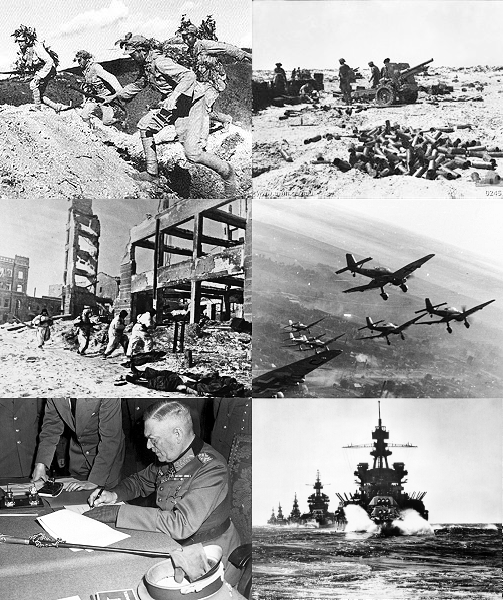
World War II - was a global conflict between the...

FIFA or the F d ration Internationale de Football Association...

KPMG is a multinational professional services network headquartered in London...
Trending
3 hours ago Reid Scott's Chase Scene Strategy Revealed on Law & Order

3 hours ago Corey Seager Undergoes Elbow Surgery Following Challenging Season with Texas Rangers

4 hours ago Jake Bauers Delivers Key RBI Double for Brewers Against Dodgers

4 hours ago Deion Sanders Prepares Colorado Buffaloes for Challenging Upcoming Football Game Against Utah Utes

4 hours ago Andre Drummond Makes Impact With Knicks Through Scoring And Communication

4 hours ago Selena Gomez Honors Martin Short's Late Daughter at Rare Impact Fund Gala
Popular

Ilhan Omar is a prominent American politician currently serving as...

Ken Paxton is an American politician and lawyer serving as...

Jameis Winston is an American football quarterback currently playing for...

Elon Musk is a visionary entrepreneur and engineer known for...

Michael Joseph Jackson the King of Pop was a highly...

Cristiano Ronaldo widely considered one of the greatest footballers captains...