Challenges in the Life of Alan Greenspan in a Detailed Timeline


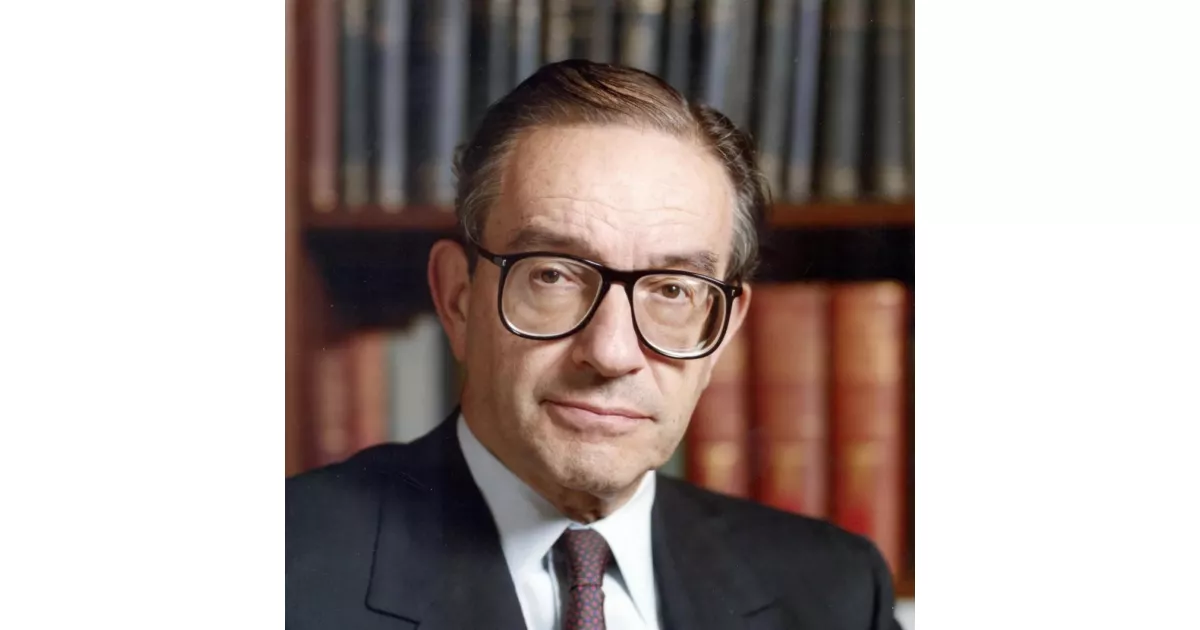
Resilience and perseverance in the journey of Alan Greenspan. A timeline of obstacles and growth.
Alan Greenspan is an American economist notable for serving as the 13th chairman of the Federal Reserve from 1987 to 2006. Following his tenure at the Federal Reserve, he transitioned to private consulting through Greenspan Associates LLC, providing economic advice to firms.
September 11, 2001: Federal Funds Rate Reduction
On September 11, 2001, the Federal Open Market Committee voted to reduce the federal funds rate from 3.5% to 3.0% in response to the attacks.


2001: Criticism for Supporting Bush's Tax Cut Plan
In 2001, Alan Greenspan received criticism for supporting President George W. Bush's tax cut plan.
2002: Federal Funds Rate Dropped After Scandals
In 2002, following accounting scandals, the Federal Reserve dropped the federal funds rate from 1.25% to 1.00%, which Greenspan stated would lead to a surge in home sales and refinancing.
2004: Interest Rate Reduction
In 2004 Alan Greenspan lowered interest rates to 1%, enabling banks to borrow money for free, adjusted for inflation, which lead to lending to unfit borrowers.
2004: Businessweek Analysis of Fed's Role in Housing Bubble
In 2004, Businessweek analysts argued that the Federal Reserve-engineered decline in rates inflated the housing bubble and that many recent buyers were exposed to rising rates because they were taking advantage of the lower rates available from adjustable-rate mortgages.
March 2005: Criticism for Supporting Bush's Social Security Plan
In March 2005, Alan Greenspan was attacked as "one of the biggest political hacks we have in Washington" by then-Democratic Senate Minority Leader Harry Reid for supporting President George W. Bush's plan to partially privatize Social Security.
2005: Late Realization of the Bubble
In 2005, Alan Greenspan noted he didn't realize the housing market bubble until very late in 2005.
2006: Late Realization of the Bubble
In 2006, Alan Greenspan noted he didn't realize the housing market bubble until very late in 2006.
March 2007: Subprime Mortgage Industry Collapse
In March 2007, the subprime mortgage industry collapsed, leading to bankruptcy filings by many of the largest lenders due to spiraling foreclosure rates. This contributed to criticism of Greenspan's role in the rise of the housing bubble.
2007: Housing Market Bubble Statement
In 2007, Alan Greenspan stated that there was a bubble in the U.S. housing market, warning of "large double-digit declines" in home values.
2007: Paulson & Co. Foresaw Collapse of Sub-Prime Housing Market
In 2007, Paulson & Co. foresaw the collapse of the sub-prime housing market and hired Goldman Sachs to package their sub-prime holdings into derivatives and sell them. Some economic commentators blamed this collapse on Alan Greenspan's policies while at the Fed.
March 2008: Article on the 2008 Financial Crisis
In March 2008, Alan Greenspan wrote an article for the Financial Times' Economists' Forum, stating that the 2008 financial crisis in the United States is likely to be judged as the most wrenching since the end of World War II. He argued for market flexibility and open competition.
September 2008: Stiglitz's Criticism of Greenspan's Regulation Beliefs
In September 2008, Joseph Stiglitz stated that Greenspan "didn't really believe in regulation" and called for self-regulation, which he termed an oxymoron.
October 15, 2008: Analysis of Greenspan's Opposition to Derivatives Regulation
On October 15, 2008, The Washington Post published an article analyzing the origins of the economic crisis, claiming that Alan Greenspan vehemently opposed any regulation of derivatives and actively sought to undermine the office of the Commodity Futures Trading Commission.
October 23, 2008: Congressional Hearing Admission
On October 23, 2008, during a congressional hearing, Alan Greenspan admitted that his free-market ideology, which shunned certain regulations, was flawed. He clarified his stance on laissez-faire capitalism, asserting that in a democratic society, there could be no better alternative and that the errors stemmed from the application of competitive markets.
2008: Frustration over ARM Criticism
In 2008, Alan Greenspan expressed frustration that his February 23 speech was used to criticize him on ARMs and the subprime mortgage crisis. He stated he had made countervailing comments eight days after it that praised traditional fixed-rate mortgages and suggested lenders should offer a greater variety of mortgage product alternatives.
2008: Cited as Responsible for Financial Crisis
In 2008, Alan Greenspan was cited as one of the persons responsible for the 2008 financial crisis in the documentary film "Inside Job", and he was also named in Time magazine as one of the "25 People to Blame for the Financial Crisis".
2009: Reich's Criticism of Greenspan's Contribution to the Housing Bubble
In 2009, Robert Reich wrote that Greenspan's worst move was to contribute to the giant housing bubble and the worst worldwide crash since the Great Depression, by lowering interest rates to 1% in 2004 and refusing government oversight of lending institutions.
October 2011: Chomsky's Criticism of Greenspan's Testimony
In October 2011, Noam Chomsky criticized Alan Greenspan's February 1997 testimony to the U.S. Senate as an example of the self-serving attitudes of the so-called 1%, where Greenspan stated that growing worker insecurity promotes long-term investment by keeping inflation low.
Mentioned in this timeline
Bill Clinton served as the nd U S President from...
George W Bush the rd U S President - is...
Elizabeth II reigned as Queen of the United Kingdom and...
Ronald Reagan the th U S President - was a...
The United States of America is a federal republic primarily...

Ruth Bader Ginsburg was an American lawyer and Supreme Court...
Trending
3 hours ago Packers Tight End Tucker Kraft Refines Unique Tucky Sneak Play Before Bears Matchup
4 hours ago Mark Schlereth Criticizes Bengals Handling of Star Quarterback Joe Burrow
3 hours ago Updates on NFL Game Analysis and Super Bowl Anniversary Celebrations
4 hours ago Stephen A. Smith Apologizes for Spreading False $25 Million Claim About Iman Shumpert
4 hours ago Drew Brees Receives Hall of Fame and Saints Ring of Honor Honors

4 hours ago Iran Intensifies Tanker Attacks in Strait of Hormuz Amid Stalled War Efforts
Popular

Ken Paxton is an American politician and lawyer serving as...

Cristiano Ronaldo widely considered one of the greatest footballers captains...

Michael Joseph Jackson the King of Pop was a highly...

Elon Musk is a visionary entrepreneur and engineer known for...

Shakira Isabel Mebarak Ripoll the Queen of Latin Music is...
Bernie Sanders is a prominent American politician and the senior...