Major Controversies Surrounding Alan Greenspan: A Detailed Timeline


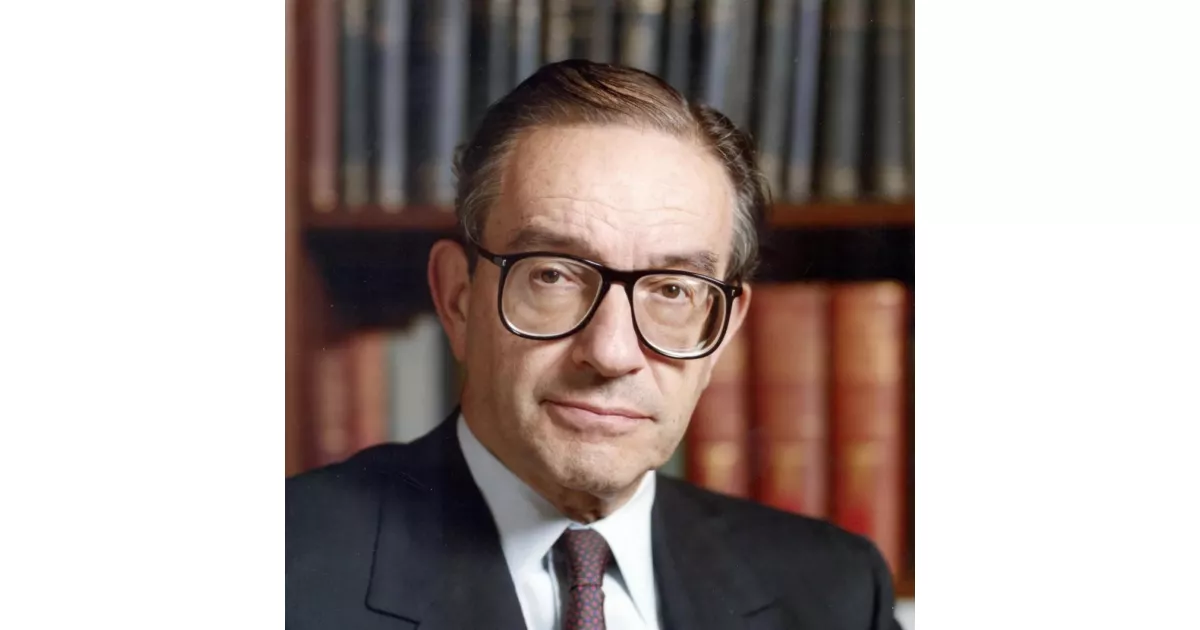
A closer look at the most debated and controversial moments involving Alan Greenspan.
Alan Greenspan is an American economist notable for serving as the 13th chairman of the Federal Reserve from 1987 to 2006. Following his tenure at the Federal Reserve, he transitioned to private consulting through Greenspan Associates LLC, providing economic advice to firms.
1987: Dissertation Removed and Discussion of Housing Bubble
In 1987, Alan Greenspan's dissertation was removed from New York University's archives at his request, coinciding with his appointment as chairman of the Federal Reserve Board. The dissertation included a discussion of soaring housing prices and their potential effect on consumer spending, anticipating a possible housing bubble.


1987: Greenspan Put
In 1987, following the stock market crash, Alan Greenspan affirmed the Fed's readiness to provide liquidity to support the economic and financial system, an action later known as the Greenspan put.
1999: Government Report on Derivatives Regulation
In 1999, Alan Greenspan, joined by Treasury Secretary Lawrence Summers, Securities and Exchange Commission Chairman Arthur Levitt, and Commodity Futures Trading Commission Chairman William Ranier, concluded in a government report that the trading of financial derivatives by eligible swap participants should be excluded from the Commodity Exchange Act.
2000: Interest Rate Hikes and Dot-Com Bubble
In 2000, Alan Greenspan raised interest rates several times, which some believe contributed to the bursting of the dot-com bubble.
2000: Commodity Futures Modernization Act
In 2000, the Commodity Futures Modernization Act was passed, driven by a 1999 government report, clarifying that most over-the-counter derivatives were outside the regulatory authority of any government agency. Alan Greenspan supported this view.
2001: Criticism for Supporting Bush's Tax Cut Plan
In 2001, Alan Greenspan received criticism for supporting President George W. Bush's tax cut plan.
February 23, 2004: Recommendation of Adjustable-Rate Mortgages
On February 23, 2004, Alan Greenspan suggested that more homeowners should consider taking out adjustable-rate mortgages (ARMs), as the Fed's own funds rate was at a then all-time-low of 1%.
2004: Federal Funds Rate at 1% and Rising Gold Prices
By 2004, the Greenspan-led Federal Reserve had brought the federal funds rate down to 1%. By late 2004, the price of gold was higher than its 12-year moving average. Critics like Steve Forbes attributed the rise in commodity prices and gold to Greenspan's monetary policy.
2004: Interest Rate Reduction
In 2004 Alan Greenspan lowered interest rates to 1%, enabling banks to borrow money for free, adjusted for inflation, which lead to lending to unfit borrowers.
2004: Businessweek Analysis of Fed's Role in Housing Bubble
In 2004, Businessweek analysts argued that the Federal Reserve-engineered decline in rates inflated the housing bubble and that many recent buyers were exposed to rising rates because they were taking advantage of the lower rates available from adjustable-rate mortgages.
March 2005: Criticism for Supporting Bush's Social Security Plan
In March 2005, Alan Greenspan was attacked as "one of the biggest political hacks we have in Washington" by then-Democratic Senate Minority Leader Harry Reid for supporting President George W. Bush's plan to partially privatize Social Security.
April 6, 2005: Call for Increased Regulation of Fannie Mae and Freddie Mac
On April 6, 2005, Alan Greenspan called for a substantial increase in the regulation of Fannie Mae and Freddie Mac before the Senate Banking Committee, citing significant risks to the nation's financial system due to their enormous portfolios.
2005: Late Realization of the Bubble
In 2005, Alan Greenspan noted he didn't realize the housing market bubble until very late in 2005.
2006: Criticism of Republican Party after 2006 Election
In "The Age of Turbulence: Adventures in a New World", published in 2007, Alan Greenspan criticizes President George W. Bush, Vice President Dick Cheney, and the Republican-controlled Congress for abandoning the Republican Party's principles on spending and deficits, following the 2006 election.
2006: Late Realization of the Bubble
In 2006, Alan Greenspan noted he didn't realize the housing market bubble until very late in 2006.
March 2007: Subprime Mortgage Industry Collapse
In March 2007, the subprime mortgage industry collapsed, leading to bankruptcy filings by many of the largest lenders due to spiraling foreclosure rates. This contributed to criticism of Greenspan's role in the rise of the housing bubble.
2007: Advised Deposing Saddam Hussein
In 2007, Alan Greenspan stated in an interview that he advised senior members of the George W. Bush administration to depose Saddam Hussein for the sake of the oil markets and the global economy.
2007: Housing Market Bubble Statement
In 2007, Alan Greenspan stated that there was a bubble in the U.S. housing market, warning of "large double-digit declines" in home values.
2007: Paulson & Co. Foresaw Collapse of Sub-Prime Housing Market
In 2007, Paulson & Co. foresaw the collapse of the sub-prime housing market and hired Goldman Sachs to package their sub-prime holdings into derivatives and sell them. Some economic commentators blamed this collapse on Alan Greenspan's policies while at the Fed.
2007: Belief in Free Markets and History of Low Risk Premiums
In his 2007 biography, Alan Greenspan wrote, "History has not dealt kindly with the aftermath of protracted periods of low risk premiums" as seen before the credit crisis of 2008, despite his claims to be a firm believer in free markets.
March 2008: Article on the 2008 Financial Crisis
In March 2008, Alan Greenspan wrote an article for the Financial Times' Economists' Forum, stating that the 2008 financial crisis in the United States is likely to be judged as the most wrenching since the end of World War II. He argued for market flexibility and open competition.
September 2008: Stiglitz's Criticism of Greenspan's Regulation Beliefs
In September 2008, Joseph Stiglitz stated that Greenspan "didn't really believe in regulation" and called for self-regulation, which he termed an oxymoron.
October 15, 2008: Analysis of Greenspan's Opposition to Derivatives Regulation
On October 15, 2008, The Washington Post published an article analyzing the origins of the economic crisis, claiming that Alan Greenspan vehemently opposed any regulation of derivatives and actively sought to undermine the office of the Commodity Futures Trading Commission.
October 23, 2008: Congressional Hearing Admission
On October 23, 2008, during a congressional hearing, Alan Greenspan admitted that his free-market ideology, which shunned certain regulations, was flawed. He clarified his stance on laissez-faire capitalism, asserting that in a democratic society, there could be no better alternative and that the errors stemmed from the application of competitive markets.
2008: Frustration over ARM Criticism
In 2008, Alan Greenspan expressed frustration that his February 23 speech was used to criticize him on ARMs and the subprime mortgage crisis. He stated he had made countervailing comments eight days after it that praised traditional fixed-rate mortgages and suggested lenders should offer a greater variety of mortgage product alternatives.
2008: Cited as Responsible for Financial Crisis
In 2008, Alan Greenspan was cited as one of the persons responsible for the 2008 financial crisis in the documentary film "Inside Job", and he was also named in Time magazine as one of the "25 People to Blame for the Financial Crisis".
2009: Reich's Criticism of Greenspan's Contribution to the Housing Bubble
In 2009, Robert Reich wrote that Greenspan's worst move was to contribute to the giant housing bubble and the worst worldwide crash since the Great Depression, by lowering interest rates to 1% in 2004 and refusing government oversight of lending institutions.
October 2011: Chomsky's Criticism of Greenspan's Testimony
In October 2011, Noam Chomsky criticized Alan Greenspan's February 1997 testimony to the U.S. Senate as an example of the self-serving attitudes of the so-called 1%, where Greenspan stated that growing worker insecurity promotes long-term investment by keeping inflation low.
Mentioned in this timeline
Bill Clinton served as the nd U S President from...
George W Bush the rd U S President - is...
Elizabeth II reigned as Queen of the United Kingdom and...
Ronald Reagan the th U S President - was a...
The United States of America is a federal republic primarily...
Ruth Bader Ginsburg was an American lawyer and Supreme Court...
Trending
3 hours ago Tyson Bagent Set to Start for Chicago Bears Against Packers
12 months ago Miller, McCoy Injured in Saints' Loss; McCoy Possibly Out for Season

3 hours ago Josh Jacobs Status Update Amid Legal Issues and Packers Game Absence
3 hours ago Steelers Place Wide Receiver Michael Pittman Jr. on Injured Reserve
3 hours ago Braelon Allen Showcases Impressive Running Ability for the New York Jets

3 hours ago Jets Coaches Anticipate Breakthrough for Rookie Pass-Rusher David Bailey
Popular

Ken Paxton is an American politician and lawyer serving as...

Cristiano Ronaldo widely considered one of the greatest footballers captains...

Michael Joseph Jackson the King of Pop was a highly...

Elon Musk is a visionary entrepreneur and engineer known for...

Shakira Isabel Mebarak Ripoll the Queen of Latin Music is...
Bernie Sanders is a prominent American politician and the senior...