Rise to Success: Career Highlights of Alan Greenspan


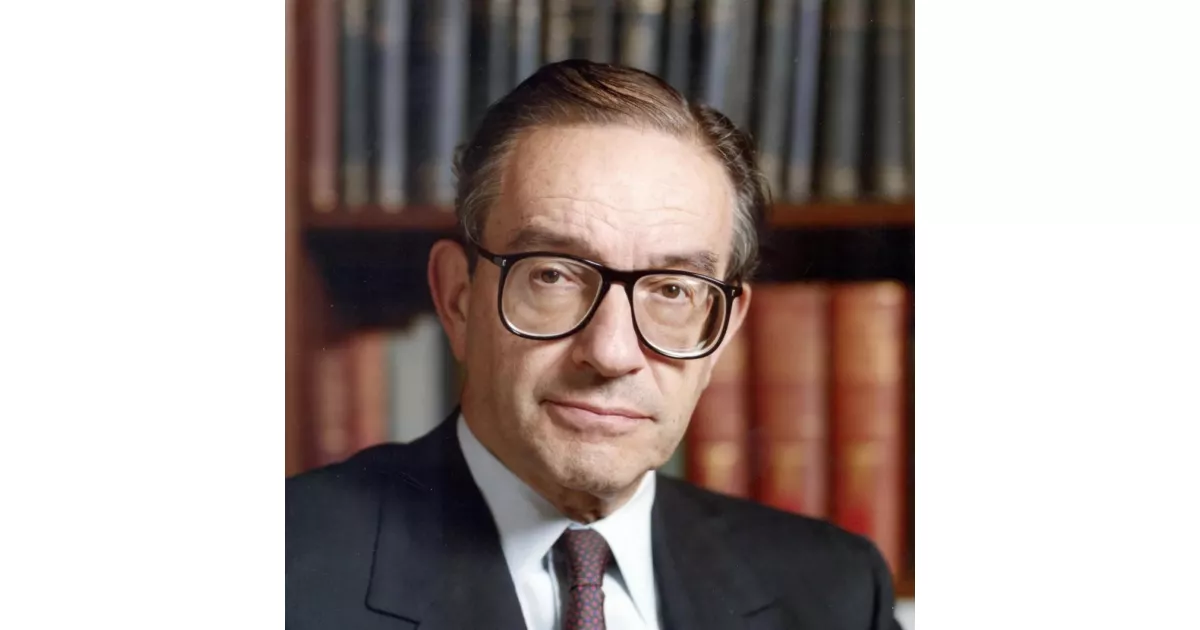
Discover the career path of Alan Greenspan, from the first major opportunity to industry-changing achievements.
Alan Greenspan is an American economist notable for serving as the 13th chairman of the Federal Reserve from 1987 to 2006. Following his tenure at the Federal Reserve, he transitioned to private consulting through Greenspan Associates LLC, providing economic advice to firms.
1948: Worked at National Industrial Conference Board
From 1948, Alan Greenspan worked as an analyst at the National Industrial Conference Board, which is now known as the Conference Board.


1953: Left National Industrial Conference Board
In 1953, Alan Greenspan ended his employment as an analyst at the National Industrial Conference Board.
1955: Chairman and President of Townsend-Greenspan & Co., Inc.
In 1955, Alan Greenspan became chairman and president of Townsend-Greenspan & Co., Inc., an economics consulting firm in New York City.
1966: Contribution to "Capitalism: The Unknown Ideal"
In 1966, Alan Greenspan contributed several essays to Ayn Rand's book "Capitalism: The Unknown Ideal", including one supporting the gold standard, solidifying his role as a proponent of Objectivism.
1968: Coordinator on Domestic Policy
In mid-1968, Alan Greenspan agreed to serve as Richard Nixon's coordinator on domestic policy in the nomination campaign.
1974: Chairman of the Council of Economic Advisers
In 1974, Alan Greenspan served as chairman of the Council of Economic Advisers, under President Gerald Ford.
1974: Swearing-in as Chairman of the Council of Economic Advisers
In 1974, Ayn Rand stood beside Alan Greenspan at his swearing-in ceremony as chairman of the Council of Economic Advisers, highlighting their close relationship and his growing influence in economic policy.
1977: Obtained Ph.D. in Economics
In 1977, Alan Greenspan obtained a Ph.D. in economics from New York University.
1977: Resumed Position at Townsend-Greenspan & Co., Inc.
In 1977, Alan Greenspan resumed his role as chairman and president of Townsend-Greenspan & Co., Inc. after serving as chairman of the Council of Economic Advisers.
1982: Director of the Council on Foreign Relations
In 1982, Alan Greenspan became a director of the Council on Foreign Relations foreign policy organization.
June 2, 1987: Nomination as Federal Reserve Chairman
On June 2, 1987, President Ronald Reagan nominated Alan Greenspan as the successor to Paul Volcker as chairman of the Board of Governors of the Federal Reserve.
August 11, 1987: Confirmed as Chairman of the Federal Reserve
On August 11, 1987, the Senate confirmed Alan Greenspan as chairman of the Board of Governors of the Federal Reserve.
August 1987: Nominated to Federal Reserve
In August 1987, Alan Greenspan was first nominated to the Federal Reserve by President Ronald Reagan.
1987: Dissertation Removed and Discussion of Housing Bubble
In 1987, Alan Greenspan's dissertation was removed from New York University's archives at his request, coinciding with his appointment as chairman of the Federal Reserve Board. The dissertation included a discussion of soaring housing prices and their potential effect on consumer spending, anticipating a possible housing bubble.
1987: End of Tenure at Townsend-Greenspan & Co., Inc.
In 1987, Alan Greenspan's tenure as chairman and president of Townsend-Greenspan & Co., Inc., came to an end.
1987: Greenspan Put
In 1987, following the stock market crash, Alan Greenspan affirmed the Fed's readiness to provide liquidity to support the economic and financial system, an action later known as the Greenspan put.
1988: End of Term as Director of the Council on Foreign Relations
In 1988, Alan Greenspan's term as a director of the Council on Foreign Relations foreign policy organization ended.
1993: Support for Clinton's Deficit Reduction Program
In 1993, Alan Greenspan lent support to President Bill Clinton's deficit reduction program.
1999: Taylor Rule Prescriptions Followed
In 1999, Alan Greenspan's monetary policy decisions largely followed standard Taylor rule prescriptions.
1999: Government Report on Derivatives Regulation
In 1999, Alan Greenspan, joined by Treasury Secretary Lawrence Summers, Securities and Exchange Commission Chairman Arthur Levitt, and Commodity Futures Trading Commission Chairman William Ranier, concluded in a government report that the trading of financial derivatives by eligible swap participants should be excluded from the Commodity Exchange Act.
2000: Interest Rate Hikes and Dot-Com Bubble
In 2000, Alan Greenspan raised interest rates several times, which some believe contributed to the bursting of the dot-com bubble.
2000: Commodity Futures Modernization Act
In 2000, the Commodity Futures Modernization Act was passed, driven by a 1999 government report, clarifying that most over-the-counter derivatives were outside the regulatory authority of any government agency. Alan Greenspan supported this view.
January 2001: Support for Bush's Tax Cut
In January 2001, Alan Greenspan supported President George W. Bush's proposed tax decrease, stating that the federal surplus could accommodate a significant tax cut while paying down the national debt.
September 11, 2001: Federal Funds Rate Reduction
On September 11, 2001, the Federal Open Market Committee voted to reduce the federal funds rate from 3.5% to 3.0% in response to the attacks.
2001: Federal Reserve Interest Rate Cuts
In autumn 2001, the Greenspan-led Federal Reserve initiated a series of interest rate cuts in response to the September 11 attacks and corporate scandals, ultimately lowering the federal funds rate to 1% by 2004.
July 2002: Remarks on Greed and Financial Regulation
In July 2002, while presenting the Federal Reserve's Monetary Policy Report, Alan Greenspan remarked on the increased avenues to express greed and suggested the need for more regulated financial markets.
2002: Federal Funds Rate Dropped After Scandals
In 2002, following accounting scandals, the Federal Reserve dropped the federal funds rate from 1.25% to 1.00%, which Greenspan stated would lead to a surge in home sales and refinancing.
February 23, 2004: Recommendation of Adjustable-Rate Mortgages
On February 23, 2004, Alan Greenspan suggested that more homeowners should consider taking out adjustable-rate mortgages (ARMs), as the Fed's own funds rate was at a then all-time-low of 1%.
May 18, 2004: Nominated for Fifth Term as Chairman of the Federal Reserve
On May 18, 2004, President George W. Bush nominated Alan Greenspan to serve for an unprecedented fifth term as chairman of the Federal Reserve.
2004: Federal Funds Rate at 1% and Rising Gold Prices
By 2004, the Greenspan-led Federal Reserve had brought the federal funds rate down to 1%. By late 2004, the price of gold was higher than its 12-year moving average. Critics like Steve Forbes attributed the rise in commodity prices and gold to Greenspan's monetary policy.
April 6, 2005: Call for Increased Regulation of Fannie Mae and Freddie Mac
On April 6, 2005, Alan Greenspan called for a substantial increase in the regulation of Fannie Mae and Freddie Mac before the Senate Banking Committee, citing significant risks to the nation's financial system due to their enormous portfolios.
May 2005: Remarks on Derivatives and Risk Management
In a May 2005 speech, Alan Greenspan discussed the role of derivatives and risk management in the resilience of the banking system, while also noting concerns about risks associated with derivatives.
January 31, 2006: Retirement from the Federal Reserve
On January 31, 2006, Alan Greenspan retired from his position at the Federal Reserve after serving the second-longest tenure in the position. President George W. Bush then appointed Ben Bernanke as his successor.
February 26, 2007: Forecasted Possible Recession
On February 26, 2007, Alan Greenspan forecast a possible recession in the United States before or in early 2008. The Dow Jones Industrial Average decreased by 416 points the following day, losing 3.3% of its value.
May 2007: Hired by PIMCO as a Special Consultant
In May 2007, Alan Greenspan was hired as a special consultant by Pacific Investment Management Company (PIMCO) to participate in their quarterly economic forums and speak privately with the bond managers about Fed interest rate policy.
August 2007: Senior Advisor to Deutsche Bank
In August 2007, Deutsche Bank announced that it would be retaining Alan Greenspan as a senior advisor to its investment banking team and clients.
September 17, 2007: Publication of "The Age of Turbulence"
On September 17, 2007, Alan Greenspan's memoir "The Age of Turbulence: Adventures in a New World" was published.
January 2008: Hired as Adviser by Paulson & Co.
In mid-January 2008, hedge fund Paulson & Co. hired Alan Greenspan as an adviser.
2008: Forecasted Possible Recession
In early 2008, Alan Greenspan forecast a possible recession in the United States.
Mentioned in this timeline
Bill Clinton served as the nd U S President from...
George W Bush the rd U S President - is...
Elizabeth II reigned as Queen of the United Kingdom and...
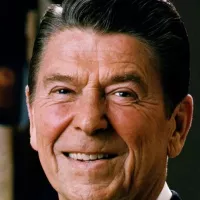
Ronald Reagan the th U S President - was a...
The United States of America is a federal republic primarily...

Ruth Bader Ginsburg was an American lawyer and Supreme Court...
Trending

4 hours ago Keke Palmer Jokes About Future Sports Parenting and Celebrates Ebony Power 100 Inclusion

4 hours ago San Francisco 49ers Announce Key Roster Updates Before Matchup Against Seattle Seahawks

4 hours ago Nick Bosa Reveals Foster Baby While Sharing Romantic Moment With Girlfriend Ella Ailiff
4 hours ago Security Guard Killed and Woman Injured in South Seattle Nightclub Drive-By Shooting

4 hours ago Marissa Ayers Announces Major Life Change Amid Jaxson Dart's Injury Recovery
4 hours ago Jacoby Brissett Analyzed as Fantasy Football Quarterback Value Option for Week 5
Popular

Ken Paxton is an American politician and lawyer serving as...

Jameis Winston is an American football quarterback currently playing for...

Cristiano Ronaldo widely considered one of the greatest footballers captains...
Michael Joseph Jackson the King of Pop was a highly...

Elon Musk is a visionary entrepreneur and engineer known for...

Shakira Isabel Mebarak Ripoll the Queen of Latin Music is...