


Cincinnati, Ohio, founded in 1788, is the most populous city in Hamilton County and the third-largest in Ohio, with a population of 309,317 as of 2020. Situated at the confluence of the Licking and Ohio rivers, it serves as the economic and cultural center of the Cincinnati metropolitan area, which is the most populous in Ohio and the 30th-largest in the US, boasting over 2.3 million residents.
1900: Population of Prussian Background
By 1900, more than 60 percent of Cincinnati's population was of Prussian background.


1903: Completion of the Ingalls Building
In 1903, the Ingalls Building was completed in Cincinnati, marking an early ambitious project in the 20th century.
1911: Cincinnati Park Board Established
In 1911, the Cincinnati Park Board was established with the purchase of 168 acres of land.
1915: Ashtabula Adopts Electoral System
Starting with Ashtabula in 1915, several major cities in Ohio adopted this electoral system, which had the practical effect of reducing ward boss and political party power.
1917: Cincinnati Subway Voted for Construction
In 1917, citizens voted to spend $6 million to build the Cincinnati Subway.
1918: Worthmore Canning
Since 1918, Worthmore, the only remaining commercial canner of mock turtle soup, has produced it in Cincinnati.
1919: Reds Win World Series
The Cincinnati Reds won a World Series title in 1919.
1920: Cincinnati Subway Construction Delayed
World War I delayed commencement of the Cincinnati Subway's construction until 1920.
March 31, 1922: Ohio Flood Stage was 50 feet
From 1899 to March 31, 1922, the Ohio flood stage was 50 feet.
April 1, 1922: Ohio Flood Stage Set at 52 feet
On April 1, 1922, the Ohio flood stage at Cincinnati was officially set at 52 feet, as measured from the John A. Roebling Suspension Bridge.
1923: Reform Movement Arises
In 1923, a reform movement arose which ended machine rule, led by Murray Seasongood.
1924: Ballot Initiatives Replace Ward System
In 1924, ballot initiatives were used to replace the ward system with the current at-large system, resulting in a smaller council hiring a professional city manager.
1924: City Council System Change
Prior to 1924, Cincinnati city council members were elected through a system of wards, which was then changed due to corruption from partisan rule.
1929: Cincinnati Subway Construction Stalled
Cincinnati Subway's construction stalled after the Wall Street Crash of 1929.
1934: Record high temperature
In 1934, specifically on July 21 and 22, Cincinnati recorded a record high temperature of 108 °F (42 °C).
January 26, 1937: All-time high water mark crested.
On January 26, 1937, the Ohio River reached its all-time high water mark of 79 feet 11+7⁄8 inches in Cincinnati.
1937: Ohio River Flood
In 1937, Cincinnati experienced one of the worst floods in the nation's history, devastating many areas along the Ohio valley. Protective flood walls were later built.
1939: Contemporary Arts Center Established
The Contemporary Arts Center was established in Cincinnati in 1939 as one of the first contemporary art institutions in the country.
1940: Reds Win World Series
The Cincinnati Reds won a World Series title in 1940.
1950: Last Census Revealing Population Growth
Cincinnati had witnessed population growth, the first such increase since the 1950 census.
1950: Peak Population
In 1950, Cincinnati reached its peak population of 503,998.
1951: WCET Channel 48 License
In 1951, WCET channel 48, now known as CET, received License #1, becoming the United States' oldest licensed public television station.
1955: The Cincinnati Herald Founded
In 1955, Gerald Porter founded The Cincinnati Herald, a weekly African American newspaper.
1956: The Edge of Night Features Cincinnati
From 1956, the Cincinnati skyline was prominently featured in the opening and closing sequences of the CBS/ABC daytime drama "The Edge of Night", serving as the stand-in for the show's setting, Monticello.
1957: Proportional Representation System
From 1924 to 1957, the council was elected by proportional representation and single transferable voting.
1957: Opposition to Proportional Representation
In 1957, opponents of proportional representation fanned fears of black political power in an effort to overturn the charter.
1957: Council Position Elections
In 1957, overturning the charter meant all candidates had to run in a single race for the nine city council positions.
1957: Cincinnati Royals in the NBA
In 1957, the Cincinnati Royals competed in the National Basketball Association.
1962: The Filet-O-Fish Creation
In 1962, the Filet-O-Fish was created by Lou Groen, the owner of the first McDonald's franchise in the Cincinnati area, to cater to Catholic patrons who abstained from meat on Fridays.
1963: Last Women's Professional Golf Event
The 2022 Kroger Queen City Championship marked the first time since 1963 that women's professional golf returned to Cincinnati.
June 1967: Avondale Riot of 1967
In June 1967, the Avondale riot occurred following the disputed conviction of Posteal Laskey Jr. and due to police abuse and deteriorating living conditions in Avondale. Crowds filled the streets and threw bottles and firebombs at businesses.
1968: Avondale Riot of 1968
In 1968, the Avondale riot broke out after the assassination of Martin Luther King Jr. in April. A mob smashed store windows and looted or burned merchandise. Two people were killed, at least 220 injured and 260 arrested during the 1968 riot.
1972: Cincinnati Royals Leave NBA
In 1972, the Cincinnati Royals left the National Basketball Association; they are now known as the Sacramento Kings.
1974: Tornado in Metro Cincinnati area
In 1974, a tornado struck the Metro Cincinnati area.
1975: Reds Win World Series
The Cincinnati Reds won a World Series title in 1975, during the era of The Big Red Machine.
1976: Reds Win World Series
The Cincinnati Reds won a World Series title in 1976, during the era of The Big Red Machine.
January 18, 1977: Record low temperature
On January 18, 1977, Cincinnati recorded a record low temperature of −25 °F (−32 °C).
1977: Jerry Springer as Mayor
In 1977, Jerry Springer, later a television talk show host, was chosen to serve one year as mayor of Cincinnati.
1978: The Great Blizzard of 1978
In 1978, Cincinnati experienced the Great Blizzard.
1979: Cincinnati Open Relocation
Since 1979, the Cincinnati Open, an international tennis tournament, has been held at the Lindner Family Tennis Center in suburban Mason.
1980: The Edge of Night Changes Skyline
In 1980, the Cincinnati skyline was replaced by the Los Angeles skyline in the opening and closing sequences of the CBS/ABC daytime drama "The Edge of Night".
1982: Bengals Super Bowl Appearance
In 1982, the Bengals made a Super Bowl appearance.
1987: Cincinnati Zoo Designated National Historic Landmark
In 1987, the Cincinnati Zoo & Botanical Garden was appointed as a National Historic Landmark.
1987: Top Vote-Getter as Mayor
Starting in 1987, the top vote-getter in the city council election was automatically selected as mayor.
1988: Bicentennial Commons park built with 'Flying Pigs' sculpture
In 1988, Cincinnati built Bicentennial Commons park and commissioned Andrew Leicester to create a sculpture featuring four steamboat smokestacks topped with winged pigs, which eventually became a city symbol.
1989: Bengals Super Bowl Appearance
In 1989, the Bengals made a Super Bowl appearance.
1990: Cincinnati Cyclones Founded
In 1990, the Cincinnati Cyclones, a minor league hockey team, were founded.
1990: Reds Win World Series
The Cincinnati Reds won a World Series title in 1990.
1992: Cincinnati Crime Rates
By 1992, Cincinnati's crime rates were at a certain level.
1994: Notable snowstorm in 1994
In 1994, there was a notable snowstorm in Cincinnati.
1995: Lowest Crime Rate Since 1992
By 1995, Cincinnati's overall crime rate had reached its lowest point since 1992, but with more murders and rapes.
1996: The Cincinnati Herald Purchased
In 1996, Sesh Communications purchased The Cincinnati Herald.
1996: Sales Tax Increase Approved
In 1996, a sales tax increase was passed in Hamilton County to fund Paycor Stadium and Great American Ball Park.
1998: "Don't Trash the 'Nati"
In 1998, Keep Cincinnati Beautiful introduced the catchphrase "Don't Trash the 'Nati" as part of a litter-prevention campaign.
1999: Tornado in Metro Cincinnati area
In 1999, a tornado struck the Metro Cincinnati area.
1999: Notable snowstorm in 1999
In 1999, there was a notable snowstorm in Cincinnati.
1999: Mayor Elected Separately
Starting in 1999, the mayor was elected separately in a general at-large election for the first time, reducing the city manager's role.
2000: Paycor Stadium Opens
In 2000, Paycor Stadium opened in Cincinnati, funded by a sales tax increase passed in 1996.
April 2001: Racially Charged Riots
In April 2001, racially charged riots occurred in Cincinnati after police fatally shot Timothy Thomas, an unarmed black man. An agreement was made for community-oriented policing.
2001: Cincinnati Riots
Before the riots of 2001, Cincinnati's overall crime rate had been dropping steadily.
2001: Jean-Robert de Cavel Opens New Restaurants
Since 2001, Jean-Robert de Cavel, the former head chef of The Maisonette, has opened four new restaurants in the Cincinnati area.
2003: Great American Ball Park Opens
In 2003, Great American Ball Park opened, funded by a sales tax increase passed in 1996.
2004: Opening of the National Underground Railroad Freedom Center
In 2004, the National Underground Railroad Freedom Center opened along the riverfront. It is based on the history of the Underground Railroad, recognizing Cincinnati's role in helping slaves escape to freedom by crossing the Ohio River.
2004: National Underground Railroad Freedom Center Completed
In 2004, the National Underground Railroad Freedom Center was completed along Freedom Way in Downtown Cincinnati, honoring the city's involvement in the Underground Railroad.
2005: The Maisonette Closes
In 2005, The Maisonette in Cincinnati, which had been Mobil Travel Guide's longest-running five-star restaurant in the United States for 41 consecutive years, closed.
2006: Fountain Square Renovation
Fountain Square in Downtown Cincinnati was renovated in 2006.
2007: Notable snowstorm in 2007
In 2007, there was a notable snowstorm in Cincinnati.
2010: Cyclones Win Kelly Cup Finals
In 2010, the Cincinnati Cyclones won the Kelly Cup Finals, their second championship in three seasons.
January 2011: Queen City Square Opened
In January 2011, Queen City Square opened. It is the tallest building in Cincinnati and the third tallest in Ohio.
October 2011: Domestic Violence Resolution
In October 2011, the Cincinnati Council became the first local government in the United States to adopt a resolution recognizing freedom from domestic violence as a fundamental human right.
2011: Crosstown Shootout Brawl
In 2011, the Crosstown Shootout, the rivalry game between the Cincinnati Bearcats and Xavier Musketeers, erupted in an on-court brawl that resulted in multiple suspensions.
2011: Opera Fusion: New Works Project Sponsorship
Since 2011, the Cincinnati Opera and the University of Cincinnati College-Conservatory of Music have partnered to sponsor the Opera Fusion: New Works project, a program for composers and librettists to workshop an opera.
2012: Cincinnati Hosts the World Choir Games
In 2012, Cincinnati hosted the World Choir Games, adopting the mantra "Cincinnati, the City that Sings!"
2012: Tornado in Metro Cincinnati area
In 2012, a tornado struck the Metro Cincinnati area.
2012: Transit Usage
In 2012, less than 80,000 trips were made with transit on an average day in the Cincinnati region.
2013: The Banks Phase 1A Completed
In early 2013, Phase 1A of The Banks project was completed and 100% occupied.
2015: Households without a Car
In 2015, 19.3 percent of Cincinnati households lacked a car.
2015: Cincinnati Hosts USITT 2015 Conference and Stage Expo
In 2015, Cincinnati hosted the USITT 2015 Conference and Stage Expo at the Duke Energy Convention Center, attracting over 5,000 students, educators, theatrical designers, performers, and other personnel to the city.
2015: Shooting of Samuel DuBose
In 2015, Samuel DuBose was fatally shot by a University of Cincinnati police officer after a traffic stop, leading to protests by the Black Lives Matter movement.
2015: Gross Domestic Product
In 2015, the gross domestic product for the Cincinnati region was $127 billion.
April 9, 2016: FC Cincinnati Home Debut
On April 9, 2016, FC Cincinnati made its home debut in the USL before a crowd of more than 14,000 fans.
May 14, 2016: FC Cincinnati Breaks Attendance Record
On May 14, 2016, FC Cincinnati broke the all-time USL attendance record with a crowd of 23,375 in its 1–0 victory against the Pittsburgh Riverhounds.
September 9, 2016: The Connector streetcar line opened
The Connector streetcar line in Downtown and Over-the-Rhine opened for service on September 9, 2016.
September 2016: Cincinnati Bell Connector Began
The Cincinnati Bell Connector construction began in September 2016.
2016: Households without a Car
In 2016, 21.2 percent of Cincinnati households lacked a car, compared to a national average of 8.7 percent.
2016: Fastest Growing Midwestern Economic Capital
In 2016, Cincinnati had the fastest-growing Midwestern economic capital.
2016: Cincinnati Public Library Ranked Second Largest
In 2016, the Cincinnati and Hamilton County Public Library system was the second largest in the nation based on the number of holdings.
2016: Legal proceedings following shooting of Samuel DuBose
In late 2016, the legal proceedings resulting from the shooting of Samuel DuBose in 2015 became a recurring focus of national news media.
January 2017: Cincinnati Declared a Sanctuary City
In January 2017, Cincinnati's mayor declared the city a sanctuary city.
2017: Tornado in Metro Cincinnati area
In 2017, a tornado struck the Metro Cincinnati area.
May 29, 2018: FC Cincinnati Awarded MLS Bid
On May 29, 2018, FC Cincinnati was awarded an MLS bid.
2018: FC Cincinnati Joins MLS
In 2018, MLS announced the inclusion of FC Cincinnati as the city's third professional sports team.
2019: Cincinnati Christian University Closing
In 2019, Cincinnati Christian University permanently closed its doors in Cincinnati.
2019: FC Cincinnati Joins Major League Soccer
In 2019, FC Cincinnati became a Major League Soccer franchise.
2019: FC Cincinnati Joins MLS
In 2019, FC Cincinnati moved to Major League Soccer (MLS) for the season.
2020: Census Data
According to the 2020 census, there were 309,317 people, 138,696 households, and 62,319 families residing in Cincinnati. The racial makeup was 50.3% White and 41.4% African American.
2020: Cincinnati population
In 2020, Cincinnati had a population of 309,317 according to the census.
2020: Population Increase
In 2020, the census reported a population of 309,317, representing a 4.2% increase since 2010, marking the first increase since 1950.
2021: Cincinnati Television Market Ranking
As of the 2021 television season, Cincinnati was ranked as the 36th largest television market in the United States, according to Nielsen Media Research.
2021: FC Cincinnati Moves to TQL Stadium
In 2021, FC Cincinnati moved to TQL Stadium in the West End neighborhood.
2021: Opening of TQL Stadium
In 2021, TQL Stadium opened on Cincinnati's west end.
2021: Notable snowstorm in 2021
In 2021, there was a notable snowstorm in Cincinnati.
January 4, 2022: Aftab Pureval Assumes Office
On January 4, 2022, Aftab Pureval assumed office as the 70th mayor of Cincinnati.
September 2022: Unemployment Rate
As of September 2022, the unemployment rate in Cincinnati is 3.3%, below the national average.
September 2022: Cincinnati Radio Market Ranking
As of September 2022, Cincinnati was the 33rd largest radio market in the United States, with an estimated 1.8 million listeners aged 12 and above.
2022: The Connector ridership
In 2022, The Connector streetcar had an annual ridership of over 846,000.
2022: Bengals Super Bowl Appearance
In 2022, the Bengals made a Super Bowl appearance.
2022: Kroger Queen City Championship Debut
In 2022, the Kroger Queen City Championship debuted on the LPGA Tour at TPC River's Bend.
2023: Cincinnati Homicides
Cincinnati had 71 homicides in 2023, down from 78 in 2022.
2023: Chatfield College Closing
In 2023, Chatfield College permanently closed its doors in Cincinnati.
2023: Cincinnati metropolitan area population
In the 2023 census estimates, the Cincinnati metropolitan area had a population of 2,271,479, making it the 30th-largest metropolitan statistical area in the country.
March 2024: Sale of Cincinnati Southern Railway
In March 2024, the Cincinnati Southern Railway was sold to Norfolk Southern. It was the only municipally owned interstate railway in the United States until then.
2024: Subway Construction Costs Estimated in 2024
In 1917, the Cincinnati Subway Voted for Construction was $6 million, which is about $119 million in 2024.
2024: GDP Equivalent
In 2015, the gross domestic product for the Cincinnati region was equivalent to ~$164 billion in 2024.
2025: Notable snowstorm in 2025
In 2025, there was a notable snowstorm in Cincinnati.
2026: Notable snowstorm in 2026
In 2026, there was a notable snowstorm in Cincinnati.
Mentioned in this timeline
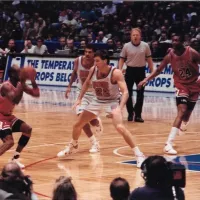
Basketball is a team sport played on a rectangular court...
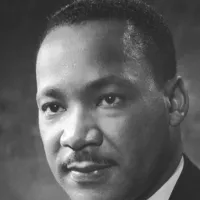
Martin Luther King Jr was a pivotal leader in the...

McDonald's Corporation is a globally recognized American fast-food chain As...

Kroger is an American retail corporation that runs supermarkets and...
The United States of America is a federal republic primarily...

CBS or CBS Broadcasting Inc is a major American commercial...
Trending
4 hours ago Vivek Ramaswamy's Nuclear Startup Atlas Atomics Reaches $1.9 Billion Valuation

4 hours ago José Mourinho Defends Kylian Mbappé Against Ridiculous Criticism at Real Madrid
4 hours ago Oregon QB Dante Moore Ruled Out Against UCLA; Dylan Raiola Named Starter

4 hours ago Robert Lewandowski's Team Secures Remarkable Comeback Win in Major League Soccer
4 hours ago Jimmy Kimmel Live Announces Star-Studded Guest Lineup for October 12-16
5 hours ago Marshall Manning Receives Multiple College Football Scholarship Offers
Popular

Ken Paxton is an American politician and lawyer serving as...

Cristiano Ronaldo widely considered one of the greatest footballers captains...

Michael Joseph Jackson the King of Pop was a highly...

Elon Musk is a visionary entrepreneur and engineer known for...

Shakira Isabel Mebarak Ripoll the Queen of Latin Music is...
Bernie Sanders is a prominent American politician and the senior...