History of Interpol in Timeline


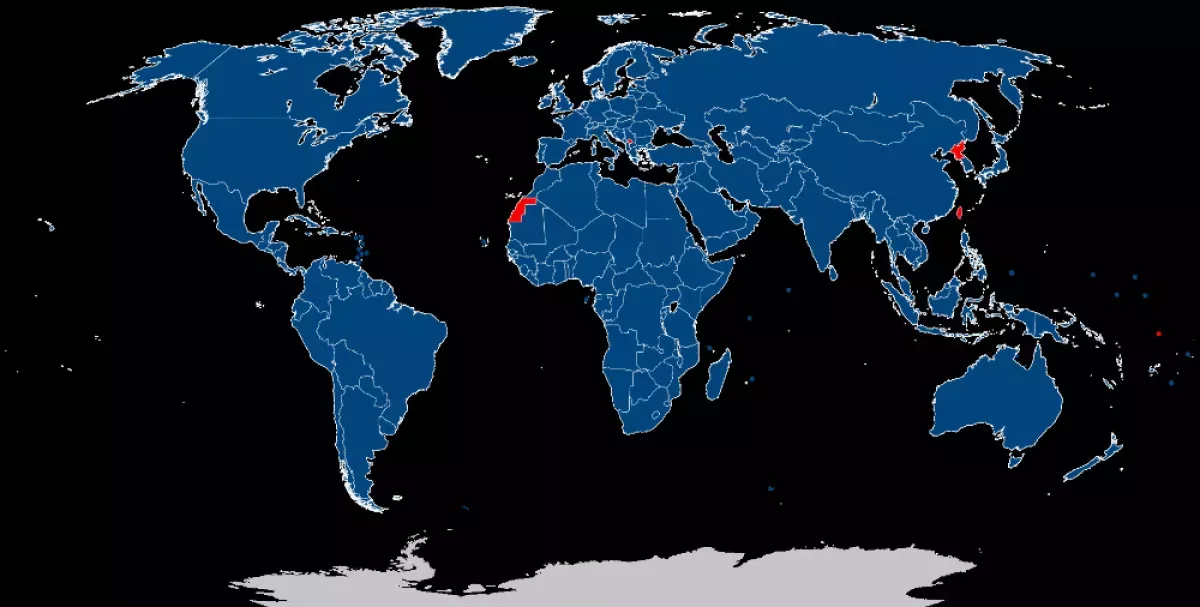
Interpol, the International Criminal Police Organization, is the world's largest international police organization. It facilitates worldwide police cooperation and crime control among its 196 member states. Headquartered in Lyon, France, Interpol operates through a network of National Central Bureaus in each member country and seven regional bureaus worldwide. Its primary function is to enable cross-border police collaboration to combat international crime.
5 hours ago : Interpol Unveils 'Wings On Fire' in Albuquerque: A Punchy New Track Debut
Interpol debuted their new song, 'Wings On Fire,' in Albuquerque, showcasing a punchy and energetic sound. Fans eagerly anticipate the studio version.


1904: Anti-Anarchist Conference follow up meeting in St. Petersburg
In 1904, the follow up meeting of the 1898 Anti-Anarchist Conference of Rome in St. Petersburg did not yield results in creating a formal structure for addressing the international anarchist movement.
1914: International Criminal Police Congress held in Monaco
In 1914, the International Criminal Police Congress was held in Monaco, where diplomats and legal officials from two dozen countries discussed international collaboration in criminal investigations, the sharing of investigative techniques, and extradition procedures.
1922: International Police Conference in New York City
In 1922, the United States attempted a similar initiative through the International Police Conference in New York City, but it failed to garner international support.
September 1923: Organization founded as the International Criminal Police Commission (ICPC)
In September 1923, the organization known today as Interpol was founded as the International Criminal Police Commission (ICPC) at the close of a five-day International Police Congress in Vienna.
1923: International Criminal Police Commission (ICPC) founded
In 1923, a new initiative was undertaken at an International Criminal Police Congress in Vienna. The 22 delegates agreed to found the International Criminal Police Commission (ICPC), the direct forerunner of Interpol, based in Vienna. Also in 1923, wanted person notices were first published in the ICPCs International Public Safety Journal.
1928: The United Kingdom joined ICPC
In 1928, the United Kingdom joined the International Criminal Police Commission (ICPC).
1934: ICPC's membership more than doubled to 58 nations
By 1934, the ICPC's membership more than doubled to 58 nations.
1938: ICPC came under Nazi control
In 1938, the International Criminal Police Commission (ICPC) came under Nazi control, and its headquarters were located in the same building as the Gestapo.
1938: The United States joined Interpol
In 1938, the United States joined Interpol, although a U.S. police officer unofficially attended the 1923 congress.
November 29, 1941: Interpol had offices at Am Kleinen Wannsee 16
On November 29, 1941, Interpol had offices at Am Kleinen Wannsee 16.
1942: ICPC headquarters moved to Berlin
In 1942, the commission’s headquarters were eventually moved to Berlin.
1945: End of ICPC Nazi control
At the end of World War II in 1945, the period of Nazi control over the ICPC ended.
1946: Telegraphic address used since 1946
The telegraphic address of the International Criminal Police Commission (ICPC) was used since 1946.
1950: Adoption of the current Interpol emblem
The current emblem of Interpol was adopted in 1950 and includes the following elements.
1951: Reference to the 1951 Refugee Convention
The Centre for Peace Studies created recommendations for Interpol, in particular, to delete Red Notices and Diffusions for people who were granted refugee status according to 1951 Refugee Convention issued by their countries of origin.
1956: ICPC adopted new constitution and the name Interpol
In 1956, the International Criminal Police Commission (ICPC) adopted a new constitution and the name Interpol, which was derived from its telegraphic address that had been in use since 1946.
1967: Headquarters moved to Saint-Cloud
In 1967, Interpol's headquarters were established in Saint-Cloud, a Parisian suburb.
1968: Dickopf elected as the president of Interpol
In 1968, Dickopf was elected as the president of Interpol.
1972: Dickopf maintained his post until 1972
Despite knowing his former Nazi connections, Dickopf maintained his post as president of Interpol until 1972.
September 1984: Interpol transfers recognition to the PRC
In September 1984, after the People's Republic of China was seated as "China" in the UN, Interpol transferred its recognition from the ROC to the PRC.
1989: Headquarters moved to Lyon
In 1989, Interpol's headquarters were moved to their present location in Lyon.
1997: Start of Uyghur detention and deportation cases
Since 1997, 1,546 cases from 28 countries of detention and deportation of the Uyghurs were recorded.
2004: French Court of Audit as Interpol's external auditors
From 2004, Interpol's external auditors was the French Court of Audit.
2004: Interpol opened a Special Representative Office to the UN in New York City
In 2004, Interpol opened a Special Representative Office to the UN in New York City.
2006: Manuel Rosales, Venezuelan presidential candidate
Manuel Rosales was a candidate during the 2006 Venezuelan presidential election.
January 2008: Jackie Selebi resigned as president of Interpol
In January 2008, Jackie Selebi resigned as president of Interpol after being charged with corruption.
October 2008: Khoo Boon Hui appointed president
In October 2008, Singaporean Khoo Boon Hui was appointed as president, replacing Jackie Selebi.
2008: UNHCR points to the problem of arrests of refugees on the request of INTERPOL
In 2008, the office of the United Nations High Commissioner for Refugees pointed to the problem of arrests of refugees on the request of INTERPOL in connection with politically motivated charges.
2009: Interpol opened a Special Representative Office to the EU in Brussels
In 2009, Interpol opened a Special Representative Office to the EU in Brussels.
2009: Manuel Rosales flees to Peru
In 2009, Manuel Rosales, a politician who opposed Hugo Chavez, fled to Peru and was subject to a red alert on charges of corruption for two weeks.
2009: Interpol began issuing travel documents
Interpol began issuing its own travel documents in 2009 with hopes that nations would remove visa requirements for individuals travelling for Interpol business, thereby improving response times.
July 2010: Selebi found guilty of corruption
In July 2010, Jackie Selebi was found guilty of corruption by the South African High Court in Johannesburg for accepting bribes.
November 2010: Office of the Auditor General of Norway replaced the French Court of Audit
In November 2010, the Office of the Auditor General of Norway replaced the French Court of Audit as Interpol's external auditor for a three-year term.
2010: OSCE Parliamentary Assembly declaration in Oslo
In 2010, the OSCE Parliamentary Assembly adopted a declaration in Oslo criticizing some OSCE member States for abusing international investigation mechanisms and urged them to support Interpol reform.
September 2011: Second Command and Coordination Centre added in Buenos Aires
In September 2011, a second Interpol Command and Coordination Centre was added in Buenos Aires.
November 8, 2012: Mireille Ballestrazzi elected first female president
On November 8, 2012, Mireille Ballestrazzi was elected as the first female president of the organization.
2012: OSCE Parliamentary Assembly declaration in Monaco
In 2012, the OSCE Parliamentary Assembly adopted a declaration in Monaco criticizing some OSCE member States for abusing international investigation mechanisms and urged them to support Interpol reform.
2013: Criticism over Interpol's deals with private sector bodies
In 2013, Interpol faced criticism over its multimillion-dollar deals with private sector bodies due to lack of transparency and potential conflicts of interest.
2013: Incident Response Teams deployed eight times
In 2013, Interpol's Incident Response Teams (IRTs) were deployed eight times to offer expertise and database access in cases of international disasters, terrorist attacks, or assassinations.
2013: Interpol Foundation for a Safer World created
In 2013, the Interpol Foundation for a Safer World was created to enhance collaboration between Interpol and the private sector.
2013: OSCE Parliamentary Assembly declaration in Istanbul
In 2013, the OSCE Parliamentary Assembly adopted a declaration in Istanbul criticizing some OSCE member States for abusing international investigation mechanisms and urged them to support Interpol reform.
2013: PACE's Istanbul Declaration cites cases of political prosecution
In 2013, the PACE's Istanbul Declaration of the OSCE cited specific cases of prosecution, including those of Petr Silaev, William Browder, Ilya Katsnelson, Ales Michalevic, and Bohdan Danylyshyn.
January 2014: Council of Europe criticizes Interpol's file control commission
In January 2014, the resolution of the Parliamentary Assembly of the Council of Europe criticized the mechanisms of operation of the Commission for the Control of Interpol's files, in particular, non-adversarial procedures and unjust decisions.
July 2014: Dmytro Yarosh placed on Interpol's wanted list
On 25 July 2014, Dmytro Yarosh was placed on Interpol's international wanted list at the request of Russian authorities.
September 2014: Third Command and Coordination Centre opened in Singapore
In September 2014, a third Interpol Command and Coordination Centre was opened in Singapore.
December 2014: Liquidation of a sabotage and reconnaissance group in Ukraine
In December 2014, the Security Service of Ukraine (SBU) liquidated a sabotage and reconnaissance group led by a former agent of the Ukrainian Bureau of INTERPOL.
January 2015: Viktor Yanukovych placed on Interpol's wanted list
On 12 January 2015, Viktor Yanukovych was placed on the Interpol wanted list as a suspect by the Ukrainian government.
April 2015: Alondra Díaz-Nuñez apprehended in Mexico
In April 2015, Alondra Díaz-Nuñez was apprehended in Guanajuato City, Mexico, being mistaken for a missing American teenager, leading to criticism of Interpol.
April 2015: Interpol Global Complex for Innovation (IGCI) officially opened
In April 2015, Interpol's Global Complex for Innovation (IGCI) was officially opened in Singapore to act as its research and development facility, and a place of cooperation on digital crimes investigations.
May 2015: PACE Committee hearing in Yerevan on Interpol abuse
In May 2015, the PACE Committee on Legal Affairs and Human Rights organized a hearing in Yerevan regarding Interpol abuse, allowing representatives of NGOs and Interpol to speak.
July 2015: Interpol organized a session of the Working Group on the Processing of Information
From 1 to 3 July 2015, Interpol organized a session of the Working Group on the Processing of Information to verify information processing mechanisms.
July 2015: International arrest warrant against Viktor Yanukovych suspended
On 16 July 2015, the international arrest warrant against Viktor Yanukovych was suspended pending further review, after an intervention of a British law firm.
2015: Interpol severs ties with private-sector bodies
After the 2015 FIFA scandal, Interpol severed ties with all the private-sector bodies that evoked criticism, and has adopted a new and transparent financing framework.
2015: HSBC CEO departure from the Interpol Foundation board
In 2015, Interpol's president obtained the departure of HSBC CEO from the Interpol Foundation board after the Swiss Leaks allegations.
November 2016: Meng Hongwei elected president
In November 2016, Meng Hongwei was elected president during the 85th Interpol General Assembly.
2016: Taiwan criticized Interpol for turning down its application
In 2016, Taiwan criticized Interpol for turning down its application to join the General Assembly as an observer.
September 2017: Stockholm Center for Freedom report on Turkey's weaponization of Interpol
In September 2017, the Stockholm Center for Freedom issued a report stating that Turkey has weaponized Interpol mechanisms.
September 2017: Palestine and the Solomon Islands accepted as members
In September 2017, the organization voted to accept Palestine and the Solomon Islands as members.
February 2018: Salih Muslim briefly detained in Prague
On 25 February 2018, Syrian-Kurd Salih Muslim was briefly detained at Turkey's request in Prague, Czech Republic.
March 2018: Czech authorities dismiss Turkey's request regarding Salih Muslim
On 17 March 2018, the Czech authorities dismissed Turkey's request regarding Salih Muslim as lacking merit.
September 2018: Meng Hongwei reported missing
At the end of September 2018, Meng Hongwei was reported missing during a trip to China.
October 7, 2018: Meng Hongwei resigned
On October 7, 2018, Interpol announced that Meng Hongwei had resigned his post with immediate effect.
November 21, 2018: Kim Jong Yang elected president
On November 21, 2018, Kim Jong Yang was elected president of Interpol.
2018: UAE hosts Interpol General Assembly
In 2018, the United Arab Emirates hosted the Interpol General Assembly, facilitated by their growing influence due to donations.
2018: Meng Hongwei president until 2018
Meng Hongwei, a politician from the People’s Republic of China, was to serve as president until 2018.
2019: Valid Interpol notices in circulation
As of 2019, there were 62,448 valid Red and 12,234 Yellow Interpol notices in circulation.
2019: Interpol's operating income
In 2019, Interpol's operating income was €142 million, with contributions from member countries, voluntary cash contributions, and in-kind contributions.
2020: Andrey Gnyot co-founded the Free Association of Athletes (SOS-BY)
During the 2020–2021 Belarusian protests, Gnyot co-founded the Free Association of Athletes (SOS-BY), bringing together athletes opposed to the Lukashenko regime.
2020: Postponement of Interpol General Assembly due to COVID-19
In 2020, the Interpol General Assembly, scheduled to be held in the UAE, was postponed due to the COVID-19 pandemic.
June 2021: Calls to oppose Al-Raisi's candidacy
In June 2021, French Parliamentarians urged President Emmanuel Macron to oppose the candidacy of the UAE's General Ahmed Nasser Al-Raisi.
October 2021: Complaint submitted to the French Prosecutor in Paris
In October 2021, Al-Raisi faced further opposition, as lawyers submitted a complaint to the French Prosecutor in Paris.
November 2021: Criminal complaint filed against Al-Raisi in Turkey
In November 2021, a Turkish lawyer filed a criminal complaint against Al-Raisi's nomination in Turkey.
November 25, 2021: Ahmed Naser Al-Raisi elected president
On November 25, 2021, Ahmed Naser Al-Raisi was elected as president of Interpol.
2021: Andrey Gnyot co-founded the Free Association of Athletes (SOS-BY)
During the 2020–2021 Belarusian protests, Gnyot co-founded the Free Association of Athletes (SOS-BY), bringing together athletes opposed to the Lukashenko regime.
January 2022: Serbian authorities extradite Ahmed Jaafar Mohamed Ali
On 25 January 2022, Serbian authorities extradited a Bahraini dissident, Ahmed Jaafar Mohamed Ali, despite an injunction from the European Court of Human Rights (ECHR).
October 30, 2023: Andrey Gnyot arrested in Belgrade
On October 30, 2023, Belarusian filmmaker Andrey Gnyot was arrested in Belgrade due to an Interpol warrant at the request of Belarusian authorities.
2023: Interpol member states voiced their support for Taiwan's bid to re-join the organization
In 2023, over 60 Interpol member states voiced their support for Taiwan's bid to re-join the organization.
June 2024: Andrey Gnyot transferred to house arrest
In June 2024, Andrey Gnyot, who was arrested in Belgrade in October 2023, was transferred to house arrest.
November 27, 2025: Lucas Philippe elected president
On November 27, 2025, Lucas Philippe was elected president.
2025: Easing of stricter measures against Russia for Interpol abuse
According to a whistleblower, some of the stricter measures introduced in 2022 against Russia for Interpol abuse were dropped quietly in 2025.
January 2026: Whistleblower reveals Russia's abuse of Interpol
In January 2026, a whistleblower at Interpol provided data revealing that Russia uses Interpol to target critics abroad.
Mentioned in this timeline
Ukraine is a country in Eastern Europe the second-largest on...
Venezuela officially the Bolivarian Republic of Venezuela is a country...
Germany officially the Federal Republic of Germany is located in...
China officially the People's Republic of China PRC is located...
Africa is the second-largest and second-most populous continent home to...
Japan is an East Asian island country located in the...
Trending

2 hours ago Trump to Read Bible Verse Amidst Controversy; 'America Reads the Bible' Event Kicks Off

2 hours ago Lewandowski's Agent Makes Key Move Amidst Barcelona Transfer Signal: Future Uncertain
2 hours ago Dijon: Service Civique, Pétanque and Intergenerational Solidarity Events for Seniors Announced

2 hours ago Troy Baker at 50: Reflecting on Career, Believing His Best Work Is Ahead

3 hours ago Selena Gomez addresses Benny Blanco split rumours, asking for support and clarification.

3 hours ago Joey Fatone Discusses Justin Timberlake's MTV Awards Moment and Solo Career
Popular
William Franklin Graham III known as Franklin Graham is an...

Paula White-Cain is a prominent American televangelist and key figure...
Eric Swalwell is an American lawyer and politician currently serving...

Melania Trump is a Slovenian-American former model who served as...
Viktor Orb n is a prominent Hungarian politician and lawyer...
J D Vance is an American politician and author He...