Major Controversies Surrounding Jared Kushner: A Detailed Timeline


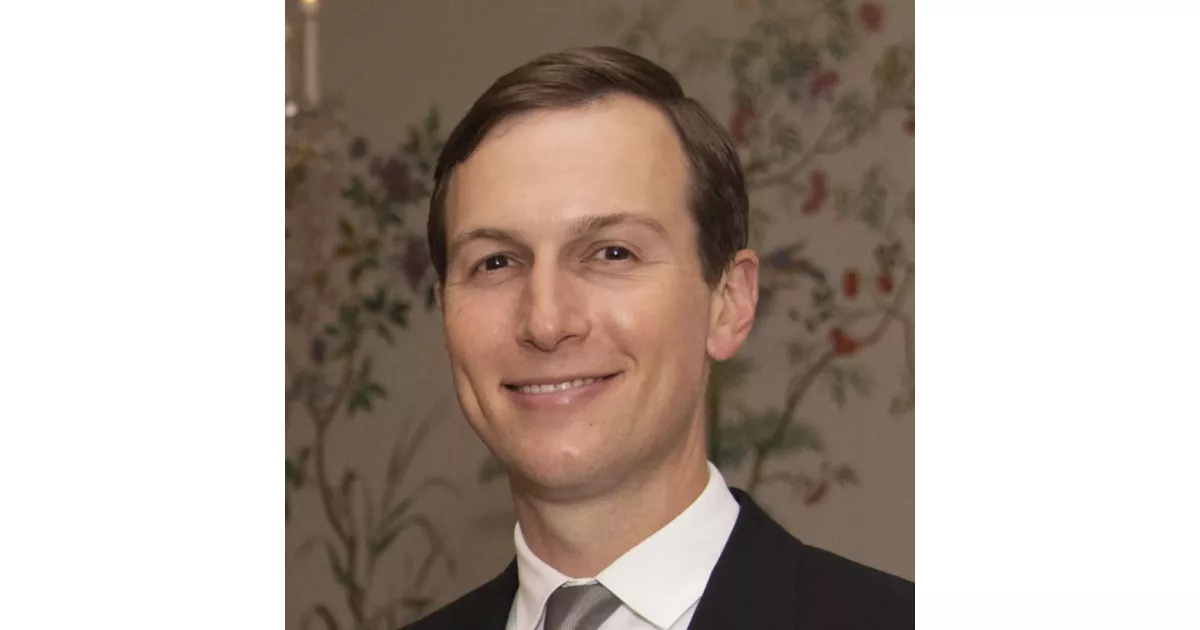
A closer look at the most debated and controversial moments involving Jared Kushner.
Jared Kushner is an American businessman, investor, and former government official. As the son-in-law of Donald Trump, he served as a senior advisor during Trump's presidency from 2017 to 2021. His role included directing the Office of American Innovation. Kushner's involvement in politics stemmed from his family ties to Trump, leveraging his business background to advise on various policy initiatives.
1998: Father's Donation to Harvard
In 1998, Jared Kushner's father donated $2.5 million to Harvard University.


July 2014: Vnesheconombank Under International Sanctions
In July 2014, Vnesheconombank (VEB), the Russian state-owned bank headed by Sergei Gorkov, came under international sanctions. Gorkov met with Jared Kushner in December 2016.
2015: Ivanka Trump's Licensing Deal with Sanei International
In 2015, before Donald Trump secured the Republican nomination, Ivanka Trump began negotiations for a licensing deal between her clothing brand and Sanei International, a company with Japanese government investment, but backed out to avoid conflicts of interest.
June 9, 2016: Meeting at Trump Tower with Russian Lawyer
On June 9, 2016, Jared Kushner, along with Donald Trump Jr. and Paul Manafort, attended a meeting at Trump Tower with Natalia Veselnitskaya, a lawyer connected to the Kremlin, who purportedly offered compromising information on Hillary Clinton. Kushner reportedly found the meeting a "waste of time" and tried to leave early.
June 2016: Offer of Compromising Information on Hillary Clinton
In June 2016, Jared Kushner's brother-in-law, Donald Trump Jr., was reportedly offered compromising information on Hillary Clinton from the Russian government through an agent of Emin Agalarov, which led to a meeting on June 9, 2016.
June 2016: Trump campaign-Russian meeting
In June 2016, there was a Trump campaign-Russian meeting in which Kushner was involved.
July 5, 2016: Kushner Addresses Anti-Semitism Controversy
On July 5, 2016, Jared Kushner responded to criticism regarding a Trump campaign tweet with allegedly anti-Semitic imagery by writing an open letter in the New York Observer, defending against accusations of racism and anti-Semitism. His estranged cousin, Marc, responded on Facebook, emphasizing the importance of renouncing hate, based on his grandparents' history.
August 2016: Nader Offers Help to Trump Campaign
In August 2016, George Nader, an emissary for the crown princes of the UAE and Saudi Arabia, offered help to the Trump presidential campaign. Mueller investigated meetings between Trump associates including Jared Kushner and George Nader.
November 2016: Kushner's Undisclosed Phone Calls with Russian Ambassador
Between April and November 2016, Jared Kushner had two undisclosed phone calls with the Russian ambassador, Sergey I. Kislyak.
December 2016: Meeting Between UAE Officials and Trump Associates
In December 2016, George Nader attended a New York meeting between United Arab Emirates officials and Jared Kushner, Michael Flynn, and Steve Bannon.
December 2016: Kushner's Meeting with Sergei Gorkov of Vnesheconombank
In December 2016, Jared Kushner met with Sergei Gorkov, head of the Russian state-owned bank Vnesheconombank (VEB), which was under international sanctions. While initial reports cited transition-related diplomacy, VEB later claimed the meeting concerned Kushner's family real estate corporation.
December 2016: Kushner's Meeting and Communications Request with Kislyak
In December 2016, Jared Kushner met with Sergey Kislyak, the Russian ambassador. During this month, U.S. intelligence officials reportedly overheard Kislyak relaying a request from Kushner to establish a "secret and secure communications channel" with the Kremlin using Russian diplomatic facilities.
2016: Christie Fired
In 2016, Chris Christie was fired from Donald Trump's election campaign team. Christie claimed that Jared Kushner was responsible for having him fired as revenge for sending his father to prison.
2016: Investigation into Russian Meddling in the 2016 Election
In 2016, Investigations began into Russian meddling in the election and in July 2017, Jared Kushner appeared before the House and Senate intelligence committees in closed session as part of these investigations.
2016: Application for Trademarks
In 2016, Ivanka applied for the trademarks due to concerns about the proliferation of knock off and counterfeits goods being sold under her name in China as her father's presidential campaign progressed.
2016: Kushner's Meetings with Russians
In 2016, Jared Kushner stated that he had four meetings with Russians during the presidential campaign and transition, but that none of these contacts were improper.
2016: Kushner's Use of Private Email for White House Business
In 2016, it was revealed that Jared Kushner used a private email account for official White House business, although his lawyer stated that no classified information was transmitted.
January 2017: Omission of Business Relationships in Financial Disclosure
In January 2017, Jared Kushner did not identify business relationships in his government financial-disclosure form.
January 2017: Questioning of Kushner's Appointment
In January 2017, Jared Kushner's appointment as Trump's senior advisor in the White House was questioned on the basis of a 1967 anti-nepotism law.
January 2017: Kushner Resigns from Kushner Companies
In January 2017, after being appointed as Senior Advisor to Donald Trump, Jared Kushner resigned as head of his family's real-estate firm, Kushner Companies, and partially divested himself of some assets, but he transferred ownership of some of his assets to his brother and to a trust overseen by his mother rather than selling off his assets to a third party or setting up a blind trust with outside management.
January 18, 2017: Kushner Requests Top Secret Security Clearance
On January 18, 2017, Jared Kushner requested Top Secret security clearance, using "Standard Form 86 (SF86): Questionnaire for National Security Positions", omitting all of Kushner's contacts with foreign officials. He quickly updated his filing to notify government officials that he would supplement his disclosure to provide the required information.
January 20, 2017: DOJ Opinion on Anti-Nepotism Law
On January 20, 2017, the Department of Justice's Office of Legal Counsel issued an opinion stating the anti-nepotism law does not apply to appointments within the White House, paving the way for Jared Kushner's role as senior advisor.
April 6, 2017: Chinese Trademarks Approved for Ivanka Trump Brand
On April 6, 2017, the same day that Kushner and Ivanka Trump dined with Chinese president Xi Jinping, the Chinese government provisionally approved three new trademarks for the Ivanka Trump brand, giving it monopoly rights to sell jewelry, bags, and spa services in China.
May 2017: Kushner's Attorney on Calls with Kislyak
In May 2017, Jared Kushner's attorney, Jamie Gorelick, stated that Kushner had participated in "thousands of calls in this time period" and did not recall any with Kislyak, regarding phone calls that happened between April and November 2016.
May 2017: Report on Kushner's Financial Disclosures
In May 2017, the Wall Street Journal reported that Jared Kushner had failed to disclose all required financial information in his security clearance applications, including owing $1 billion in loans. During 2017, Kushner and his wife Ivanka Trump reportedly made $82 million in outside income while serving as senior White House advisors.
June 2017: Kushner's Role in Qatar Blockade
In June 2017, amid a naval blockade of Qatar by Saudi Arabia and the UAE, Jared Kushner reportedly backed the Saudis and Emiratis, undermining efforts to resolve the conflict and pressuring President Trump to support them.
July 2017: Kushner Updates SF86
By July 2017, Jared Kushner had updated his SF86, disclosing contacts with foreign nationals and making government officials aware of the June 2016 Trump campaign–Russian meeting and Kushner's role in it.
July 2017: Kushner Appears Before Intelligence Committees
In July 2017, Jared Kushner appeared before the House and Senate intelligence committees in closed session as part of investigations into Russian meddling in the 2016 election and released a public statement.
August 24, 2017: Kushner Visits Israel and Palestine
On August 24, 2017, Jared Kushner traveled to Israel to meet with Prime Minister Benjamin Netanyahu. Following this, he visited Palestine to meet with President Mahmoud Abbas, aiming to restart the Middle East peace process.
October 2017: Senate Judiciary Committee Requests Documents from Kushner
In October 2017, the Senate Judiciary Committee requested numerous documents from Jared Kushner related to investigations into Russian meddling in the 2016 election.
November 2017: Kushner Interviewed by Mueller's Office
In early November 2017, Jared Kushner was interviewed by investigators from Special Counsel Robert Mueller's office. The interview reportedly focused on former national security advisor Michael Flynn.
May 2018: Trump Reportedly Orders Granting of Top-Secret Clearance
In May 2018, Donald Trump reportedly ordered John Kelly to grant Jared Kushner a top-secret clearance, with Kelly documenting the order in an internal memo.
January 2019: Trump Denies Intervention
In January 2019, Donald Trump told The New York Times that he had not intervened to grant Jared Kushner's security clearances.
February 8, 2019: Ivanka denies Trump's intervention
On February 8, 2019, Jared Kushner's wife Ivanka also denied that Trump had intervened to grant her or Kushner's security clearances.
February 28, 2019: Reports of Trump's Intervention
On February 28, 2019, it was reported that in May 2018 Donald Trump ordered John Kelly to grant Jared Kushner a top-secret clearance, documented in an internal memo. This was reportedly the first time a U.S. president had intervened in such a way.
June 2019: Senate Intelligence Committee Criminal Referral for Kushner
In June 2019, Republicans and Democrats on the Senate Intelligence Committee made a criminal referral of Jared Kushner to federal prosecutors due to concerns that his testimony was contradicted by Richard Gates, a former Trump campaign aide. The referral did not accuse Kushner of making false statements.
June 2019: Kushner Denies Trump is Racist in HBO Interview
In June 2019, during an HBO/Axios interview, Jared Kushner denied that President Trump was a racist and spoke of his family's immigration history. He defended the Trump administration's decision to drastically reduce the number of refugees accepted by the United States.
January 2020: UN Investigation into Jeff Bezos' Hacking
In January 2020, UN investigators advised that Kushner and others in contact with Saudi crown prince Mohammed bin Salman, who was reportedly involved in the hacking of Jeff Bezos's phone through WhatsApp communications, should take measures to protect their communications.
January 2020: Transcript of Kushner's FBI Interview Not Released
In January 2020, the transcript of Jared Kushner's interview with FBI investigators was not publicly released as ordered by a federal judge, with the Justice Department citing the need for a security review.
January 28, 2020: Unveiling of Kushner's peace plan
On January 28, 2020, Donald Trump formally unveiled a peace plan authored by Jared Kushner alongside Israeli prime minister Benjamin Netanyahu. The plan offered Palestinians a conditional path to an independent state but was criticized for favoring Israel. Palestinian representatives were not invited to the unveiling.
March 11, 2020: Kushner helps write Trump's Oval Office address on coronavirus
On March 11, 2020, Kushner helped write the Oval Office address that President Trump gave to the nation on the coronavirus, along with Trump's advisor Stephen Miller. The address was "widely panned". In the address, Trump blamed Europeans and the Chinese for the virus, describing the virus as a "foreign virus".
March 2020: Kushner Sold Stakes in Opportunity Zone Firm
In March 2020, it was reported that Jared Kushner had sold stakes in a firm that benefitted from Opportunity Zone tax breaks, which are incentives for investment in low-income communities that he had promoted as a White House advisor.
March 30, 2020: Report on website for coronavirus testing
On March 30, 2020, The Atlantic reported that a website that Trump had said would help Americans to diagnose themselves and direct them to a nearby coronavirus testing site in a March 13 press conference had been a project between the government and Oscar Health, a company that Kushner had ties with. The website was quickly scrapped.
April 2020: Kushner Uses WhatsApp for Coronavirus Team Communications
During March and April 2020, Jared Kushner reportedly used WhatsApp to communicate with his coronavirus team.
April 2020: Kushner defends administration's response to coronavirus pandemic
In April 2020, Kushner publicly defended the administration's response to the coronavirus pandemic. He said, "The notion of the federal stockpile is that it's supposed to be our stockpile. It's not supposed to be states' stockpiles that they then use."
April 2020: Ventilator shortage and Kushner's team struggles
In April 2020, the Department of Defense revealed a shortage of ventilators in the strategic national stockpile. Kushner described the administration's response to the coronavirus as "a great success story," despite the ongoing challenges. Kushner's team of volunteers struggled to procure PPE. No ventilators were produced from an $86 million contract advised by Kushner's team.
May 2020: Kushner claims coronavirus is under control
In May 2020, Kushner reportedly told those involved in the coronavirus response that the coronavirus was under control and that there would not be a second wave, despite the ongoing pandemic.
June 2020: Coronavirus cases surge in the US and conflicts of interest
By June 2020, coronavirus cases were surging in the United States. It was revealed that businesses owned by the Kushner family obtained coronavirus relief, which raised concerns with potential conflicts of interests due to Kushner's White House role.
August 2020: Kushner reiterates 'success story' claim during pandemic
In August 2020, when 170,000 had died from the coronavirus in the United States, Jared Kushner reiterated his claim from April 2020 that the administration's response had been a "success story."
2020: Trump Expressed Regrets About FIRST STEP Act
According to reporting by Axios in 2020, Trump expressed regrets in private about having followed Jared Kushner's lead in going through with the First Step Act.
May 2021: Kushner's Security Detail Costs
In May 2021, it was reported that Jared Kushner's Secret Service security team accompanied him to Abu Dhabi, United Arab Emirates, incurring US State Department costs of $12,950. The security detail booked 50 "room nights" at Abu Dhabi's Ritz-Carlton hotel between May 5 and 14. Ethics watchdogs raised concerns regarding Kushner's financial connections with the UAE.
2021: Kushner starts Affinity Partners
In 2021, Jared Kushner started Affinity Partners, an investment firm. He sought funds from sovereign wealth funds of Gulf countries, including the Saudi government's Public Investment Fund (PIF), which later invested $2 billion despite internal concerns.
March 31, 2022: Kushner speaks to House Select Committee on January 6 Attack
On March 31, 2022, Jared Kushner voluntarily spoke to the United States House Select Committee on the January 6 Attack for six hours. He was the highest-ranking Trump administration official interviewed to date, as well as the first Trump family member to be interviewed.
June 2, 2022: House Oversight Committee Investigation
On June 2, 2022, the House Oversight Committee opened an investigation into whether Jared Kushner traded on his government position to secure a deal with the Saudi government's Public Investment Fund (PIF) for his investment firm, Affinity Partners.
2023: Chris Christie Criticizes Kushner's Saudi Deal
In 2023, Republican presidential candidate Chris Christie criticized Jared Kushner and Donald Trump for Kushner's deal with Saudi Arabia, questioning why Kushner was sent to the Middle East and highlighting the $2 billion investment from the Saudis to Jared Kushner and Ivanka Trump after Kushner left office.
March 2024: Kushner's Comments on Gaza
In March 2024, Jared Kushner described the Gaza Strip as “valuable waterfront property” and suggested relocating Palestinians to the Negev desert or Rafah while the territory was “cleaned up” during an appearance at the Harvard Kennedy School.
2024: Senate Investigation into Affinity Fund
As of 2024, Jared Kushner's fund, Affinity, had made $157 million in management fees since 2021. The fund is under Senate investigation for possible foreign influence buying ahead of the 2024 election.
2024: Concerns About Payments to Curry Favor with Trump
In 2024, it was suggested that payments to Kushner were meant to curry favor with Donald Trump's family should he retake the White House. The House Oversight Committee Chairman, Kentucky Republican James Comer, said he believes Kushner “crossed the line of ethics” by accepting the investment from Saudi Arabia.
February 28, 2026: US and Israel launch Operation Epic Fury against Iran
On February 28, 2026, following the collapse of nuclear negotiations, the United States and Israel launched a joint military operation against Iran, known as Operation Epic Fury.
March 2026: Lawmakers Seek Information on Kushner's Business Dealings
In March 2026, Representative Robert Garcia and Senator Ron Wyden sent letters to the White House seeking information on Jared Kushner’s business dealings in the Middle East, citing reports that Kushner's private equity firm was soliciting billions of dollars in investments from regional governments while he simultaneously served as a negotiator.
Mentioned in this timeline
Donald John Trump is an American politician media personality and...
Jeff Bezos is an American businessman best known as the...

WhatsApp is a widely-used instant messaging and VoIP service owned...
George Soros is a Hungarian-American investor and philanthropist with a...
Barack Obama the th U S President - was the...
John F Kennedy JFK was the th U S President...
Trending
4 hours ago Alex Eala Aims for Recovery at the Ningbo Open Tennis Tournament
4 hours ago Stephen A. Smith Details Shocking Dinner with Donald Trump and Bill Maher
4 hours ago Ashlyn Krueger Faces Janice Tjen at the WTA Kinoshita Group Japan Open

4 hours ago Winona Ryder Reflects on Early Hollywood Appearance Criticism and Lasting Cultural Impact
4 hours ago Tennis Player Experiences Aggressive Racket Meltdown During Intense Match
5 hours ago Liudmila Samsonova Faces Lilli Tagger in WTA Osaka Round of 32 Match
Popular
Ilhan Omar is a prominent American politician currently serving as...

Ken Paxton is an American politician and lawyer serving as...

Elon Musk is a visionary entrepreneur and engineer known for...

Michael Joseph Jackson the King of Pop was a highly...

Cristiano Ronaldo widely considered one of the greatest footballers captains...

Greta Thunberg is a Swedish climate activist who gained international...