Rise to Success: Career Highlights of Larry Page


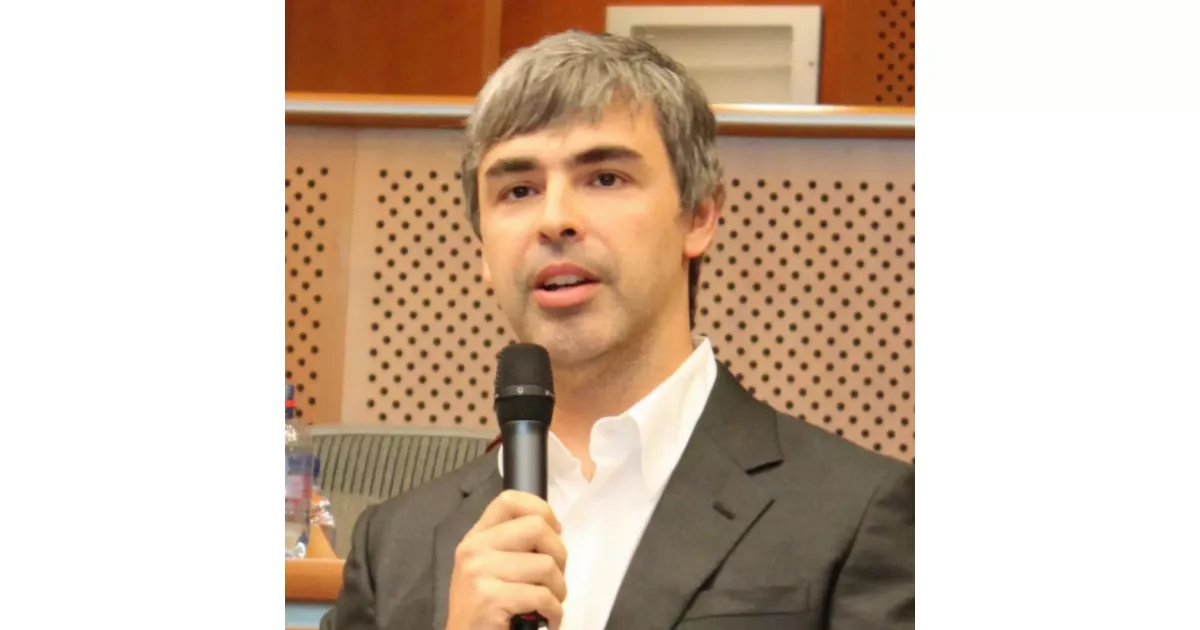
How Larry Page built a successful career. Explore key moments that defined the journey.
Lawrence Edward Page, co-founder of Google alongside Sergey Brin, is a prominent American businessman and computer scientist. As of 2026, Page's estimated net worth is $269 billion, which makes him one of the wealthiest individuals globally. He is best known for his role in creating Google, a transformative force in the world of technology and information access.


1997: CEO of Google
In 1997, Larry Page became the chief executive officer of Google.
1998: Incorporation of Google
In 1998, Larry Page and Sergey Brin incorporated Google, Inc., initially named "Googol", and built the Google search engine in Susan Wojcicki's garage.
1998: Realized Potential of Search Engine
In mid-1998, Larry Page realized the further potential of their project, with 10,000 searches a day.
1999: Experimented with Smaller Servers
In 1999, Larry Page experimented with smaller servers to fit more into each square meter of the third-party warehouses that Google rented.
March 2001: Hired Eric Schmidt as Chairman
In March 2001, Eric Schmidt was hired as chairman of Google, before becoming CEO in August.
August 2001: Stepped down as CEO of Google
In August 2001, Larry Page stepped down as CEO of Google and was succeeded by Eric Schmidt.
2001: Attempt to Fire Project Managers
During his first tenure as CEO, Larry Page attempted to fire all of Google's project managers in 2001.
August 20, 2004: Google's Initial Public Offering
On August 20, 2004, Google underwent its initial public offering (IPO), making Larry Page a billionaire at the age of 30.
2004: Received the Marconi Prize
In 2004, Larry Page received the Marconi Prize along with Sergey Brin for co-creating PageRank, a search ranking algorithm for Google.
2005: Acquisition of Android
In 2005, Larry Page led the acquisition of Android for $50 million to fulfill his ambition to place handheld computers in the possession of consumers.
September 2008: Launch of the T-Mobile G1
In September 2008, T-Mobile launched the G1, the first phone using Android software.
2008: Advised to Explore the World Wide Web
In 2008, Larry Page recalled that his supervisor, Terry Winograd, advised him to explore the mathematical properties of the World Wide Web as a dissertation theme while at Stanford University.
January 2011: Announcement of CEO Transition
Following a January 2011 announcement, Larry Page officially became the chief executive of Google on April 4, 2011.
January 20, 2011: Schmidt Announced End of CEO Tenure
On January 20, 2011, Eric Schmidt announced the end of his tenure as CEO.
April 4, 2011: Became CEO of Google
On April 4, 2011, Larry Page officially became the chief executive of Google.
April 2011: Reassumed CEO Role at Google
In April 2011, Larry Page once again became the CEO of Google.
August 15, 2011: Google's Acquisition of Motorola Mobility
On August 15, 2011, Larry Page announced Google would acquire Motorola Mobility for $12.5 billion. Page explained on Google's blog that the acquisition was to strengthen Google's patent portfolio and protect Android from anti-competitive threats from companies like Microsoft and Apple.
May 2012: Unveiling of the Chromebook
In May 2012, Google, under Larry Page's leadership, unveiled the Chromebook, a laptop running on the Google operating system, ChromeOS.

January 2013: "Project Kennedy" based on "moonshots"
In January 2013 Wired interview, Larry Page used the term "moonshots" to describe ambitious projects which led to Jon Wiley's redesign overhaul codenamed "Project Kennedy".
January 2013: Interview with Wired
In January 2013, Larry Page discussed Google's "10X" mentality in an interview with Wired. He cited YouTube and Android as examples of "crazy" ideas that investors were initially uninterested in, and expressed satisfaction with Google+.
May 2013: Keynote Address at I/O Developers Conference
At the May 2013 I/O developers conference in San Francisco, Larry Page delivered a keynote address where he expressed frustration with negativity in the technology sector and said that the Web isn't advancing as fast as it should be. Page also noted an issue with Microsoft's Outlook program and expressed interest in Burning Man.
September 2013: Launch of Calico Initiative
In September 2013, Larry Page launched Calico, an independent R&D project in biotechnology, with the goal of innovating and improving human health. Art Levinson was appointed as the new division's CEO.
2013: Assets of the Carl Victor Page Memorial Fund
In 2013, Larry Page's family foundation, the Carl Victor Page Memorial Fund, reportedly held assets in excess of a billion dollars at the end of the year.
2013: Absence from Product Launches or Earnings Calls
Since 2013, Larry Page has not presented at product launches or earnings calls. The reorganization into Alphabet was considered a retirement plan allowing Page to relinquish responsibilities over Google while retaining control.
March 2014: TedX Conference Presentation
In March 2014, Larry Page participated in a TedX conference in Vancouver, British Columbia, Canada. The presentation was scripted, and included a demonstration of an artificially intelligent computer program.
October 2014: Management Restructure Announcement
In October 2014, Larry Page announced a major management restructure to focus on ambitious projects like Google X, Google Fiber, Nest Labs, and Calico. He maintained his role as the unofficial "chief product officer."
November 2014: Donation to Ebola Virus Relief Effort
In November 2014, Larry Page and his wife donated $15 million through the Carl Victor Page Memorial Fund to aid the effort against the Ebola virus epidemic in West Africa.
November 2014: Interview on CEO Role
In a November 2014 interview, Larry Page stated that he prioritized maintaining a "deep knowledge" of Google's products and projects as CEO, and that his job was to push people ahead.
2014: Sale of Motorola Mobility to Lenovo
In 2014, Larry Page sold Motorola Mobility to Lenovo for $2.9 billion, resulting in a $9.5 billion loss in value over two years for Google.
July 2015: CEO of Alphabet Inc.
In July 2015, Larry Page became the CEO of Alphabet Inc., Google's newly formed parent organization.
August 10, 2015: Announcement of Alphabet Inc. Restructuring
On August 10, 2015, Larry Page announced that Google had restructured into a number of subsidiaries of a new holding company known as Alphabet Inc, with Page becoming CEO of Alphabet Inc and Sundar Pichai assuming the position of CEO of Google Inc.
2015: Absence from Press Conferences
Since 2015, Larry Page has not participated in press conferences. The reorganization into Alphabet was considered a retirement plan allowing Page to relinquish responsibilities over Google while retaining control.
December 3, 2019: Stepping Down as Alphabet CEO
On December 3, 2019, Larry Page announced his resignation from the position of Alphabet CEO. He was replaced by Google CEO Sundar Pichai, who continued in his role as Google CEO. Page and Sergey Brin stated that Alphabet and Google no longer needed two CEOs and a President.
December 4, 2019: Stepped Down From Executive Positions
On December 4, 2019, Larry Page and Sergey Brin stepped down from all executive positions and day-to-day roles within Alphabet Inc.
September 2022: Merger of Kitty Hawk into Wisk Aero
In September 2022, Kitty Hawk, an aerial vehicle startup where Larry Page was a strategic backer, was merged into the Wisk Aero joint venture with Boeing, ceasing all activities as a separate entity.
2023: Foundation of Dynatomics
In 2023, Larry Page founded Dynatomics, a Palo Alto-based startup, that utilizes artificial intelligence to optimize product manufacturing processes.
December 2025: Termination or relocation of companies holding assets
In December 2025, Larry Page and Sergey Brin, worth a combined $520 billion, terminated or moved out of California sixty limited liability companies that hold their assets.
Mentioned in this timeline

Founded in by Mark Zuckerberg and his Harvard roommates Facebook...
Google LLC is a multinational technology corporation specializing in a...
Lego is a line of plastic construction toys created by...
Jeffrey Epstein was an American financier and convicted sex offender...
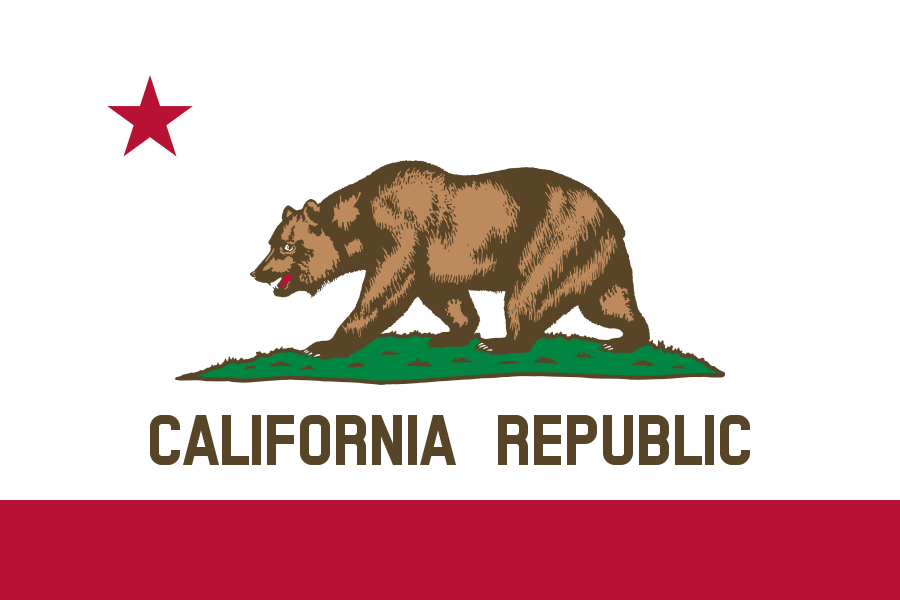
California is a U S state on the Pacific Coast...
Richard Branson is a prominent English business magnate best known...
Trending
3 hours ago 49ers Open Practice Window for Wide Receiver Christian Kirk
3 hours ago Cade Smith Secures Crucial Six Outs in Guardians' ALCS Game 3 Victory

4 hours ago Cole Palmer Key Figure in Chelsea's Tactical Clash Against Everton
3 hours ago Analysis of America's Global Standing and Trump's Political Legacy
4 hours ago Sotomayor and Gorsuch Condemn Immigration Prosecution as Constitutional Absurdity
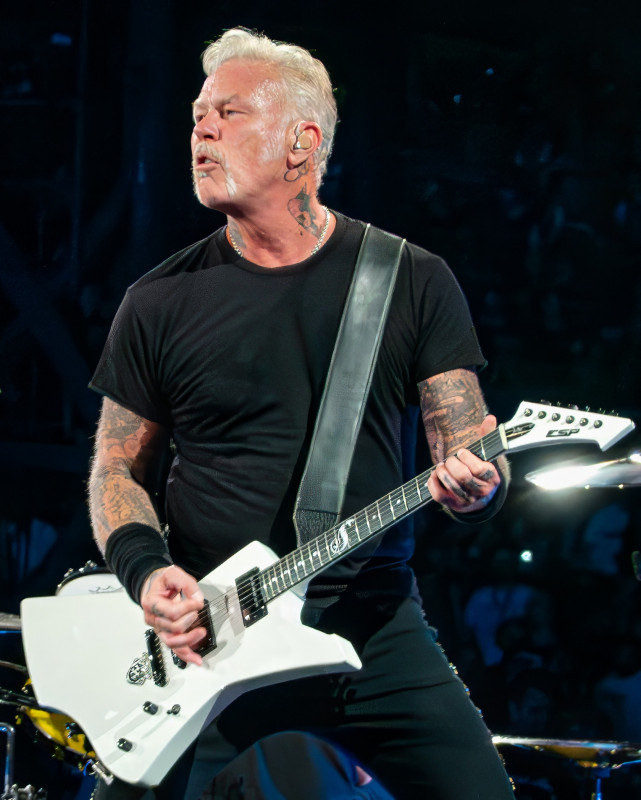
4 hours ago James Hetfield Criticizes Political Agendas at Concerts Sparking Industry Debate
Popular
Ilhan Omar is a prominent American politician currently serving as...
Ken Paxton is an American politician and lawyer serving as...

Elon Musk is a visionary entrepreneur and engineer known for...

Jameis Winston is an American football quarterback currently playing for...
Michael Joseph Jackson the King of Pop was a highly...
Cristiano Ronaldo widely considered one of the greatest footballers captains...