History of Montreal in Timeline


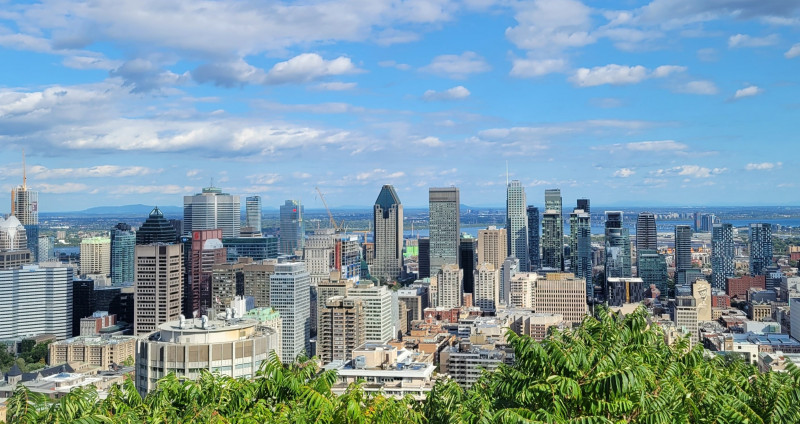
Montreal is the largest city in Quebec and the second-largest in Canada, named after Mount Royal. Founded in 1642, it's located on the Island of Montreal and smaller surrounding islands. It is situated 196 km east of Ottawa and 258 km southwest of Quebec City.
3 hours ago : Montreal: First date spots, attempted murder, and armed assault reported in March.
Montreal experiences a mix of events, including suggestions for first dates in March, an attempted murder in Ahuntsic-Cartierville targeting a 23-year-old man, and an armed assault where a 24-year-old man was shot.


1901: Montreal Population Increase
By 1901, Montreal's population had risen to 267,000.
1901: First Crematorium in Canada
In 1901, the Mount Royal Cemetery Company established the first crematorium in Canada.
August 1914: Establishment of Internment Camp
In August 1914, an internment camp was set up at Immigration Hall in Montreal.
November 1918: Closure of Internment Camp
In November 1918, the internment camp at Immigration Hall in Montreal was closed.
1919: Formation of CN
In 1919, the Canadian government formed Montreal-based CN (Canadian National Railway) following a series of country-wide rail bankruptcies.
1924: Illuminated Cross on Mount Royal Installed
In 1924, a 31.4 m-high illuminated cross was installed on Mount Royal.
1929: Stock Market Crash of 1929
The Stock Market Crash of 1929 exacerbated high unemployment in Montreal during the Great Depression.
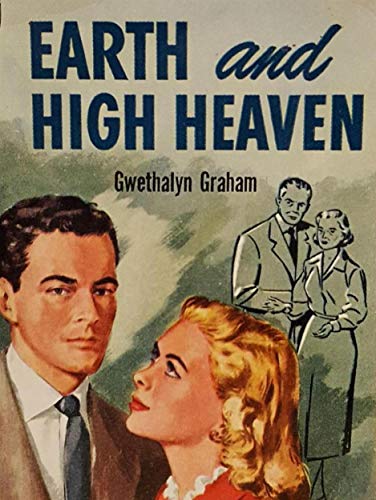
1944: Publication of Earth and High Heaven
In 1944, Gwethalyn Graham's novel "Earth and High Heaven" was published, representing a shift in Quebec literature to writing set in the multicultural city of Montreal.
1944: Conscription Instituted
In 1944, the government decided to institute conscription to expand the armed forces.
1945: Publication of Bonheur d'occasion
In 1945, Gabrielle Roy's novel "Bonheur d'occasion," translated as "The Tin Flute," was published, marking a shift in Quebec literature towards urban settings like Montreal.

1946: Jackie Robinson with the Montreal Royals
In 1946, Jackie Robinson broke the baseball color line with the Montreal Royals, receiving strong support from local fans during an emotionally challenging year.
1951: Montreal's Population Surpasses One Million
By 1951, Montreal's population had surpassed one million.
1959: Opening of the Saint Lawrence Seaway
The Saint Lawrence Seaway opened in 1959, allowing vessels to bypass Montreal and leading to the end of the city's economic dominance.
1960: End of Montreal Royals
In 1960, the minor-league Montreal Royals of the International League ceased operations, marking the end of their baseball presence in the city.
1966: Metro Inauguration
In 1966, the Montreal Metro was inaugurated, featuring 68 stations on four lines.
1967: Montreal Held the World's Fair
In 1967, Montreal held the World's Fair, also known as Expo67.
1967: Montreal Hosts International and Universal Exposition
In 1967, Montreal hosted the International and Universal Exposition.
1967: Completion of Saint Joseph's Oratory and Expo 67 Pavilions
In 1967, Saint Joseph's Oratory was completed, and pavilions were designed for the International and Universal Exposition (Expo 67).
1969: Montreal Expos Inaugural Season
In 1969, Major League Baseball arrived in Montreal with the formation of the Montreal Expos, who began playing their games at Jarry Park Stadium.
1971: Jewish Community
In 1971, the Jewish community in Greater Montreal numbered 109,480. Political and economic uncertainties led many to leave Montreal and the province of Quebec.
1975: Montreal's homicide rate peaks
In 1975, Montreal's homicide rate peaked at around 10.3 per 100,000 people, with a total of 112 murders.
1976: Summer Olympic Games
In 1976, Montreal hosted the Summer Olympic Games, an event initiated by Montreal Mayor Jean Drapeau, who also initiated the Metro project.
1976: Montreal Summer Olympics
In 1976, Montreal hosted the Summer Olympic Games, incurring significant costs for the stadium which reached nearly $3 billion with interest.
1976: Montreal Hosts Summer Olympics and Parti Quebecois Election
In 1976, Montreal hosted the Summer Olympics, which brought international prestige but resulted in massive debt. The Parti Québécois also won the election, leading to social and political changes.
1977: Expos Move to Olympic Stadium
In 1977, the Montreal Expos relocated their home games from Jarry Park Stadium to the larger Olympic Stadium.
1978: CN Passenger Services Transferred to VIA
In 1978, CN's flagship train, the Super Continental, became a Via train.
1981: Visible Minorities in Greater Montreal in 1981
In 1981, visible minorities comprised 5.2% of the population of Greater Montreal.
1982: Annexation of Pointe-aux-Trembles
In 1982, Montreal annexed Pointe-aux-Trembles.
1989: École Polytechnique Massacre
In 1989, the École Polytechnique massacre occurred in Montreal, resulting in 14 deaths and 14 injuries.
1990: Elimination of the Super Continental
In 1990, the Super Continental was eliminated in favor of rerouting The Canadian.
1990: The Canadian Terminated in Toronto
Since 1990, The Canadian, CPR's flagship train, has terminated in Toronto instead of in Montreal.
1991: Montreal Machine in WLAF
In 1991, the Montreal Machine played in the World League of American Football.
1992: Montreal Machine in WLAF
In 1992, the Montreal Machine played in the World League of American Football.
1992: Conversion to Fibre Optic Light
In 1992, the illuminated cross on Mount Royal was converted to fibre optic light.
1993: Construction of Uniprix Stadium
In 1993, Uniprix Stadium was built on the site of Jarry Park and is used for the National Bank Open tennis tournaments.
1993: Montreal Canadiens Stanley Cup Victory
In 1993, the Montreal Canadiens won their NHL-record 24th Stanley Cup championship, marking their most recent victory.
November 2, 1995: Ubisoft Montreal Opening
On November 2, 1995, the video game industry in Montreal began to boom with the opening of Ubisoft Montreal, attracting major game developers.
1995: CPR Headquarters Moved to Calgary
In 1995, Canadian Pacific Railway (CPR) moved its corporate headquarters from Windsor Station in Montreal to Calgary, Alberta.
1995: Canadian Pacific Railway
Until 1995, Montreal was home to the headquarters of the Canadian Pacific Railway, reinforcing its status as a vital railway hub.
1996: Montreal Canadiens Move to Bell Centre
In 1996, the Montreal Canadiens moved to the Bell Centre, their current home, after previously playing at the Montreal Forum.
1998: Church Attendance in Quebec
In 1998, weekly church attendance in Quebec was among the lowest in Canada, despite the Greater Montreal Area being predominantly Catholic.
2001: Plateau as Canada's Most Creative Neighbourhood
A 2001 study deemed the Plateau Mount Royal borough as Canada's most creative neighbourhood, with artists comprising 8% of its labour force.
January 1, 2002: Montreal Merged with Surrounding Municipalities
On January 1, 2002, Montreal merged with 27 surrounding municipalities on the Island of Montreal, creating a unified city.
January 2002: Municipal Reorganization and Forced Mergers
In January 2002, many boroughs were independent cities that were forced to merge with Montreal following the 2002 municipal reorganization of Montreal.
2002: Champ Car World Series at Circuit Gilles Villeneuve
From 2002, the Circuit Gilles Villeneuve hosted a round of the Champ Car World Series.
2002: Aerospace Jobs
In 2002, Montreal ranked as the fourth-largest center in North America for aerospace jobs, highlighting its significance in the industry.
June 2004: Referendums to Leave Unified City
In June 2004, several former municipalities voted in separate referendums to leave the unified city of Montreal.
2005: Expos Relocation to Washington, D.C.
After 36 years in Montreal, in 2005, the Montreal Expos relocated to Washington, D.C., and were rebranded as the Washington Nationals, ending Montreal's stint with Major League Baseball.
2005: Montreal Home to Design Associations
Since 2005, Montreal has been home to the International Council of Graphic Design Associations (Icograda) and the International Design Alliance (IDA).
January 1, 2006: Demerger of Municipalities from Montreal
On January 1, 2006, the demerger of several municipalities from Montreal took place, leaving 15 municipalities on the island.
December 2006: Payment of Olympic Stadium Debt
In December 2006, Montreal finally paid off the debt for the 1976 Summer Olympic Games stadium, which had ballooned to nearly $3 billion with interest.
2006: Montreal Named UNESCO City of Design
In 2006, Montreal was named a UNESCO City of Design, recognizing its design community.
2006: Montreal Metropolitan Community
In 2006, the Montreal Metropolitan Community (CMM) covered 4,360 km (1,680 sq mi), with 3.6 million inhabitants, and is responsible for regional planning and development.
2007: Highest Number of Homicides Since 2007
In 2007, Montreal had 42 homicides, which was the highest number since 2022 when there were 41.
2007: FIFA U-20 World Cup Games in Montreal
In 2007, Montreal hosted games of the FIFA U-20 World Cup at Olympic Stadium.
2007: Metro Extension to Laval
In 2007, the Montreal Metro was extended to the city of Laval, north of Montreal, with three new stations.
2007: Champ Car World Series at Circuit Gilles Villeneuve
Until 2007, the Circuit Gilles Villeneuve hosted a round of the Champ Car World Series.
2008: Grey Cup at Olympic Stadium
In 2008, the Olympic Stadium hosted the Grey Cup, a major event for the Canadian Football League.
2008: Port of Montreal Cargo
In 2008, the Port of Montreal, a major inland port, handled 26 million tonnes of cargo, solidifying its role as a crucial transshipment point in Canada.
2009: Gentrification of the Plateau
As of 2009, the Plateau Mount Royal borough was undergoing considerable gentrification.
2009: Launch of BIXI
In 2009, Montreal launched BIXI, one of the world's most successful bike share systems, using Montreal-based PBSC Urban Solutions ICONIC bikes.
2009: Canadian Grand Prix Dropped from F1 Calendar
In 2009, the Canadian Grand Prix was dropped from the Formula One calendar, disappointing many fans.
2010: Daily Passengers
As of Q1 2010, the Montreal Metro had a total of 1,050,800 daily passengers on an average weekday.
2010: Shell Refinery Closure
In 2010, Shell decided to close its oil refining center in Montreal, resulting in job losses and increased reliance on foreign refineries for eastern Canada.
2010: Warner Bros. Interactive Entertainment Studio Opening
In 2010, Warner Bros. Interactive Entertainment announced it would open a video game studio in Montreal, its first studio not purchased, creating 300 jobs to develop games for Warner Bros. franchises like Batman.
2010: Canadian Grand Prix Returns to F1 Calendar
In 2010, the Canadian Grand Prix returned to the Formula One calendar after being dropped in 2009.
2010: STM wins Outstanding Public Transit System
In 2010, the Société de transport de Montréal (STM) bus routes served 1,347,900 passengers on an average weekday. The STM also won the award of Outstanding Public Transit System in North America by the APTA in 2010, being the first Canadian company to win this prize.
2012: CF Montréal Joins Major League Soccer
In 2012, CF Montréal, formerly known as the Montreal Impact, joined Major League Soccer, becoming the city's professional soccer team.
August 2014: Unicycling World Championship
In August 2014, Montreal hosted the 17th unicycling world championship and convention (UNICON).
2014: FIFA U-20 Women's World Cup Games in Montreal
In 2014, Montreal hosted games of the FIFA U-20 Women's World Cup at Olympic Stadium.
2014: Commuter Rail Ridership
In 2014, the commuter rail system in Montreal, managed and operated by Exo, carried an average of 79,000 daily passengers, making it the seventh busiest in North America.
2015: Increase in Sex Crimes and Fraud
Between 2015 and 2016, sex crimes in Montreal increased by 14.5 percent, and fraud cases increased by 13 percent.
2015: FIFA Women's World Cup Games in Montreal
In 2015, Olympic Stadium hosted Montreal games in the FIFA Women's World Cup, solidifying the city's role in international soccer events.
April 22, 2016: Unveiling of the REM
On April 22, 2016, the Réseau express métropolitain (REM), a forthcoming automated rapid transit system, was unveiled.
2016: Montreal population
In 2016, Montreal had a population of 1,704,694.
2016: Minimum in Murders Reached
In 2016, the overall crime rate in Montreal reached a minimum with 23 murders reported. However, sex crimes increased 14.5 percent between 2015 and 2016, and fraud cases increased by 13 percent over the same period.
2017: Montreal Livability Ranking
In 2017, Montreal was ranked the 12th-most livable city in the world by the Economist Intelligence Unit.
March 2018: Global Financial Centres Index Ranking
As of March 2018, Montreal was ranked 12th in the Global Financial Centres Index, highlighting its competitiveness as a financial center.
April 12, 2018: Groundbreaking of the REM
On April 12, 2018, groundbreaking occurred for the Réseau express métropolitain (REM).
2018: La Presse Goes Online
In 2018, La Presse, a French-language daily newspaper in Montreal, transitioned to an online daily publication.
2018: Montreal Ranked as a Global City
In 2018, Montreal was ranked as a global city.
2018: Trudeau Airport Statistics
In 2018, Pierre Elliott Trudeau International Airport was the third busiest airport in Canada by passenger traffic and aircraft movements, handling 19.42 million passengers and 240,159 aircraft movements. It also had the largest percentage of international flights of any Canadian airport, with 63% of its passengers being on non-domestic flights.
2019: 25 Homicides Reported
In 2019, 25 homicides were reported in Montreal, which matched the number reported in 2020.
2019: Montreal's GDP
In 2019, Metropolitan Montreal accounted for CA$234.0 billion of Quebec's CA$425.3 billion GDP, solidifying its position as a major economic center.
2019: Modernization of Metro Trains
Starting in 2019, the Montreal Metro has been modernizing its trains, running new Azur models with inter-connected wagons.
2020: Increase in homicides
In 2020, Montreal saw an increase in overall crime, with a notable increase in homicides. 25 homicides were reported in 2020.
2020: Canadian Grand Prix Dropped from F1 Calendar
In 2020, the Canadian Grand Prix was dropped from the Formula One calendar due to the COVID-19 pandemic.
2021: Religious Diversity
As of 2021, Islam was the largest non-Christian religious group in Montreal, comprising 12.7% of the population. The Jewish community numbered 90,780.
2021: Panethnic Breakdown of Montreal in 2021
As per the 2021 census, the panethnic breakdown of Montreal was: European (60.3%), African (11.5%), Middle Eastern (9.3%), South Asian (4.6%), Latin American (4.5%), Southeast Asian (3.8%), East Asian (3.8%), Indigenous (0.9%), and Other/Multiracial (1.3%).
2021: Increase in Murders and Shootings
In 2021, Montreal experienced a 48% increase in murders with a total of 37, giving the city a homicide rate of around 2.1 per 100,000 people. The Montreal Police Annual Report for 2021 showed that there were 144 shootings across the city, or an average of one shooting every 2.5 days.
2021: Montreal Livability Ranking Drop
In 2021, Montreal's livability ranking dropped to 40th, primarily due to healthcare stress from the COVID-19 pandemic.
2021: Canadian Grand Prix Dropped from F1 Calendar
In 2021, the Canadian Grand Prix was dropped from the Formula One calendar for the second year in a row due to the COVID-19 pandemic.
2021: Immigrant Population
In 2021, the census reported that immigrants made up 33.4% of Montreal's total population, with the top countries of origin being Haiti, Algeria, France, Morocco, and Italy.
2021: Language Spoken by Residents
In 2021, the census revealed that 47.0% of Montreal residents primarily spoke French, while 13.0% primarily spoke English. Additionally, a significant portion of residents spoke non-official languages, highlighting the city's linguistic diversity.
2021: Montreal Population and Language Statistics
In 2021, the city of Montreal had a population of 1,762,949, with a metropolitan population of 4,291,732, making it the second-largest metropolitan area in Canada. In 2021, 85.7% of the city's population considered themselves fluent in French, while 90.2% could speak it in the metropolitan area.
2021: Montreal Population in 2021
In the 2021 Canadian census, Montreal had a population of 1,762,949.
2021: Visible Minorities in Montreal in 2021
In the 2021 census, visible minorities comprised 38.8% of Montreal's population. The most numerous were Black Canadians (11.5%), Arab Canadians (8.2%), South Asian Canadians (4.6%), Latin Americans (4.5%), and Chinese Canadians (3.3%).
2021: Age Demographics in 2021
The 2021 census recorded 270,430 (15.3%) children between 0 and 14 years of age, while 295,475 (16.8%) were 65 and over.
2022: Partial Opening of the REM
As of 2022, the Réseau express métropolitain (REM) is scheduled to be opened in three phases.
2022: Another Increase in Homicides
In 2022, Montreal saw another 10.8% increase in homicides, with a total of 41 being reported (giving a slightly higher homicide rate of 2.3 per 100,000 people).
2022: Canadian Grand Prix Resumes
In 2022, racing resumed with the 2022 Canadian Grand Prix, after being dropped from the Formula One calendar in 2020 and 2021.
2023: Alouettes Win Grey Cup
In 2023, the Montreal Alouettes won the Grey Cup, marking their eighth victory in the Canadian Football League championship.
2024: Inauguration of Elie-Wiesel Park
In 2024, Elie-Wiesel Park was inaugurated in the Snowdon district in Côte-des-Neiges–Notre-Dame-de-Grâce.
2025: Soraya Martinez Ferrada as Mayor
As of 2025, Soraya Martinez Ferrada is the mayor of Montreal, leading the city government.
2027: Full Completion of the REM
The Réseau express métropolitain (REM) is scheduled to be fully completed by 2027.
Mentioned in this timeline
Ubisoft Entertainment SA is a French video game publisher with...

The stock market is where buyers and sellers trade stocks...
Jackie Robinson was a pivotal figure in American history As...
Washington D C is the capital city and federal district...
World War II - was a global conflict between the...
Football is a family of team sports primarily involving kicking...
Trending
18 minutes ago Celebrating International Women's Day 2026: Empowerment, Museums, and Giving Back

18 minutes ago Golden Knights and Capitals Discuss Possible Nic Dowd Trade to Vegas.

18 minutes ago Britney Spears Arrested for DUI in California: Details

19 minutes ago Tyriq Withers shines in 'Reminders of Him' film adaptation of Hoover's novel.

19 minutes ago Shivam Dube: India's clutch performer in T20 World Cup, likened to Yuvraj Singh and Dhoni.
1 hour ago Denison, Hornets, and Trine advance to NCAA Women's Basketball Tournament: Regional Preview.
Popular

Ken Paxton is an American politician and lawyer serving as...

Hillary Diane Rodham Clinton is a prominent American politician lawyer...
Jesse Jackson is an American civil rights activist politician and...

Jim Carrey is a Canadian-American actor and comedian celebrated for...
Bill Clinton served as the nd U S President from...
XXXTentacion born Jahseh Dwayne Ricardo Onfroy was a controversial yet...