


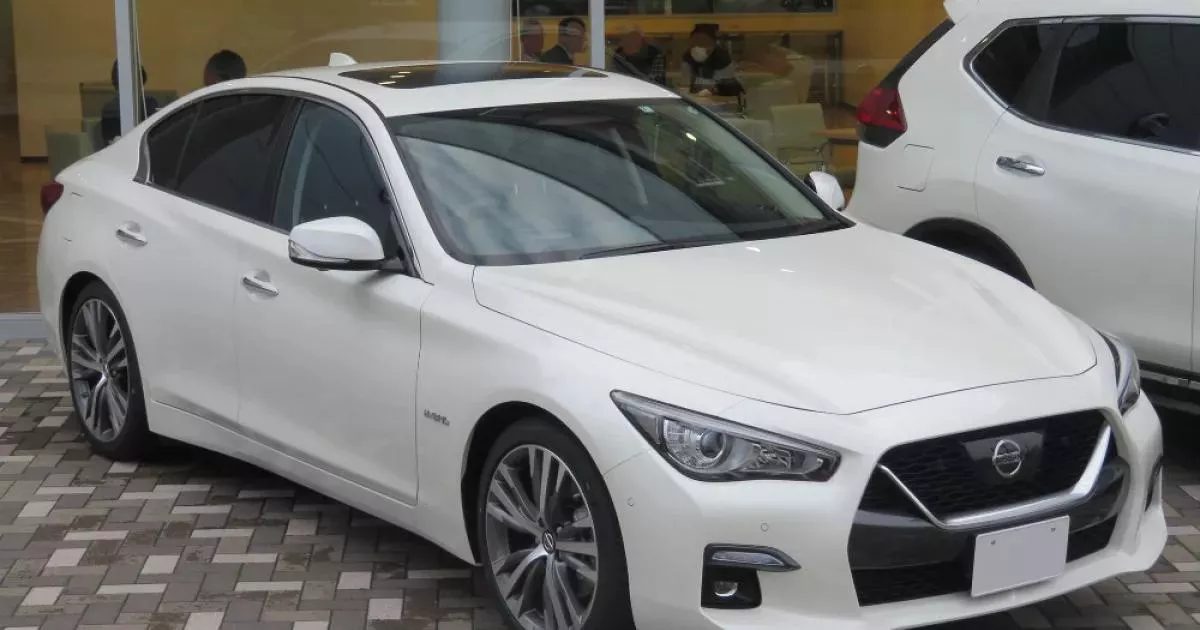
The Nissan Skyline is an automobile brand with a rich history, initially produced by Prince Motor Company in 1957. Following a merger in 1967, Nissan took over production. Post-merger, the Skyline, along with the Nissan Gloria, was marketed in Japan through Nissan Prince Shop dealerships. The Skyline is an iconic car model in automotive history.
1900: BLSI-3 Series
In May 1961, the BLSI-3 series featured a 1900 badge on the side.


April 1957: Introduction of the First Skyline
On April 24, 1957, Fuji Precision Industries introduced the first Skyline, marketed as a luxury car, at the Takarazuka Theater in Tokyo. It featured a 1.5 L engine producing 60 hp.
October 1959: Release of ALSI-2 Series
In October 1959, the ALSI-2 series of the Nissan Skyline was released with an upgraded engine producing 70 hp due to higher quality fuel allowing for an increase in compression.
1959: ALSI-1 Sold in the United States
In 1959, the ALSI-1 generation Skyline was sold in the United States, but sales were poor and the cars remain extremely rare.
February 1960: Release of the ALSI-2-1 Series
In February 1960, the ALSI-2-1 series was released. The Deluxe and commercial variants were updated with quad headlights, while the standard model retained twin headlights. The side strip design was also changed on the standard models.
September 1960: Standard Model Gains Quad Headlights
In September 1960, the standard model of the Nissan Skyline gained quad headlights with the release of the ALSI-2-2 series.
1960: 1960 Left-Hand-Drive Model
In 1960, a left-hand-drive model reappeared in an Idaho junkyard.
May 1961: Release of BLSI-3 Series
In May 1961, the BLSI-3 series was released. The 1500 engine used in the ALSID Deluxe was dropped and replaced with the 91 hp 1.9L GB-4 engine from the Gloria.
October 1961: Standard Model Receives New Engine
In October 1961, the standard model of the Nissan Skyline received the new 1.9L GB-4 engine.
1961: Name Change to Prince Motor Company
In 1961, Fuji Precision Industries changed its name to Prince Motor Company for the second time.
1961: Design Similarities
The Nissan Skyline S50-1's brake lights and integrated tail lights resembled the Ford Galaxie of 1961.
1961: Skyline
The Nissan Skyline had a design that shows some resemblance to the earlier 1961 Fiat 2300, designed by Pininfarina.
September 1962: Release of the S21 Series
In September 1962, the S21 series of the Nissan Skyline was released, featuring a redesigned front end and the same 1.9L GB-4 engine.
1962: Approach Done by German company BMW
In 1962 German company BMW, built a small, affordable, performance coupe and sedan with the New Class series.
September 1963: Launch of the S50 Skyline Deluxe
In September 1963, Prince Motor Company launched the S50 Skyline Deluxe (S50D-1).
November 1963: End of S21 Production
In November 1963, production of the Nissan Skyline S21 series ended.
1963: Round circular tail lights introduced
In 1963, the Skyline introduced round circular tail lights. This design reappeared on the C110.
April 1964: Launch of the Skyline Standard
In April 1964, Prince Motor Company launched the Skyline Standard (S50S-1), a lower-priced model aimed at taxi operators.
May 1964: Launch of Skyline GT Racing Version
In May 1964, Prince launched the racing version of the Skyline, the Skyline GT, based on the S50D-1 with the G-7 engine from the Gloria S41.
February 1965: Four-Speed Transmission Option
From February 1965, the Deluxe model of the Nissan Skyline became available with a four-speed floor shift transmission.
February 1965: Release of Prince Skyline 2000GT
In February 1965, Prince released the Skyline 2000GT road car (S54B-2) to the Japanese market.
June 1966: Two-Speed Automatic Option
In June 1966, a two-speed automatic transmission option was added to the Deluxe model of the Nissan Skyline.
October 1966: Facelift for GT Model
In October 1966, the GT received a mild facelift similar to the S50D-2, but retained its original round taillights. This model was known as S54-3.
October 1966: Introduction of the S50-2
In October 1966, the S50-2 was introduced with a light facelift, including a new grille, rectangular taillights, interior changes, and an extraction vent on the C-pillar.
August 1967: Prince Releases the S57
In August 1967, Prince released the S57, successor to the S50D-2. It used a new OHC 1.5 L G15 engine.
August 1967: Introduction of the S50-3
In August 1967, the S50-3 was introduced, featuring wider rectangular tail lights and front side indicators. The Deluxe trim was rebranded as the S57 series.
1967: S50-2 Model
From 1967 to 1968, the S50-3 models were built, with the later S57 receiving a more modern unit.
October 1968: Engine Power Decrease
In October 1968, the GC10 2000GT's engine power was decreased to 105 hp.
1968: S50-3 Model
From 1967 to 1968, the S50-3 models were built, with the later S57 receiving a more modern unit.
February 1969: First GT-R Skyline Appears
In February 1969, the first GT-R Skyline, called the PGC-10, appeared. It used the 2.0 L S20 I6 engine producing 160 hp.
June 1970: Automatic Variant Introduced
In June 1970, Nissan introduced an automatic variant of the GC10 2000GT.
October 1970: Two-Door Coupe Introduced
In October 1970, Nissan introduced a two-door coupe variant of the GC10 2000GT.
October 1970: 2-door coupé version debuted
In October 1970, a 2-door coupé version of the GT-R was debuted, stripped of unnecessary equipment for racing purposes.
October 1970: Introduction of Hardtop Coupe
In October 1970, a hardtop coupé variant of the Nissan Skyline was introduced.
March 1971: Introduction of the 2-door coupé version
In March 1971, the 2-door coupé version of the GT-R was introduced after being debuted in October 1970. The cars were light and performed well at the track.
September 1971: 2000 GT-X Receives L20SU Engine
In September 1971, the KGC10 2000 GT-X received a 2.0 L L20SU straight-six engine producing 130 PS.
1971: C10 races against rivals
In 1971, the C10 raced against the Toyota 1600GT, Isuzu Bellett GTR, Mazda Familia (R100), Capella (RX-2), and even Porsche. Late in 1971, the Mazda RX-3 became the GT-R's main rival, eventually ending the GT-R's winning streak.
March 1972: Four-Door GT-X Sedan Added
In March 1972, the lineup was expanded to include a four-door GT-X sedan.
September 1972: Production of the C110 generation begins
In September 1972, the C110 generation of the Skyline began production.
September 1972: Skyline GT-R hardtop arrival
In September 1972, the Skyline GT-R hardtop arrived.
1972: Coupé achieves 50 victories
Through 1972, the coupé version of the GT-R achieved 50 victories, extending the sedan's prior success of 33 victories in less than two years.
1973: End of C110 Skyline production
Since the end of C110 Skyline production in 1973, the DR30 Skyline remains a cult car.
1975: Introduction of Silvia and Nissan NAPS emission control technology
In 1975, Nissan introduced the Silvia, a smaller, more affordable two-door coupe influenced by the C110 styling. Nissan also introduced its emission control technology, Nissan NAPS, primarily consisting of fuel injection on trim packages ending with an "E" in 1975.
February 1976: C110 model facelift
In February 1976, the C110 model was facelifted and became the C111 model.
August 1977: Production of the C110 generation ends
In August 1977, production of the C110 generation of the Skyline ended. The C110 and GC110 Skyline were sold as the Datsun K-series for export in the 1970s.
August 1977: Introduction of the C210 series
In August 1977, the C210 series was introduced, continuing to divide the Skyline range into four-cylinder and six-cylinder models.
1978: Internal and external facelift of the Skyline
In late 1978, the Skyline received an internal and external facelift, leading to a model code change from 210 to 211. The Skyline also first appeared in several European export markets such as Germany in 1978.
1978: Switch to Z-series engines
In late 1978, the four-cylinder L-series engines were switched to the cross-flow Z-series, although the L16 lingered on for commercial applications.
June 1980: Addition of Z20E and GT-Diesel engines to the lineup
In June 1980, the two-liter, fuel injected inline-four Z20E engine was added to the Skyline lineup, as was the 2.8 liter straight-six GT-Diesel with 91 PS.
August 1981: End of C210 series production
In August 1981, production of the C210 series ended.
August 1981: Launch of the R30 series
In August 1981, the R30 series was launched, built on a C31 Laurel platform. Names were brought into line with the home Japanese and worldwide markets. Unlike preceding generations, four- and six-cylinder versions now shared a front end of the same length.
October 1981: Release of the 2000RS
On 2 October 1981, the 2000RS version of the Skyline was released, featuring the naturally aspirated 4-valve-per-cylinder DOHC FJ20E engine.
1981: Debut of the FJ20 engine
In late 1981, the all-new 16-valve DOHC FJ20 engine debuted, the first four-cylinder engine from any Japanese manufacturer to employ more than two valves per cylinder.
August 1982: Release of Liftbacks in Australia
In August 1982, the Liftback version of the R30 was released to the Australian market.
September 1982: Addition of 2.8 liter inline-six engine
In September 1982, a 2.8 liter inline-six engine was added to export markets, producing 139 PS.
1982: Skyline enters South African market as Datsun
In 1982, the Skyline entered the South African market and was initially sold as a Datsun.
February 1983: Introduction of the 2000RS-Turbo
In February 1983, the DR30 range received a performance boost with the introduction of the turbocharged FJ20ET engine in the 2000RS-Turbo, becoming the most powerful Japanese production engine of its era.
August 1983: Significant changes to the DR30 Skyline
In August 1983, Nissan elevated the status of the DR30 Skyline as their flagship model, introducing changes to distinguish it from other Skyline models and the new RS-X model.
August 1983: Facelift of the R30 range
In August 1983, the R30 range was facelifted, featuring changes such as four-wheel disc brakes as standard and the replacement of the Z18S engine with the newer CA18E.
November 1983: Facelift model launched in Australia
In November 1983, the facelifted model of the R30 was launched in Australia.
1983: Release of the Paul Newman Version R30
During 1983, the Paul Newman Version R30 was released to commemorate the association between Nissan and the actor Paul Newman.
1983: George Fury placed second in the Australian Touring Car Championship
In 1983, George Fury placed second in the Australian Touring Car Championship.
May 1984: Arrival of the four-door GT version
In May 1984, the four-door GT version arrived in South Africa, featuring the GTX suspension and a Weber carburetor.
1984: Addition of air-to-air intercooler
For 1984, an air-to-air intercooler was added, allowing the compression ratio to be increased, boosting the output of the FJ20ET powered model. The intercooled model was nicknamed the Turbo C.
1984: Addition of automatic transmission option
In 1984, an automatic transmission option was added to the R30 Skyline.
1985: Introduction of the R31 Skyline
In 1985, the R31 Skyline, based on the Laurel platform (C32), was introduced. The design was slightly larger and squarer than previous Skylines and was available as a Sedan, Hardtop sedan, Coupé and station wagon. It was known as the "Seventhsu" or "7th Sukairain" by owners, due to it being the 7th-generation Skyline.
1985: Changes to the "Plasma Spark" ignition system
In early 1985, towards the end of R30 production, there were changes to the "Plasma Spark" ignition system.
1986: South African range facelift
For the 1986 model year, the South African range was lightly facelifted, with a luxurious 2.8 SGL replacing the GLX and the GT being discontinued.
1986: George Fury placed second in the Australian Touring Car Championship
In 1986, George Fury placed second in the Australian Touring Car Championship.
1987: Manufacture and sale of R31 Skylines in South Africa
In 1987, 29,305 R31 Skylines were manufactured and sold in South Africa in four-door sedan form. These models were powered by the RB30E 3.0 straight-six engine, RB20E 2.0 straight-six, or the CA20S four-cylinder powerplant.
1987: Glenn Seton gained second position in the Australian Touring Car Championship
In 1987, Glenn Seton gained second position in the Australian Touring Car Championship.
1987: Nissan sharing victory with BMW in the 1987 Australian Manufacturers' Championship
In 1987, Glenn Seton joined George Fury in the Australian Touring Car Championship. Seton contended for the title with Richards' BMW M3, while Fury experienced a frustrating first half. The championship concluded at Oran Park Raceway in Sydney, where Richards' BMW M3 defeated Seton, securing Richards' second ATCC title in three years. Fury's third-place finish contributed to Nissan sharing the victory with BMW in the 1987 Australian Manufacturers' Championship. Fury's final competitive race in the Peter Jackson Nissan DR30s was at the 1987 Australian Grand Prix in Adelaide, where he finished second to Dick Johnson's Ford Sierra RS500.
1987: Introduction of the HR31 GTS-R Coupe
In late 1987, the RB20DET-R powered HR31 GTS-R Coupe was introduced with 823 units built for Group A homologation. It featured a reworked RB20DET engine with a larger turbocharger and intercooler. The factory-claimed maximum output was 210 PS (154 kW; 207 hp), with racing versions making over 430 hp (321 kW; 436 PS) in Group A trim.
1987: R30 Skyline replaced by R31 in South Africa
In mid-1987, the R30 was replaced by the R31 Skyline in South Africa.
1988: First production of the R32 GT-R including prototype cars.
In 1988, the R32 GT-R was first produced, including prototype cars.
1989: Jim Richards and Mark Skaife win the Sandown 500
In 1989, Jim Richards and Mark Skaife drove a Gibson Motorsport prepared Skyline GTS-R to win the Sandown 500 in Australia.
1989: R32 GT-R dominates JTCC
In 1989, The R32 GT-R dominated the Japanese Touring Car Championship (JTCC), winning every race that it entered.
1989: DR30 used by privateer racers
In 1989, the 340 bhp DR30 continued to be used by privateer racers in Australian touring car racing.
1989: BNR32 GT-R released after 16 years
In 1989, the BNR32 was released, marking the return of the GT-R after a 16-year absence since the end of C110 Skyline production in 1973.
1989: Debut of the R32 Skyline
In 1989, the R32 Skyline debuted, available as a 2-door coupe or 4-door hardtop sedan. It featured several versions of the RB-series straight-6 engines, an 1,800 cc 4-cylinder GXi model, HICAS four-wheel steering, and a 5-speed automatic transmission in the 2.5-liter GTS-25. The GTS-t came in standard and Type M configurations, with the Type M having larger five-stud 16-inch wheels, four piston front calipers and twin piston rears plus other minor differences. Nissan also produced 100 Australian models of the R32, and a 4WD version of the GTS-t Type M, called the GTS-4.
1989: First six Nismo cars built
In 1989, the first six Nismo cars were built.
1990: Jim Richards wins the 1990 Australian Touring Car Championship
In 1990, Jim Richards used the Skyline GTS-R in 6 of the 8 races to win the Australian Touring Car Championship (he used the R32 GT-R in the final two rounds of the series). It was the first Australian Touring Car Championship victory for a Nissan driver.
1990: Introduction of the R32 GT-R into the Australian Touring Car Championship
In 1990, the R32 GT-R was introduced into the Australian Touring Car Championship, ending the reign of the Ford Sierra Cosworth.
1990: Production of remaining Nismo GT-Rs
In 1990, the other 554 NISMO GT-Rs were built and were all Gunmetal Grey in color.
1991: R32 GT-R took 50 races from 50 starts from 1991 to 1997 in the N1 Super Taikyu.
In 1991, the R32 GT-R began a dominant run in the N1 Super Taikyu, taking 50 races from 50 starts from 1991 to 1997 (latterly R33).
1992: End of R31 Skyline sales in South Africa
In 1992, the R31 Skyline manufacturing and sales in South Africa came to an end, marking the last time Skylines were available in South Africa.
1992: R32 GT-R wins Bathurst 1000
In 1992, the R32 GT-R won the Bathurst 1000 classic in Australia.
February 1993: Emergence of the GT-R V-spec
In February 1993, the GT-R V-spec emerged wearing 17" BBS mesh wheels (225/50/17) covering larger Brembo calipers. The clutch actuation changed from a push to a pull system and the car had a standard mechanical rear differential.
August 1993: Introduction of the R33 Skyline
In August 1993, the R33 Skyline was introduced as a coupé and sedan. The GTS model was down-graded to have only the RB20E, and the 2.0 L turbo RB20DET from the GTS-t was replaced with the GTS-25t, which was equipped with the larger RB25DET. HICAS was standard in all GTS-25t sub-models except the Type G.
1993: R32 GT-R wins JTCC series title
From 1989 to 1993, the R32 GT-R dominated the Japanese Touring Car Championship (JTCC), taking the series title every year.
1995: R33 GT-R received upgrades in 1995
In 1995, the R33 GT-R received an improved version of the RB26DETT, the ATTESA-ETS four-wheel-drive system, and Super HICAS 4-wheel steering.
September 1996: Release of the Nissan Stagea
In September 1996, a Nissan Laurel C34-based wagon was released, called the Stagea. It is widely regarded as a compatriot of the Skyline, rather than the Laurel it was based on, owing to drivetrain configurations — commonly AWD, using ATTESA ET-S. A common modification on the Stagea is to fit it with an R34 skyline front, in effect making an R34-lookalike wagon.
1996: R33 Skyline (Spec 2) Updates
In 1996, Driver and Passenger airbags became standard in the R33 Skyline (Spec 2), Ignition system changed, with the ignition module no longer located on the cam covers and was instead replaced by smart ignition coils (Ignitor built into coil) and ECU. The RB25DET's turbo was also given a nylon compressor wheel to improve response.
1996: Discontinuation of the station wagon body style
In 1996, the station wagon body style for the Skyline was discontinued, and would not see a replacement (the Stagea) until 1996, by which point the R33 had arrived.
1997: R32 GT-R dominated the N1 Super Taikyu 50 races from 50 starts from 1991 to 1997
In 1997, the R32 GT-R dominated the N1 Super Taikyu 50 races from 50 starts from 1991 to 1997 (latterly R33).
February 1998: R33 Skyline production ceased
In February 1998, the production of the R33 Skyline ceased, with the final run being the 40th Anniversary R33.
May 1998: Introduction of the R34 Skyline
In May 1998, the R34 Skyline was introduced. The HR34, ER34, and ENR34 marked the introduction of the more fuel-efficient RB25DET NEO engine. The RB20E engine was discontinued in the R34 base model (GT), and the RB20DE, after last being used in the R32 Skyline, was reintroduced in the updated NEO guise. The HR34 GT, powered by the RB20DE NEO and coupled with a five-speed gearbox, became the most fuel-efficient straight-six Skyline (of any shape) to date.
1998: GT-R Skyline Appears
The first GT-R Skyline used the 2.0 L (1998 cc) S20 I6.
2000: KGC10 2000 GT-X Receives L20SU Engine
In September 1971, the KGC10 2000 GT-X received a 2.0 L (1,998 cc) L20SU straight-six engine.
2000: Skyline 60th Anniversary original goods collection released by Japan Post
On June 16, 2017, Japan Post released Skyline 60th Anniversary original goods collection for catalogue, and Skyline 60th anniversary original goods for net shop.
2002: Closure of the Musashimurayama plant
In 2002, the Musashimurayama plant closed, and the R34 was the last Skyline to have its platform shared with the luxury-oriented, longer wheelbase Laurel, which was due to be discontinued.
2002: V35 Skyline Export to North America
In 2002, the V35 Skyline was exported to North America for the first time, being sold as the Infiniti G35.
October 2007: SKYLINE collection accessories on sale
In October 2007, a series of 15 accessories under the SKYLINE collection label, including wallet, card case, key ring, intelligent key case, Zippo lighter, Skyline Coupe T-shirt, SKYLINE COUPE pins went on sale at Nissan online shop.
December 2008: Nissan Skyline Sedan and Coupe models on sale
In December 2008, the Nissan Skyline Sedan models including the 250GT, 250GT FOUR, and 370GT and Coupe models including the 370GT went on sale.
2008: Introduction of the 370GT sedan
In 2008, the 370GT sedan, a Japanese version of the Infiniti G37 sedan, was introduced for the 2009 model year, replacing the 350GT sedan.
April 2009: Skyline Crossover Unveiled
In April 2009, the Skyline Crossover, based on the Infiniti EX37, was unveiled at Nissan Galleries nationwide, featuring all seven body color variants.
July 2009: Sales of the Skyline Crossover began
Sales of the Skyline Crossover began in July 2009. Early models included the 370GT (Type P) and 370GT FOUR (Type P).
2009: Introduction of the 370GT sedan
In 2008, the 370GT sedan, a Japanese version of the Infiniti G37 sedan, was introduced for the 2009 model year, replacing the 350GT sedan.
January 2010: Revised Skyline Sedan and Coupe on sale
In January 2010, the revised Skyline Sedan and Coupe went on sale.
August 2010: Sales of original frame stamps titled History of Cars "Nissan (Skyline)"
In August 2010, Nissan Motor Co., Ltd. and Minami Kanto Regional Office, Japan Post Network Co., Ltd. announced the sales of original frame stamps titled History of Cars "Nissan (Skyline)" (5000 units) and History of Cars "Nissan (Electric Vehicles)" (1000 units). The frame stamps went on sale from 1 February to 31 August 2010.
November 2010: Revised Skyline Sedan and Crossover on sale
In November 2010, the revised Skyline Sedan and Crossover went on sale.
December 2011: Sedan version on sale
The Sedan version, covering the 250GT Type P, 250GT FOUR Type P, and 370GT Type SP, went on sale between December 2011 and April 2013.
2011: Death of Shinichiro Sakurai
In 2011, Shinichiro Sakurai, the chief influence of the Nissan Skyline since its inception, passed away.
February 2012: Limited edition Coupe version on sale
In February 2012, the Coupe version, a limited edition (55 units) of Skyline 370GT coupe, commemorating the 55th anniversary of Nissan Skyline went on sale between February 2012 and April 2013.
October 2012: Revised Skyline Crossover on sale
The revised Skyline Crossover, covering 370GT (Type P) and 370GT FOUR (Type P), went on sale on October 25, 2012.
December 2012: 500 Skyline meets Eizin Suzuki 2013 calendars were distributed
In December 2012, as part of the 55th anniversary of the Nissan Skyline, a draw of 500 Skyline meets Eizin Suzuki 2013 calendars were distributed.
April 2013: Limited edition Coupe version on sale
In February 2012, the Coupe version, a limited edition (55 units) of Skyline 370GT coupe, commemorating the 55th anniversary of Nissan Skyline went on sale between February 2012 and April 2013.
April 2013: Sedan version on sale
The Sedan version, covering the 250GT Type P, 250GT FOUR Type P, and 370GT Type SP, went on sale between December 2011 and April 2013.
2013: 500 Skyline meets Eizin Suzuki 2013 calendars were distributed
In December 2012, as part of the 55th anniversary of the Nissan Skyline, a draw of 500 Skyline meets Eizin Suzuki 2013 calendars were distributed.
February 2014: Japan models went on sale
In February 2014, Japan models went on sale. Early models include 350GT Hybrid, 350GT Hybrid Type P, 350GT Hybrid Type SP, 350GT Four Hybrid, 350GT Four Hybrid Type P, 350GT Four Hybrid Type SP.
June 2014: 200GT-t models went on sale
In June 2014, the 200GT-t, 200GT-t Type P, and 200GT-t Type SP models went on sale through Nissan dealers.
August 2014: R32 Skyline GT-Rs become eligible for US import
In August 2014, the first R32 Skyline GT-Rs became eligible for US import under the NHTSA "25 year" rule, allowing vehicles at least 25 years old to be imported without complying with federal emissions or safety standards.
2014: Japan models went on sale
In 2014, Japan models went on sale. Early models included 370GT, 370GT Type P, 370GT FOUR Type P, and 370GT FOUR.
December 2015: Skyline Cool Exclusive on sale in Japan
On December 21, 2015, the Skyline Cool Exclusive went on sale in Japan, based on Skyline sedan models 200GT-t Type P, 200GT-t Type SP, 350GT Hybrid Type P, 350GT Hybrid Type SP, 350GT Four Hybrid Type P, and 350GT Four Hybrid Type SP.
April 2016: All-direction support system added to select models
Beginning April 18, 2016, the 350GT Hybrid, 350GT Four Hybrid, and 200GT-t models include an all-direction support system in the emergency brake.
June 2017: Skyline 60th Anniversary original goods collection released by Japan Post
On June 16, 2017, Japan Post released Skyline 60th Anniversary original goods collection for catalogue, and Skyline 60th anniversary original goods for net shop.
December 2017: 2017 Skyline update went on sale
The 2017 Skyline update went on sale on December 20, 2017 in Japan. Changes include redesigned bumper for Type SP, Type P, 350 GT Hybrid models, 9 body colors (including Imperial Amber), new standard Cutting brilliant 19-inch aluminum wheel for Type SP and 18-inch aluminum wheel with chrome color coat for Type P models.
July 2019: 2019 Skyline update went on sale
The 2019 Skyline update went on sale on July 16, 2019 in Japan. Changes include redesigned front fascia, reuse of Nissan logo emblems, rounded taillamps, addition of 3.0 L VR30DDTT twin turbo V6 engine option, discontinuation of Mercedes-Benz 274930 engine option, and introduction of ProPilot 2.0 safety system. This update also reintroduced the "400R" moniker.
2019: Thirteenth-generation Skyline Updates
In 2019, the thirteenth-generation Skyline, identical to the Infiniti Q50 sedan, retained Infiniti badges until 2019. It debuted an electric-gasoline hybrid powertrain and revived four-cylinder engines and turbocharged models.
August 2023: Skyline Nismo and Skyline Nismo Limited Unveiled
On August 8, 2023, The Skyline Nismo and Skyline Nismo Limited were unveiled. The Nismo version is limited to 1,000 units, while the Nismo Limited is limited to 100 units.
2024: Skyline Remains Only Nissan Sedan in Japan
As of 2024, the Nissan Skyline is the only remaining sedan in Nissan's Japanese lineup.
Mentioned in this timeline
The United States of America is a federal republic primarily...

Germany officially the Federal Republic of Germany is located in...

Japan is an East Asian island country located in the...
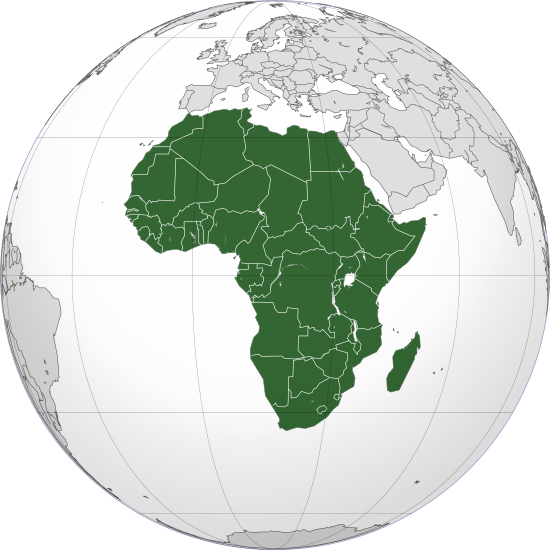
Africa is the second-largest and second-most populous continent home to...

Australia officially the Commonwealth of Australia is a country encompassing...
A car also known as an automobile is a wheeled...
Trending

3 hours ago Reese Witherspoon Reacquires Hello Sunshine Production Firm With Mediawan Partnership
4 hours ago Barack Obama Joins Sherrod Brown for Campaign Rally in Cleveland Ahead of Election
4 hours ago Junior Caminero and Jonny DeLuca Avoid Serious Injury Following Scary Outfield Collision

4 hours ago Channing Tatum Stars in the Critically Acclaimed and Bold New Thriller Film Josephine

4 hours ago Billy Crystal Reflects on Tragedy and New Broadway Show

4 hours ago Brian Austin Green Explains Absence From Sharna Burgess Dancing with the Stars Performances
Popular

Ken Paxton is an American politician and lawyer serving as...

Ilhan Omar is a prominent American politician currently serving as...

Jameis Winston is an American football quarterback currently playing for...

Cristiano Ronaldo widely considered one of the greatest footballers captains...

Elon Musk is a visionary entrepreneur and engineer known for...
Michael Joseph Jackson the King of Pop was a highly...