


A pardon is a governmental act that releases an individual from some or all of the legal ramifications of a criminal conviction. It can be issued either before or after a conviction, contingent on the jurisdiction's legal framework. Pardons essentially forgive the crime, restoring some or all of the person's rights. The specific process and eligibility criteria for obtaining a pardon vary significantly between different jurisdictions and legal systems. Pardons are generally executive powers.
1/1988: Law 1/1988
Spanish law outlines the procedure and requirements for granting pardons given by the Law of 18 June 1870, modified by Law 1/1988 of 14 January.


1954: Constitution of China
In 1954, the Constitution of China made provision for amnesties and pardons, both of which were to be powers of the Standing Committee of the National People's Congress.
February 1958: Dahir No. 1-57-387
In Morocco, under Dahir (royal decree) No. 1-57-387 of 6 February 1958, requests for pardon are required to go through an examination process by a commission prior to approval by the king.
1959: First Pardon Released
In 1959, Chairman Mao Zedong and President Liu Shaoqi released the first pardon.
1961: Codification of Right to Pardon
In 1961, the right to pardon was codified into the constitution by Hassan II in Morocco.
1965: Commutation to Life Imprisonment
From 1965, death sentences in Hong Kong were automatically commuted to life imprisonment under the royal prerogative.
1975: Constitution Promulgation
In 1975, a constitution was promulgated in China, removing provision for amnesty and only kept pardons.
1978: Constitution Promulgation
In 1978, a constitution was promulgated in China, removing provision for amnesty and only kept pardons.
1978: Spanish Constitution of 1978
The Spanish Constitution of 1978 acknowledged the derecho de gracia (right of grace) or indulto (pardon) as a privilege of the king of Spain.
1980: Freeing of Cooper and McMahon
In 1980, Home Secretary William Whitelaw used the royal prerogative of mercy to free David Cooper and Michael McMahon from their imprisonment after they had been convicted of murder on poor evidence.
1980: Maru Ram v. Union of India
In 1980, in the case of Maru Ram v. Union of India, the Supreme Court of India held that the power of pardon is of an executive character and subject to judicial review.
1981: Maru Ram v. Union of India
In 1981, in the case of Maru Ram v. Union of India, the Supreme Court of India held that the power of pardon is of an executive character and subject to judicial review.
1981: Law No. 18.050 and Decree No. 1542
In Chile, in 1981, the norms of Law No. 18.050 and its Regulations (Decree No. 1542 on particular pardons) forbade particular pardons for those convicted of a crime of terrorism.
1982: Constitution Promulgation
In 1982, a constitution was promulgated in China, removing provision for amnesty and only kept pardons.
1986: Governor Anaya Commutes Death Sentences
In 1986, Governor Toney Anaya of New Mexico commuted all death sentences in the state prior to leaving office.
1988: Kehar Singh v. Union of India
In 1988, in the case of Kehar Singh v. Union of India, the Supreme Court of India confirmed that the power of pardon is subject to judicial review.
1989: Kehar Singh v. Union of India
In 1989, in the case of Kehar Singh v. Union of India, the Supreme Court of India confirmed that the power of pardon is subject to judicial review.
1993: Abolishment of Death Penalty
In 1993, the death penalty was formally abolished in Hong Kong.
1993: Criminal Procedure Act
The 1993 Criminal Procedure Act in Ireland provides the method by which a person convicted of an offence may apply for a pardon. It outlines the procedure and requirements for applying.
July 1996: Pardon of Haase and Bennett
In July 1996, drug smugglers John Haase and Paul Bennett were pardoned from their 18-year imprisonment sentences after serving ten months, on the advice of Home Secretary Michael Howard.
1996: Constitution of South Africa
Under section 84(2)(j) of the Constitution of South Africa, 1996, the president of South Africa is responsible for pardoning or reprieving offenders.
1997: Handover of Hong Kong
Prior to the handover of Hong Kong in 1997, the power of pardon was the royal prerogative of mercy of the monarch of the United Kingdom.
1998: Yeltsin's Pardons
In 1998, President Boris Yeltsin frequently used his power of pardon, granting 7,000 to 8,000 pardons.
1999: Codification of Right to Pardon
In 1999, the right to pardon was codified into the constitution by Hassan II in Morocco.
2003: Governor Ryan Commutes Death Sentences
In 2003, Governor George Ryan of Illinois commuted all death sentences in the state prior to leaving office.
2003: Constitution of Rwanda
In 2003, The prerogative of mercy, exercisable by the president, was defined by the Constitution of Rwanda, which came into effect following a national referendum.
2006: Statutory Pardon for Soldiers
In 2006, all British Armed Forces soldiers who were executed for cowardice during the First World War were given a statutory pardon by an Act of Parliament (the Armed Forces Act 2006).
2006: Epuru Sudhakar & Anr vs Govt. Of A.P. & Ors
In 2006, the Supreme Court held that clemency is subject to judicial review, the court quashed the decision of the Governor of Andhra Pradesh commuting the sentence of a convicted Congress activist in the case of Epuru Sudhakar & Anr vs Govt. Of A.P. & Ors.
2006: Last General Pardon Approved in Italy
In 2006, the last general pardon in Italy, discounting three years from sentences, was approved.
December 2008: Klar Released on Parole
Following a court decision, Christian Klar was released on parole in December 2008.
2008: Haase and Bennett Sentenced
In 2008, John Haase and Paul Bennett were sentenced to imprisonment for 20 and 22 years, respectively, after the discovery that the information they gave was unreliable.
March 2012: Changes to Eligibility Criteria and Waiting Periods
Effective March 2012, the eligibility criteria and waiting periods for pardons were changed.
2012: Safe Streets and Communities Act Passed
In 2012, Canada's Parliament passed the Safe Streets and Communities Act, which replaced the term "pardon" with "record suspension" and changed the pardon system.
2012: Waiting Period Completion
Prior to 2012, individuals were required to complete a waiting period after completing all of their sentences to be eligible for pardon.
2014: Governor O'Malley Commutes Death Sentences
In 2014, Governor Martin O'Malley of Maryland commuted all death sentences in the state prior to leaving office.
2014: Putin's Pardons
In 2014, Vladimir Putin granted five pardons as president of Russia.
September 2015: President el-Sisi Issues Pardon
On September 2015, President Abdel Fattah el-Sisi issued a pardon freeing 100 activists, including Al Jazeera journalists Mohamed Fahmy and Baher Mohamed.
2015: Putin's Pardons
In 2015, Vladimir Putin granted two pardons as president of Russia.
2019: President Rebelo de Sousa Grants Pardons
In 2019, president Marcelo Rebelo de Sousa granted two pardons in Portugal.
2021: Putin's Pardons
In 2021, Vladimir Putin officially pardoned six convicted offenders in Russia.
2022: Governor Brown Commutes Death Sentences
In 2022, Governor Kate Brown of Oregon commuted all death sentences in the state prior to leaving office.
2024: End of Wagner Group Pardon Program
As of 2024, the Wagner Group pardon program in Russia is no longer in effect.
Mentioned in this timeline
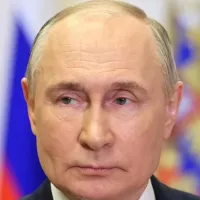
Vladimir Putin is a prominent Russian politician who has significantly...

Ukraine is a country in Eastern Europe the second-largest on...

India officially the Republic of India is a South Asian...
Hong Kong is a densely populated special administrative region of...

Germany officially the Federal Republic of Germany is located in...

China officially the People's Republic of China PRC is located...
Trending

4 hours ago Venue and Timing Uncertain for WNBA Finals Game 6 Between Valkyries and Dream

4 hours ago LeBron James Highlights Taurean Prince Quotes Amidst Notable 76ers Performance Improvements
4 hours ago Cairo Santos Kicks Career-Long 58-Yard Field Goal in Bears Victory Over Patriots

4 hours ago Bobby Brink Finds Stability on Minnesota Wild Third Line Amid Mixed Performance Reviews

5 hours ago Domantas Sabonis Faces Criticism Amidst Kings Performance Struggles and Rookie Tensions

5 hours ago Miranda Lambert to Headline Dallas Cowboys 30th Annual Thanksgiving Halftime Show
Popular

Ilhan Omar is a prominent American politician currently serving as...

Ken Paxton is an American politician and lawyer serving as...

Elon Musk is a visionary entrepreneur and engineer known for...
Barack Obama the th U S President - was the...

Michael Joseph Jackson the King of Pop was a highly...

Greg Abbott is the current and th Governor of Texas...