Childhood and Education Journey of Pat Riley in Timeline


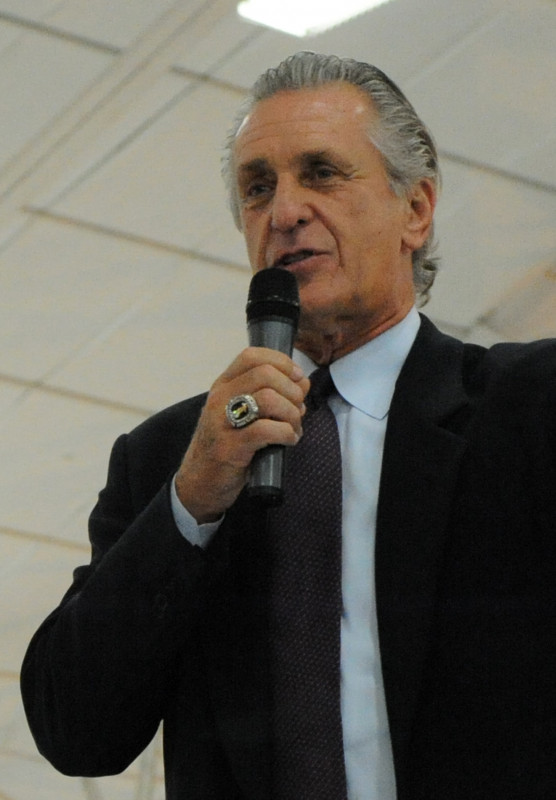
An overview of the childhood and early education of Pat Riley, highlighting the experiences that shaped the journey.
Pat Riley is an iconic figure in professional basketball, renowned for his immense success as both a player, head coach, and executive. After an unremarkable playing career, he rose to prominence as the head coach of the 'Showtime' Los Angeles Lakers in the 1980s, leading them to four NBA championships. Known for his meticulous preparation, demanding intensity, and signature slicked-back hairstyle, Riley later coached the New York Knicks before joining the Miami Heat in 1995. As the Heat’s team president and former coach, he orchestrated the acquisition of superstars like Shaquille O'Neal, Dwyane Wade, LeBron James, and Jimmy Butler, securing multiple additional championships for the franchise. A multiple-time NBA Coach of the Year and Executive of the Year, Riley is widely regarded as one of the greatest architects and motivators in league history, embodying a culture of 'Heat Culture' defined by discipline, hard work, and relentless competitiveness.
1944: Leon Riley's Major League Baseball Debut
In 1944, Pat Riley's father, Leon Riley, played in four games for the Philadelphia Phillies, marking a milestone in his long career in professional baseball.


March 20, 1945: Birth of Patrick James Riley
On March 20, 1945, Patrick James Riley, who would later become a renowned NBA player, coach, and executive, was born.
December 29, 1961: Linton High School vs. Power Memorial Basketball Game
On December 29, 1961, Pat Riley played for Linton High School in a notable game against Power Memorial, which featured a young Lew Alcindor (later Kareem Abdul-Jabbar). Linton High School emerged victorious with a score of 74–68 in this historic matchup.
1967: 1967 Dual Sport Draft Selections
In 1967, Pat Riley reached significant career milestones by being selected as the seventh overall pick in the NBA draft by the San Diego Rockets and simultaneously drafted as a wide receiver in the 11th round by the Dallas Cowboys, despite having no college football experience.
1970: Selection by Portland Trail Blazers
Following his three-year tenure with the Rockets, Pat Riley was chosen by the Portland Trail Blazers during the 1970 NBA expansion draft.
1975: Trade to the Phoenix Suns
In 1975, Pat Riley was traded to the Phoenix Suns during the 1975–76 NBA season.
1976: Retirement from the NBA
In 1976, Pat Riley officially retired from professional basketball after completing nine seasons in the league with a career average of 7.4 points per game.
1977: Return to the NBA as a Broadcaster
In 1977, Pat Riley made his return to the National Basketball Association by taking on a new professional role as a broadcaster for the Los Angeles Lakers.
November 1979: Transition to Assistant Coach
During November 1979, following a severe bicycle accident involving head coach Jack McKinney, Paul Westhead assumed the head coaching position for the Lakers and appointed Pat Riley as an assistant coach.
1981: Pat Riley Appointed Lakers Head Coach
During the 1981-82 NBA season, following a period of internal tension between Magic Johnson and head coach Paul Westhead, Lakers owner Jerry Buss fired Westhead. After a public press conference where initial plans to appoint Jerry West as head coach were altered, Pat Riley was officially named the interim head coach of the Los Angeles Lakers in 1981, a position that eventually became permanent.
1987: 1987 Lakers Regular Season
During the 1987 season, the Los Angeles Lakers achieved a higher number of regular-season wins compared to the following year, setting the stage for Pat Riley's championship repeat efforts in 1987 and 1988.
1987: Pat Riley Coaches Lakers to 1987 NBA Championship
In 1987, Pat Riley led a legendary Los Angeles Lakers roster, including stars like Magic Johnson and Kareem Abdul-Jabbar, to a 65-17 regular season record. The team went on to defeat the Boston Celtics in six games during the 1987 NBA Finals, securing Riley's third championship as a head coach.
1989: 1989 NBA Finals Lakers Defeat and Injuries
During the 1989 NBA Finals, Pat Riley's intense training regimen in Santa Barbara led to critical injuries for key players Byron Scott and Magic Johnson, ultimately resulting in the Los Angeles Lakers being swept by the Detroit Pistons.
1989: Pat Riley Named NBA Coach of the Year
In 1989, Pat Riley was honored as the NBA Coach of the Year for the first time in his career, solidifying his status as one of the league's most prominent figures before he ultimately stepped down as head coach of the Los Angeles Lakers following a playoff series loss to the Phoenix Suns.
1991: Pat Riley Named Head Coach of the New York Knicks
In 1991, following a one-year stint as a television commentator for NBC, Pat Riley transitioned back to coaching by accepting the position of head coach for the New York Knicks ahead of the 1991–92 season.
1991: Knicks swept by Chicago Bulls
In 1991, the New York Knicks suffered a clean sweep at the hands of the Chicago Bulls during the playoffs as Chicago advanced toward their first championship title.
1995: Pat Riley's Initial Season with the Miami Heat
During the 1995-96 NBA season, Pat Riley took charge of the Miami Heat, leading the team to a 42-40 record. This marked a significant 10-game improvement for the franchise, which also saw the acquisition of key players like Alonzo Mourning and Tim Hardaway to serve as building blocks for the future.
1995: Joined the Miami Heat
In 1995, Pat Riley began his tenure with the Miami Heat, assuming the roles of both team president and head coach.
Mentioned in this timeline
Basketball is a team sport played on a rectangular court...
LeBron James nicknamed King James is an American professional basketball...
Shaquille O'Neal is widely regarded as one of the most...
Kareem Abdul-Jabbar a Naismith Memorial Basketball Hall of Famer is...
The White House located at Pennsylvania Avenue NW in Washington...
Earvin Magic Johnson Jr is a celebrated American businessman and...
Trending
4 hours ago Federal Prosecutors Dismantle Massive Alleged Marriage Fraud Ring in Massachusetts
4 hours ago Nico Paz reveals inspiration for his headers

4 hours ago Kelly Ripa and Mark Consuelos Finally Welcome Home Their New Puppy After Health Scare
5 hours ago Maryland Terrapins Fire Head Football Coach Mike Locksley
5 hours ago Stefanos Tsitsipas Targets Grand Slam Glory Amidst Renaissance

5 hours ago Judge Judy Sheindlin Celebrates Her 84th Birthday
Popular

Ilhan Omar is a prominent American politician currently serving as...
Ken Paxton is an American politician and lawyer serving as...

Elon Musk is a visionary entrepreneur and engineer known for...

Michael Joseph Jackson the King of Pop was a highly...
Cristiano Ronaldo widely considered one of the greatest footballers captains...

MrBeast the professional name of Jimmy Donaldson is the most-subscribed...