History of Poland–Ukraine relations in Timeline


Poland and Ukraine established strong relations after Ukraine's independence in 1991, with Poland being the first to recognize it. While historical controversies occasionally arise, they generally don't significantly impact the positive bilateral relationship between the two nations. The alliance has strengthened in recent years, particularly in the face of external threats.
1918: Polish-Ukrainian War and Alliance
In 1918, the Polish–Ukrainian War and the Polish–Ukrainian alliance occurred in the aftermath of World War I.


1919: Resolution Drafted for Memorial Day of Victims
In response to Poland's resolution, in July 2016 Ukrainian MP Oleksii Musii drafted a resolution declaring March 24 "Memorial Day of the Victims of Polish state genocide against Ukrainians in 1919–1951".
1920: Polish-Ukrainian War and Alliance
In 1920, the Polish–Ukrainian War and the Polish–Ukrainian alliance occurred in the aftermath of World War I.
1943: Ukraine Forbids Exhumation of Polish Victims
In April 2017, the Ukrainian Institute of National Remembrance forbade the exhumation of Polish victims of the 1943 genocide of Poles in Volhynia and Eastern Galicia, as retaliation for the dismantling of a monument to UPA soldiers in Hruszowice, Poland.
1947: Operation Vistula
In 1947, Operation Vistula took place in the aftermath of World War II, impacting the demographics of the regions along the Polish-Ukrainian border.
1951: Resolution Drafted for Memorial Day of Victims
In response to Poland's resolution, in July 2016 Ukrainian MP Oleksii Musii drafted a resolution declaring March 24 "Memorial Day of the Victims of Polish state genocide against Ukrainians in 1919–1951".
1985: Schengen Agreement Acceptance
In 1985, Poland's acceptance of the Schengen Agreement led to complications regarding Ukrainian border traffic.
September 1989: Polish Parliamentarians in Kyiv
In September 1989, Polish parliamentarians visited Kyiv for the People's Movement of Ukraine's congress, supporting Ukrainian national democratic forces and laying the groundwork for new Polish-Ukrainian relations.
July 16, 1990: Declaration of State Sovereignty of Ukraine
On July 16, 1990, Ukraine's Declaration of State Sovereignty took place.
July 27, 1990: Polish Senate on Ukraine's Sovereignty
On July 27, 1990, the Polish Senate acknowledged Ukraine's Declaration of State Sovereignty, expressing a desire for close cooperation.
August 3, 1990: Poland Condemns Vistula Action
On August 3, 1990, the Senate of the Republic of Poland condemned the Vistula action, providing a political and moral assessment of the events and seeking to compensate for the resulting grievances.
August 24, 1991: Ukraine Declares Independence
On August 24, 1991, Ukraine declared independence following the failed Soviet coup attempt.
1991: Ukraine Gained Independence
In 1991, Ukraine gained independence from the Soviet Union, marking a pivotal moment in the history of Poland–Ukraine relations. Poland was the first country to recognize Ukraine's independence.
1993: President Wałęsa's Visit to Ukraine
In 1993, President of Poland Lech Wałęsa paid an official visit to Ukraine, resulting in the establishment of the Advisory Committee of the Presidents of Ukraine and the Republic of Poland. In February of the same year, an agreement on military cooperation was also signed.
June 1996: Agreement on Cultural Property Protection
In June 1996, Ukraine and Poland established an agreement for cooperation concerning the protection and return of cultural property lost and illegally displaced during World War II, creating an Intergovernmental Ukrainian-Polish Commission.
1996: President Kuchma's Visit to Warsaw
In 1996, Leonid Kuchma visited Warsaw. Later on, Ukrainian–Polish relations reached the level of a strategic partnership.
1997: President Kwaśniewski's Visit to Kyiv
In 1997, Aleksander Kwaśniewski visited Kyiv, solidifying strategic partnership.
March 5, 1998: Geremek on Ukraine's Strategic Importance
On March 5, 1998, B. Geremek stated that "independent Ukraine is of key strategic importance both for Poland and its security, and for stability in the entire region. Maintaining privileged relations with Ukraine contributes to strengthening European security."
1998: Joint Actions to Avoid EU Enlargement Consequences
In 1998, during the visit of Minister Bronisław Geremek to Ukraine on September 15–16, the parties agreed to intensify joint actions in order to avoid possible negative consequences of EU enlargement.
March 1999: Ukrainian-Polish Conference on European Integration
At the end of March 1999, the first meeting of the Ukrainian-Polish Conference on European Integration took place in Warsaw.
2003: Schengen Agreement Created Border Problems
In 2003, Poland's acceptance of the 1985 Schengen Agreement created problems with Ukrainian border traffic.
April 2005: Year of Ukraine Inaugurated
In April 2005, the Year of Ukraine was inaugurated in Warsaw with President Viktor Yushchenko's participation, marking strengthened relations and cooperation.
2007: Poland's Entry into the Schengen Area
From the end of 2007, Poland's entry into the Schengen Area created new procedures and rules for crossing the Ukrainian-Polish border, causing difficulties for cooperation between the two states.
March 2008: Poland Supports Union for the Mediterranean
In March 2008, at the European Council, Poland supported the proposal to create a Union for the Mediterranean, anticipating EU support for separating the eastern direction of the European Neighbourhood Policy (ENP).
May 7, 2008: Poland's Foreign Policy Declaration
On May 7, 2008, Polish Foreign Minister Radoslaw Sikorski, in a Sejm address, outlined Poland's foreign policy for 2008, emphasizing the nation's focus on developing a common foreign policy towards the East and specializing in strengthening the eastern vector of EU policy.
May 26, 2008: "Eastern Partnership" approved at EU meeting
On May 26, 2008, the joint Polish-Swedish proposal "Eastern Partnership" was presented, approved at the meeting of the EU General Policy Council and the Council on Foreign Relations in Brussels and has become the flagship initiative of the entire EU.
2008: Joint Research Projects
As of 2008, the joint Ukrainian–Polish cooperation program in the field of science and technology included more than 150 joint research projects.
2008: Allegation of Putin's Proposal to Divide Ukraine
In 2008, according to Poland's ex-foreign minister Radoslaw Sikorski, Russian President Vladimir Putin allegedly proposed to then Polish Prime Minister Donald Tusk the division of Ukraine between Poland and Russia.
2009: Ukraine Joins Eastern Partnership
In 2009, Ukraine became a member of the Eastern Partnership, a European Union project initiated by Poland to discuss trade, economic strategy, and travel agreements between the EU and its Eastern European neighbors.
2014: Poland's Support During Euromaidan and Crimean Annexation
In 2014, Poland actively supported Ukraine during the Euromaidan and the annexation of Crimea by Russia, advocating for Ukraine within the European Union and supporting sanctions against Russia. Poland also declared it would never recognize the annexation. Poland took in a large number of Ukrainian refugees.
2015: Criticism of Ukrainian Memory Laws
In 2015, the Ukrainian decommunization laws, which honored the UPA and related organizations, faced criticism in Poland due to historical controversies.
2015: Tensions Arise Over WWII Interpretations
Since 2015, differing interpretations of events during World War II involving Poles and Ukrainians have led to increased tensions between the two nations.
July 2016: Polish Sejm Declares National Day of Remembrance
In July 2016, the Polish Sejm passed a resolution making July 11 a National Day of Remembrance of Victims of Genocide, commemorating over 100,000 Polish citizens killed during a coordinated attack by the UPA in Volhynia.
2016: Postponement of "Volhynia" Screening
In 2016, a special screening of the Polish film "Volhynia" by the Polish Institute in Kyiv for Ukrainian MPs was postponed due to concerns that it may disrupt public order, based on recommendations from the Ukrainian foreign ministry.
April 2017: Ukraine Forbids Exhumation of Polish Victims
In April 2017, the Ukrainian Institute of National Remembrance forbade the exhumation of Polish victims of the 1943 genocide of Poles in Volhynia and Eastern Galicia, as retaliation for the dismantling of a monument to UPA soldiers in Hruszowice, Poland.
2018: Polish Act on the Institute of National Remembrance
In 2018, Article 2a of the Polish Act on the Institute of National Remembrance, discussing the "crimes of Ukrainian nationalists and members of Ukrainian organizations collaborating with the Third German Reich", sparked criticism from Ukraine, where it was dubbed the "Anti-Banderovite Law".
August 2019: Zelenskyy Promises to Lift Moratorium on Exhumations
In August 2019, President Volodymyr Zelenskyy pledged to lift the moratorium on exhuming Polish mass graves in Ukraine. This followed a ban by the previous Ukrainian government on Polish exhumations of victims of the UPA-perpetrated Volhynian genocide.
February 2022: Declaration of Solidarity and Support for Ukraine
On 23 February 2022, Polish President Andrzej Duda, along with the President of Lithuania, visited Kyiv and jointly declared solidarity and support for Ukraine, calling for international sanctions against Russia in response to escalating tensions.
May 2022: Poland Becomes Second Largest Weapon Supplier to Ukraine
During the war in 2022, Poland became the second-largest weapons supplier to Ukraine, with the total value of weapons exceeding $1.6 billion as of 24 May 2022. The weapons included missiles, grenade launchers, rifles, drones, tanks, RPGs and ammunition.
September 2023: Poland Halts Weapon Supplies Amid Grain Dispute
On 20 September 2023, Polish Prime Minister Mateusz Morawiecki announced Poland would not supply weapons to Ukraine beyond existing agreements, due to tensions over the Polish import ban on Ukrainian grain. Morawiecki also warned President Zelensky after Zelensky accused Poland of making a 'political theater' out of grain issue.
February 2024: Blockade Expands and Farmers Protest
By February 2024, the blockade of the Poland-Ukraine border had expanded to all major crossings, including railways, and protestors had spilled grain from train transports. On 27 February 2024, about 10,000 farmers marched in Warsaw demanding a ban on food imports from Ukraine.
Mentioned in this timeline
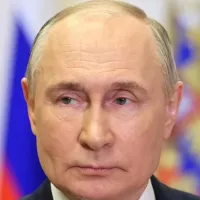
Vladimir Putin is a prominent Russian politician who has significantly...
Ukraine is a country in Eastern Europe the second-largest on...
The Union of Soviet Socialist Republics USSR existed from to...
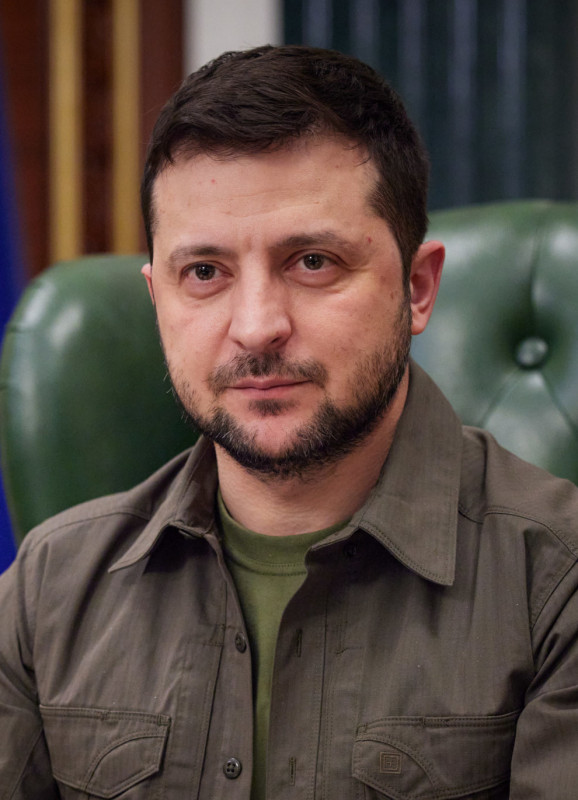
Volodymyr Zelenskyy is the current president of Ukraine serving since...
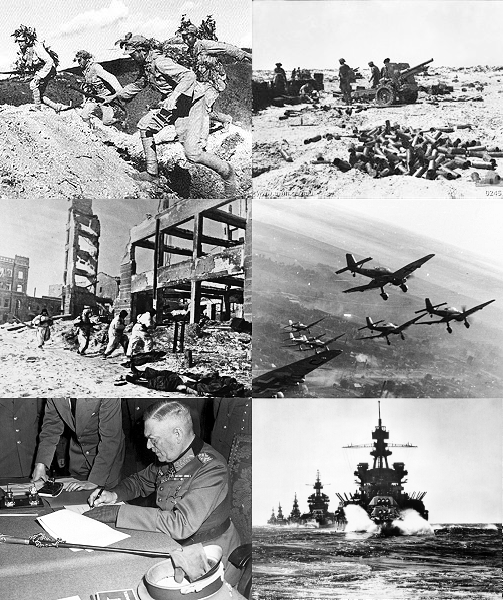
World War II - was a global conflict between the...

Football commonly known as soccer in many regions is the...
Trending

3 hours ago Debra Messing Endorses Trump-Backed Candidate Bruce Blakeman for New York Governor
3 hours ago North Carolina Cities Consider Moratoriums on New Data Center Development Projects

3 hours ago Amazon Prime Big Deal Days Offers Massive Savings for Holiday Shopping Season
4 hours ago Daylight Saving Time 2026 Ending: Clock Change Debate Continues
4 hours ago Nebraska Head Coach Matt Rhule Makes Surprise Cameo Appearance in HBO's Lanterns Season Finale

4 hours ago RFK Racing and Brad Keselowski Announce Surprising Departure and Split
Popular

Ken Paxton is an American politician and lawyer serving as...

Jameis Winston is an American football quarterback currently playing for...
Shakira Isabel Mebarak Ripoll the Queen of Latin Music is...

Elon Musk is a visionary entrepreneur and engineer known for...
Bernie Sanders is a prominent American politician and the senior...
Cristiano Ronaldo widely considered one of the greatest footballers captains...