Lasting Legacy of Richard Nixon: A Look at the Influence on History


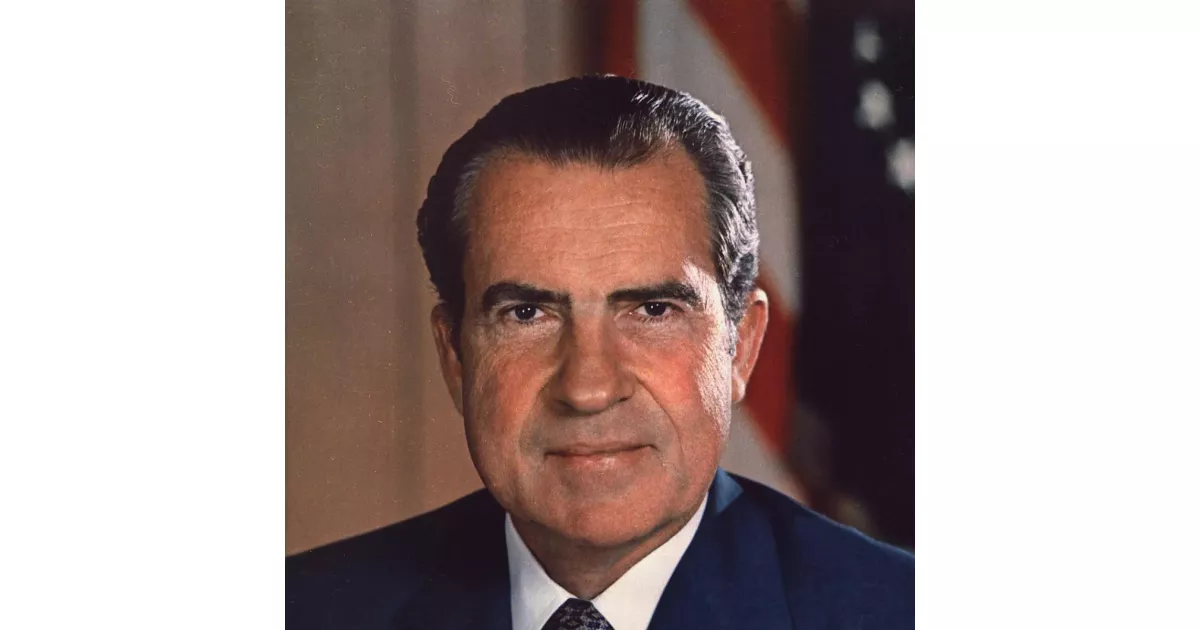
A closer look at the lasting mark left by Richard Nixon—a timeline of influence.
Richard Nixon, the 37th U.S. President, served from 1969-1974. A Republican, he previously served as a Congressman, Senator, and Vice President. His presidency is noted for reducing US involvement in Vietnam, establishing détente with the Soviet Union and China, overseeing the Apollo 11 Moon landing, and creating the EPA and OSHA. Nixon resigned in 1974 amid the Watergate scandal, becoming the only president to ever resign.
1962: Nixon's Farewell Speech
In 1962, Nixon gave a farewell speech that was later quoted by Tom Wicker of The New York Times.


1971: White House audio tapes
In 1971, White House audio tapes captured derogatory statements made by Nixon towards Jews.
1973: Endangered Species Act
In 1973, Nixon enforced legislation such as the Endangered Species Act.
August 8, 1974: Nixon Announces Resignation
On August 8, 1974, facing certain impeachment and removal from office, Nixon announced on television that he would resign the presidency the following day.
September 8, 1974: Ford Pardons Nixon
On September 8, 1974, President Gerald Ford granted Nixon a "full, free, and absolute pardon", ending any possibility of an indictment.
1977: Nixon-Frost Interviews Aired
In 1977, the filmed interviews of Nixon by David Frost were aired. The interviews garnered 45–50 million viewers.
1978: Publication of RN: The Memoirs of Richard Nixon
In 1978, Nixon published his memoirs, "RN: The Memoirs of Richard Nixon", which became a bestseller.

1983: George McGovern commented on Nixon's foreign policy
In 1983, George McGovern commented that Nixon had a practical approach to China and the Soviet Union, but criticized his continuation of the war in Vietnam.
1986: Nixon addressed newspaper publishers convention
In 1986, Nixon addressed a convention of newspaper publishers, impressing his audience and leading to a Newsweek story on "Nixon's comeback".
1986: Nixon visited the Soviet Union
In 1986, Nixon visited the Soviet Union and sent President Reagan a memorandum with foreign policy suggestions and impressions of Mikhail Gorbachev. Nixon was ranked as one of the ten most admired men in the world following the trip.
July 19, 1990: Richard Nixon Library and Birthplace opened
On July 19, 1990, the Richard Nixon Library and Birthplace opened in Yorba Linda, California, attended by the Nixons and former Presidents Ford, Reagan, and George H. W. Bush.
1993: Nixon becomes an elder statesman
By 1993, Nixon had cemented his role as an elder statesman. President Bill Clinton regularly sought his advice.
January 1994: Nixon founded the Nixon Center
In January 1994, Nixon founded the Nixon Center (now the Center for the National Interest), a policy think tank in Washington.
April 27, 1994: Richard Nixon's funeral
Richard Nixon's funeral took place on April 27, 1994, in Yorba Linda, California. Eulogists included President Bill Clinton and former secretary of state Henry Kissinger.
1998: Impeachment of Bill Clinton
During the impeachment of Bill Clinton in 1998, Republicans and Democrats drew comparisons and contrasts to Nixon and Watergate. There was also a decrease in the power of the presidency as Congress passed restrictive legislation in the wake of Watergate.
October 1999: Release of 1971 White House audio tapes
In October 1999, audio tapes from 1971 were released containing derogatory statements by Nixon toward Jews.
2011: Nigel Bowles' Study of Nixon's Economic Record
In 2011, political economist Nigel Bowles published a study of Nixon's economic record, stating that the new president did little to alter Johnson's policies through the first year of his presidency.
2011: Paper on Nixon and the environment
In a 2011 paper, historian Paul Charles Milazzo highlighted Nixon's environmental legacy, including the creation of the EPA and the enforcement of the 1973 Endangered Species Act.
Mentioned in this timeline
John F Kennedy JFK was the th U S President...
Bill Clinton served as the nd U S President from...
California is a U S state on the Pacific Coast...
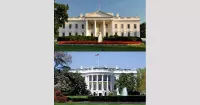
The White House located at Pennsylvania Avenue NW in Washington...
NASA the National Aeronautics and Space Administration is the U...

Buzz Aldrin is an American former astronaut engineer and fighter...
Trending
5 days ago Arnold Schwarzenegger Childhood Home Transformed Into Dedicated Museum in Austria

4 hours ago Citibank Navigates Hiring Shifts, Expansion in China, and Stock Valuation Forecasts
4 hours ago Two Teenage Girls Arrested for Alleged Corona High School Shooting Plot
5 hours ago Catherine Breed Makes History Swimming Entire 900-Mile California Coastline
5 hours ago League of Legends Patch 26.21 Introduces ARAM Mayhem and New Augments
5 hours ago U.S. and Israel Coordinate Potential Renewed Strike Plans Against Iran
Popular
Ken Paxton is an American politician and lawyer serving as...

Ilhan Omar is a prominent American politician currently serving as...

Michael Joseph Jackson the King of Pop was a highly...
Elon Musk is a visionary entrepreneur and engineer known for...

Cristiano Ronaldo widely considered one of the greatest footballers captains...

Linda Ronstadt is a versatile American singer renowned for her...