Major Controversies Surrounding Richard Nixon: A Detailed Timeline


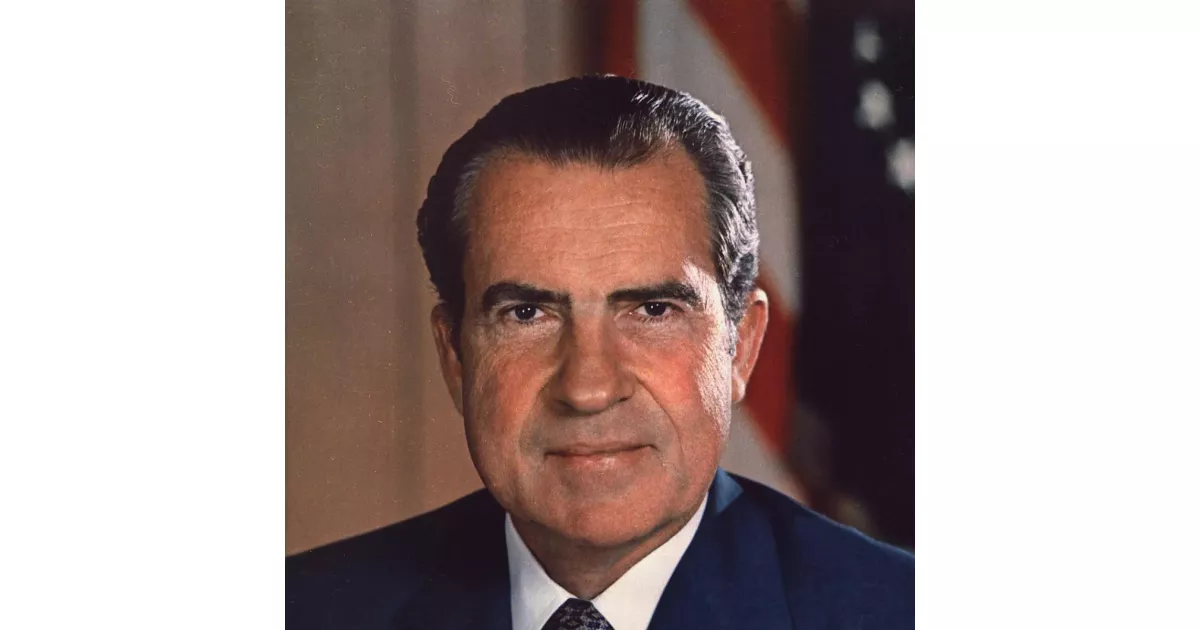
Public opinion and media debates around Richard Nixon—discover key moments of controversy.
Richard Nixon, the 37th U.S. President, served from 1969-1974. A Republican, he previously served as a Congressman, Senator, and Vice President. His presidency is noted for reducing US involvement in Vietnam, establishing détente with the Soviet Union and China, overseeing the Apollo 11 Moon landing, and creating the EPA and OSHA. Nixon resigned in 1974 amid the Watergate scandal, becoming the only president to ever resign.
February 1947: Joins House Un-American Activities Committee
In February 1947, Nixon joined the House Un-American Activities Committee (HUAC) and heard Gerhard Eisler and Ruth Fischer testify. Fellow U.S. Representative Charles J. Kersten introduced him to Father John Francis Cronin, who shared his paper "The Problem of American Communism in 1945".


May 1948: Co-sponsors Mundt-Nixon Bill
In May 1948, Nixon co-sponsored the Mundt–Nixon Bill, which aimed to register all Communist Party members and require a statement of the source of all printed and broadcast material issued by organizations that were found to be Communist fronts.
August 1948: Alger Hiss Spy Case
In August 1948, Richard Nixon gained national attention when his persistence as a House Un-American Activities Committee member helped break the Alger Hiss spy case, leading to Hiss's perjury conviction in 1950.
1950: Hiss Convicted of Perjury
In 1950, Alger Hiss was convicted of perjury for denying under oath that he had passed documents to Whittaker Chambers, in a case that Nixon had pursued as part of the House Un-American Activities Committee.
September 23, 1952: The Checkers Speech
On September 23, 1952, facing allegations of a conflict of interest due to a political fund, Nixon delivered the Checkers speech on television, defending himself and emotionally stating that his wife wore a "respectable Republican cloth coat" and mentioning the gift of "a little cocker spaniel dog ... named Checkers."
November 11, 1962: "The Political Obituary of Richard M. Nixon" airs
On November 11, 1962, ABC News aired "The Political Obituary of Richard M. Nixon", an episode of Howard K. Smith: News and Comment, which highlighted Nixon's California defeat. The program featured Alger Hiss, leading to public outcry and sympathy for Nixon.
October 22, 1968: Information about Johnson's "October Surprise"
On October 22, 1968, Nixon received information indicating that Johnson was planning an "October surprise" by abandoning conditions for a bombing halt in Vietnam, potentially to aid Humphrey's election campaign.
March 1969: Operation Menu Bombing Campaign Begins
In March 1969, Nixon approved the secret B-52 carpet bombing campaign of North Vietnamese and Khmer Rouge positions in Cambodia, code-named Operation Menu, without the consent of Cambodian leader Norodom Sihanouk.
1969: Stepping Up Covert Operations Against Cuba
In 1969, upon taking office, Nixon stepped up covert operations against Cuba and its president, Fidel Castro.
April 30, 1970: Invasion of Cambodia Announced
On April 30, 1970, Richard Nixon announced the ground invasion of Cambodia against North Vietnamese bases, leading to further protests, including the Kent State University shooting.
September 1970: Opposition to Salvador Allende
In September 1970, the election of Salvador Allende as President of Chile spurred a vigorous campaign of covert opposition by Nixon and Kissinger.
1971: Covert Aid to Pakistan and End of Gold Standard
In 1971, Nixon covertly aided Pakistan during the Bangladesh Liberation War and ended the direct international convertibility of the U.S. dollar to gold, effectively taking the United States off the gold standard.
1971: White House audio tapes
In 1971, White House audio tapes captured derogatory statements made by Nixon towards Jews.
1971: Publication of the Pentagon Papers
In 1971, excerpts from the "Pentagon Papers", leaked by Daniel Ellsberg, were published by The New York Times and The Washington Post. Nixon initially hesitated but was later persuaded to try and prevent publication, though the Supreme Court ruled in favor of the newspapers.
June 17, 1972: Watergate Break-in
On June 17, 1972, five men were caught breaking into the Democratic Party headquarters at the Watergate complex in Washington, D.C., which initiated the Watergate scandal.
June 20, 1972: Missing Tape Gap
On June 20, 1972, a tape of conversations held in the White House later revealed an 18+1⁄2 minute gap, further fueling the Watergate scandal.
1972: Appealing to Racial Conservatism
In 1972, Nixon hoped to boost his election chances by appealing to the racial conservatism of Southern whites, who were angered by the civil rights movement, according to some scholars.
1972: Clean Water Act Veto
In 1972, Nixon vetoed the Clean Water Act, objecting to the amount of money to be spent on it, though Congress overrode the veto.
July 1973: Butterfield Testifies About Taping System
In July 1973, White House aide Alexander Butterfield testified under oath to Congress that Nixon had a secret taping system and recorded his conversations and phone calls in the Oval Office.
September 11, 1973: Coup d'état in Chile
On September 11, 1973, General Augusto Pinochet assumed power in Chile in a violent coup d'état, during which Salvador Allende died.
October 6, 1973: Yom Kippur War and U.S. Response
On October 6, 1973, an Arab coalition led by Egypt and Syria attacked Israel, leading to the Yom Kippur War. Nixon ordered an airlift to resupply Israeli losses. Later, when Soviet Premier Brezhnev threatened military intervention, Nixon ordered the U.S. military to DEFCON3.
October 10, 1973: Agnew Resigns as Vice President
On October 10, 1973, Vice President Agnew resigned for reasons unrelated to Watergate; he was convicted on charges of bribery, tax evasion, and money laundering during his tenure as governor of Maryland.
November 17, 1973: "I'm not a crook"
On November 17, 1973, during a televised question-and-answer session, Nixon famously stated, "People have got to know whether or not their president is a crook. Well, I'm not a crook. I've earned everything I've got."
1973: Watergate Scandal Revelations
From 1973, ongoing revelations from the Nixon administration's involvement in Watergate eroded his support in Congress and the country.
1973: Oil Crisis
In 1973, due to U.S. support for Israel during the Yom Kippur War, Arab OPEC nations retaliated by refusing to sell crude oil to the U.S., resulting in the 1973 oil crisis. This caused gasoline shortages and rationing in the United States in late 1973.
May 9, 1974: House Judiciary Committee Opens Impeachment Hearings
On May 9, 1974, the House Judiciary Committee opened impeachment hearings against President Nixon, which were televised on major TV networks.
August 5, 1974: Release of the "Smoking Gun Tape"
On August 5, 1974, Nixon released the "Smoking Gun Tape", accepting blame for misleading the country about when he had been told of White House involvement in the Watergate break-in. The tape demonstrated Nixon had been told of the White House connection to the Watergate burglaries soon after they took place and had approved plans to thwart the investigation.
August 9, 1974: Nixon's Resignation
On August 9, 1974, facing almost certain impeachment and removal from office, Nixon resigned from the presidency due to the Watergate scandal.
September 8, 1974: Ford Pardons Nixon
On September 8, 1974, President Gerald Ford granted Nixon a "full, free, and absolute pardon", ending any possibility of an indictment.
October 1974: Nixon fell ill with phlebitis
In October 1974, Nixon became ill with phlebitis and chose surgery after being advised by doctors. While Nixon was under subpoena, The Washington Post questioned his illness, and Judge John Sirica excused his presence at the trial. Congress instructed Ford to retain Nixon's presidential papers. The 1974 midterm elections saw Republican losses, influenced by Watergate and Nixon's pardon.
1974: Nixon Pays Back Taxes
In 1974, Nixon paid $465,000 in back taxes amidst allegations of improper personal finances and tax issues.
1975: North Vietnam Conquest of South Vietnam
In 1975, after American combat support ended and a brief truce, fighting resumed, leading to North Vietnam conquering South Vietnam.
1976: Nixon disbarred in New York
In 1976, Nixon was disbarred by a New York State court for obstruction of justice in the Watergate affair, without presenting a defense.
1983: George McGovern commented on Nixon's foreign policy
In 1983, George McGovern commented that Nixon had a practical approach to China and the Soviet Union, but criticized his continuation of the war in Vietnam.
1998: Impeachment of Bill Clinton
During the impeachment of Bill Clinton in 1998, Republicans and Democrats drew comparisons and contrasts to Nixon and Watergate. There was also a decrease in the power of the presidency as Congress passed restrictive legislation in the wake of Watergate.
October 1999: Release of 1971 White House audio tapes
In October 1999, audio tapes from 1971 were released containing derogatory statements by Nixon toward Jews.
Mentioned in this timeline
John F Kennedy JFK was the th U S President...
Bill Clinton served as the nd U S President from...
California is a U S state on the Pacific Coast...
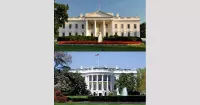
The White House located at Pennsylvania Avenue NW in Washington...
NASA the National Aeronautics and Space Administration is the U...

Buzz Aldrin is an American former astronaut engineer and fighter...
Trending
5 days ago Arnold Schwarzenegger Childhood Home Transformed Into Dedicated Museum in Austria

4 hours ago Citibank Navigates Hiring Shifts, Expansion in China, and Stock Valuation Forecasts
4 hours ago Two Teenage Girls Arrested for Alleged Corona High School Shooting Plot
5 hours ago Catherine Breed Makes History Swimming Entire 900-Mile California Coastline
5 hours ago League of Legends Patch 26.21 Introduces ARAM Mayhem and New Augments
5 hours ago U.S. and Israel Coordinate Potential Renewed Strike Plans Against Iran
Popular
Ken Paxton is an American politician and lawyer serving as...

Ilhan Omar is a prominent American politician currently serving as...

Michael Joseph Jackson the King of Pop was a highly...

Elon Musk is a visionary entrepreneur and engineer known for...

Cristiano Ronaldo widely considered one of the greatest footballers captains...

Linda Ronstadt is a versatile American singer renowned for her...