Challenges in the Life of Richard Nixon in a Detailed Timeline


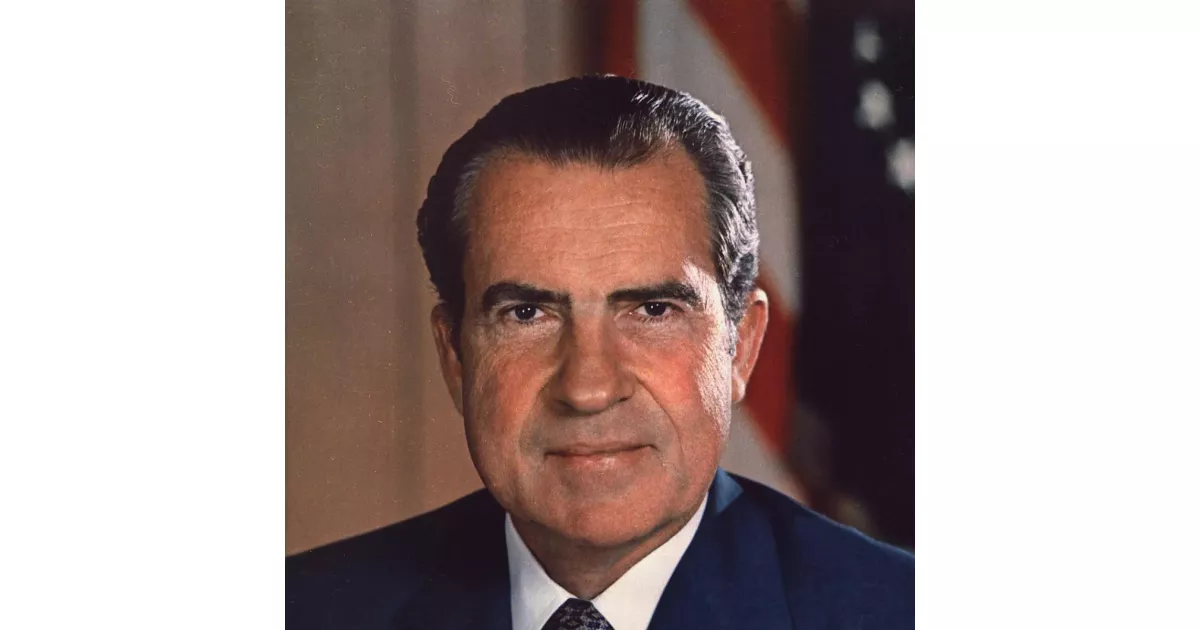
A closer look at the defining struggles that shaped Richard Nixon's life and career.
Richard Nixon, the 37th U.S. President, served from 1969-1974. A Republican, he previously served as a Congressman, Senator, and Vice President. His presidency is noted for reducing US involvement in Vietnam, establishing détente with the Soviet Union and China, overseeing the Apollo 11 Moon landing, and creating the EPA and OSHA. Nixon resigned in 1974 amid the Watergate scandal, becoming the only president to ever resign.
1922: Nixon Family Ranch Fails
In 1922, the Nixon family ranch failed, leading the family to move to Whittier, California.


1954: Republicans Lost Control of Congress
In the 1954 elections, despite intense campaigning by Nixon, the Republicans lost control of both houses of Congress, causing Nixon to contemplate leaving politics once he had served out his term.
December 1955: Eisenhower's Suggestion
In December 1955, Eisenhower proposed that Nixon not run for reelection and instead become a Cabinet officer in a second Eisenhower administration.
April 27, 1958: Goodwill Tour of South America
On April 27, 1958, Richard and Pat Nixon embarked on a goodwill tour of South America. In Montevideo, Uruguay, Nixon visited a college campus. In Lima, Peru, he was met with student demonstrations, and in Caracas, Venezuela, Nixon and his wife were spat on by anti-American demonstrators and their limousine was attacked.
1960: Loss in Presidential Election
In 1960, Richard Nixon narrowly lost the presidential election to John F. Kennedy.
1962: Loss in California Gubernatorial Race
In 1962, Richard Nixon lost the race for governor of California.
1962: California Gubernatorial Election
In 1962, Richard Nixon ran for governor of California against incumbent Pat Brown, despite some reluctance and suspicion that he viewed the position as a stepping stone for a presidential run. He lost the election, which was widely considered the end of his political career.
1969: Cancellation of Manned Orbital Laboratory Program
In 1969, Nixon canceled the Air Force Manned Orbital Laboratory program because uncrewed spy satellites were a more cost-effective way to achieve the same reconnaissance objective.
1969: Economic Conditions at Start of Nixon's Presidency
In 1969, when Nixon took office, inflation was at 4.7 percent, its highest rate since the Korean War. Unemployment was low, but interest rates were at their highest in a century.
October 1970: Soviet Expansion at Cienfuegos Port
In October 1970, the Soviets began expanding their base at the Cuban port of Cienfuegos, leading to a minor confrontation. The Soviets then stipulated they would not use Cienfuegos for submarines bearing ballistic missiles.
1970: Economic Struggles and Midterm Elections
In 1970, the U.S. economy continued to struggle, contributing to a lackluster Republican performance in the midterm congressional elections.
1970: Nixon's alcohol consumption
Nixon sometimes drank alcohol to excess, especially in 1970, and was prescribed sleeping pills and dilantin for depression.
August 1971: Nixon Announces Wage and Price Controls
In August 1971, with inflation unresolved and an election year looming, Nixon announced temporary wage and price controls, allowed the dollar to float, and ended the convertibility of the dollar into gold.
June 17, 1972: Watergate Break-in
On June 17, 1972, five men were caught breaking into the Democratic Party headquarters at the Watergate complex in Washington, D.C., which initiated the Watergate scandal.
June 20, 1972: Missing Tape Gap
On June 20, 1972, a tape of conversations held in the White House later revealed an 18+1⁄2 minute gap, further fueling the Watergate scandal.
June 1973: Reimposition of Price Controls
In June 1973, after winning re-election, Nixon reimposed price controls.
July 1973: Butterfield Testifies About Taping System
In July 1973, White House aide Alexander Butterfield testified under oath to Congress that Nixon had a secret taping system and recorded his conversations and phone calls in the Oval Office.
September 11, 1973: Coup d'état in Chile
On September 11, 1973, General Augusto Pinochet assumed power in Chile in a violent coup d'état, during which Salvador Allende died.
October 6, 1973: Yom Kippur War and U.S. Response
On October 6, 1973, an Arab coalition led by Egypt and Syria attacked Israel, leading to the Yom Kippur War. Nixon ordered an airlift to resupply Israeli losses. Later, when Soviet Premier Brezhnev threatened military intervention, Nixon ordered the U.S. military to DEFCON3.
October 10, 1973: Agnew Resigns as Vice President
On October 10, 1973, Vice President Agnew resigned for reasons unrelated to Watergate; he was convicted on charges of bribery, tax evasion, and money laundering during his tenure as governor of Maryland.
November 17, 1973: "I'm not a crook"
On November 17, 1973, during a televised question-and-answer session, Nixon famously stated, "People have got to know whether or not their president is a crook. Well, I'm not a crook. I've earned everything I've got."
1973: Oil Crisis
In 1973, due to U.S. support for Israel during the Yom Kippur War, Arab OPEC nations retaliated by refusing to sell crude oil to the U.S., resulting in the 1973 oil crisis. This caused gasoline shortages and rationing in the United States in late 1973.
1973: Paris Peace Accords and End of Conscription
In 1973, the Paris Peace Accords were signed, implementing a ceasefire and allowing for the withdrawal of American troops. Conscription was phased out, and the armed forces transitioned to an all-volunteer force.
April 30, 1974: Lapse of Price Control Authorization
On April 30, 1974, the statutory authorization for Nixon's price controls lapsed.
May 9, 1974: House Judiciary Committee Opens Impeachment Hearings
On May 9, 1974, the House Judiciary Committee opened impeachment hearings against President Nixon, which were televised on major TV networks.
August 5, 1974: Release of the "Smoking Gun Tape"
On August 5, 1974, Nixon released the "Smoking Gun Tape", accepting blame for misleading the country about when he had been told of White House involvement in the Watergate break-in. The tape demonstrated Nixon had been told of the White House connection to the Watergate burglaries soon after they took place and had approved plans to thwart the investigation.
August 8, 1974: Nixon Announces Resignation
On August 8, 1974, facing certain impeachment and removal from office, Nixon announced on television that he would resign the presidency the following day.
October 1974: Nixon fell ill with phlebitis
In October 1974, Nixon became ill with phlebitis and chose surgery after being advised by doctors. While Nixon was under subpoena, The Washington Post questioned his illness, and Judge John Sirica excused his presence at the trial. Congress instructed Ford to retain Nixon's presidential papers. The 1974 midterm elections saw Republican losses, influenced by Watergate and Nixon's pardon.
1974: Nixon Pays Back Taxes
In 1974, Nixon paid $465,000 in back taxes amidst allegations of improper personal finances and tax issues.
1975: North Vietnam Conquest of South Vietnam
In 1975, after American combat support ended and a brief truce, fighting resumed, leading to North Vietnam conquering South Vietnam.
1976: Nixon disbarred in New York
In 1976, Nixon was disbarred by a New York State court for obstruction of justice in the Watergate affair, without presenting a defense.
Mentioned in this timeline
John F Kennedy JFK was the th U S President...
Bill Clinton served as the nd U S President from...
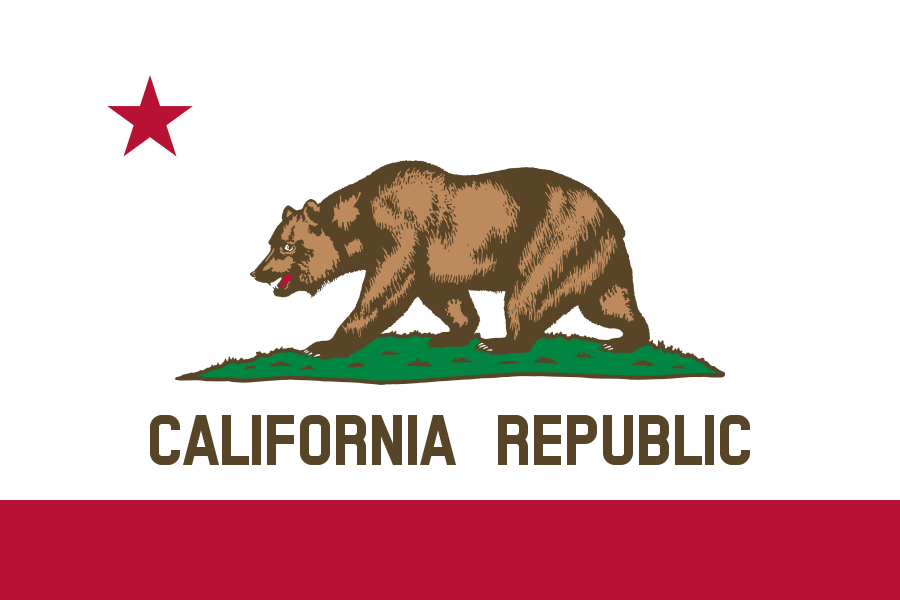
California is a U S state on the Pacific Coast...
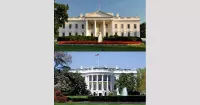
The White House located at Pennsylvania Avenue NW in Washington...

NASA the National Aeronautics and Space Administration is the U...

Buzz Aldrin is an American former astronaut engineer and fighter...
Trending
5 days ago Arnold Schwarzenegger Childhood Home Transformed Into Dedicated Museum in Austria

4 hours ago Citibank Navigates Hiring Shifts, Expansion in China, and Stock Valuation Forecasts

4 hours ago Two Teenage Girls Arrested for Alleged Corona High School Shooting Plot
5 hours ago Catherine Breed Makes History Swimming Entire 900-Mile California Coastline

5 hours ago League of Legends Patch 26.21 Introduces ARAM Mayhem and New Augments
5 hours ago U.S. and Israel Coordinate Potential Renewed Strike Plans Against Iran
Popular
Ken Paxton is an American politician and lawyer serving as...

Ilhan Omar is a prominent American politician currently serving as...

Michael Joseph Jackson the King of Pop was a highly...

Elon Musk is a visionary entrepreneur and engineer known for...

Cristiano Ronaldo widely considered one of the greatest footballers captains...

Linda Ronstadt is a versatile American singer renowned for her...