Childhood and Education Journey of Richard Nixon in Timeline


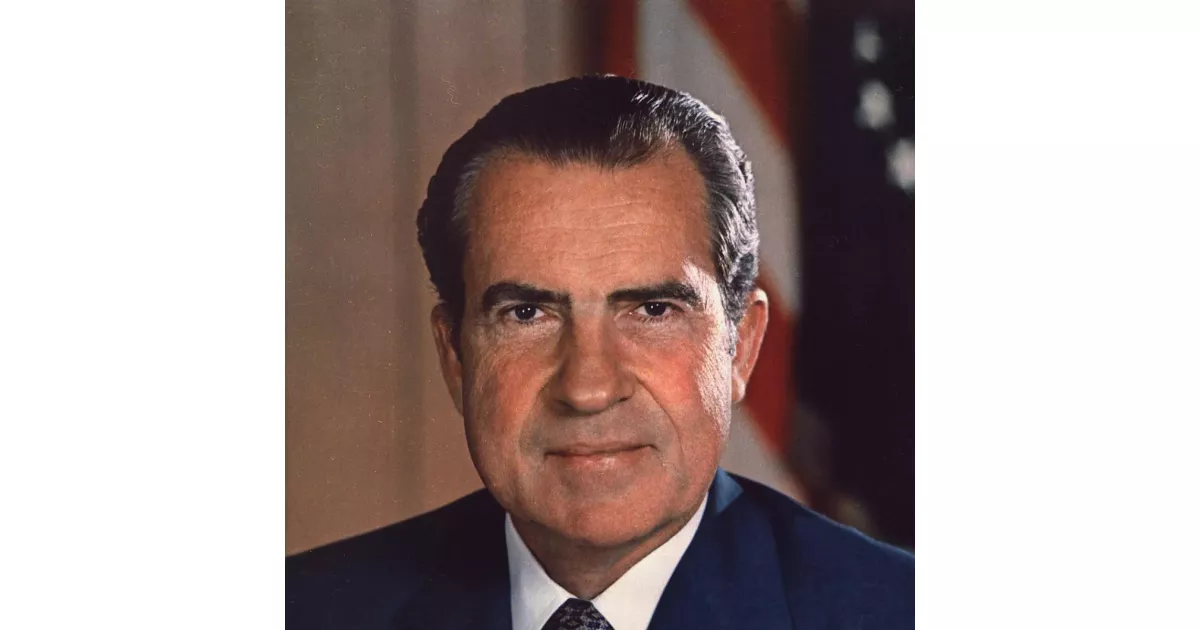
How education and upbringing influenced the life of Richard Nixon. A timeline of key moments.
Richard Nixon, the 37th U.S. President, served from 1969-1974. A Republican, he previously served as a Congressman, Senator, and Vice President. His presidency is noted for reducing US involvement in Vietnam, establishing détente with the Soviet Union and China, overseeing the Apollo 11 Moon landing, and creating the EPA and OSHA. Nixon resigned in 1974 amid the Watergate scandal, becoming the only president to ever resign.
January 9, 1913: Richard Nixon's Birth
On January 9, 1913, Richard Milhous Nixon was born.


1922: Nixon Family Ranch Fails
In 1922, the Nixon family ranch failed, leading the family to move to Whittier, California.
1925: Death of Nixon's Brother Arthur
In 1925, Richard Nixon's younger brother Arthur died at the age of seven after a short illness.
September 1928: Transfer to Whittier High School
In September 1928, Richard Nixon's parents permitted him to transfer to Whittier High School.
September 1930: Enrollment at Whittier College
In September 1930, Richard Nixon enrolled at Whittier College.
1933: Brother Harold's Death
In 1933, Richard Nixon's brother Harold died.
1934: Graduation from Whittier College
In 1934, Richard Nixon graduated from Whittier College with a Bachelor of Arts degree.
June 1937: Graduation from Duke Law
In June 1937, Richard Nixon graduated third in his class from Duke University School of Law.
1937: Graduation from Duke University School of Law
In 1937, Richard Nixon graduated from Duke University School of Law with a Juris Doctor degree.
January 1938: Cast in "The Dark Tower"
In January 1938, Richard Nixon was cast in the Whittier Community Players production of "The Dark Tower", where he met his future wife, Pat Ryan.
June 21, 1940: Marriage to Pat Ryan
On June 21, 1940, Richard Nixon married Thelma "Pat" Ryan in a small ceremony.
January 1942: Move to Northern Virginia
In January 1942, Richard Nixon and his wife moved to the Northern Virginia suburbs.
1942: Move to Washington, D.C.
In 1942, Richard Nixon moved with his wife Pat to Washington, D.C., to work for the federal government.
1946: Birth of Daughter Tricia
In 1946, Richard and Pat Nixon's daughter Tricia was born.
1948: Birth of Daughter Julie
In 1948, Richard and Pat Nixon's daughter Julie was born.
1960: Nixon's Civil Rights Advocacy
In 1960, during his campaign, Nixon advocated for civil rights, a stance that some scholars believe later shifted when he slowed down desegregation as president.
January 1961: End of Vice Presidency and Return to California
In January 1961, at the end of his term as vice president, Richard Nixon and his family moved back to California. He then practiced law and wrote his bestselling book, "Six Crises".
November 11, 1962: "The Political Obituary of Richard M. Nixon" airs
On November 11, 1962, ABC News aired "The Political Obituary of Richard M. Nixon", an episode of Howard K. Smith: News and Comment, which highlighted Nixon's California defeat. The program featured Alger Hiss, leading to public outcry and sympathy for Nixon.
November 22, 1963: Nixon in Dallas on Day of Kennedy Assassination
On the morning of November 22, 1963, Richard Nixon was in Dallas, Texas, staying at the Baker Hotel. He departed from Love Field just an hour before President Kennedy's arrival and assassination later that day.
1964: Goldwater's Opposition to the Civil Rights Act
In 1964, Goldwater won several Southern states by opposing the Civil Rights Act but alienated more moderate Southerners.
January 1968: Tet Offensive and Tumultuous Primary Season
In January 1968, the exceptionally tumultuous primary election season began with the launch of the Tet Offensive.
1968: Nixon's Efforts to Gain Southern Support
In 1968, Nixon's efforts to gain Southern support were diluted by Wallace's candidacy.
July 1969: Chappaquiddick Incident
In July 1969, the Chappaquiddick incident largely removed Ted Kennedy from contention as a potential Democratic opponent to Nixon.
March 1970: North Vietnamese Troops Invade Cambodia
In March 1970, at the explicit request of the Khmer Rouge, North Vietnamese troops launched an offensive and overran much of Cambodia.
May 9, 1970: Meeting with Protesters at the Lincoln Memorial
On May 9, 1970, Nixon held an impromptu, early morning meeting with protesters at the Lincoln Memorial in response to the growing protests against the war.
1970: Nixon's alcohol consumption
Nixon sometimes drank alcohol to excess, especially in 1970, and was prescribed sleeping pills and dilantin for depression.
January 5, 1972: Nixon Announces Reelection Candidacy
On January 5, 1972, Nixon entered his name on the New Hampshire primary ballot, effectively announcing his candidacy for reelection.
October 1974: Nixon fell ill with phlebitis
In October 1974, Nixon became ill with phlebitis and chose surgery after being advised by doctors. While Nixon was under subpoena, The Washington Post questioned his illness, and Judge John Sirica excused his presence at the trial. Congress instructed Ford to retain Nixon's presidential papers. The 1974 midterm elections saw Republican losses, influenced by Watergate and Nixon's pardon.
December 1974: Nixon began planning his comeback
In December 1974, despite widespread ill will, Nixon started planning his political comeback, as noted in his diary.
1975: Nixon's health improving; working on memoirs
By early 1975, Nixon's health improved. He worked on his memoirs to offset financial strain. His transition allowance ended in February, leading to staff cuts. In 1975, he met with David Frost for a series of interviews.
1975: Ford's Visit to China
In 1975, President Ford visited China, and Nixon waited to visit China until after Ford's own visit.
February 1976: Nixon visited China at Mao's invitation
In February 1976, Nixon visited China at the personal invitation of Mao Zedong, having waited until after Ford's visit in 1975.
1978: Nixon visited the United Kingdom
In early 1978, Nixon visited the United Kingdom, where he was largely shunned by American diplomats and government ministers, but welcomed by Margaret Thatcher and others. Nixon addressed the Oxford Union regarding Watergate.
August 10, 1979: Nixons purchased a condominium in New York City
On August 10, 1979, the Nixons purchased a 12-room condominium in New York City.
1979: Nixon visited the White House and Beijing
In 1979, Nixon visited the White House, invited by Carter for a state dinner for Chinese Vice Premier Deng Xiaoping. Nixon also had a private meeting with Deng and revisited Beijing in mid-1979.
July 1980: Nixon attended the Shah of Iran's funeral
In July 1980, Nixon defied the State Department by attending the funeral of the Shah of Iran in Egypt.
1981: Nixon moved to Saddle River, New Jersey
In 1981, after 18 months in a New York City townhouse, Nixon and his wife moved to Saddle River, New Jersey.
1983: Interview about Poker Winnings
In a 1983 interview, Nixon described turning down an invitation to dine with Charles Lindbergh because he was hosting a poker game, where he used his winnings to finance his first congressional campaign.
1986: Nixon visited the Soviet Union
In 1986, Nixon visited the Soviet Union and sent President Reagan a memorandum with foreign policy suggestions and impressions of Mikhail Gorbachev. Nixon was ranked as one of the ten most admired men in the world following the trip.
July 19, 1990: Richard Nixon Library and Birthplace opened
On July 19, 1990, the Richard Nixon Library and Birthplace opened in Yorba Linda, California, attended by the Nixons and former Presidents Ford, Reagan, and George H. W. Bush.
June 22, 1993: Pat Nixon died
On June 22, 1993, Pat Nixon died of emphysema and lung cancer. Her funeral services were held at the Richard Nixon Library and Birthplace.
April 18, 1994: Nixon's Stroke
On April 18, 1994, Richard Nixon suffered a debilitating stroke.
April 27, 1994: Richard Nixon's funeral
Richard Nixon's funeral took place on April 27, 1994, in Yorba Linda, California. Eulogists included President Bill Clinton and former secretary of state Henry Kissinger.
Mentioned in this timeline
John F Kennedy JFK was the th U S President...

Bill Clinton served as the nd U S President from...
California is a U S state on the Pacific Coast...
The White House located at Pennsylvania Avenue NW in Washington...

NASA the National Aeronautics and Space Administration is the U...

Buzz Aldrin is an American former astronaut engineer and fighter...
Trending
5 days ago Arnold Schwarzenegger Childhood Home Transformed Into Dedicated Museum in Austria

4 hours ago Citibank Navigates Hiring Shifts, Expansion in China, and Stock Valuation Forecasts
4 hours ago Two Teenage Girls Arrested for Alleged Corona High School Shooting Plot
5 hours ago Catherine Breed Makes History Swimming Entire 900-Mile California Coastline

5 hours ago League of Legends Patch 26.21 Introduces ARAM Mayhem and New Augments
5 hours ago U.S. and Israel Coordinate Potential Renewed Strike Plans Against Iran
Popular

Ken Paxton is an American politician and lawyer serving as...

Ilhan Omar is a prominent American politician currently serving as...

Michael Joseph Jackson the King of Pop was a highly...

Elon Musk is a visionary entrepreneur and engineer known for...

Cristiano Ronaldo widely considered one of the greatest footballers captains...

Linda Ronstadt is a versatile American singer renowned for her...