Rise to Success: Career Highlights of Richard Nixon


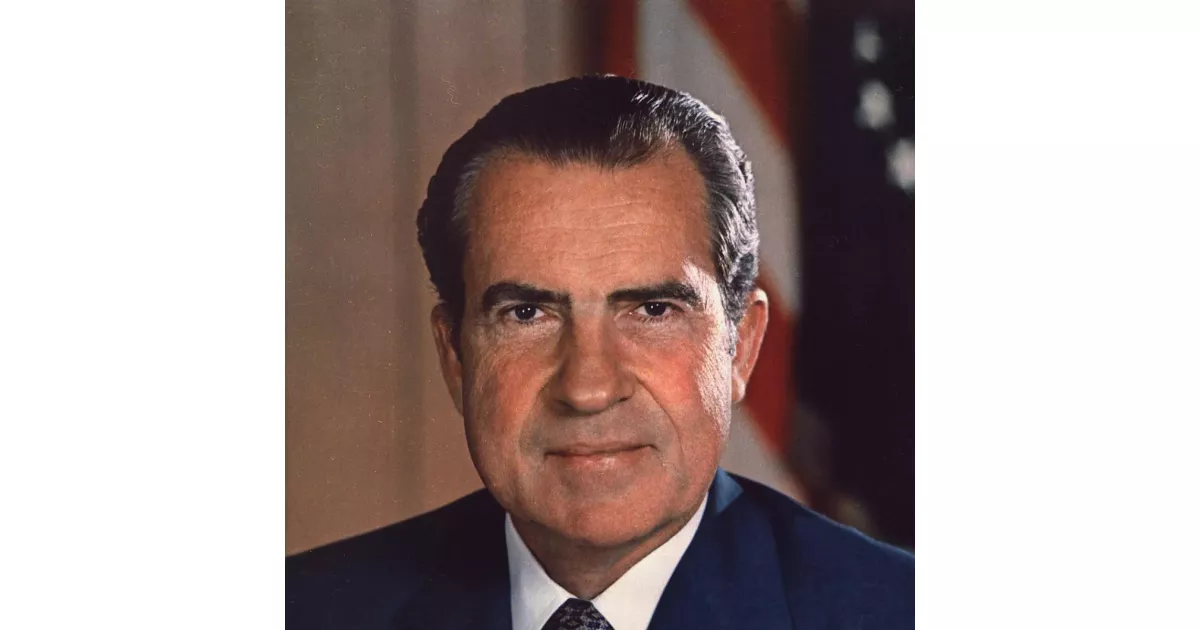
How Richard Nixon built a successful career. Explore key moments that defined the journey.
Richard Nixon, the 37th U.S. President, served from 1969-1974. A Republican, he previously served as a Congressman, Senator, and Vice President. His presidency is noted for reducing US involvement in Vietnam, establishing détente with the Soviet Union and China, overseeing the Apollo 11 Moon landing, and creating the EPA and OSHA. Nixon resigned in 1974 amid the Watergate scandal, becoming the only president to ever resign.
1934: Graduation from Whittier College
In 1934, Richard Nixon graduated from Whittier College with a Bachelor of Arts degree.


1937: Graduation from Duke University School of Law
In 1937, Richard Nixon graduated from Duke University School of Law with a Juris Doctor degree.
1937: Admittance to the California Bar
In 1937, Richard Nixon was admitted to the California bar and began practicing law.
1938: Opened La Habra Branch of Law Firm
In 1938, Richard Nixon opened his own branch of Wingert and Bewley in La Habra, California.
1941: Sought Position at Office of Price Administration
Throughout the latter part of 1941, Richard Nixon sought a position at the Office of Price Administration.
June 15, 1942: Commission in the US Naval Reserve
On June 15, 1942, Richard Nixon was appointed a lieutenant junior grade in the United States Naval Reserve.
October 1942: First Naval Assignment
In October 1942, Richard Nixon was given his first assignment as aide to the commander of the Naval Air Station Ottumwa in Wapello County, Iowa.
1942: Move to Washington, D.C.
In 1942, Richard Nixon moved with his wife Pat to Washington, D.C., to work for the federal government.
May 1943: End of Ottumwa Assignment
In May 1943, Richard Nixon's assignment as aide to the commander of the Naval Air Station Ottumwa ended.
July 2, 1943: Assignment to Marine Aircraft Group 25
On July 2, 1943, Richard Nixon was assigned to Marine Aircraft Group 25 and the South Pacific Combat Air Transport Command (SCAT).
October 1, 1943: Promotion to Lieutenant
On October 1, 1943, Richard Nixon was promoted to lieutenant in the Navy.
January 1945: Transfer to Bureau of Aeronautics
In January 1945, Richard Nixon was transferred to the Bureau of Aeronautics office in Philadelphia.
October 3, 1945: Promotion to Lieutenant Commander
On October 3, 1945, Richard Nixon was promoted to lieutenant commander in the U.S. Naval Reserve.
1945: Formation of "Committee of 100"
In 1945, Republicans in California's 12th congressional district formed a "Committee of 100" to select a consensus candidate to run against Democratic representative Jerry Voorhis.
March 10, 1946: Relieved of Active Duty
On March 10, 1946, Richard Nixon was relieved of active duty in the Navy.
1946: Election to the House of Representatives
In 1946, Richard Nixon was elected to the House of Representatives.
1946: Nixon's Congressional Campaign
In 1946, after leaving the Navy, Richard Nixon and his wife returned to Whittier, California, where he began a year of intensive campaigning, ultimately winning the election against Jerry Voorhis with 65,586 votes.
February 1947: Joins House Un-American Activities Committee
In February 1947, Nixon joined the House Un-American Activities Committee (HUAC) and heard Gerhard Eisler and Ruth Fischer testify. Fellow U.S. Representative Charles J. Kersten introduced him to Father John Francis Cronin, who shared his paper "The Problem of American Communism in 1945".
February 18, 1947: Maiden Speech to the House
On February 18, 1947, Nixon delivered his maiden speech to the House, referring to Gerhard Eisler's belligerence toward the HUAC.
June 1947: Support for Taft-Hartley Act
In June 1947, Nixon supported the Taft–Hartley Act, a federal law that monitors the activities and power of labor unions.
August 1947: Service on Herter Committee
In August 1947, Nixon became one of 19 House members to serve on the Herter Committee, which went to Europe to report on the need for U.S. foreign aid, leading to the congressional passage of the Marshall Plan.
May 1948: Co-sponsors Mundt-Nixon Bill
In May 1948, Nixon co-sponsored the Mundt–Nixon Bill, which aimed to register all Communist Party members and require a statement of the source of all printed and broadcast material issued by organizations that were found to be Communist fronts.
May 19, 1948: Passage of Mundt-Nixon Bill in the House
On May 19, 1948, the Mundt–Nixon Bill passed the House by 319 to 58. The Nixon Library cites this bill's passage as Nixon's first significant victory in Congress.
August 1948: Alger Hiss Spy Case
In August 1948, Richard Nixon gained national attention when his persistence as a House Un-American Activities Committee member helped break the Alger Hiss spy case, leading to Hiss's perjury conviction in 1950.
1949: Considers Senate Run
In 1949, Nixon began to consider running for the United States Senate against the Democratic incumbent, Sheridan Downey, and entered the race in November.
March 1950: Downey Retirement Announcement
In March 1950, faced with a primary battle, Sheridan Downey announced his retirement from the Senate race.
November 30, 1950: Downey's Resignation
On November 30, 1950, Sheridan Downey resigned from the Senate, enabling the governor to appoint Nixon.
1950: Hiss Convicted of Perjury
In 1950, Alger Hiss was convicted of perjury for denying under oath that he had passed documents to Whittaker Chambers, in a case that Nixon had pursued as part of the House Un-American Activities Committee.
1950: Election to the Senate
In 1950, Richard Nixon was elected to the Senate.
January 1951: Start of Senate Term
In January 1951, other senators elected in 1950 began their terms. Nixon had been appointed to the senate a month before and thus gained seniority.
May 8, 1952: Speech to NY Republican Party Fundraiser
On May 8, 1952, Nixon's speech at a state Republican Party fundraiser in New York City impressed Governor Thomas E. Dewey, who suggested Nixon would make a suitable vice presidential candidate to run alongside Eisenhower.
September 23, 1952: The Checkers Speech
On September 23, 1952, facing allegations of a conflict of interest due to a political fund, Nixon delivered the Checkers speech on television, defending himself and emotionally stating that his wife wore a "respectable Republican cloth coat" and mentioning the gift of "a little cocker spaniel dog ... named Checkers."
1952: Eisenhower's Running Mate
In 1952, Richard Nixon was the running mate of Dwight Eisenhower, the Republican Party's presidential nominee.
June 1, 1953: Promotion to Commander
On June 1, 1953, Richard Nixon was promoted to commander in the U.S. Naval Reserve.
1953: Increased Responsibilities as Vice President
In 1953, Eisenhower granted Nixon more responsibilities than any previous vice president, including attending Cabinet and National Security Council meetings and chairing them in Eisenhower's absence. He also toured the Far East which increased local goodwill toward the US.
1953: Nixon Becomes Vice President
In 1953, Richard Nixon became the 36th Vice President under President Dwight D. Eisenhower.
1954: Republicans Lost Control of Congress
In the 1954 elections, despite intense campaigning by Nixon, the Republicans lost control of both houses of Congress, causing Nixon to contemplate leaving politics once he had served out his term.
September 24, 1955: Eisenhower's Heart Attack
On September 24, 1955, President Eisenhower suffered a heart attack. Nixon acted in Eisenhower's stead during this period, presiding over Cabinet meetings and ensuring that aides and Cabinet officers did not seek power.
December 1955: Eisenhower's Suggestion
In December 1955, Eisenhower proposed that Nixon not run for reelection and instead become a Cabinet officer in a second Eisenhower administration.
February 1956: Eisenhower's Reelection Bid
In February 1956, Eisenhower announced his reelection bid, but initially hedged on the choice of his running mate.
November 1956: Eisenhower-Nixon Reelection
In November 1956, Eisenhower and Nixon were reelected by a comfortable margin.
1956: Re-election as Vice President
In 1956, Richard Nixon was again the running mate of Dwight Eisenhower, and was re-elected as Vice President.
November 1957: Eisenhower's Stroke
In November 1957, Eisenhower suffered a mild stroke, and Nixon gave a press conference, assuring the nation that the Cabinet was functioning well as a team during Eisenhower's brief illness.
April 27, 1958: Goodwill Tour of South America
On April 27, 1958, Richard and Pat Nixon embarked on a goodwill tour of South America. In Montevideo, Uruguay, Nixon visited a college campus. In Lima, Peru, he was met with student demonstrations, and in Caracas, Venezuela, Nixon and his wife were spat on by anti-American demonstrators and their limousine was attacked.
July 1959: The Kitchen Debate
In July 1959, Eisenhower sent Nixon to the Soviet Union for the opening of the American National Exhibition in Moscow. On July 24, Nixon and Nikita Khrushchev engaged in an impromptu exchange about the merits of capitalism versus communism that became known as the "Kitchen Debate".
January 9, 1960: Presidential Campaign Announcement
On January 9, 1960, Nixon launched his first campaign for President of the United States. He faced John F. Kennedy, who called for new blood and claimed the Eisenhower–Nixon administration had allowed the Soviet Union to overtake the U.S. in quantity and quality of ballistic missiles.
1960: Loss in Presidential Election
In 1960, Richard Nixon narrowly lost the presidential election to John F. Kennedy.
1960: Nixon's Civil Rights Advocacy
In 1960, during his campaign, Nixon advocated for civil rights, a stance that some scholars believe later shifted when he slowed down desegregation as president.
1960: Considered 1960 presidential run
Nixon planned to gain administrative experience before a 1960 presidential run.
January 1961: End of Vice Presidency and Return to California
In January 1961, at the end of his term as vice president, Richard Nixon and his family moved back to California. He then practiced law and wrote his bestselling book, "Six Crises".
1961: End of Nixon's Vice Presidency
In 1961, Richard Nixon's tenure as Vice President ended.
1962: Nixon's Farewell Speech
In 1962, Nixon gave a farewell speech that was later quoted by Tom Wicker of The New York Times.
1962: Loss in California Gubernatorial Race
In 1962, Richard Nixon lost the race for governor of California.
1962: California Gubernatorial Election
In 1962, Richard Nixon ran for governor of California against incumbent Pat Brown, despite some reluctance and suspicion that he viewed the position as a stepping stone for a presidential run. He lost the election, which was widely considered the end of his political career.
1964: Goldwater's Opposition to the Civil Rights Act
In 1964, Goldwater won several Southern states by opposing the Civil Rights Act but alienated more moderate Southerners.
1964: Nixon Endorses Goldwater
In 1964, despite winning write-in votes in the primaries and being considered a contender, Nixon fulfilled his promise to stay out of the presidential nomination process and endorsed Arizona Senator Barry Goldwater. Nixon campaigned for Goldwater, who ultimately lost the election in a landslide.
June 6, 1966: Retirement from Naval Reserve
On June 6, 1966, Richard Nixon retired from the U.S. Naval Reserve.
1966: Campaigning in Congressional Elections
In 1966, Richard Nixon campaigned for many Republicans in the congressional elections, seeking to regain seats lost in the Johnson landslide. He was credited with helping the Republicans win major electoral gains that year.
1967: Arguing Time, Inc. v. Hill before the Supreme Court
In 1967, Richard Nixon argued on behalf of the Hill family in the Time, Inc. v. Hill case at the Supreme Court of the United States. Although the final decision favored Time Inc., Nixon received praise for his argument, marking the first and only case he argued before the Supreme Court.
1968: Nixon Campaigns as ERA Supporter
In 1968, Nixon campaigned as a supporter of the ERA. However, feminists later criticized him for not doing enough to help the ERA or their cause after his election.
1968: Nixon's Efforts to Gain Southern Support
In 1968, Nixon's efforts to gain Southern support were diluted by Wallace's candidacy.
1968: Victory in Presidential Election
In 1968, Richard Nixon ran again for the presidency and defeated the Democratic candidate, Vice President Hubert Humphrey.
1968: Environmental Policy Not a Significant Issue
In the 1968 election, environmental policy was not a significant issue.
January 20, 1969: Inauguration as President
On January 20, 1969, Richard Nixon was inaugurated as President of the United States, sworn in by Chief Justice Earl Warren. He spoke about unity and peace in his inaugural address.
May 1969: Public Proposal for Troop Withdrawal and Elections
In May 1969, after initial peace talks in Paris did not result in an agreement, Nixon publicly proposed to withdraw all American troops from South Vietnam, provided North Vietnam did so, and suggested South Vietnam hold internationally supervised elections with Viet Cong participation.
July 1969: Visit to South Vietnam and Implementation of Vietnamization
In July 1969, Richard Nixon visited South Vietnam, where he met with military commanders and President Nguyễn Văn Thiệu. Amid protests at home, he implemented "Vietnamization," replacing American troops with Vietnamese troops.
July 20, 1969: Apollo 11 Moon Landing
On July 20, 1969, the United States won the race to land astronauts on the Moon with the flight of Apollo 11. Nixon spoke with Neil Armstrong and Buzz Aldrin during their moonwalk, calling it "the most historic phone call ever made from the White House".
1969: Cancellation of Manned Orbital Laboratory Program
In 1969, Nixon canceled the Air Force Manned Orbital Laboratory program because uncrewed spy satellites were a more cost-effective way to achieve the same reconnaissance objective.
1969: Nixon Becomes President
In 1969, Richard Nixon became the 37th President of the United States.
1969: Stepping Up Covert Operations Against Cuba
In 1969, upon taking office, Nixon stepped up covert operations against Cuba and its president, Fidel Castro.
1969: Economic Conditions at Start of Nixon's Presidency
In 1969, when Nixon took office, inflation was at 4.7 percent, its highest rate since the Korean War. Unemployment was low, but interest rates were at their highest in a century.
April 1970: First Earth Day
In April 1970, the first Earth Day presaged a wave of voter interest on the subject of environmental policy.
August 1970: Soviets Request Reaffirmation of Understanding
In August 1970, the Soviets asked Nixon to reaffirm the understanding between Kennedy and Khrushchev regarding Cuba, which he did.
September 1970: Desegregation Progress in Public Schools
By September 1970, as a result of the Nixon administration's efforts to integrate public schools in the South, less than ten percent of black children were attending segregated schools.
September 1970: Opposition to Salvador Allende
In September 1970, the election of Salvador Allende as President of Chile spurred a vigorous campaign of covert opposition by Nixon and Kissinger.
October 1970: Soviet Expansion at Cienfuegos Port
In October 1970, the Soviets began expanding their base at the Cuban port of Cienfuegos, leading to a minor confrontation. The Soviets then stipulated they would not use Cienfuegos for submarines bearing ballistic missiles.
1970: Congress Grants Power to Impose Wage and Price Freezes
In 1970, Congress granted the president the power to impose wage and price freezes, though they did not expect Nixon to use this authority.
1970: Implementation of the Philadelphia Plan
In 1970, Nixon implemented the Philadelphia Plan, which was the first significant federal affirmative action program.
1970: Economic Struggles and Midterm Elections
In 1970, the U.S. economy continued to struggle, contributing to a lackluster Republican performance in the midterm congressional elections.
February 1971: Call for Increased Funding for Sickle-Cell Research
In February 1971, Nixon called for more money for sickle-cell research, treatment, and education.
July 15, 1971: Announcement of Nixon's Visit to China
On July 15, 1971, Washington and Beijing announced that President Nixon would visit China the following February, marking a significant breakthrough in U.S.-China relations after secret meetings between Kissinger and Chinese officials.
August 1971: Nixon Announces Wage and Price Controls
In August 1971, with inflation unresolved and an election year looming, Nixon announced temporary wage and price controls, allowed the dollar to float, and ended the convertibility of the dollar into gold.
1971: Covert Aid to Pakistan and End of Gold Standard
In 1971, Nixon covertly aided Pakistan during the Bangladesh Liberation War and ended the direct international convertibility of the U.S. dollar to gold, effectively taking the United States off the gold standard.
1971: Transformation of the Post Office Department
In 1971, Nixon eliminated the Cabinet-level United States Post Office Department, which then became the government-run United States Postal Service.
1971: Health Insurance Reform Proposal
In 1971, Nixon proposed health insurance reform, including a private health insurance employer mandate, federalization of Medicaid, and support for HMOs.
January 5, 1972: Nixon Announces Reelection Candidacy
On January 5, 1972, Nixon entered his name on the New Hampshire primary ballot, effectively announcing his candidacy for reelection.
February 1972: Nixon's Visit to China
In February 1972, Richard Nixon and his wife visited China, where they were greeted by Premier Zhou Enlai. Nixon made a point of shaking Zhou's hand, unlike Dulles in 1954. The visit was heavily covered by television, which Nixon favored over print.
May 16, 1972: Signing of National Sickle Cell Anemia Control Act
On May 16, 1972, Nixon signed the National Sickle Cell Anemia Control Act.
May 22, 1972: Nixon's Visit to Moscow
On May 22, 1972, President Nixon and the First Lady arrived in Moscow and met with Leonid Brezhnev and other leading Soviet officials.
May 24, 1972: Approval of NASA and Soviet Space Program Cooperation
On May 24, 1972, Nixon approved a five-year cooperative program between NASA and the Soviet space program, culminating in the 1975 joint mission of an American Apollo and Soviet Soyuz spacecraft linking in space.
November 7, 1972: Nixon Reelected in Landslide Victory
On November 7, 1972, Nixon was reelected in one of the largest landslide election victories in American history, defeating George McGovern with over 60 percent of the popular vote.
1972: Endorsement of the Equal Rights Amendment
In 1972, Nixon endorsed the Equal Rights Amendment after it passed both houses of Congress and went to the states for ratification.
1972: Appealing to Racial Conservatism
In 1972, Nixon hoped to boost his election chances by appealing to the racial conservatism of Southern whites, who were angered by the civil rights movement, according to some scholars.
1972: Clean Water Act Veto
In 1972, Nixon vetoed the Clean Water Act, objecting to the amount of money to be spent on it, though Congress overrode the veto.
1972: Visit to China and Re-election
In 1972, Nixon visited China, leading to diplomatic relations between the two nations, and he was re-elected, defeating George McGovern.
1972: Dampening of Inflation
In 1972, Nixon's policies dampened inflation. Nixon's decision to end the gold standard in the United States led to the collapse of the Bretton Woods system.
June 1973: Reimposition of Price Controls
In June 1973, after winning re-election, Nixon reimposed price controls.
October 6, 1973: Yom Kippur War and U.S. Response
On October 6, 1973, an Arab coalition led by Egypt and Syria attacked Israel, leading to the Yom Kippur War. Nixon ordered an airlift to resupply Israeli losses. Later, when Soviet Premier Brezhnev threatened military intervention, Nixon ordered the U.S. military to DEFCON3.
December 6, 1973: Ford Sworn in as Vice President
On December 6, 1973, Gerald Ford was sworn in as vice president, replacing Agnew.
1973: Trade Deal with the Soviet Union
In 1973, Nixon encouraged the Export-Import Bank to finance a trade deal with the Soviet Union involving Occidental Petroleum. Also in 1973, Nixon announced his administration was committed to seeking most favored nation trade status with the USSR.
1973: End of American Combat in Vietnam
In 1973, Nixon ended American combat involvement in Vietnam and the military draft.
1973: Endangered Species Act
In 1973, Nixon enforced legislation such as the Endangered Species Act.
1973: Enactment of Limited HMO Bill
In 1973, a limited HMO bill was enacted.
1973: Paris Peace Accords and End of Conscription
In 1973, the Paris Peace Accords were signed, implementing a ceasefire and allowing for the withdrawal of American troops. Conscription was phased out, and the armed forces transitioned to an all-volunteer force.
April 30, 1974: Lapse of Price Control Authorization
On April 30, 1974, the statutory authorization for Nixon's price controls lapsed.
June 1974: Visit to the Middle East
In June 1974, Nixon made one of his final international visits as president to the Middle East, and became the first president to visit Israel.
August 8, 1974: Nixon Announces Resignation
On August 8, 1974, facing certain impeachment and removal from office, Nixon announced on television that he would resign the presidency the following day.
August 9, 1974: Nixon's Resignation
On August 9, 1974, facing almost certain impeachment and removal from office, Nixon resigned from the presidency due to the Watergate scandal.
October 1974: Nixon fell ill with phlebitis
In October 1974, Nixon became ill with phlebitis and chose surgery after being advised by doctors. While Nixon was under subpoena, The Washington Post questioned his illness, and Judge John Sirica excused his presence at the trial. Congress instructed Ford to retain Nixon's presidential papers. The 1974 midterm elections saw Republican losses, influenced by Watergate and Nixon's pardon.
December 1974: Nixon began planning his comeback
In December 1974, despite widespread ill will, Nixon started planning his political comeback, as noted in his diary.
1974: Second Trip to the Soviet Union
In 1974, Nixon embarked on a second trip to the Soviet Union, arriving in Moscow on June 27. He met with Brezhnev in Yalta, discussing a proposed mutual defense pact, détente, and MIRVs. There were no significant breakthroughs in these negotiations.
1974: Comprehensive Health Insurance Reform Proposal
In 1974, Nixon proposed more comprehensive health insurance reform, including a private health insurance employer mandate and replacement of Medicaid with state-run plans.
1975: Nixon's health improving; working on memoirs
By early 1975, Nixon's health improved. He worked on his memoirs to offset financial strain. His transition allowance ended in February, leading to staff cuts. In 1975, he met with David Frost for a series of interviews.
1975: Ford's Visit to China
In 1975, President Ford visited China, and Nixon waited to visit China until after Ford's own visit.
February 1976: Nixon visited China at Mao's invitation
In February 1976, Nixon visited China at the personal invitation of Mao Zedong, having waited until after Ford's visit in 1975.
1976: Nixon disbarred in New York
In 1976, Nixon was disbarred by a New York State court for obstruction of justice in the Watergate affair, without presenting a defense.
1977: Nixon-Frost Interviews Aired
In 1977, the filmed interviews of Nixon by David Frost were aired. The interviews garnered 45–50 million viewers.
1978: Publication of RN: The Memoirs of Richard Nixon
In 1978, Nixon published his memoirs, "RN: The Memoirs of Richard Nixon", which became a bestseller.

1978: Nixon visited the United Kingdom
In early 1978, Nixon visited the United Kingdom, where he was largely shunned by American diplomats and government ministers, but welcomed by Margaret Thatcher and others. Nixon addressed the Oxford Union regarding Watergate.
1979: Nixon visited the White House and Beijing
In 1979, Nixon visited the White House, invited by Carter for a state dinner for Chinese Vice Premier Deng Xiaoping. Nixon also had a private meeting with Deng and revisited Beijing in mid-1979.
July 1980: Nixon attended the Shah of Iran's funeral
In July 1980, Nixon defied the State Department by attending the funeral of the Shah of Iran in Egypt.
1983: George McGovern commented on Nixon's foreign policy
In 1983, George McGovern commented that Nixon had a practical approach to China and the Soviet Union, but criticized his continuation of the war in Vietnam.
1986: Nixon addressed newspaper publishers convention
In 1986, Nixon addressed a convention of newspaper publishers, impressing his audience and leading to a Newsweek story on "Nixon's comeback".
1986: Nixon visited the Soviet Union
In 1986, Nixon visited the Soviet Union and sent President Reagan a memorandum with foreign policy suggestions and impressions of Mikhail Gorbachev. Nixon was ranked as one of the ten most admired men in the world following the trip.
1993: Nixon becomes an elder statesman
By 1993, Nixon had cemented his role as an elder statesman. President Bill Clinton regularly sought his advice.
January 1994: Nixon founded the Nixon Center
In January 1994, Nixon founded the Nixon Center (now the Center for the National Interest), a policy think tank in Washington.
2011: Paper on Nixon and the environment
In a 2011 paper, historian Paul Charles Milazzo highlighted Nixon's environmental legacy, including the creation of the EPA and the enforcement of the 1973 Endangered Species Act.
Mentioned in this timeline
John F Kennedy JFK was the th U S President...
Bill Clinton served as the nd U S President from...
California is a U S state on the Pacific Coast...
The White House located at Pennsylvania Avenue NW in Washington...
NASA the National Aeronautics and Space Administration is the U...
Buzz Aldrin is an American former astronaut engineer and fighter...
Trending
5 days ago Arnold Schwarzenegger Childhood Home Transformed Into Dedicated Museum in Austria

4 hours ago Citibank Navigates Hiring Shifts, Expansion in China, and Stock Valuation Forecasts
4 hours ago Two Teenage Girls Arrested for Alleged Corona High School Shooting Plot
5 hours ago Catherine Breed Makes History Swimming Entire 900-Mile California Coastline
5 hours ago League of Legends Patch 26.21 Introduces ARAM Mayhem and New Augments
5 hours ago U.S. and Israel Coordinate Potential Renewed Strike Plans Against Iran
Popular

Ken Paxton is an American politician and lawyer serving as...

Ilhan Omar is a prominent American politician currently serving as...

Michael Joseph Jackson the King of Pop was a highly...

Elon Musk is a visionary entrepreneur and engineer known for...

Cristiano Ronaldo widely considered one of the greatest footballers captains...

Linda Ronstadt is a versatile American singer renowned for her...