Richard Nixon's Success and Achievements in Timeline


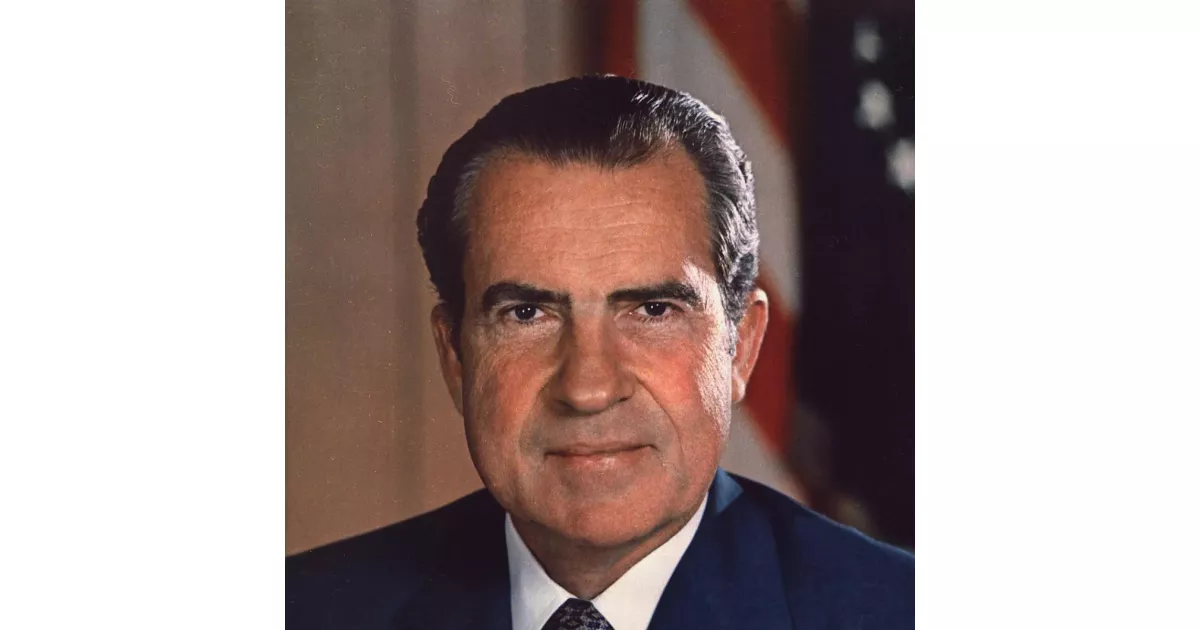
A closer look at the biggest achievements of Richard Nixon. Awards, milestones, and records that define success.
Richard Nixon, the 37th U.S. President, served from 1969-1974. A Republican, he previously served as a Congressman, Senator, and Vice President. His presidency is noted for reducing US involvement in Vietnam, establishing détente with the Soviet Union and China, overseeing the Apollo 11 Moon landing, and creating the EPA and OSHA. Nixon resigned in 1974 amid the Watergate scandal, becoming the only president to ever resign.
October 1, 1943: Promotion to Lieutenant
On October 1, 1943, Richard Nixon was promoted to lieutenant in the Navy.


1946: Nixon's Congressional Campaign
In 1946, after leaving the Navy, Richard Nixon and his wife returned to Whittier, California, where he began a year of intensive campaigning, ultimately winning the election against Jerry Voorhis with 65,586 votes.
May 19, 1948: Passage of Mundt-Nixon Bill in the House
On May 19, 1948, the Mundt–Nixon Bill passed the House by 319 to 58. The Nixon Library cites this bill's passage as Nixon's first significant victory in Congress.
August 1948: Alger Hiss Spy Case
In August 1948, Richard Nixon gained national attention when his persistence as a House Un-American Activities Committee member helped break the Alger Hiss spy case, leading to Hiss's perjury conviction in 1950.
1950: Hiss Convicted of Perjury
In 1950, Alger Hiss was convicted of perjury for denying under oath that he had passed documents to Whittaker Chambers, in a case that Nixon had pursued as part of the House Un-American Activities Committee.
September 23, 1952: The Checkers Speech
On September 23, 1952, facing allegations of a conflict of interest due to a political fund, Nixon delivered the Checkers speech on television, defending himself and emotionally stating that his wife wore a "respectable Republican cloth coat" and mentioning the gift of "a little cocker spaniel dog ... named Checkers."
June 1, 1953: Promotion to Commander
On June 1, 1953, Richard Nixon was promoted to commander in the U.S. Naval Reserve.
November 1956: Eisenhower-Nixon Reelection
In November 1956, Eisenhower and Nixon were reelected by a comfortable margin.
1966: Campaigning in Congressional Elections
In 1966, Richard Nixon campaigned for many Republicans in the congressional elections, seeking to regain seats lost in the Johnson landslide. He was credited with helping the Republicans win major electoral gains that year.
1968: Victory in Presidential Election
In 1968, Richard Nixon ran again for the presidency and defeated the Democratic candidate, Vice President Hubert Humphrey.
January 20, 1969: Inauguration as President
On January 20, 1969, Richard Nixon was inaugurated as President of the United States, sworn in by Chief Justice Earl Warren. He spoke about unity and peace in his inaugural address.
July 20, 1969: Apollo 11 Moon Landing
On July 20, 1969, the United States won the race to land astronauts on the Moon with the flight of Apollo 11. Nixon spoke with Neil Armstrong and Buzz Aldrin during their moonwalk, calling it "the most historic phone call ever made from the White House".
September 1970: Desegregation Progress in Public Schools
By September 1970, as a result of the Nixon administration's efforts to integrate public schools in the South, less than ten percent of black children were attending segregated schools.
November 7, 1972: Nixon Reelected in Landslide Victory
On November 7, 1972, Nixon was reelected in one of the largest landslide election victories in American history, defeating George McGovern with over 60 percent of the popular vote.
1972: Visit to China and Re-election
In 1972, Nixon visited China, leading to diplomatic relations between the two nations, and he was re-elected, defeating George McGovern.
1972: Dampening of Inflation
In 1972, Nixon's policies dampened inflation. Nixon's decision to end the gold standard in the United States led to the collapse of the Bretton Woods system.
1973: Paris Peace Accords and End of Conscription
In 1973, the Paris Peace Accords were signed, implementing a ceasefire and allowing for the withdrawal of American troops. Conscription was phased out, and the armed forces transitioned to an all-volunteer force.
Mentioned in this timeline
John F Kennedy JFK was the th U S President...
Bill Clinton served as the nd U S President from...
California is a U S state on the Pacific Coast...
The White House located at Pennsylvania Avenue NW in Washington...
NASA the National Aeronautics and Space Administration is the U...

Buzz Aldrin is an American former astronaut engineer and fighter...
Trending
5 days ago Arnold Schwarzenegger Childhood Home Transformed Into Dedicated Museum in Austria

4 hours ago Citibank Navigates Hiring Shifts, Expansion in China, and Stock Valuation Forecasts
4 hours ago Two Teenage Girls Arrested for Alleged Corona High School Shooting Plot
5 hours ago Catherine Breed Makes History Swimming Entire 900-Mile California Coastline

5 hours ago League of Legends Patch 26.21 Introduces ARAM Mayhem and New Augments
5 hours ago U.S. and Israel Coordinate Potential Renewed Strike Plans Against Iran
Popular

Ken Paxton is an American politician and lawyer serving as...

Ilhan Omar is a prominent American politician currently serving as...

Michael Joseph Jackson the King of Pop was a highly...

Elon Musk is a visionary entrepreneur and engineer known for...

Cristiano Ronaldo widely considered one of the greatest footballers captains...

Linda Ronstadt is a versatile American singer renowned for her...