History of Robert Altman in Timeline


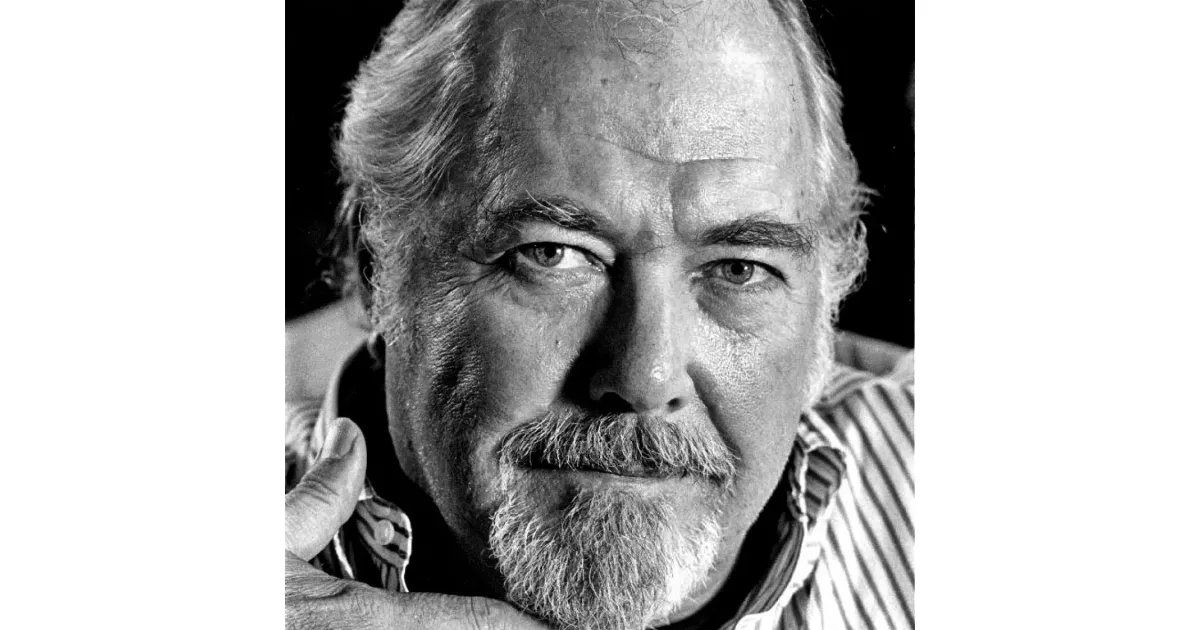
Robert Altman was a prominent American filmmaker of the New Hollywood era. He was renowned for his subversive and satirical films characterized by overlapping dialogue and large ensemble casts. Throughout his career, Altman received many awards, including an Honorary Academy Award, two BAFTAs, a Primetime Emmy Award, and a Golden Globe. He also garnered seven nominations for competitive Academy Awards, solidifying his status as an influential and celebrated director.
4 hours ago : Sam Altman navigates OpenAI's future, addressing AI's impact and leadership challenges.
Sam Altman is facing challenges in leading OpenAI's future growth and monetization, acknowledging AI's impact while exploring leadership strategies and financial sustainability for the company, as well as impact of ideas.


1947: Marriage to LaVonne Elmer
In 1947, Robert Altman married LaVonne Elmer, his first wife.
1947: Move to California
In 1947, after his discharge from the United States Army Air Forces, Robert Altman moved to California and started working in publicity.
1948: Script Sale to RKO
In 1948, Robert Altman sold a script to RKO for the film "Bodyguard", which he co-wrote with George W. George. This event marked an early success in Altman's filmmaking career.
1949: Release of 'They Live by Night'
In 1949, Nicholas Ray filmed 'They Live by Night', an adaptation of the Edward Anderson novel that Robert Altman would later adapt as Thieves Like Us in 1974.
1949: Divorce from LaVonne Elmer
In 1949, Robert Altman divorced LaVonne Elmer.
1950: Marriage to Lotus Corelli
In 1950, Robert Altman married Lotus Corelli, his second wife.
1951: Direction of Modern Football
In 1951, Robert Altman directed an early Calvin film titled "Modern Football". This film was rediscovered in February 2012 by filmmaker Gary Huggins.
1953: Directing Pulse of the City
In 1953, Robert Altman began directing episodes of the DuMont drama series "Pulse of the City", marking one of his first forays into television directing.
1954: Directing Pulse of the City
In 1954, Robert Altman continued directing episodes of the DuMont drama series "Pulse of the City", continuing his work in television.
1955: Divorce from Lotus Corelli
In 1955, Robert Altman divorced Lotus Corelli.
1956: Directing The Sheriff of Cochise and The Delinquents
In 1956, Robert Altman directed an episode of "The Sheriff of Cochise" and was hired to write and direct the feature film "The Delinquents" in Kansas City. After the success of "The Delinquents", Altman moved to California for the last time.
1957: Co-Directing The James Dean Story
In 1957, Robert Altman co-directed "The James Dean Story", a documentary released to capitalize on the actor's death. The same year, he was hired by Alfred Hitchcock to direct episodes of "Alfred Hitchcock Presents".
1957: Marriage to Kathryn Reed
In 1957, Robert Altman married Kathryn Reed, his third wife.
1963: "The Hunt" Episode
In 1963, Robert Altman's episode of television show, "The Hunt", included James Caan and Bruce Dern in the cast.
1964: Expansion of "Once Upon a Savage Night"
In 1964, one of Robert Altman's episodes of "Kraft Suspense Theatre", titled "Once Upon a Savage Night", was expanded and released as a television film under the name "Nightmare in Chicago".
1969: Offered the script for M*A*S*H
In 1969, Robert Altman was offered the script for "M*A*S*H", an adaptation of a Korean War-era novel. Altman initially hesitated, and the production faced challenges due to his unorthodox filming methods.
1969: That Cold Day in the Park Release
In 1969, Robert Altman's film "That Cold Day in the Park" was released but it was a critical and box-office failure.
1970: M*A*S*H
In 1970, Altman directed M*A*S*H, a satirical black comedy set during the Korean War.
1970: MASH sound and images
In 1970, MASH began to develop the crucial Altman style of overlapping, blurred sound and images so slippery with zoom that there was no sense of composition.
1970: First use of overlapping soundtracks in M*A*S*H
In 1970, Robert Altman first used overlapping soundtracks in M*A*S*H, a sound technique described as a "breathtaking innovation at the time."
1970: Release and Success of M*A*S*H
In 1970, Robert Altman's film "M*A*S*H" was released and widely hailed as a classic. It won the Palme d'Or at the Cannes Film Festival and received five Academy Award nominations, becoming Altman's highest-grossing film. The Academy Film Archive preserved the film in 2000.
1970: Founding of Lion's Gate Films
In 1970, following the release of M*A*S*H, Robert Altman founded Lion's Gate Films to gain independent production freedom, allowing him to make films like Brewster McCloud, A Wedding, and 3 Women.
1971: McCabe & Mrs. Miller
In 1971, Altman directed McCabe & Mrs. Miller, a satire on Westerns.
1971: Critical Success with McCabe & Mrs. Miller
In 1971, Robert Altman achieved critical success with "McCabe & Mrs. Miller", a revisionist Western film featuring songs by Leonard Cohen.
1973: Music in The Long Goodbye
In 1973, Robert Altman incorporated a "hauntingly repeated melody" in The Long Goodbye.
1974: Release of Thieves Like Us and California Split
In 1974, Robert Altman released "Thieves Like Us", an adaptation of the Edward Anderson novel, and "California Split", a gambling comedy-drama.
1975: Release of Nashville
In 1975, Robert Altman directed Nashville, a satire on America prior to the Bicentennial.
1978: Release of A Wedding
In 1978, Robert Altman directed A Wedding, a satire on American marriage rituals and hypocrisy.
1979: Filming of Health
In early 1979, Robert Altman shot the political satire, Health, intending it for a Christmas release.
1980: Release of Popeye
In 1980, Robert Altman directed the musical film "Popeye", starring Robin Williams in his film debut. Despite grossing $60 million worldwide, it was considered a box office disappointment. The filming location was in Malta. Gilda Radner was considered for the lead female role.
1981: Sale of Malibu Home and Lion's Gate production company
In 1981, Altman sold his home in Malibu and the Lion's Gate production company after the flop of Popeye.
1981: Sale of Lion's Gate
In 1981, Robert Altman sold Lion's Gate to producer Jonathan Taplin after his political satire Health was shelved.
1982: Come Back to the Five and Dime, Jimmy Dean, Jimmy Dean
In 1982, Robert Altman's stage play and film, Come Back to the Five and Dime, Jimmy Dean, Jimmy Dean, were released, starring Cher. Cher credits Altman for launching her film career.
1982: Filming Streamers
In 1982, after finishing "Come Back to the Five and Dime, Jimmy Dean, Jimmy Dean", Robert Altman filmed "Streamers" in Dallas, which was shot in only 18 days.
1983: Release of Streamers and Teaching at the University of Michigan
In 1983, Robert Altman's film "Streamers" was released. He began teaching a course on his films at the University of Michigan and co-wrote John Anderson's hit single "Black Sheep".
1983: Shooting O.C. and Stiggs in Arizona
In the summer of 1983, Robert Altman shot the film "O.C. and Stiggs" in Arizona, away from studio executives and the screenwriters, whom he banned from the set.
1985: Filming O.C. and Stiggs
In 1985, Robert Altman attempted to return to Hollywood with the teen comedy "O.C. and Stiggs". The chaotic production led to tension with the studio, MGM.
1985: Release of Fool for Love
In 1985, Robert Altman's film adaptation of Sam Shepard's Pulitzer Prize-nominated play, Fool for Love, was released, starring Shepard alongside Kim Basinger, Harry Dean Stanton, and Randy Quaid. The film performed relatively well compared to Altman's other films of the era, grossing $900,000 domestically on a $2 million budget and receiving positive reviews.
1987: Aria shown at Cannes Film Festival
In 1987, Robert Altman's contribution to Aria, using a selection from Jean-Phillipe Rameau's Les Boréades, was shown at the Cannes Film Festival. The film received mixed reception.
1987: Release of O.C. and Stiggs
In 1987, four years after it was shot, Robert Altman's film "O.C. and Stiggs" received a belated limited commercial release, following poor test screenings and studio issues. The British Film Institute later referred to it as probably Altman's least successful film.
1988: Primetime Emmy Award for Tanner '88
In 1988, Altman received the Primetime Emmy Award for Outstanding Directing for a Drama Series for Tanner '88.
1988: Tanner '88 and The Caine Mutiny Court-Martial aired
In 1988, Robert Altman returned to America to shoot Tanner '88, a mockumentary series with Garry Trudeau set during a United States presidential campaign, for which he earned a Primetime Emmy Award. Also, during the show's run, Altman's television production of The Caine Mutiny Court-Martial aired and received high acclaim.
1990: Vincent & Theo was directed
In 1990, Robert Altman directed Vincent & Theo, a biographical film about Vincent van Gogh intended as a television miniseries for broadcast in the United Kingdom. A theatrical version was a modest success in the United States, marking a turning point in Altman's critical resurgence.
1992: British Academy Film Award for The Player
In 1992, Altman won a British Academy Film Award for The Player.
1992: Release of The Player
In 1992, Robert Altman directed The Player, a satire about the Hollywood film industry.
1992: Release and awards for The Player
In 1992, The Player, directed by Robert Altman, was released. The film, co-produced by David Brown, received three Academy Award nominations, including Best Director. While Altman did not win the Oscar, he was awarded Best Director by the Cannes Film Festival, BAFTA, and the New York Film Critics Circle.
1993: Release and awards for Short Cuts
In 1993, Robert Altman directed Short Cuts, an adaptation of short stories by Raymond Carver. He won the Golden Lion at the Venice International Film Festival and received another Oscar nomination for Best Director.
1993: Analysis of jazz music in Short Cuts
In 1993, cinema studies professor Krin Gabbard wrote an analysis of Altman's use of jazz music in Short Cuts, noting that few critics have considered the "importance of the music" in the film.
1994: Directors Guild of America Lifetime Achievement Award
In 1994, Altman received the Directors Guild of America Lifetime Achievement Award.
1994: Release of Prêt-à-Porter
In 1994, Robert Altman's film Prêt-à-Porter (also known as Ready to Wear) was released. Despite significant pre-release publicity, it was a commercial and critical disappointment, though it received several nominations for year-end awards, including two Golden Globe nominations and won the National Board of Review award for Best Acting By An Ensemble.
1997: Developing Hands on a Hard Body film
In 1997, Robert Altman was developing a film based on Hands on a Hard Body: The Documentary.
1997: Gun series cancelled
In 1997, Robert Altman's anthology series Gun, despite its high-profile cast, was cancelled after only six episodes.
1998: The Gingerbread Man released
In 1998, Robert Altman's legal thriller The Gingerbread Man was released. It made very little at the box office.
November 2000: Altman's Claim about Moving to Paris
In November 2000, Altman claimed he would move to Paris if George W. Bush was elected, later joking he meant Paris, Texas.
2001: DVD Commentary on M*A*S*H
In 2001, Altman expressed his disapproval of the M*A*S*H television series in the DVD commentary for his film M*A*S*H, citing the TV show as the antithesis of his movie and labeling its anti-war messages as "racist".
2001: British Academy Film Award and Golden Globe Award for Gosford Park
In 2001, Altman won a British Academy Film Award and a Golden Globe Award for Best Director for Gosford Park.
2001: Gosford Park release
In 2001, Robert Altman's film Gosford Park was released. It was included on many critics' lists of the best films of the year and won the Academy Award for Best Original Screenplay and received six more nominations, including two for Altman.
2003: "Not in Our Name" declaration
In 2003, Altman signed the "Not in Our Name" declaration opposing the invasion of Iraq.
2004: Adaptation of A Wedding as an opera
In 2004, Robert Altman reunited with Bolcom, Weinstein, and the Lyric Opera to adapt his 1978 film, A Wedding, as an opera. It was generally well received.
June 2006: A Prairie Home Companion released
In June 2006, a film version of Garrison Keillor's public radio series A Prairie Home Companion was released.
November 20, 2006: Robert Altman's Death
On November 20, 2006, Robert Altman, the acclaimed American filmmaker known for his contributions to the New Hollywood era, passed away. During his lifetime, he received numerous accolades for his work.
2006: Honorary Oscar
In 2006, Altman received an Honorary Oscar for his work in film.
2007: Dedication of There Will Be Blood to Altman
In 2007, Paul Thomas Anderson dedicated his film There Will Be Blood to Altman.
2008: University of Michigan Library acquires Altman's archive
In 2008, the University of Michigan Library acquired Robert Altman's archive, preserving his work and legacy.
2009: Establishment of the Robert Altman Award
Since 2009, the Robert Altman Award is awarded at the yearly Independent Spirit Awards.
February 2012: Rediscovery of "Modern Football"
In February 2012, an early Calvin film directed by Robert Altman titled "Modern Football" (1951) was found by filmmaker Gary Huggins.
2014: Publication of book about Altman and release of Altman documentary
In 2014, Kathryn Altman co-authored a book about Robert Altman, and served as a consultant and narrator for the documentary Altman.
2014: Release of Altman Documentary
In 2014, a feature-length documentary film titled Altman was released, focusing on his life and work through film clips and interviews.
2016: Death of Kathryn Altman
In 2016, Kathryn Altman, Robert Altman's widow, died.
Mentioned in this timeline
George W Bush the rd U S President - is...

Cher an American singer actress and television personality is celebrated...
The United States of America is a federal republic of...

California is a U S state on the Pacific Coast...
Robin Williams was a highly acclaimed American actor and comedian...

The lion Panthera leo is a large cat species native...
Trending

36 minutes ago Islam Makhachev Claims Opponent Acceptance; Prates Leaks Next Fight Speculation; Title Defense?
36 minutes ago Ryan Reynolds' Wrexham chases Premier League promotion amidst rising net worth and team milestones.

36 minutes ago Kalshi Offers Promo Codes for NBA, Stanley Cup Playoffs Prediction Markets.

3 hours ago Sean Strickland Faces Khamzat Chimaev at UFC 328 Amidst Gun Threat Claims.
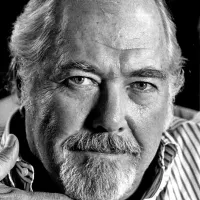
4 hours ago Sam Altman navigates OpenAI's future, addressing AI's impact and leadership challenges.
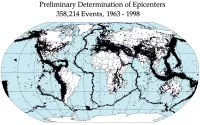
5 hours ago Earthquake Shakes Northern Japan; Advisory Ends After Magnitude 7.7 Quake
Popular

Michael Joseph Jackson the King of Pop was a highly...
Graham Cunningham Platner is an American oyster farmer and Marine...

Melania Trump is a Slovenian-American former model who served as...
William Franklin Graham III known as Franklin Graham is an...

Kash Patel is an American lawyer who currently serves as...

Ben Sasse is an American politician and academic administrator who...