History of Cincinnati in Timeline


Cincinnati, Ohio, founded in 1788, is the most populous city in Hamilton County and the third-largest in Ohio, with a population of 309,317 in 2020. Situated at the confluence of the Licking and Ohio Rivers, it serves as the economic and cultural center of the Cincinnati metropolitan area, which is the largest in Ohio with over 2.3 million residents.
3 hours ago : Cincinnati Weekend: Best Things to Do Feb 27 - Mar 8, 2026
Cincinnati offers a variety of activities from February 27th to March 8th, 2026. Explore various options for weekend entertainment and weekday fun. Discover Cincinnati's vibrant scene.


1900: German population in Cincinnati
By 1900, more than 60 percent of Cincinnati's population was of Prussian background.
1903: Completion of the Ingalls Building
In 1903, the Ingalls Building was completed in Cincinnati as one of the ambitious projects undertaken at the beginning of the 20th century.
1911: Cincinnati Park Board Established
In 1911, the Cincinnati Park Board was established with the purchase of 168 acres of land.
1915: Ashtabula Adopts Electoral System
Starting with Ashtabula in 1915, several major cities in Ohio adopted the proportional representation and single transferable voting electoral system.
1917: Cincinnati Subway Funding Approved
In 1917, Cincinnati citizens voted to spend $6 million (approximately $119 million in 2024) to build the Cincinnati Subway.
1918: Worthmore Canner Founded
Since 1918, Worthmore, the only remaining commercial canner of Cincinnati-style mock turtle soup, has produced it in Cincinnati.
1919: Reds Win World Series
In 1919, the Cincinnati Reds won the World Series.
1920: Subway Construction Delayed
World War I delayed the commencement of Cincinnati Subway construction until 1920.
March 31, 1922: Flood stage was adjusted
Prior to the adjustment on April 1, 1922, from 1899 to March 31, 1922, the flood stage was 50 feet (15 m).
April 1, 1922: Official Ohio flood stage at Cincinnati set
On April 1, 1922, the Ohio flood stage at Cincinnati was officially set at 52 feet (16 m), as measured from the John A. Roebling Suspension Bridge.
1923: Reform Movement
In 1923, a reform movement led by Murray Seasongood arose which ended machine rule.
1924: Charter Committee Replaces Ward System
In 1924, the Charter Committee used ballot initiatives to replace the ward system with the current at-large system.
1924: Ward System Ended
Prior to 1924, city council members were elected through a system of wards which was subject to corruption. In 1924, the ward system was ended due to partisan rule.
1929: Subway Construction Stalled
Construction of the Cincinnati Subway stalled after the Wall Street Crash of 1929.
1934: Record high temperature
In 1934, Cincinnati recorded a record high temperature of 108 °F (42 °C) on July 21 and 22.
January 26, 1937: Record high water mark
On January 26, 1937, the Ohio River reached its all-time high water mark of 79 feet 11+7⁄8 inches (24.381 m).
1937: Ohio River flood of 1937
In 1937, the Ohio River flood devastated many areas along the Ohio Valley. It was one of the worst floods in the nation's history, prompting the city to build protective flood walls afterward.
1939: Establishment of the Contemporary Arts Center
In 1939, the Contemporary Arts Center was established in Cincinnati as one of the first contemporary art institutions in the country.
1940: Reds Win World Series
In 1940, the Cincinnati Reds won the World Series.
1950: Peak Population in Cincinnati
In 1950, Cincinnati reached its peak population of 503,998.
1950: Last census count of population increase
The 1950 census was the last time Cincinnati experienced a population increase prior to the 2020 census.
1951: WCET Channel 48 Launched
In 1951, WCET channel 48 (now known as CET) became the United States' oldest licensed public television station, holding License #1.
1955: The Cincinnati Herald Founded
In 1955, Gerald Porter founded The Cincinnati Herald, a weekly African American newspaper.
1956: Cincinnati skyline in The Edge of Night
In 1956, the Cincinnati skyline was prominently featured in the opening and closing sequences of the CBS/ABC daytime drama, "The Edge of Night", serving as a stand-in for the show's setting, Monticello.
1957: End of Proportional Representation
From 1924 to 1957, the council was elected by proportional representation and single transferable voting.
1957: Fears of Black Political Power
In 1957, in an effort to overturn the charter that provided for proportional representation, opponents fanned fears of black political power, at a time of increasing civil rights activism.
1957: All Candidates Run in a Single Race
In 1957, overturning that charter, all candidates had to run in a single race for the nine city council positions.
1957: Cincinnati Royals in NBA
In 1957, the Cincinnati Royals competed in the National Basketball Association.
1960: Beginning of Population Decline
Starting in 1960, Cincinnati lost population in every census count until 2010.
1962: Filet-O-Fish Created
In 1962, the Filet-O-Fish was created by Lou Groen, the owner of the first McDonald's franchise in the Cincinnati area, to cater to Catholic patrons who abstained from meat on Fridays.
1963: Last Women's Professional Golf
In 1963, was the last time women's professional golf was in Cincinnati, prior to the Kroger Queen City Championship debut in 2022.
June 1967: Avondale Riot of 1967
In June 1967, the Avondale riot erupted following the conviction of Posteal Laskey Jr., accused of being the Cincinnati Strangler. The riot resulted in one death and 404 arrests.
1968: Avondale Riot of 1968
In 1968, the Avondale riot broke out after the assassination of Martin Luther King Jr. in April. The riot resulted in two deaths, at least 220 injuries, and 260 arrests.
1972: Cincinnati Royals Relocated
In 1972, the Cincinnati Royals were relocated; they are now known as the Sacramento Kings.
1974: Tornado strikes Metro Cincinnati
In 1974, a tornado struck the Metro Cincinnati area.
1975: Reds Win World Series
In 1975, the Cincinnati Reds won the World Series.
1976: Reds Win World Series
In 1976, the Cincinnati Reds won the World Series.
January 18, 1977: Record low temperature
On January 18, 1977, Cincinnati recorded a record low temperature of −25 °F (−32 °C).
1977: Jerry Springer Mayor
In 1977, Jerry Springer was chosen to serve one year as mayor of Cincinnati.
1978: The Great Blizzard
In 1978, Cincinnati experienced the Great Blizzard.
1979: Cincinnati Open Moves to Mason
In 1979, the Cincinnati Open tennis tournament was moved to the Lindner Family Tennis Center in suburban Mason.
1980: Los Angeles skyline replaces Cincinnati in The Edge of Night
In 1980, the Cincinnati skyline was replaced by the Los Angeles skyline in the opening and closing sequences of the CBS/ABC daytime drama, "The Edge of Night".
1982: Bengals Make Super Bowl Appearance
In 1982, the Bengals made their first Super Bowl appearance.
1987: Cincinnati Zoo Appointed as National Historic Landmark
In 1987, the Cincinnati Zoo & Botanical Garden in Avondale was appointed as a National Historic Landmark.
1987: Top Vote-Getter Selected as Mayor
Starting in 1987, the top vote-getter in the city council election was automatically selected as mayor.
1988: Construction of Bicentennial Commons and creation of the Flying Pigs sculpture
In 1988, Cincinnati built Bicentennial Commons to celebrate the city's 200th anniversary and commissioned the "Flying Pigs" sculpture, which has since become a city symbol.
1989: Bengals Make Super Bowl Appearance
In 1989, the Bengals made their second Super Bowl appearance.
1990: Cincinnati Cyclones Founded
In 1990, the Cincinnati Cyclones were founded as a minor league AA-level professional hockey team playing in the ECHL.
1990: Reds Win World Series
In 1990, the Cincinnati Reds won the World Series.
1992: Cincinnati Crime Rate
By 1992, Cincinnati's overall crime rate reached its lowest point in recent years.
1994: Notable snowstorm
In 1994, Cincinnati experienced a notable snowstorm.
1995: Lowest Crime Rate Since 1992
By 1995, Cincinnati's overall crime rate had reached its lowest point since 1992, but with more murders and rapes.
1996: The Cincinnati Herald Purchased
In 1996, Sesh Communications purchased The Cincinnati Herald.
1996: Sales tax increase for stadium funding
In 1996, a sales tax increase in Hamilton County was passed to fund the construction of Paycor Stadium and Great American Ball Park.
1998: "Don't Trash the 'Nati" campaign
In 1998, Keep Cincinnati Beautiful introduced the catchphrase "Don't Trash the 'Nati" as part of a litter-prevention campaign.
1999: Notable snowstorm
In 1999, Cincinnati experienced a notable snowstorm.
1999: Tornado strikes Metro Cincinnati
In 1999, a tornado struck the Metro Cincinnati area.
1999: Mayor Elected Separately
Starting in 1999, the mayor was elected separately in a general at-large election for the first time.
2000: Opening of Paycor Stadium
In 2000, Paycor Stadium opened, funded by a sales tax increase passed in Hamilton County in 1996.
April 2001: Racially charged riots after police shooting
In April 2001, racially charged riots occurred after police fatally shot Timothy Thomas, an unarmed black man. The ACLU, Cincinnati Black United Front, the city, and its police union agreed upon a community-oriented policing strategy afterwards.
2001: Cincinnati Riots
Before the riots of 2001, Cincinnati's overall crime rate had been dropping steadily, but after the riot, violent crime increased.
2001: Jean-Robert de Cavel Opens Restaurants
Since 2001, Jean-Robert de Cavel, the former head chef of The Maisonette, has opened four new restaurants in the Cincinnati area.
2003: Opening of Great American Ball Park
In 2003, Great American Ball Park opened, funded by a sales tax increase passed in Hamilton County in 1996.
2004: National Underground Railroad Freedom Center Opened
In 2004, the National Underground Railroad Freedom Center opened along the riverfront in Cincinnati. It is based on the history of the Underground Railroad and recognizes the city's role in the escape of slaves across the Ohio River.
2004: Completion of National Underground Railroad Freedom Center
In 2004, the National Underground Railroad Freedom Center was completed along Freedom Way in Downtown Cincinnati, honoring the city's historical role in the Underground Railroad.
2005: The Maisonette Closes
In 2005, The Maisonette in Cincinnati, which was Mobil Travel Guide's longest-running five-star restaurant in the United States, closed after holding that distinction for 41 consecutive years.
2006: Fountain Square Renovation
In 2006, Fountain Square in Downtown Cincinnati was renovated.
2007: Notable snowstorm
In 2007, Cincinnati experienced a notable snowstorm.
2010: Cincinnati Cyclones Win Kelly Cup Finals
In 2010, the Cincinnati Cyclones won the Kelly Cup Finals, their 2nd championship in three seasons.
2010: Population before the recent population growth
Prior to the recent population growth, the 2010 census reported Cincinnati with a population of 296,943
January 2011: Opening of Queen City Square
In January 2011, Queen City Square opened in Cincinnati, becoming the tallest building in the city and the third tallest in Ohio.
October 2011: Domestic Violence Resolution
In October 2011, the Council became the first local government in the United States to adopt a resolution recognizing freedom from domestic violence as a fundamental human right.
2011: Crosstown Shootout Brawl
In 2011, the Cincinnati Bearcats and Xavier Musketeers Crosstown Shootout rivalry game erupted in an on-court brawl.
2011: Opera Fusion: New Works Project Started
Since 2011, Cincinnati Opera and the University of Cincinnati College-Conservatory of Music have partnered to sponsor the Opera Fusion: New Works project, providing a program for composers and librettists to workshop operas.
2012: Cincinnati Hosted the World Choir Games
In 2012, Cincinnati hosted the World Choir Games, using the slogan "Cincinnati, the City that Sings!"
2012: Tornado strikes Metro Cincinnati
In 2012, a tornado struck the Metro Cincinnati area.
2012: Low Transit Usage
In 2012, in a region of just over 2 million people, less than 80,000 trips were made with transit on an average day.
2013: Banks Project Phase 1A completed
As of early 2013, Phase 1A of The Banks project, which includes apartments, retail, restaurants, and offices, was complete and fully occupied.
2015: Households Without a Car
In 2015, 19.3 percent of Cincinnati households lacked a car.
2015: USITT Conference and Stage Expo
In 2015, Cincinnati hosted the USITT 2015 Conference and Stage Expo at the Duke Energy Convention Center, bringing over 5,000 students, educators, designers, performers, and personnel to the city for the main conference for Theatre, Opera, and Dance in the United States.
2015: Fatal shooting of Samuel DuBose
In 2015, Samuel DuBose, an unarmed black motorist, was fatally shot by a University of Cincinnati police officer, Ray Tensing, after a traffic stop.
2015: Gross Domestic Product
In 2015, the gross domestic product for the Cincinnati region was $127 billion (~$164 billion in 2024).
April 9, 2016: FC Cincinnati Home Debut
On April 9, 2016, FC Cincinnati made its home debut in the USL, before a crowd of more than 14,000 fans.
May 14, 2016: FC Cincinnati Breaks USL Attendance Record
On May 14, 2016, FC Cincinnati broke the all-time USL attendance record, bringing in an audience of 23,375 on its 1–0 victory against the Pittsburgh Riverhounds.
September 9, 2016: Connector Streetcar Opens
The Connector streetcar line in Downtown and Over-the-Rhine opened for service on September 9, 2016, crossing directly above the unfinished subway on Central Parkway downtown.
September 2016: Start of the Cincinnati Bell Connector
In September 2016, construction began on the Cincinnati Bell Connector.
2016: Fastest-growing Midwestern Economic Capital
In 2016, Cincinnati had the fastest-growing Midwestern economic capital.
2016: Second Largest Library System
In 2016, the Cincinnati and Hamilton County Public Library system was the second largest in the nation by number of holdings.
2016: Households Without a Car Increase
In 2016, the percentage of Cincinnati households without a car increased slightly to 21.2 percent, compared to the national average of 8.7 percent.
2016: Legal proceedings for Samuel DuBose shooting
In late 2016, the legal proceedings for the shooting of Samuel DuBose became a recurring focus of national news media, leading to protests by the Black Lives Matter movement.
January 2017: Cincinnati Declared a Sanctuary City
In January 2017, Cincinnati's mayor declared the city a sanctuary city.
2017: Tornado strikes Metro Cincinnati
In 2017, a tornado struck the Metro Cincinnati area.
May 29, 2018: FC Cincinnati Awarded MLS Bid
On May 29, 2018, FC Cincinnati was awarded an MLS bid.
2018: MLS announces inclusion of FC Cincinnati
In 2018, MLS announced the inclusion of FC Cincinnati, making them the city's third professional sports team.
2019: Cincinnati Christian University Closes
In 2019, Cincinnati Christian University permanently closed.
2019: FC Cincinnati MLS Franchise
In 2019, FC Cincinnati became a Major League Soccer franchise.
2020: Cincinnati population in 2020
In 2020, the census recorded Cincinnati's population as 309,317, making it the third-most populous city in Ohio.
2020: Population Growth
In 2020, the census reported Cincinnati's population at 309,317, a 4.2% increase from 2010, marking the first population increase since 1950.
2020: Cincinnati witnesses population growth
In 2020, the census revealed that Cincinnati had witnessed population growth for the first time since the 1950 census.
2020: Census Demographics
In the 2020 census, Cincinnati had a population of 309,317 people in 138,696 households, with a population density of 3,809.9 inhabitants per square mile. The racial makeup was diverse, with a significant African American population.
2021: Cincinnati Television Market Ranking
As of the 2021 television season, Cincinnati is the 36th largest television market in the United States, according to Nielsen Media Research.
2021: Notable snowstorm
In 2021, Cincinnati experienced a notable snowstorm.
2021: FC Cincinnati Moves to TQL Stadium
In 2021, FC Cincinnati moved to TQL Stadium in the West End neighborhood just northwest of downtown.
2021: Opening of TQL Stadium
In 2021, TQL Stadium, located on Cincinnati's west end, opened its doors.
January 4, 2022: Aftab Pureval becomes mayor
On January 4, 2022, Aftab Pureval assumed office as the 70th mayor of Cincinnati.
September 2022: Unemployment Rate
As of September 2022, the unemployment rate in Cincinnati was 3.3%, below the national average.
September 2022: Cincinnati Radio Market Ranking
As of September 2022, Cincinnati is the 33rd largest radio market in the United States, with approximately 1.8 million listeners aged 12 and above.
2022: Bengals Make Super Bowl Appearance
In 2022, the Bengals made their third Super Bowl appearance.
2022: Connector Streetcar Ridership
In 2022, the Connector streetcar line boasted over 3.5 miles of track, 16 hours of service per day on weekdays, and had an annual ridership of over 846,000.
2022: Kroger Queen City Championship Debut
In 2022, the Kroger Queen City Championship debuted, marking the first time since 1963 that women's professional golf returned to Cincinnati.
2023: Chatfield College Closes
Chatfield College permanently closed in 2023.
2023: Homicides in Cincinnati
In 2023, Cincinnati had 71 homicides, down from 78 in 2022.
2023: Cincinnati Metropolitan Area Population Estimate
In the 2023 census estimates, the Cincinnati metropolitan area had a population of 2,271,479, making it the 30th-largest metropolitan statistical area in the country.
March 2024: Sale of Cincinnati Southern Railway
In March 2024, the Cincinnati Southern Railway, the only municipally owned interstate railway in the United States, was sold to Norfolk Southern.
2024: Value of 1917 Subway Funding
In 1917, Cincinnati citizens voted to spend $6 million (~$119 million in 2024) to build the Cincinnati Subway.
2024: Gross Domestic Product
In 2015, the gross domestic product for the region was $127 billion (~$164 billion in 2024).
2024: Value of Subway Construction Cost
Inflation raised the cost of the Cincinnati Subway construction to over $13 million (~$154 million in 2024).
2025: Notable snowstorm
In 2025, Cincinnati experienced a notable snowstorm.
2026: Notable snowstorm
In 2026, Cincinnati experienced a notable snowstorm.
Mentioned in this timeline
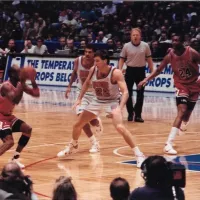
Basketball is a team sport played on a rectangular court...

McDonald's is an American multinational fast food restaurant chain As...

Kroger is an American retail corporation that runs supermarkets and...
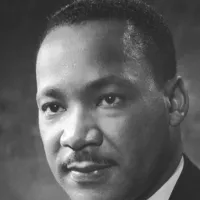
Martin Luther King Jr was a pivotal leader in the...
The United States of America is a federal republic located...

CBS Broadcasting Inc CBS is a prominent American commercial broadcast...
Trending

19 minutes ago Uchijima and Kalinina to meet for the Antalya 2026 Megasaray Hotels Open title.
20 minutes ago Southern Lottery Results for March 1st: Searching for the Winning Series

20 minutes ago Cyprus Airports Cancel Flights Amid Rising Tensions Between US, Israel, and Iran.

1 hour ago Kansas City Man Steals Greyhound Bus, Leading Police on I-29 Chase
1 hour ago Matildas Host Filipinas in Asian Cup Opener; Kerr Addresses Injury, Self-Doubt.
1 hour ago Armie Hammer's Post-Scandal Life: Therapy, Fatherhood, Acting Comeback, and SNL Satire.
Popular
Jesse Jackson is an American civil rights activist politician and...
XXXTentacion born Jahseh Dwayne Ricardo Onfroy was a controversial yet...

Hillary Diane Rodham Clinton is a prominent American politician lawyer...

Kashyap Pramod Patel is an American lawyer who became the...
Barack Obama the th U S President - was the...

Michael Joseph Jackson the King of Pop was a highly...