


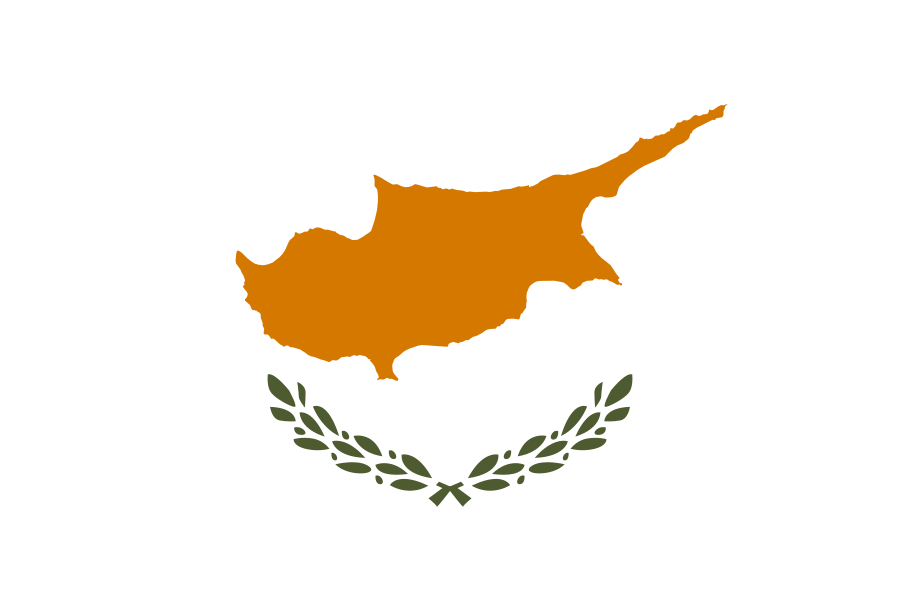
Cyprus is an island country in the eastern Mediterranean Sea, near the Levant in West Asia. Nicosia serves as its capital and largest city. The northeastern part of the island is under Turkish occupation, divided from the Republic of Cyprus by the UN Buffer Zone. British sovereign military bases, Akrotiri and Dhekelia, are located in the south. Cyprus is the third-largest and third-most populous island in the Mediterranean.
5 hours ago : Turkish Ferry Carrying Hundreds Capsizes Off Northern Cyprus Coast
A ferry carrying 267 passengers and crew has capsized off the coast of northern Cyprus. An urgent rescue operation is currently underway to locate and assist those on board the stricken vessel.


1900: Birth of Adamantios Diamantis
In 1900, Adamantios Diamantis, considered one of the founding fathers of modern Cypriot art, was born.
1906: Completion of Famagusta harbour
By 1906, the Famagusta harbour was completed, making Cyprus a strategic naval outpost.
May 1913: Serbo-Greek pact of May 1913
The Serbo-Greek pact of May 1913 was mentioned.
November 1914: De jure Ottoman territory until 5 November 1914
Cyprus remained a de jure Ottoman territory until November 5, 1914, together with Egypt and Sudan.
1914: Formal annexation by the United Kingdom
In 1914, Cyprus was formally annexed by the United Kingdom.
October 1915: Britain offered Cyprus to Greece
In October 1915, Britain offered Cyprus to Greece under the condition that Greece join the war.
1923: Treaty of Lausanne
In 1923, under the Treaty of Lausanne, the nascent Turkish republic relinquished any claim to Cyprus.
1924: Birth of Christophoros Savva
In 1924, Christophoros Savva, considered one of the founding fathers of modern Cypriot art, was born.
1925: Cyprus declared a British crown colony
In 1925, Cyprus was declared a British crown colony.
1946: Island's population census
The Greeks were 80.2% of the total island's population at the time (census 1946).
January 1950: Referendum in favour of enosis
In January 1950, the Church of Cyprus organised a referendum where 96% of Greek Cypriots voted in favour of enosis.
1952: Lawrence Durrell's Residence in Cyprus
In 1952, British writer Lawrence Durrell began living in Cyprus while working for the British colonial government.
1955: Founding of EOKA
In 1955, the EOKA organisation was founded, seeking union with Greece through armed struggle.
1956: Lawrence Durrell Ends Residence in Cyprus
In 1956, British writer Lawrence Durrell ended his residence in Cyprus while working for the British colonial government.
1957: Duff Cooper Prize
In 1957, Lawrence Durrell's book Bitter Lemons about his time in Cyprus won the second Duff Cooper Prize.
July 1958: British policy regarding TMT
In a letter dated 15 July 1958, The Secretary of State for the Colonies advised the Governor of Cyprus not to act against TMT so as not to harm British relations with the Turkish government.
1958: Death of Vassilis Vryonides
In 1958, Cypriot painter Vassilis Vryonides, who studied at the Academy of Fine Arts in Venice, passed away.
August 1960: Cyprus officially attained independence
On 16 August 1960, Cyprus officially attained independence with a population of 573,566.
December 1960: First Population Census After Independence
In December 1960, the first population census after independence indicated Cyprus had a total population of 573,566, with 77.1% Greeks, 18.2% Turks, and 4.7% others.
1960: Establishment of Apophasis
In 1960, Christophoros Savva, together with Welsh artist Glyn Hughes, founded Apophasis [Decision], the first independent cultural centre of the newly established Republic of Cyprus.
1960: Cyprus granted independence
In 1960, Cyprus was granted independence following nationalist violence.
1960: Population Statistics in 1960
In 1960, Greek Cypriots made up 77% of the population, and Turkish Cypriots made up 18% of the population.
1960: 1960 Constitution
In 1960, the Constitution provided for a presidential system of government with independent executive, legislative and judicial branches as well as a complex system of checks and balances including a weighted power-sharing ratio designed to protect the interests of the Turkish Cypriots.
1960: Constitution results in impasses
In 1960, the division of power under the constitution soon resulted in legal impasses and discontent.
1960: End of Sole Official Language Status for English
In 1960, with Cyprus' independence, English lost its status as the sole official language, though it continued to be used widely.
1960: Treaty of Guarantee
The 1960 Treaty of Guarantee was cited by the Turkish army as a justification to intervene in the island
December 1963: Intercommunal violence erupted on 21 December 1963
Intercommunal violence erupted on 21 December 1963, resulting in deaths and displacement.
1963: Inter-communal Ethnic Tensions
Due to inter-communal ethnic tensions starting in 1963, an island-wide census was regarded as impossible.
1963: The crisis of 1963–64
The crisis of 1963 brought further intercommunal violence, displaced over 25,000 Turkish Cypriots into enclaves and brought the end of Turkish Cypriot representation in the republic.
1963: Greek and Turkish Cypriots missing
There were 1,534 Greek Cypriots and 502 Turkish Cypriots missing as a result of the fighting from 1963 to 1974.
1964: Turkey threatened to invade Cyprus in 1964
In 1964, Turkey threatened to invade Cyprus but was stopped by a warning from US President Lyndon B. Johnson.
1964: Turkish Seats Remain Vacant
Since 1964, twenty-four seats that were allocated to the Turkish community in the House of Representatives have remained vacant.
1965: Vacant Turkish Cypriot Seats
Since 1965, following clashes between the two communities, the Turkish Cypriot seats in the House have remained vacant.
1968: Christophoros Savva represented Cyprus at the Venice Biennale and dies.
In 1968, Christophoros Savva was among the artists representing Cyprus in its inaugural Pavilion at the 34th Venice Biennale. Christophoros Savva also died in 1968.
1973: Cypriot Government Census
In 1973, the Cypriot government conducted a census, excluding the Turkish Cypriot populace, revealing a Greek Cypriot population of 482,000.
July 1974: Coup d'état and Turkish invasion
On 15 July 1974, a coup d'état was carried out in Cyprus, followed by the Turkish army invading the island on 20 July 1974.
December 1974: Return of Archbishop Makarios III
In December 1974, Archbishop Makarios III returned to Cyprus after the restoration of constitutional order.
1974: Turkish invasion of Cyprus in 1974
In 1974, 36% of the island was taken over by the Turks, leading to the eviction of 180,000 Greek Cypriots.
1974: Division of Cyprus
In 1974, Cyprus was divided de facto when the Turkish army occupied the northern third of the island.
1974: Population Estimate and Military Occupation
In 1974, the Cypriot government estimated the total population of Cyprus at 641,000; with 78.9% Greeks and 18.4% Turks. Later in 1974, the military occupation of part of the island occurred.
1974: Events of the summer of 1974
The events of the summer of 1974 dominate the politics on the island, as well as Greco-Turkish relations.
1975: US Congress imposed arms embargo on Turkey
In mid-1975 the US Congress imposed an arms embargo on Turkey for using US-supplied equipment during the Turkish invasion of Cyprus in 1974.
1975: Sotiris Kaiafas Wins European Golden Shoe
In the 1975-76 season, Footballer Sotiris Kaiafas won the European Golden Shoe.
1976: Post-Occupation Census
In 1976, the government of Cyprus conducted a census after the military occupation.
1982: Post-Occupation Census
In 1982, the government of Cyprus conducted a census after the military occupation.
1983: Establishment of Turkish Cypriot state
In 1983, a separate Turkish Cypriot state was established in the north by unilateral declaration.
1983: Proclamation of Turkish Republic of Northern Cyprus
In 1983, the Turkish Cypriot parliament proclaimed the Turkish Republic of Northern Cyprus (TRNC).
1983: Declaration of Independence
In 1983, the Turkish Cypriots declared independence as the Turkish Republic of Northern Cyprus but were recognised only by Turkey.
1985: Adoption of a Constitution
In 1985, the TRNC adopted a constitution and held its first elections.
1989: End of De Facto use of English in Courts
Until 1989, English was used (de facto) in courts of law.
1992: Post-Occupation Census
In 1992, the government of Cyprus conducted a census after the military occupation.
1993: Cyprus Police Under Ministry of Justice
Since 1993, the Cyprus Police has been under the Ministry of Justice and Public Order.
1994: Death of Adamantios Diamantis
In 1994, Adamantios Diamantis, considered one of the founding fathers of modern Cypriot art, passed away.
1994: Establishment of the Cinema Advisory Committee
In 1994, Cypriot film production received a boost with the establishment of the Cinema Advisory Committee.
1996: Funding from Eurimages
In 1996, the film I Sphagi tou Kokora received funding from the Council of Europe's Eurimages Fund.
1996: End of use of English in Legislation
Until 1996, English was used in legislation.
1999: Film Funding from Eurimages
In 1999, the film To Tama received funding from the Council of Europe's Eurimages Fund.
2000: EuroAsia Interconnector Project
Cyprus is the last EU member fully isolated from energy interconnections and it is expected that it will be connected to European network via the EuroAsia Interconnector, a 2000 MW high-voltage direct current undersea power cable. The EuroAsia Interconnector will connect Greek, Cypriot, and Israeli power grids.
2000: Budget for Filmmaking
In 2000, the annual amount set aside for filmmaking in the national budget was CYP£500,000 (about €850,000).
2001: Religious Census
According to the 2001 census carried out in the government-controlled areas, 94.8% of the population was Eastern Orthodox, 0.9% Armenian and Maronite, 1.5% Latin Catholic, 1.0% Church of England, and 0.6% Muslim.
2001: Heavy Rainfall Pushes Water Reserves Up
Between 2001 and 2004, exceptionally heavy annual rainfall pushed water reserves up, with supply exceeding demand.
2001: CIA World Factbook Population Calculation
In 2001, the CIA World Factbook estimated that Greek Cypriots comprised 77%, Turkish Cypriots 18%, and others 5% of the total Cypriot population.
2001: Post-Occupation Census
In 2001, the government of Cyprus conducted a census after the military occupation.
2001: Investment in Water Desalination Plants
Since 2001, the Government has invested heavily in the creation of water desalination plants which have supplied almost 50 per cent of domestic water.
April 2003: Northern Cyprus Eases Checkpoint Restrictions
In April 2003, Northern Cyprus unilaterally eased checkpoint restrictions, permitting Cypriots to cross between the two sides for the first time in 30 years.
2003: Demarcation of Maritime Border with Egypt
Cyprus demarcated its maritime border with Egypt in 2003.
May 2004: Cyprus joined the European Union
On 1 May 2004, Cyprus joined the European Union, with EU legislation suspended in Northern Cyprus.
2004: Heavy Rainfall Pushes Water Reserves Up
Between 2001 and 2004, exceptionally heavy annual rainfall pushed water reserves up, with supply exceeding demand.
2004: Cyprus joins the European Union
In 2004, Cyprus joined the European Union.
2004: EU Accession
In 2004, Cyprus was among the ten countries that joined the European Union, becoming the wealthiest of the new member states at the time.
2004: Annan Plan referendum
In 2004, the Annan Plan was put to a referendum, with Turkish Cypriots supporting and Greek Cypriots voting against it.
2005: All-Time High Water Storage
By the start of 2005, total water storage in the island's reservoirs rose to an all-time high, following exceptionally heavy rainfall between 2001 and 2004.
2006: Census of Northern Cyprus
According to the 2006 census carried out by Northern Cyprus, there were 256,644 (de jure) people living in Northern Cyprus.
2006: 2006 European Heat Wave
Cyprus experienced drought as a result of the 2006 European heat wave, impacting water supplies.
2006: French and German Speakers
In 2006, 12% of the population of Cyprus spoke French and 5% spoke German.
2006: Vehicle Ownership and Public Transport Plans
In 2006, Cyprus had the 29th-highest per capita private car ownership globally, with approximately 344,000 privately owned vehicles and a total of 517,000 registered motor vehicles. Also in 2006, plans were announced to improve and expand bus services and other public transport, backed by the European Union Development Bank.
2006: Marcos Baghdatis Ranked 8th in the World
In 2006, tennis player Marcos Baghdatis was ranked 8th in the world, was a finalist at the Australian Open, and reached the Wimbledon semi-final.
2006: Cyprus Rugby Federation Formed
In 2006, the Cyprus Rugby Federation was formed.
2007: House of Representatives Composition
As of 2007, the House of Representatives had 56 members elected for a five-year term by proportional representation, and three observer members representing the Armenian, Latin and Maronite minorities.
2007: Demarcation of Maritime Border with Lebanon
Cyprus demarcated its maritime border with Lebanon in 2007.
2007: Kyriakos Ioannou Wins Bronze Medal
In 2007, high jumper Kyriakos Ioannou achieved a jump of 2.35m at the 11th IAAF World Championships in Athletics in Osaka, Japan, winning the bronze medal.
January 2008: Adoption of the Euro
On 1 January 2008, the Cypriot government adopted the euro as the national currency, replacing the Cypriot pound.
March 2008: Demolition of Wall on Ledra Street
In March 2008, a wall that had stood for decades at the boundary between the Republic of Cyprus and the UN buffer zone was demolished. This wall cut across Ledra Street in Nicosia and was a symbol of the island's division.
April 2008: Reopening of Ledra Street
On 3 April 2008, Ledra Street was reopened in the presence of Greek and Turkish Cypriot officials, marking a symbolic step after the demolition of the dividing wall.
2008: Dimitris Christofias Becomes Head of State
In 2008, Dimitris Christofias became the country's first Communist head of state.
2008: Anorthosis Famagusta FC Qualifies for UEFA Champions League
In the 2008 season, Anorthosis Famagusta FC became the first Cypriot team to qualify for the UEFA Champions League Group stage.
2008: Financial Crisis Damage
The Cypriot economy was damaged by the 2008 financial crisis and the Euro area crisis.
2010: Demarcation of Maritime Border with Israel
Cyprus demarcated its maritime border with Israel in 2010.
2010: English Proficiency
In 2010, 80.4% of Cypriots were proficient in English as a second language.
2010: Winter Olympics Qualification
In 2010, siblings Christopher and Sophia Papamichalopoulou qualified for the 2010 Winter Olympics in Vancouver, British Columbia, Canada.
2010: Population Estimate
In 2010, the International Crisis Group estimated that the total population of the island of Cyprus was 1.1 million.
2010: New Bus Network Implemented
In 2010, the new bus network was implemented throughout Cyprus.
January 2011: UN Report on Human Rights
In January 2011, the Report of the Office of the United Nations High Commissioner for Human Rights on the question of Human Rights in Cyprus noted that the ongoing division of Cyprus continues to affect human rights throughout the island.
August 2011: Production-Sharing Agreement
In August 2011, the US-based firm Noble Energy entered into a production-sharing agreement with the Cypriot government regarding the commercial development of block 12.
September 2011: Drilling Begins in Block 12
On 19 September 2011, drilling in Block 12 began without any reported incidents, despite threats from Turkey, which does not recognize Cyprus's border agreements. The drilling efforts have the support of the US, EU, and UN.
2011: Foreign Residents and Immigrants
As of 2011, the Republic of Cyprus was home to 110,200 foreign permanent residents and an estimated 10,000–30,000 undocumented illegal immigrants. There were also 10,520 people of Russian origin living in Cyprus.
2011: Costas Philippou in UFC Middleweight Division
From 2011, Mixed martial artist Costas Philippou competed in UFC's middleweight division.
2011: Post-Occupation Census
In 2011, the government of Cyprus conducted a census after the military occupation.
2011: APOEL FC reached the last 8 of the UEFA Champions League
In the 2011-2012 season, APOEL FC reached the last 8 of the UEFA Champions League after finishing top of its group and beating French Olympique Lyonnais in the Round of 16.
June 2012: Need for Foreign Aid
In June 2012, the Cypriot government announced it would need €1.8 billion in foreign aid to support the Cyprus Popular Bank, followed by Fitch downgrading Cyprus's credit rating to junk status.
2012: Involvement in Cypriot Financial Crisis
Dimitris Christofias's involvement in the 2012-2013 Cypriot financial crisis led to him not running for re-election in 2013.
2012: First Olympic Medal
In 2012, Pavlos Kontides won Cyprus's first Olympic medal, a silver medal, at the Summer Olympics in the Men's Laser class.
2012: Start of Financial Crisis
The 2012-2013 Cypriot financial crisis led to an agreement with the Eurogroup in March 2013.
February 2013: Nicos Anastasiades Wins Presidential Election
In February 2013, Democratic Rally candidate Nicos Anastasiades won 57.48% of the vote in the Presidential election and was sworn in on 28 February 2013.
March 2013: Agreement with the Eurogroup
In March 2013, an agreement was reached with the Eurogroup to split Cyprus Popular Bank into a 'bad' bank to be wound down and a 'good' bank to be absorbed by the Bank of Cyprus.
2013: Turkey Accessing Natural Resources
Since 2013, Turkey's offshore drilling companies have accessed both natural gas and oil resources.
2014: ECHR Orders Turkey to Pay Compensation
In 2014, the European Court of Human Rights ordered Turkey to pay well over $100m in compensation to Cyprus for the invasion, a judgment Ankara stated it would ignore.
2015: Relaunch of Reunification Talks
In 2015, reunification talks between the two sides in Cyprus were relaunched, aiming to resolve the long-standing division of the island.
2015: Freedom of the Press Report by Freedom House
In the 2015 Freedom of the Press report by Freedom House, the Republic of Cyprus and Northern Cyprus were ranked "free".
2015: Costas Philippou Last Season in UFC Middleweight Division
Until 2015, mixed martial artist Costas Philippou competed in UFC's middleweight division.
2016: Reduction of Compulsory Military Service
In 2016, the period of compulsory service in the Cypriot National Guard was reduced to 14 months, after historically requiring all male citizens to serve 24 months after their 17th birthday.
2016: Adoption of Professional Enlisted Institution
Since 2016, the armed forces have adopted a large professional enlisted institution (ΣΥΟΠ), which, combined with the reduction of conscript service, produces an approximate 3:1 ratio between conscript and professional enlisted personnel.
2017: Collapse of Reunification Talks
In 2017, the reunification talks between the two sides in Cyprus, which had been relaunched in 2015, collapsed without achieving a resolution.
2018: 2018 European Heat Wave
Cyprus experienced drought as a result of the 2018 European heat wave, impacting water supplies.
2018: Forest Landscape Integrity Index Score
In 2018, Cyprus had a Forest Landscape Integrity Index mean score of 7.06/10, ranking it 59th globally out of 172 countries.
2018: Anastasiades Re-elected
Nicos Anastasiades was re-elected with 56% of the vote in the 2018 presidential election.
February 2019: EU Warning on Passport Sales
In February 2019, the European Union warned that Cyprus was selling EU passports to Russian oligarchs, potentially allowing organized crime to infiltrate the EU.
July 2019: Change of Law on Cypriot Citizenship
A change of law regarding Cypriot citizenship occurred in July 2019, though the specifics of the changes are not described here.
2019: 2019 European Heat Waves
Cyprus experienced drought as a result of the 2019 European heat waves, impacting water supplies.
2020: Dispute over Exclusive Economic Zones
Since 2020, Cyprus and Turkey have been engaged in a dispute over the extent of their exclusive economic zones, stemming from oil and gas exploration in the area.
June 2021: Glyn Hughes Archived on Wayback Machine
In June 2021, English Cypriot Artist Glyn HUGHES was archived on the Wayback Machine.
2021: Population Census Results
According to the 2021 Census, the population in the government-controlled areas of Cyprus was 918,100, with Nicosia being the most populous district (38%), followed by Limassol (28%).
2021: Post-Occupation Census
In 2021, the government of Cyprus conducted a census after the military occupation.
2022: 2022 European Heat Waves
Cyprus experienced drought as a result of the 2022 European heat waves, impacting water supplies.
February 2023: Nikos Christodoulides Sworn in as President
On 28 February 2023, Nikos Christodoulides, the winner of the 2023 presidential election run-off, was sworn in as the eighth president of the Republic of Cyprus.
November 2023: Cyprus Confidential Data Leak
In November 2023, the Cyprus Confidential data leak, published by the International Consortium of Investigative Journalists, revealed strong links between the country's financial network and Russian oligarchs and high-up figures in the Kremlin, supporting Vladimir Putin's regime.
2023: Highest per Capita GDP in Southern Europe
According to the 2023 International Monetary Fund estimates, Cyprus's per capita GDP at $54,611 is the highest in Southern Europe.
July 2024: Erdoğan's Two-State Proposal
In July 2024, on the 50th anniversary of the Turkish invasion of Northern Cyprus, Turkish President Erdoğan rejected a United Nations-endorsed plan for a federal government and supported the idea of having two separate states within Cyprus, a proposal immediately rejected by Greek Cypriots.
2024: Global Peace Index Ranking
According to the 2024 Global Peace Index, Cyprus is the 88th most peaceful country in the world.
2024: Intention to officially join NATO
In 2024, Cyprus announced its intention to officially join NATO.
2025: Global Innovation Index Ranking
In 2025, Cyprus was ranked 25th in the Global Innovation Index.
2025: World Press Freedom Index Ranking
In the 2025 World Press Freedom Index, Reporters Without Borders ranked the Republic of Cyprus 77th out of 180 countries.
Mentioned in this timeline
England a constituent country of the United Kingdom occupies roughly...
A bank is a regulated financial institution licensed to accept...
Japan is an East Asian island country located in the...
A shoe is a protective and comfort-providing item of footwear...
Canada is a North American country spanning from the Atlantic...
Russia is the world's largest country spanning Eastern Europe and...
Trending
3 hours ago Buffalo Bills to Release Safety Geno Stone

3 hours ago Ben Shelton and Trinity Rodman Publicize Their Developing Romantic Relationship
4 hours ago Danny Welbeck Anticipates Special Brighton Reunion and Predicts Success for Chelsea's Season
4 hours ago Cole Palmer Returns to Peak Form Under Chelsea Manager Xabi Alonso
5 hours ago Turkish Ferry Carrying Hundreds Capsizes Off Northern Cyprus Coast
5 hours ago Iran Experiences Economic Divergence and Political Uncertainty Six Months Into Ongoing War
Popular

Dolly Parton is a celebrated American singer-songwriter actress philanthropist and...
Doug Ford is a Canadian politician and businessman currently serving...
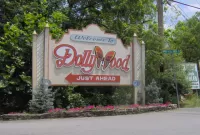
Dollywood is a popular theme park co-owned by Herschend and...

Ken Paxton is an American politician and lawyer serving as...

Michael Joseph Jackson the King of Pop was a highly...

Candace Owens is an American conservative political commentator author and...