History of John Kerry in Timeline


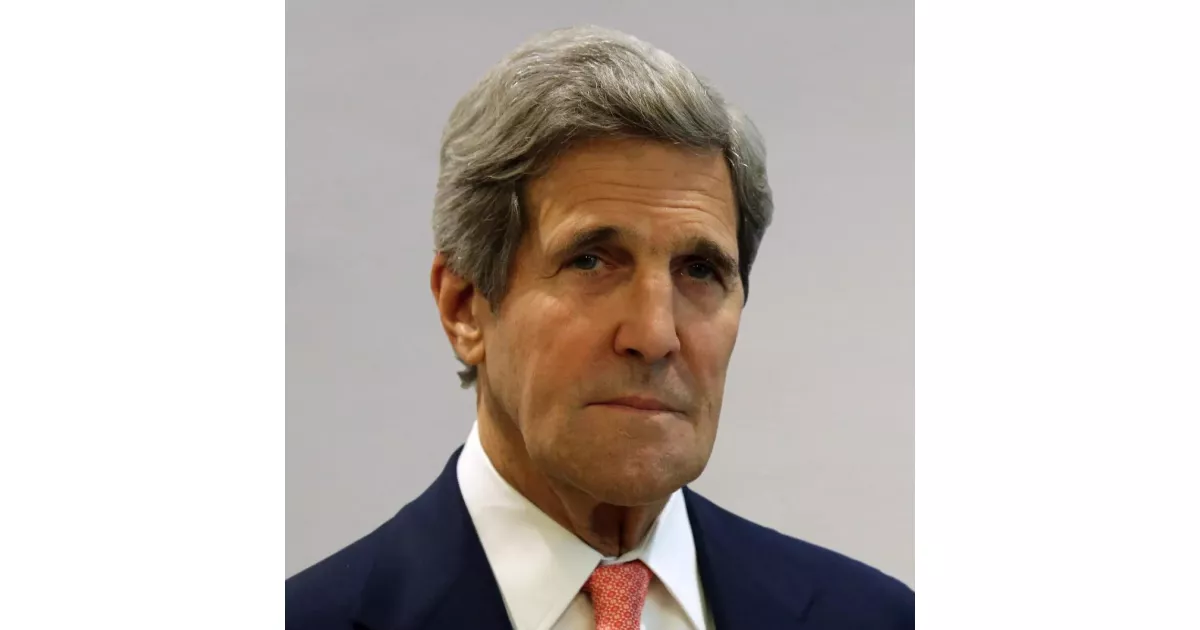
John Forbes Kerry is an American politician and diplomat, notable for serving as the 68th United States Secretary of State under President Barack Obama and as a U.S. Senator representing Massachusetts for nearly three decades. He was the Democratic nominee for President in 2004, ultimately losing to George W. Bush. More recently, Kerry served as the first U.S. Special Presidential Envoy for Climate, highlighting his continued involvement in significant political and environmental issues on a global scale.
3 hours ago : John Kerry: Netanyahu's 'long-held dream' was Iran war, speaking with GBH.
John Kerry stated in an interview with GBH News that a war with Iran has been a 'long-held dream' of Israeli Prime Minister Benjamin Netanyahu, sparking debate and raising geopolitical concerns.


1901: Conversion to Catholicism
In 1901, John Kerry's grandfather Frederick A. "Fred" Kerry, his wife, and his brother converted from Judaism to Catholicism and changed their names from Kohn to Kerry.
1905: Emigration to the United States
In 1905, John Kerry's grandparents, Fred and Ida Kerry, emigrated from the Austro-Hungarian Empire to the United States.
1915: Moved to Brookline, Massachusetts
By 1915, Fred and Ida Kerry moved to Brookline, Massachusetts.
December 11, 1943: John Kerry's Birth
John Forbes Kerry was born on December 11, 1943. He is an American attorney, politician, diplomat, and former naval officer.
1944: Father's Discharge from the Army Air Corps
John Kerry was initially considered a military brat until his father was discharged from the United States Army Air Corps in 1944.
1957: Father Stationed in Oslo and Kerry Sent to Boarding School
In 1957, John Kerry's father was stationed at the U.S. Embassy in Oslo, Norway, and Kerry was sent back to the United States to attend boarding school.
1960: Played bass in The Electras
In 1960, while at St. Paul's, John Kerry played bass in a minor rock band called The Electras with six of his classmates.
1961: Album printed for The Electras
In 1961, The Electras had about five hundred copies of one album printed, which they sold some of at dances at the school
1962: Attendance at Yale University
In 1962, John Kerry attended Yale University, majoring in political science and residing in Jonathan Edwards College.
March 1965: Ten Eyck Prize
In March 1965, John Kerry won the Ten Eyck prize as the best orator in the junior class for a speech that was critical of U.S. foreign policy.
February 18, 1966: Enlistment in the Naval Reserve
On February 18, 1966, John Kerry enlisted in the Naval Reserve.
August 1966: Start of Active Duty in the Navy
John Kerry was on active duty in the United States Navy from August 1966.
August 19, 1966: Began Active Duty
John Kerry began his active duty military service on August 19, 1966.
December 16, 1966: Officer's Commission
On December 16, 1966, after completing Officer Candidate School, John Kerry received his officer's commission in the U.S. Naval Training Center in Newport, Rhode Island.
1966: Graduation from Yale
In 1966, John Kerry graduated from Yale with a bachelor of arts degree.
1966: Enlistment in the Naval Reserve
In 1966, after graduating from Yale University, John Kerry enlisted in the United States Naval Reserve and later attained the rank of lieutenant.
December 3, 1968: Shrapnel Wound Received
During the night of December 2 and early morning of December 3, 1968, John Kerry was in charge of a small boat operating near Cam Ranh Bay. He received a shrapnel wound in the left arm above the elbow for which he received his first Purple Heart Medal.
February 20, 1969: Wound on the Bồ Đề River
On February 20, 1969, John Kerry received his second Purple Heart for a wound received in action on the Bồ Đề River, when his boat was hit by a B-40 rocket, and a piece of shrapnel hit Kerry's left leg.
February 28, 1969: Silver Star Medal Awarded
On February 28, 1969, John Kerry was awarded his Silver Star Medal for his actions during a combat operation on the Duong Keo River where he killed a Viet Cong insurgent and captured his loaded rocket launcher.
March 1, 1969: Press Release Written
On March 1, 1969, a press release was written documenting John Kerry's actions for which he was awarded the Silver Star Medal.
March 13, 1969: Operation Sealords mission
On March 13, 1969, John Kerry was in charge of one of five Swift Boats that were returning to their base after performing an Operation Sealords mission on the Bái Háp River.
March 17, 1969: Historical Summary
On March 17, 1969, a historical summary was created documenting John Kerry's actions for which he was awarded the Silver Star Medal.
April 11, 1969: Reported to Brooklyn
On April 11, 1969, John Kerry reported to the Brooklyn-based Atlantic Military Sea Transportation Service as a personal aide to an officer, Rear Admiral Walter Schlech.
December 1969: Active Duty Obligation Extended
In December 1969, John Kerry agreed to an extension of his active duty obligation from December 1969 to August 1970 in order to perform Swift Boat duty.
January 1, 1970: Temporary Promotion to Lieutenant
On January 1, 1970, John Kerry was temporarily promoted to full lieutenant.
August 1970: End of Active Duty Extension
In August 1970, John Kerry's extension of his active duty obligation ended.
1970: Kerry Considers Running for Congress
In 1970, John Kerry considered running for Congress in Massachusetts's 3rd congressional district but deferred to Robert Drinan. Later, in February 1972, Kerry considered running against Harold Donohue in the 4th district, but ultimately ran to succeed F. Bradford Morse in the 5th district.
1970: Kerry Wins Primary
In 1970, despite the arrests, Kerry won the primary with 20,771 votes (27.56%).
April 22, 1971: Kerry Appears Before U.S. Senate Committee and Throws Medals in Protest
On April 22, 1971, John Kerry appeared before a U.S. Senate committee regarding proposals to end the Vietnam War. The day after, he joined thousands of veterans in a demonstration at the United States Capitol, throwing his and other veterans' medals and service ribbons over a fence to protest the war. Kerry stated he was doing it for peace and justice.
May 30, 1971: Kerry Arrested During VVAW March
On May 30, 1971, John Kerry was arrested during a Vietnam Veterans Against the War (VVAW) march in Lexington, Massachusetts. Kerry and 440 other demonstrators were arrested for trespassing while trying to camp on the village green. They were later fined $5 each.
1971: Testified Before Senate Foreign Relations Committee
In 1971, John Kerry testified before the Senate Foreign Relations Committee, a panel he would later return to for his confirmation hearing as Secretary of State on January 24, 2013.
February 1972: Kerry's Wife Buys House in Worcester, Later Rents Apartment in Lowell
In February 1972, Kerry's wife purchased a house in Worcester, Massachusetts, with plans for Kerry to run against Harold Donohue. However, the couple never moved in. Instead, they rented an apartment in Lowell, so that Kerry could run to succeed Congressman F. Bradford Morse.
1972: Kerry Buys a House in Lowell
After his defeat in 1972, John Kerry and his wife purchased a house in the Belvidere section of Lowell, Massachusetts. He worked as a fundraiser for CARE.
1972: Unsuccessful House of Representatives Candidacy
In 1972, John Kerry ran unsuccessfully for the U.S. House of Representatives in Massachusetts's 5th congressional district, losing to Republican Paul W. Cronin in the general election.
September 5, 1973: Birth of Alexandra Kerry
On September 5, 1973, Alexandra Kerry, John Kerry's daughter, was born.
September 1973: Kerry Enrolls at Boston College Law School
In September 1973, John Kerry began his studies at Boston College Law School.
July 1974: Kerry Named Executive Director of Mass Action
In July 1974, John Kerry was appointed as the executive director of Mass Action, a Massachusetts advocacy association.
1976: Kerry Graduates from Law School and Admitted to the Bar
In 1976, John Kerry received his juris doctor (J.D.) from Boston College, passed the bar exam, and was admitted to the Massachusetts bar. Subsequently, he began working as a full-time prosecutor in the office of the District Attorney of Middlesex County.
December 31, 1976: Birth of Vanessa Kerry
On December 31, 1976, Vanessa Kerry, John Kerry's daughter, was born.
January 1977: Kerry Promoted to First Assistant District Attorney
In January 1977, John Kerry was promoted to First Assistant District Attorney for Middlesex County, becoming the campaign and media surrogate for District Attorney John J. Droney. He tried high-profile cases and helped administer the office.
February 1978: End of Naval Reserve Service
In February 1978, John Kerry ceased serving in the Naval Reserve.
1978: Kerry Launches Investigation Against Senator Edward Brooke
In 1978, John Kerry launched a criminal investigation against Senator Edward Brooke, regarding "misstatements" in his first divorce trial. The inquiry ended with no charges.
1978: Kerry Considers Running for District Attorney
In 1978, Kerry considered running for District Attorney after Droney's health worsened. However, Droney's health improved, and he resumed his duties.
1979: Kerry Leaves DA Office to Start Law Firm
In 1979, John Kerry left the District Attorney's office along with assistant DA Roanne Sragow to establish their own law firm. He also worked as a commentator for WCVB-TV and co-founded a bakery.
1979: First U.S. Secretary of State to meet with Iranian counterpart since 1979 Iranian Revolution
John Kerry was the first U.S. Secretary of State to have met with his Iranian counterpart since 1979 Iranian Revolution, on September 27, 2013.
1982: Kerry Declares Candidacy for Lieutenant Governor
In 1982, John Kerry declared his candidacy for Lieutenant Governor of Massachusetts, entering the primary election alongside several other candidates.
1982: Kerry runs for Lieutenant Governor
In 1982, John Kerry ran for Lieutenant Governor and did not receive the party endorsement.
1982: Lieutenant Governor of Massachusetts
In 1982, John Kerry was elected as the 66th lieutenant governor of Massachusetts on Michael Dukakis's ticket.
1982: Separation from Julia Thorne
In 1982, Julia Thorne asked John Kerry for a separation while she was suffering from severe depression.
1984: Kerry Runs for U.S. Senate
In 1984, John Kerry ran for the U.S. Senate seat in Massachusetts after Paul Tsongas stepped down for health reasons. Kerry prevailed in a close primary.
1984: Election to the U.S. Senate
In 1984, John Kerry was elected to the United States Senate representing Massachusetts.
January 2, 1985: Kerry Appointed to U.S. Senate
On January 2, 1985, John Kerry was appointed by Governor Dukakis to fill the U.S. Senate vacancy created by Paul Tsongas's resignation, giving him seniority over other new senators.
April 18, 1985: Kerry Travels to Nicaragua and Meets with Daniel Ortega
On April 18, 1985, John Kerry and Senator Tom Harkin traveled to Nicaragua to meet with President Daniel Ortega. They discussed a cease-fire agreement in exchange for the U.S. dropping support of the Contras. The Reagan administration denounced the offer, but Kerry was willing to test the Sandinistas' good faith.
1985: Massachusetts Senator
In 1985, John Kerry began representing Massachusetts in the United States Senate, a position he held until 2013.
1986: Publication of Vietnam Reminiscences
In a book of Vietnam reminiscences published in 1986, John Kerry said that he didn't really want to get involved in the war.
1987: Chairman of the Democratic Senatorial Campaign Committee
In 1987, John Kerry became the chairman of the Democratic Senatorial Campaign Committee.
July 25, 1988: Divorce from Julia Thorne
On July 25, 1988, John Kerry and Julia Thorne were divorced. They had separated in 1982 while she was suffering from severe depression.
November 15, 1988: Kerry Jokes About Shooting Dan Quayle
On November 15, 1988, John Kerry made a joke at a businessmen's breakfast in East Lynn, Massachusetts, saying that if George H. W. Bush was shot, the Secret Service had orders to shoot Dan Quayle. He apologized the following day.
May 4, 1989: North Convicted of Charges Relating to Iran/Contra Controversy
On May 4, 1989, Oliver North was convicted of charges related to the Iran/Contra controversy, including three felonies.
1989: End of term as Chairman of the Democratic Senatorial Campaign Committee
In 1989, John Kerry's term as the chairman of the Democratic Senatorial Campaign Committee came to an end.
1990: Introduction to Teresa Heinz
In 1990, John Kerry was introduced to Teresa Heinz by her husband at an Earth Day rally.
1990: Re-elected to the Senate
In 1990, John Kerry was re-elected to the Senate.
September 16, 1991: North's Convictions Overturned on Appeal
On September 16, 1991, Oliver North's convictions were overturned on appeal.
1991: Chaired Senate Select Committee on POW/MIA Affairs
In 1991, John Kerry became the chair of the Senate Select Committee on POW/MIA Affairs.
1991: BCCI Shut Down
In 1991, banking regulators shut down the Bank of Credit and Commerce International (BCCI) after Kerry's staff found reason to believe that it had facilitated Noriega's drug trafficking and money laundering.
December 1992: Kerry and Brown Release Report on BCCI Scandal
In December 1992, John Kerry and Senator Hank Brown released "The BCCI Affair", a report detailing the BCCI scandal. The report revealed the bank's corruption and ties to terrorists, criticizing various U.S. government agencies and influential lobbyists.
1993: Endorsed Committee Report on POW/MIA Affairs
In 1993, John Kerry endorsed the Senate Select Committee on POW/MIA Affairs report, which stated there was no compelling evidence that any American remained alive in captivity in Southeast Asia.
1994: Sponsored Resolution to End Trade Embargo Against Vietnam
In 1994, John Kerry, along with John McCain, sponsored a Senate resolution calling for an end to the existing trade embargo against Vietnam, aiming to pave the way for normalization.
1994: William Weld Re-elected as Governor
In 1994, William Weld was re-elected as Governor of Massachusetts with 71% of the vote.
May 26, 1995: Marriage to Teresa Heinz
On May 26, 1995, John Kerry married Teresa Heinz in Nantucket, Massachusetts. Teresa Heinz is a Portuguese-born businesswoman and philanthropist.
1995: Normalization of Diplomatic Relations with Vietnam
In 1995, President Bill Clinton normalized diplomatic relations with the country of Vietnam, following resolutions from John Kerry and John McCain calling for an end to the trade embargo.
1996: Kerry Faces Difficult Re-election Fight Against William Weld
In 1996, John Kerry faced a challenging re-election campaign against Governor William Weld. They agreed to a spending cap of $6.9 million but both exceeded it. Kerry won the election with 52 percent of the vote to Weld's 45 percent.
1996: Re-elected to the Senate
In 1996, John Kerry was re-elected to the Senate after winning against Republican William Weld, who was the then-Governor of Massachusetts.
1997: Marriage Annullment
In 1997, John Kerry's marriage to Julia Thorne was formally annulled.
2000: Controversy Surrounding George W. Bush's Military Service
In 2000, the controversy surrounding George W. Bush's military service in the Texas Air National Guard became a key issue. John Kerry's status as a decorated Vietnam War veteran posed a challenge for Bush's presidential campaign, prompting Republicans to question Kerry's own war record.
2000: Kerry Considered for Vice Presidential Running Mate
In the 2000 presidential election, John Kerry was considered as a potential vice presidential running mate.
October 9, 2002: Vote to Authorize Force Against Saddam Hussein
On October 9, 2002, John Kerry stated that he would vote to give the President the authority to use force, if necessary, to disarm Saddam Hussein, citing the threat posed by Iraq's weapons of mass destruction.
2002: Re-elected to the Senate
In 2002, John Kerry was re-elected to the Senate.
2002: Death of Rosemary Forbes Kerry
In 2002, John Kerry's mother, Rosemary Forbes Kerry, died. Kerry is the beneficiary of trusts inherited from Forbes family relatives.
January 23, 2003: Speech on the Threat of Saddam Hussein
On January 23, 2003, John Kerry gave a speech to Georgetown University stating that the U.S. needed to disarm Saddam Hussein because of the threat posed by his weapons of mass destruction.
2003: Diagnosis of Prostate Cancer
In 2003, John Kerry was diagnosed with and successfully treated for prostate cancer.
2003: Informed about Jewish Ancestry
In 2003, John Kerry was informed by a reporter about his Jewish ancestry.
2003: Rated Top Senate Liberal by National Journal
In 2003, John Kerry was rated as the top Senate liberal by the National Journal, although this rating was based solely on voting records from that year. This assessment was later used against him during the 2004 presidential election.
2003: Lieutenant Commander George Elliott Stated
In 2003, Lieutenant Commander George Elliott stated to Douglas Brinkley that he did not know whether to court-martial John Kerry for beaching the boat without orders or give him a medal for saving the crew.
February 3, 2004: Primary Victories in Arizona, South Carolina and New Mexico
On February 3, 2004, John Kerry had victories in Arizona, South Carolina and New Mexico Democratic primary states, reviving his campaign after winning the Iowa caucuses and performing well in New Hampshire.
March 16, 2004: "I Actually Did Vote for the $87 Billion Before I Voted Against It"
On March 16, 2004, John Kerry made the statement, "I actually did vote for the $87 billion before I voted against it" regarding a supplemental appropriations bill for the Iraq War. This statement was used by the Bush campaign to portray him as a flip-flopper.
July 6, 2004: Announced John Edwards as Running Mate
On July 6, 2004, John Kerry announced his selection of John Edwards as his running mate for the 2004 presidential election.
October 2004: Interview with Christianity Today
In October 2004, John Kerry gave an interview to Christianity Today.
November 3, 2004: Conceded the 2004 Presidential Election
On November 3, 2004, John Kerry conceded the presidential election to George W. Bush. Kerry won 59.03 million votes (48.3%) and 251 electoral votes, while Bush won 62.04 million votes (50.7%) and 286 electoral votes.
2004: Military Records Released
During the 2004 election, John Kerry posted his military records at his website, and permitted reporters to inspect his medical records.
2004: Portrayed as Staunch Liberal in Presidential Election
During the 2004 presidential election, conservative groups and the Bush campaign portrayed John Kerry as a staunch liberal, using his 2003 rating by the National Journal as evidence. Despite this, analyses found him only slightly more liberal than the average Democratic Senator.
2004: Mentioned as Possible 2008 Contender
Immediately after the 2004 election, some Democrats mentioned John Kerry as a possible contender for the 2008 Democratic nomination, with his brother suggesting it was conceivable.
2004: Presidential Election Loss
In 2004, John Kerry was the Democratic nominee for president of the United States, but he lost the election to incumbent president George W. Bush.
2004: Democratic Presidential Primaries Victory
In 2004, John Kerry won the Democratic Party presidential primaries alongside Senator John Edwards.
2004: John Edwards as Candidate
In 2004, John Kerry's former running mate John Edwards was also a candidate in the 2008 Democratic presidential primaries.
2004: Thorne supported Kerry's presidential run
In 2004, Thorne supported Kerry's presidential run.
2004: Public Revelation of Jewish Ancestry
In 2004, during John Kerry's presidential campaign, his Jewish ancestry was publicly revealed, although he stated he was unaware of it until 2003 when a reporter informed him.
2004: Swift Boat Veterans for Truth Oppose Kerry's Campaign
In 2004, during John Kerry's presidential campaign, the Swift Boat Veterans for Truth (SBVT) group, comprised of approximately 250 members, opposed Kerry's campaign. They questioned his service record and military awards through press conferences, ads, and a book, leading to the term "swiftboating" to describe unfair political attacks. Most of Kerry's former crewmates refuted SBVT's allegations.
2004: Teresa Heinz Kerry's Estimated Net Worth
In 2004, the Forbes 400 survey estimated Teresa Heinz Kerry's net worth to be $750 million.
2005: Military and Medical Records Released to News Organizations
In 2005, John Kerry released his military and medical records to the representatives of three news organizations, but has not authorized full public access to those records.
2005: Keeping America's Promise PAC raised over $5.5 million
In 2005, John Kerry's Keeping America's Promise political action committee raised over $5.5 million for other Democrats.
April 27, 2006: Death of Julia Thorne
On April 27, 2006, John Kerry's former wife, Julia Thorne, died of cancer. She had supported his 2004 presidential run.
October 30, 2006: Kerry's Remarks at Campaign Rally in Pasadena
On October 30, 2006, at a campaign rally for Phil Angelides, John Kerry stated that students who don't study hard might "get stuck in Iraq." This statement generated controversy.
2006: Generated more than $10 million for party committees and candidates
During the 2006 election cycle, the Kerry campaign operation, through his campaign account and his political action committee, generated more than $10 million for various party committees and 179 candidates for the U.S. House, Senate, state, and local offices in 42 states.
January 10, 2008: Endorsed Barack Obama for President
On January 10, 2008, John Kerry endorsed Illinois Senator Barack Obama for president in the 2008 Democratic presidential primaries.
October 1, 2008: Voted for Emergency Economic Stabilization Act
On October 1, 2008, John Kerry voted in favor of the Emergency Economic Stabilization Act of 2008, also known as the TARP bailout.
2008: Considered for 2008 Democratic Nomination
Following the 2004 presidential election, John Kerry was considered by some Democrats as a possible contender for the 2008 Democratic nomination.
2008: Re-elected to the Senate
In 2008, John Kerry was re-elected to the Senate.
January 2009: Chairman of the Senate Foreign Relations Committee
In January 2009, John Kerry became the chairman of the Senate Foreign Relations Committee, replacing Joe Biden.
August 25, 2009: Senior Senator from Massachusetts
On August 25, 2009, John Kerry became the senior senator from Massachusetts following the death of Ted Kennedy.
July 23, 2010: Report on New Yacht Construction
On July 23, 2010, the Boston Herald reported that John Kerry commissioned the construction of a new $7 million yacht in New Zealand.
May 2011: Kerry Serves as Envoy for Afghanistan and Pakistan
In May 2011, a report indicated that John Kerry had become an important envoy for Afghanistan and Pakistan, undertaking another trip to the two countries. Kerry also sought and retrieved the tail-section of the U.S. helicopter abandoned at Abbottabad during the bin Laden strike from the Pakistanis.
2011: Supported American Military Action in Libya
In 2011, John Kerry supported American military action in Libya.
2011: Global Generation Award Winner
In 2011, John Kerry was honored by the Millennium Campus Network (MCN) with a Global Generation Award for being a role model for campus leaders and an advocate for global development.
2011: Kerry's Financial Disclosure Form
In 2011, John Kerry's financial disclosure form put his personal assets in the range of $230,000,000 to $320,000,000.
December 15, 2012: Nomination as Secretary of State
On December 15, 2012, news outlets reported that President Barack Obama would nominate John Kerry to succeed Hillary Clinton as Secretary of State.
2012: Debate Prep with President Obama
During the 2012 Obama reelection campaign, John Kerry participated in one-on-one debate preparation with the president, impersonating the Republican candidate Mitt Romney.
January 2013: Nomination and Confirmation as Secretary of State
In January 2013, President Obama nominated John Kerry, and the Senate confirmed him as Secretary of State, succeeding Hillary Clinton.
January 24, 2013: Confirmation Hearing Before Senate Foreign Relations Committee
On January 24, 2013, John Kerry's confirmation hearing took place before the Senate Foreign Relations Committee, the same panel where he first testified in 1971.
January 29, 2013: Confirmed as Secretary of State
On January 29, 2013, the Senate Foreign Relations Committee unanimously voted to approve John Kerry as Secretary of State, and the full Senate confirmed him on the same day with a vote of 94–3.
February 1, 2013: Sworn in as Secretary of State
On February 1, 2013, John Kerry was officially sworn in as Secretary of State.
July 30, 2013: Meeting Between Israeli and Palestinian Negotiators
On July 30, 2013, Israeli and Palestinian negotiators met at the State Department without American mediators following a dinner hosted by John Kerry the previous evening, marking the start of the 2013-2014 Israeli–Palestinian peace talks.
August 21, 2013: Advocating military force against the Syrian government
Following the August 21, 2013, chemical weapons attack on Ghouta suburbs of Damascus, John Kerry became a leading advocate for the use of military force against the Syrian government, citing the "despot's brutal and flagrant use of chemical weapons".
September 27, 2013: Met with Iranian Foreign Minister
On September 27, 2013, John Kerry met with Iranian Foreign Minister Mohammad Javad Zarif during the P5+1 and Iran summit, leading to the JCPOA nuclear agreement. This was the highest-level direct contact between the United States and Iran in six years, making Kerry the first U.S. Secretary of State to meet with his Iranian counterpart since the 1979 Iranian Revolution.
November 2013: Remarks on the Monroe Doctrine
In November 2013, John Kerry stated that the era of the Monroe Doctrine was over. Kerry clarified this meant a shift towards a relationship where the U.S. views other American states as equals, sharing responsibilities and cooperating on security issues.
2013: Secretary of State Appointment
In 2013, John Kerry became the 68th United States Secretary of State in President Barack Obama's administration, succeeding Hillary Clinton.
2013: Increase in H. J. Heinz Company Assets
In 2013, John Kerry's H. J. Heinz Company assets increased in value by over $600,000 after Berkshire Hathaway announced their intention to purchase the company.
January 2014: Meeting with Vatican Secretary of State
In January 2014, John Kerry met with Vatican Secretary of State Archbishop Pietro Parolin. They discussed major issues including the situation in Syria, with Kerry expressing appreciation for the Archbishop's and Pope's support for the Geneva II process and concern for displaced persons and violence.
February 2014: Stated He Would Not Run in 2016 Presidential Election
In February 2014, John Kerry stated in an interview that he would not run in the 2016 presidential election.
July 20, 2014: Declaration on Syria's chemical weapons removal
On July 20, 2014, John Kerry declared "we struck a deal where we got 100 percent of the chemical weapons out" in reference to the agreement for Syria to relinquish and destroy its chemical weapons arsenal.
2014: Initiation of Israeli-Palestinian Peace Talks
During his tenure as Secretary of State, John Kerry initiated the 2013-2014 Israeli-Palestinian peace talks.
2014: Support for Israel's right to defend itself
In 2014, John Kerry expressed his support for Israel's right to defend itself during the Israel-Gaza conflict.
2014: Foreign Policy Magazine's Ivory Tower survey
In 2014, less than two years into Kerry's term, Foreign Policy Magazine's Ivory Tower survey ranked John Kerry and Lawrence Eagleburger tied for 11th place out of the 15 confirmed Secretaries of State in the past 50 years.
May 31, 2015: Biking Accident in France
On May 31, 2015, John Kerry broke his right leg in a biking accident in Scionzier, France, and was flown to Boston's Massachusetts General Hospital for recovery.
August 2015: Declared Neutrality in 2016 Democratic Presidential Primaries
In August 2015, John Kerry, serving as Secretary of State, declared he would remain neutral during the 2016 Democratic presidential primaries.
2015: Agreements Restricting Iran Nuclear Program
During his tenure, John Kerry negotiated agreements restricting the nuclear program of Iran, including the 2013 Joint Plan of Action and the 2015 Joint Comprehensive Plan of Action.
2015: Signing of the Paris Agreement
In 2015, John Kerry signed the Paris Agreement on climate change on behalf of the United States.
April 2016: Signing the Paris Climate Accords
In April 2016, John Kerry signed the Paris Climate Accords at the United Nations in New York.
November 11, 2016: Visit to Antarctica
On November 11, 2016, John Kerry became the first Secretary of State and highest-ranking U.S. official to visit Antarctica. He spent two days meeting with researchers and staying overnight at McMurdo Station.
December 28, 2016: Criticism of Israel's settlement policies
On December 28, 2016, John Kerry strongly criticized Israel's settlement policies in a speech following UN Security Council Resolution 2334. The speech received mixed reactions, with criticism from Israeli Prime Minister Benjamin Netanyahu, distancing from UK Prime Minister Theresa May, and positive reactions from Arab nations.
2016: Celebrated Hillary Clinton's Nomination
After Hillary Clinton became the party's presumptive nominee in 2016, John Kerry described it as a "truly historic moment" worth celebrating.
2016: Investment in Wireless Broadband Network in India
In 2016, John Kerry, in partnership with OPIC, announced an investment of $171 million to enable a low-cost and rapidly scalable wireless broadband network in India through Tikona Digital Networks, using wireless technology.
January 20, 2017: Retirement from diplomatic work and participation in Women's March
On January 20, 2017, John Kerry retired from his diplomatic work following the end of the Obama administration. He did not attend Donald Trump's inauguration and participated in the 2017 Women's March in Washington, D.C the following day.
April 2017: Purchase of Property on Martha's Vineyard
In April 2017, John Kerry purchased an 18-acre property on Martha's Vineyard for $11.75 million. The property is located in Seven Gates Farm.
2017: End of Secretary of State Term
In 2017, John Kerry concluded his service as the 68th United States Secretary of State, which was during President Barack Obama's administration.
2017: Reversal on Nuclear Power Position
In 2017, John Kerry reversed his earlier position on nuclear power and voiced his support, stating "Given this challenge we face today, and given the progress of fourth generation nuclear: go for it. No other alternative, zero emissions."
September 2018: Publication of 'Every Day Is Extra'
In September 2018, following his retirement from government service, John Kerry published his memoirs, titled 'Every Day Is Extra'.

November 2018: "Guardian Live" conversation on migration and climate change
In November 2018, John Kerry participated in a "Guardian Live" conversation with Andrew Rawnsley, sponsored by The Guardian in London, discussing migration into Europe and climate change.
December 5, 2019: Endorsed Joe Biden for President
On December 5, 2019, John Kerry endorsed Joe Biden's campaign for the 2020 Democratic nomination for president.
2020: Speech at the Democratic National Convention
In 2020, John Kerry delivered a speech as part of the Democratic National Convention, characterizing the foreign policy of the first Trump presidency as a continuous "blooper reel".
January 2021: U.S. Special Presidential Envoy for Climate
In January 2021, John Kerry returned to government as the U.S. special presidential envoy for climate under President Joe Biden.
January 20, 2021: Kerry assumes office as special envoy for climate
On January 20, 2021, John Kerry assumed office as a special envoy for climate in the Biden administration, following President Biden's inauguration. He became a principal on the National Security Council in this role.
April 25, 2021: Publication of leaked audiotape of conversation between Saeed Leylaz and Mohammad Javad Zarif
On April 25, 2021, The New York Times published content from a leaked audiotape of a conversation between economist Saeed Leylaz and Iranian foreign minister Mohammad Javad Zarif, which was connected to an oral history project documenting Iran's current administration. The tape was obtained by the news channel Iran International.
April 27, 2021: Republicans call on Kerry to resign
On April 27, 2021, Republicans called on John Kerry to resign from the Biden administration's National Security Council following claims that Kerry told Iranian foreign minister Zarif that Israel attacked Iranian assets in Syria. Kerry denied the allegations.
2021: Special Presidential Envoy for Climate
In 2021, John Kerry became the first U.S. special presidential envoy for climate.
June 2023: Visits to Israel, Jordan, and the United Arab Emirates
In June 2023, John Kerry visited Israel, Jordan, and the United Arab Emirates. In Israel, he emphasized the need for climate legislation to reach climate targets and reached an agreement about the renewal of the "Memorandum of understanding between Israel and the United States Environmental Protection Agency."
July 2023: Visit to India and climate commitment declaration
At the end of July 2023, John Kerry visited India. He declared that the US will be committed to the target of delivering 100 billion dollars for climate action to low income countries and that no future US president can retreat from climate commitment. Kerry criticized Donald Trump for leaving the Paris agreement.
July 2023: Climate cooperation visit to China
In July 2023, John Kerry visited China to advance climate cooperation. The visit resulted in progress in areas such as methane reduction commitments, reducing China's reliance on coal, China's objections to trade restrictions on solar panel and battery components, and climate finance. Kerry specifically mentioned the 2023 Asia heat wave.
January 13, 2024: Announcement of stepping down as U.S. climate envoy
On January 13, 2024, it was revealed that John Kerry would step down as U.S. climate envoy by the upcoming spring, stating he planned to stay active in the climate finance space.
March 6, 2024: Resignation as U.S. climate envoy
On March 6, 2024, John Kerry officially resigned from his position as U.S. climate envoy.
March 2024: Departure from Envoy Position
In March 2024, John Kerry left his position as the U.S. special presidential envoy for climate to work on Biden's 2024 presidential campaign.
May 2024: Presidential Medal of Freedom
In May 2024, John Kerry was awarded the Presidential Medal of Freedom by President Biden.
July 2024: Endorsed Kamala Harris's campaign in the 2024 presidential election
In July 2024, John Kerry endorsed Vice President Kamala Harris's campaign in the 2024 presidential election.
2024: End of Envoy for Climate Term
In 2024, John Kerry concluded his service as the U.S. special presidential envoy for climate.
Mentioned in this timeline
Donald John Trump is an American politician media personality and...
Bill Clinton served as the nd U S President from...
Barack Obama the th U S President - was the...
Hillary Diane Rodham Clinton is a prominent American politician lawyer...
George W Bush the rd U S President - is...
Joseph Robinette Biden Jr served as the th U S...
Trending

45 minutes ago Bronny and LeBron James make NBA history with a father-son assist.

46 minutes ago Lakers seek answers, Redick addresses Vanderbilt issue, and rotation updates surface.
46 minutes ago Trump's Attempt to Disrupt Ivanka's Wedding with Kushner, Revealed by Ex-Adviser
46 minutes ago Billy Bob Thornton's The Boxmasters Announce Texas and Morro Rock Tour Dates

47 minutes ago Maude Apatow discusses Euphoria costumes and desires genuine connection with her fans.

2 hours ago NBA Clears Kings: Foul a Tactical Error, Not Tanking; Investigation Concludes
Popular

Paula White-Cain is a prominent American televangelist and key figure...
William Franklin Graham III commonly known as Franklin Graham is...

XXXTentacion born Jahseh Dwayne Ricardo Onfroy was a controversial yet...

Melania Trump is a Slovenian-American former model who served as...
Bernie Sanders is a prominent American politician currently serving as...
Donald John Trump is an American politician media personality and...