Major Controversies Surrounding Nelson Mandela: A Detailed Timeline


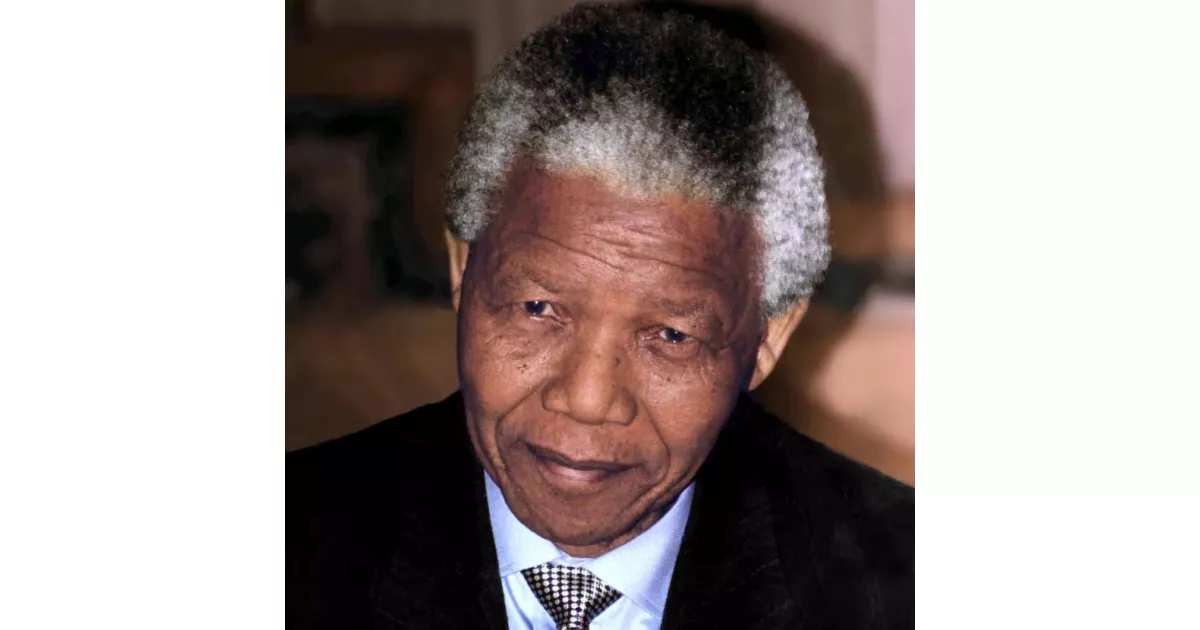
A closer look at the most debated and controversial moments involving Nelson Mandela.
Nelson Mandela was a pivotal South African anti-apartheid revolutionary, politician, and philanthropist. He served as South Africa's first Black president from 1994 to 1999, elected in the country's first fully representative democratic election. His presidency focused on dismantling apartheid's legacy, promoting racial reconciliation, and establishing a multiracial democracy. As a staunch African nationalist and socialist, he led the African National Congress (ANC) from 1991 to 1997, playing a crucial role in the transition from apartheid to a democratic society.
1926: Father Sacked for Corruption
In 1926, Gadla, Nelson Mandela's father, was sacked for corruption. Nelson was later told that his father lost his job for standing up to the magistrate's unreasonable demands.


December 1947: Supported Expulsion of Communists from ANCYL
In December 1947, Nelson Mandela supported an unsuccessful measure. The measure was aimed to expel communists from the ANCYL, reflecting his views on their ideology.
May 1956: Evelyn initiated divorce proceedings
In May 1956, Mandela's marriage broke down and Evelyn left him, taking their children to live with her brother. Evelyn initiated divorce proceedings, claiming that Mandela had physically abused her, which he denied. She withdrew her petition of separation in November, but Mandela filed for divorce in January 1958.
1956: Prosecuted in the Treason Trial
In 1956, Nelson Mandela was prosecuted in the Treason Trial. Despite facing charges for seditious activities, he was not successfully convicted during this trial.
January 1958: Mandela filed for divorce
In January 1958, Mandela filed for divorce.
1960: Assimilation of Marxist-Leninist Ideology
By 1960, according to historian Stephen Ellis, Mandela had assimilated much of the Marxist–Leninist ideology.
1960: Anti-pass campaign and Sharpeville massacre
In early 1960, both the ANC and PAC took part in an anti-pass campaign, in which Africans burned the passes that they were legally obliged to carry. One of the PAC-organised demonstrations was fired upon by police, resulting in the deaths of 69 protesters in the Sharpeville massacre.
1961: Co-founded uMkhonto we Sizwe
In 1961, Nelson Mandela co-founded the militant uMkhonto we Sizwe. This group led a sabotage campaign against the apartheid government, marking a shift towards more direct action.
1986: ANC attacks escalate
In 1986, the anti-apartheid resistance, led by the ANC, escalated its attacks, committing 231 acts of violence.
1987: ANC attacks escalate further
In 1987, the ANC committed 235 attacks, marking a further escalation of violence in the anti-apartheid resistance.
July 1988: Mandela's 70th birthday attracts international attention
In July 1988, Nelson Mandela's 70th birthday gained international attention. A tribute concert at London's Wembley Stadium was televised and watched by an estimated 200 million viewers. ANC leaders also informed him that Winnie had set herself up as head of a gang, the "Mandela United Football Club".
1990: Planned poisoning of Mandela
In 1990, there was a plan to poison Mandela with thallium shortly before his release, as part of Project Coast during the Botha regime.
June 1991: Winnie Mandela found guilty
In June 1991, Winnie Mandela was found guilty in her trial for kidnapping and assault, and sentenced to six years in prison, which was later reduced to two on appeal.
May 1992: CODESA 2 held, Mandela calls off negotiations
In May 1992, CODESA 2 was held, but after the Boipatong massacre of ANC activists by government-aided Inkatha militants, Mandela called off the negotiations.
June 1993: Afrikaner Weerstandsbeweging attacks Kempton Park World Trade Centre
In June 1993, the Afrikaner Weerstandsbeweging (AWB) attacked the Kempton Park World Trade Centre, threatening the democratic process.
March 1995: Queen Elizabeth II's state visit to South Africa
In March 1995, Mandela met with Queen Elizabeth II during her state visit to South Africa, earning him criticism from ANC anti-capitalists.
March 1996: Divorce from Winnie Madikizela-Mandela
In March 1996, Mandela divorced Winnie Madikizela-Mandela, following reports of her affairs and involvement in political corruption and violence.
1996: RDP replaced with GEAR policy
In 1996, the Reconstruction and Development Programme (RDP) was replaced with a new policy, Growth, Employment and Redistribution (GEAR), which maintained South Africa's mixed economy but emphasized economic growth through a framework of market economics and the encouragement of foreign investment.
1999: High HIV/AIDS Rate and Crime Rate in South Africa
By 1999, 10% of South Africa's population were HIV positive and South Africa had one of the world's highest crime rates.
2002: Dr. Wouter Basson's trial
In 2002, witnesses during the trial of Dr. Wouter Basson revealed the plan to poison Mandela during the Botha regime.
2003: Criticism of US Plans for War in Iraq
In 2003, Mandela criticized the United States' plans to launch a war in Iraq, calling it "a tragedy" and criticizing President George W. Bush and British Prime Minister Tony Blair.
2008: Mandela removed from US terrorism watch-list
In 2008, the US government's State and Defense departments removed Nelson Mandela from their terrorism watch-list, despite having officially designated the ANC as a terrorist organization during the 1980s.
2011: Historical Research on Mandela's Communist Party Membership
In 2011, historical research strongly suggested that Mandela had joined the Communist Party in the late 1950s or early 1960s, despite his denials. This was later confirmed by both the SACP and the ANC after Mandela's death.
Mentioned in this timeline
Bill Clinton served as the nd U S President from...
George W Bush the rd U S President - is...
Elizabeth II reigned as Queen of the United Kingdom and...
The United States of America is a federal republic primarily...
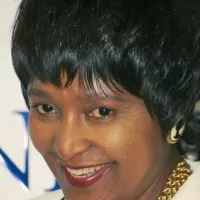
Winnie Madikizela-Mandela was a prominent South African anti-apartheid activist and...
India officially the Republic of India is a South Asian...
Trending

4 hours ago Kim Kardashian Celebrates Birthday With Unique Style In The Philippines
4 hours ago Florida State Evaluates Mike Norvell's Future Amid Mounting Athletics Debt and Coaching Buyout Concerns
4 hours ago Bob Chesney Leads UCLA Bruins to Midseason Football Success and AP Honors
4 hours ago LA Galaxy Prepares for High-Stakes MLS Clash Against San Diego

4 hours ago Taylor Swift Stuns in Blue Dior Gown at 2026 Academy Museum Gala

4 hours ago Tatum O'Neal Shares Rare Photo Six Years Following Her Near-Fatal Stroke
Popular
Ilhan Omar is a prominent American politician currently serving as...

Ken Paxton is an American politician and lawyer serving as...

Elon Musk is a visionary entrepreneur and engineer known for...

Michael Joseph Jackson the King of Pop was a highly...

Jameis Winston is an American football quarterback currently playing for...
Cristiano Ronaldo widely considered one of the greatest footballers captains...