Career Timeline of Nelson Mandela: Major Achievements and Milestones


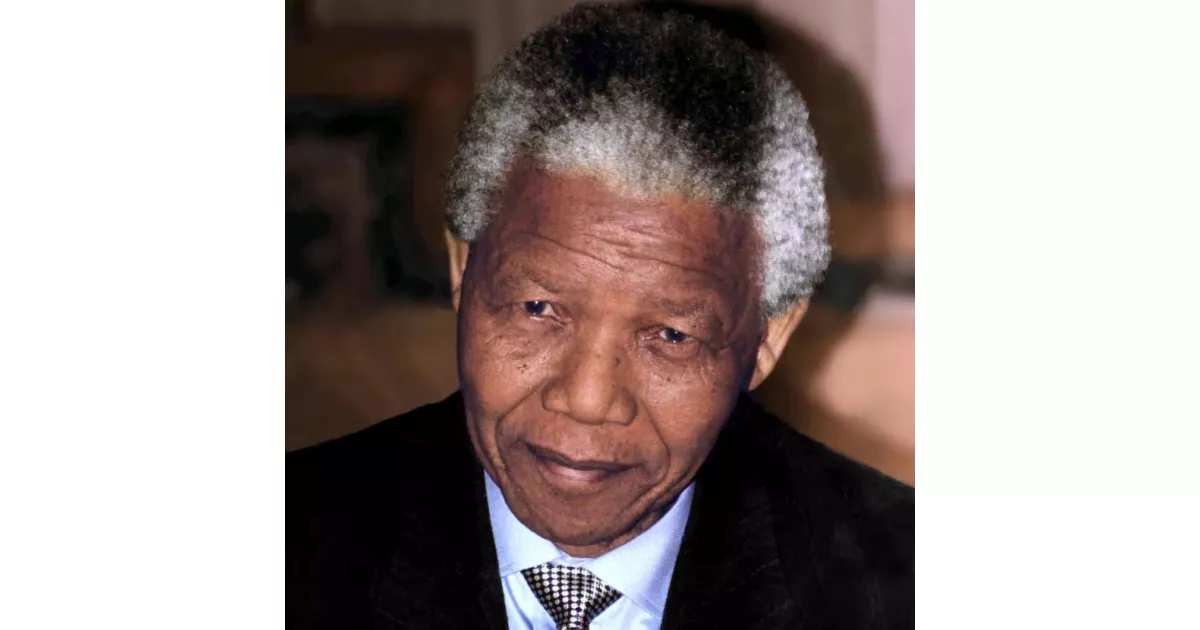
From career breakthroughs to professional milestones, explore how Nelson Mandela made an impact.
Nelson Mandela was a pivotal South African anti-apartheid revolutionary, politician, and philanthropist. He served as South Africa's first Black president from 1994 to 1999, elected in the country's first fully representative democratic election. His presidency focused on dismantling apartheid's legacy, promoting racial reconciliation, and establishing a multiracial democracy. As a staunch African nationalist and socialist, he led the African National Congress (ANC) from 1991 to 1997, playing a crucial role in the transition from apartheid to a democratic society.
April 1941: Arrived in Johannesburg
In April 1941, Nelson Mandela arrived in Johannesburg after fleeing arranged marriages. He found work and began his involvement with ANC activists.


August 1943: Marched in Support of Bus Boycott
In August 1943, Nelson Mandela participated in a march. The march supported a bus boycott aimed at reversing fare rises, demonstrating his growing political awareness.
1943: Joined the African National Congress
In 1943, Nelson Mandela joined the African National Congress (ANC), marking the beginning of his active involvement in anti-colonial and African nationalist politics.
1943: Passed BA Exams
In early 1943, after passing his BA exams, Nelson Mandela returned to Johannesburg. He wanted to follow a political path as a lawyer rather than become a privy councillor in Thembuland.
1944: Co-founded the ANC Youth League
In 1944, Nelson Mandela co-founded the Youth League of the African National Congress (ANC). This further solidified his commitment to political activism and challenging racial segregation.
1944: Founded African National Congress Youth League
In 1944, Nelson Mandela was part of a delegation to approach ANC president Alfred Bitini Xuma, leading to the founding of the African National Congress Youth League (ANCYL).
December 1947: Supported Expulsion of Communists from ANCYL
In December 1947, Nelson Mandela supported an unsuccessful measure. The measure was aimed to expel communists from the ANCYL, reflecting his views on their ideology.
1947: End of Articles
In early 1947, Nelson Mandela concluded his three years of articles at Witkin, Sidelsky and Eidelman. Following this, he decided to focus on becoming a full-time student.
March 1950: Took Xuma's place on ANC national executive
In March 1950, Mandela took Xuma's place on the ANC national executive and was elected national president of the ANCYL that same year. Also in March, the Defend Free Speech Convention was held in Johannesburg.
April 1952: Began Work at H.M. Basner Law Firm
In April 1952, Mandela began work at the H.M. Basner law firm, which was owned by a communist. His increasing commitment to work and activism meant he spent less time with his family.
1952: Involvement in the Defiance Campaign
In 1952, Nelson Mandela rose to prominence for his involvement in the Defiance Campaign. This campaign was a significant act of resistance against apartheid.
August 1953: Opened law firm, Mandela and Tambo
In August 1953, Mandela and Tambo opened their own law firm, Mandela and Tambo, in downtown Johannesburg. It was the only African-run law firm in the country, popular with aggrieved black people.
September 1953: "No Easy Walk to Freedom" speech
In September 1953, Andrew Kunene read out Mandela's "No Easy Walk to Freedom" speech at a Transvaal ANC meeting, laying out a contingency plan for a scenario in which the ANC was banned, known as the Mandela Plan or M-Plan.
June 1955: Freedom Charter adopted
In June 1955, the Freedom Charter was adopted at a conference in Kliptown, which was forcibly closed down by police. The Freedom Charter was drafted by Rusty Bernstein.
1955: Creation of the Freedom Charter
In 1955, Mandela helped create the Freedom Charter which called for the nationalization of banks, gold mines and land, to ensure equal distribution of wealth.
1955: Involvement in the Congress of the People
In 1955, Nelson Mandela played a role in the Congress of the People. His involvement marked another step in his political career.
1960: Assimilation of Marxist-Leninist Ideology
By 1960, according to historian Stephen Ellis, Mandela had assimilated much of the Marxist–Leninist ideology.
1961: Co-founded uMkhonto we Sizwe
In 1961, Nelson Mandela co-founded the militant uMkhonto we Sizwe. This group led a sabotage campaign against the apartheid government, marking a shift towards more direct action.
February 1962: Mandela's Delegation to PAFMECSA Meeting
In February 1962, the ANC sent Mandela as a delegate to the Pan-African Freedom Movement for East, Central and Southern Africa (PAFMECSA) meeting in Addis Ababa, Ethiopia. He secretly left South Africa, visited Tanganyika, met Emperor Haile Selassie I, and traveled to various countries, securing funds and support.
1975: Mandela Becomes a Class A Prisoner and Begins Autobiography
In 1975, Mandela became a Class A prisoner, which allowed him more visits and letters. He also began writing his autobiography, which was smuggled to London.
May 1990: Mandela leads ANC negotiations
In May 1990, Nelson Mandela led a multiracial ANC delegation into preliminary negotiations with a government delegation. These negotiations led to the Groot Schuur Minute, in which the government lifted the state of emergency.
July 1991: ANC national conference in Durban
At the ANC's July 1991 national conference in Durban, Mandela admitted that the party had faults and wanted to build a task force for securing majority rule. He was elected ANC President, replacing Oliver Tambo.
December 1991: CODESA begins
In December 1991, the Convention for a Democratic South Africa (CODESA) began at the Johannesburg World Trade Centre, attended by 228 delegates from 19 political parties.
1991: President of the African National Congress
In 1991, Nelson Mandela became the president of the African National Congress (ANC) party. He served in this role until 1997, contributing significantly to the party's objectives.
April 1994: ANC election campaign
In April 1994, the ANC began campaigning for the election, opening 100 election offices and orchestrating People's Forums across the country, campaigning on a Reconstruction and Development Programme (RDP).
May 1994: Mandela elected as South Africa's first black chief executive
In May 1994, Mandela was formally elected as South Africa's first black chief executive. His inauguration took place in Pretoria on 10 May 1994, televised to a billion viewers globally. Mandela headed a Government of National Unity.
December 1994: Publication of Long Walk to Freedom
In December 1994, Mandela published "Long Walk to Freedom", his autobiography based on a manuscript he had written in prison. "Long Walk to Freedom" shares the story of Mandela's life, struggles, and eventual triumph over apartheid.

1994: First President of South Africa
In 1994, Nelson Mandela became the first president of South Africa. This marked a historic moment as he was the country's first Black head of state elected in a fully representative democratic election.
1994: Free Healthcare Introduced for Children and Pregnant Women
In 1994, free healthcare was introduced for children under six and pregnant women.
1995: Mandela promotes reconciliation through rugby
In 1995, as South Africa hosted the Rugby World Cup, Mandela encouraged black South Africans to support the national rugby team, the Springboks. He wore a Springbok shirt at the final against New Zealand, and after the Springboks won, Mandela presented the trophy to captain Francois Pienaar, an Afrikaner, an event widely seen as a major step in the reconciliation of white and black South Africans.
1996: Free Healthcare Introduced
In 1996, free healthcare was introduced for all those using primary level public sector health care services.
1996: Land Reform Act Safeguards Rights of Labor Tenants
In 1996, the Land Reform Act 3 safeguarded the rights of labor tenants living on farms where they grew crops or grazed livestock, ensuring they could not be evicted without a court order or if they were over the age of 65.
1996: Constitution Allowed for Two Terms
In 1996, the new constitution permitted the president to serve two consecutive five-year terms, though Mandela never intended to run for a second term.
December 1997: Mandela Steps Down as ANC President
At the ANC's December 1997 conference, Mandela stepped down as ANC President and the ANC elected Mbeki as his successor.
1997: Mandela Delegates Duties to Mbeki
During a 1997 visit to London, Mandela said that "the ruler of South Africa, the de facto ruler, is Thabo Mbeki" and that he was "shifting everything to him".
1997: End of ANC Presidency
In 1997, Nelson Mandela's tenure as the president of the African National Congress (ANC) concluded. He had held the position since 1991, significantly influencing the party's direction.
1997: Welfare Spending Increased
In 1997, welfare spending increased by 13%.
September 1998: Mandela Appointed Secretary-General of Non-Aligned Movement
In September 1998, Mandela was appointed secretary-general of the Non-Aligned Movement, who held their annual conference in Durban.
1998: Secretary-General of the Non-Aligned Movement
From 1998 to 1999, Nelson Mandela served as the secretary-general of the Non-Aligned Movement, taking on an international leadership role.
1998: Welfare Spending Increased
In 1998, welfare spending increased by 7%.
March 1999: Farewell Speech to Parliament
In March 1999, Nelson Mandela delivered his farewell speech to Parliament before retiring from his position as president of South Africa after one term.
June 1999: Retirement and Foundation of Nelson Mandela Foundation
In June 1999, Mandela retired from the presidency, aiming for a quiet family life but soon engaged in a busy public life, founding the Nelson Mandela Foundation in 1999 to focus on rural development, school construction, and combating HIV/AIDS.
1999: ANC Boasts Policy Successes
By the 1999 election, the ANC boasted that due to their policies, 3 million people were connected to telephone lines, 1.5 million children were brought into the education system, 500 clinics were upgraded or constructed, 2 million people were connected to the electricity grid, water access was extended to 3 million people, and 750,000 houses were constructed, housing nearly 3 million people.
1999: Steps Down as President
In 1999, Nelson Mandela declined a second presidential term and was succeeded by Thabo Mbeki. He then focused on combating poverty and HIV/AIDS through the Nelson Mandela Foundation.
1999: End of Presidential Term
In 1999, Nelson Mandela's term as president of South Africa came to an end. During his presidency, he focused on dismantling apartheid and fostering racial reconciliation.
2000: Closing Address at International AIDS Conference
In 2000, Mandela gave the closing address at the XIII International AIDS Conference in Durban.
2002: Inauguration of Nelson Mandela Annual Lecture
In 2002, Nelson Mandela inaugurated the Nelson Mandela Annual Lecture.
June 2004: Retirement from Retirement
In June 2004, at the age of 85 and amid declining health, Mandela announced his "retirement from retirement" and retreated from public life.
2005: Founding of Nelson Mandela Legacy Trust
In 2005, Mandela founded the Nelson Mandela Legacy Trust and traveled to the United States to advocate for economic assistance to Africa.
2007: Call for Mugabe to Resign and Formation of The Elders
In 2007, Mandela publicly called for Zimbabwean President Robert Mugabe to resign and convened a group of world leaders in Johannesburg to form The Elders, a group dedicated to addressing global issues.
November 2009: United Nations Proclaims "Mandela Day"
In November 2009, the United Nations General Assembly proclaimed Nelson Mandela's birthday, 18 July, as "Mandela Day", to mark his contributions to the anti-apartheid struggle and called on individuals to donate 67 minutes to doing something for others, commemorating the 67 years that Mandela had been a part of the movement.
2015: UN Names Amended Rules for Treatment of Prisoners as "the Mandela Rules"
In 2015, the UN General Assembly named the amended Standard Minimum Rules for the Treatment of Prisoners as "the Mandela Rules" to honor Nelson Mandela's legacy.
Mentioned in this timeline
Bill Clinton served as the nd U S President from...
George W Bush the rd U S President - is...
Elizabeth II reigned as Queen of the United Kingdom and...
The United States of America is a federal republic primarily...
Winnie Madikizela-Mandela was a prominent South African anti-apartheid activist and...
India officially the Republic of India is a South Asian...
Trending
3 hours ago Rashod Bateman Exits Ravens-Browns Match After Suffering Shoulder Injury

3 hours ago Trey Hendrickson Undergoes Finger Surgery Amidst Ravens Injury Recovery Timeline

3 hours ago Drew Brees Praises Brock Purdy for NFL Success and College Preparation
3 hours ago Dameon Pierce Fantasy Football Outlook and Eagles Team Role Analysis
3 hours ago Pittsburgh Steelers Defense Faces Criticism Amid Struggles With Pass Rush and Blitz Strategies

4 hours ago DeVonta Smith Expected to Return for Eagles Against Panthers
Popular
Ilhan Omar is a prominent American politician currently serving as...

Ken Paxton is an American politician and lawyer serving as...

Elon Musk is a visionary entrepreneur and engineer known for...

Jameis Winston is an American football quarterback currently playing for...

Michael Joseph Jackson the King of Pop was a highly...

Cristiano Ronaldo widely considered one of the greatest footballers captains...