


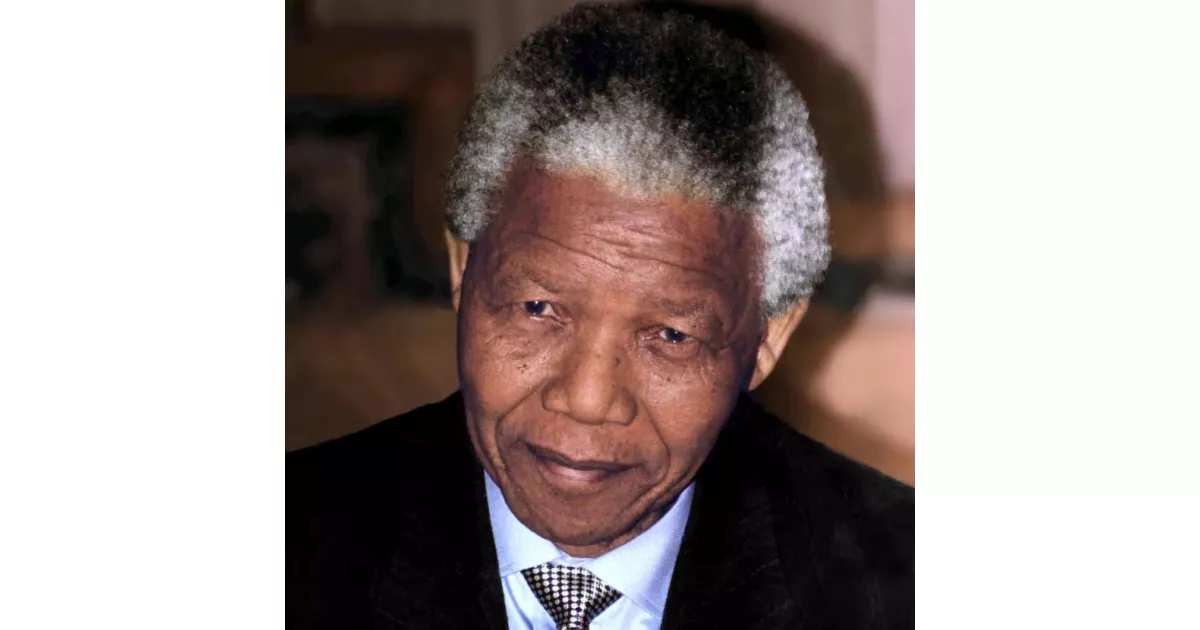
Nelson Mandela was a pivotal South African anti-apartheid revolutionary, politician, and philanthropist. He served as South Africa's first Black president from 1994 to 1999, elected in the country's first fully representative democratic election. His presidency focused on dismantling apartheid's legacy, promoting racial reconciliation, and establishing a multiracial democracy. As a staunch African nationalist and socialist, he led the African National Congress (ANC) from 1991 to 1997, playing a crucial role in the transition from apartheid to a democratic society.
1905: Reference to The Scarlet Pimpernel
In 1905, Emma Orczy's novel The Scarlet Pimpernel was published. This is referenced when the press called Mandela the "Black Pimpernel".


1915: Father Appointed as Local Chief and Councillor
In 1915, Nelson Mandela's father, Gadla Henry Mphakanyiswa Mandela, was appointed as a local chief and councillor. He served in this position after his predecessor was accused of corruption.
July 1918: Nelson Mandela Born
In July 1918, Nelson Mandela was born in the village of Mvezo in Umtata, part of South Africa's Cape Province. Given the name Rolihlahla, he was later known by his clan name, Madiba.
1926: Father Sacked for Corruption
In 1926, Gadla, Nelson Mandela's father, was sacked for corruption. Nelson was later told that his father lost his job for standing up to the magistrate's unreasonable demands.
1933: Began Secondary Education at Clarkebury Methodist High School
In 1933, Nelson Mandela started his secondary education at Clarkebury Methodist High School in Engcobo. This Western-style institution was the largest school for black Africans in Thembuland.
1937: Moved to Healdtown Methodist College
In 1937, Nelson Mandela moved to Healdtown, the Methodist college in Fort Beaufort. It was attended by most Thembu royalty, including Justice, and emphasized European culture.
1939: Began BA Degree at University of Fort Hare
In 1939, with Jongintaba's support, Nelson Mandela began working towards a BA degree at the University of Fort Hare. He studied various subjects but was later suspended for participating in a student boycott.
December 1940: Returned to Mqhekezweni
In December 1940, Nelson Mandela returned to Mqhekezweni and discovered that Jongintaba had arranged marriages for him and Justice, leading them to flee to Johannesburg.
April 1941: Arrived in Johannesburg
In April 1941, Nelson Mandela arrived in Johannesburg after fleeing arranged marriages. He found work and began his involvement with ANC activists.
1941: Moved into Alexandra Township
In 1941, Nelson Mandela rented a room in the Alexandra township. Despite the poverty, crime, and pollution, he always remembered Alexandra as a special place.
1942: Jongintaba Visited Johannesburg
In late 1942, Jongintaba visited Nelson Mandela in Johannesburg, forgiving him for running away. Jongintaba then returned to Thembuland, where he died during the winter.
August 1943: Marched in Support of Bus Boycott
In August 1943, Nelson Mandela participated in a march. The march supported a bus boycott aimed at reversing fare rises, demonstrating his growing political awareness.
1943: Joined the African National Congress
In 1943, Nelson Mandela joined the African National Congress (ANC), marking the beginning of his active involvement in anti-colonial and African nationalist politics.
1943: Passed BA Exams
In early 1943, after passing his BA exams, Nelson Mandela returned to Johannesburg. He wanted to follow a political path as a lawyer rather than become a privy councillor in Thembuland.
October 1944: Married Evelyn Mase
In October 1944, Nelson Mandela married Evelyn Mase, who was a trainee nurse and ANC activist. They began their married life together, residing with her relatives initially.
1944: Co-founded the ANC Youth League
In 1944, Nelson Mandela co-founded the Youth League of the African National Congress (ANC). This further solidified his commitment to political activism and challenging racial segregation.
1944: Founded African National Congress Youth League
In 1944, Nelson Mandela was part of a delegation to approach ANC president Alfred Bitini Xuma, leading to the founding of the African National Congress Youth League (ANCYL).
February 1945: Birth of First Child
In February 1945, Nelson Mandela and Evelyn Mase welcomed their first child, Madiba "Thembi" Thembekile, into the world. This marked a significant event in their family life.
1945: Alleged Relationship with Seipati Monakali
In 1945, according to Mpho Pule's claim, Mandela had a brief relationship with Seipati Monakali in Cape Town.
1946: Moved to Rented House in Orlando
In early 1946, Nelson Mandela and his wife Evelyn Mase moved into a rented house. The house was located in the township of Orlando, establishing a new chapter in their life together.
July 1947: Lembede rushed to hospital
In July 1947, Nelson Mandela rushed Lembede, who was ill, to the hospital. Lembede passed away, leading to Peter Mda succeeding him as ANCYL president.
December 1947: Supported Expulsion of Communists from ANCYL
In December 1947, Nelson Mandela supported an unsuccessful measure. The measure was aimed to expel communists from the ANCYL, reflecting his views on their ideology.
1947: Birth of Onica Nyembezi Mothoa
In 1947, Onica Nyembezi Mothoa, who later claimed to be Mandela's daughter, was born to Sophie Majeni.
1947: End of Articles
In early 1947, Nelson Mandela concluded his three years of articles at Witkin, Sidelsky and Eidelman. Following this, he decided to focus on becoming a full-time student.
1948: Afrikaner-dominated Herenigde Nasionale Party took power
In 1948, during the South African general election (in which only whites could vote), the Afrikaner-dominated Herenigde Nasionale Party, under Daniel François Malan, took power and united with the Afrikaner Party to form the National Party. This openly racialist party codified and expanded racial segregation through new apartheid legislation.
December 1949: Denied Degree
In December 1949, after devoting his time to politics, Mandela failed his final year at Witwatersrand three times and was ultimately denied his degree.
March 1950: Took Xuma's place on ANC national executive
In March 1950, Mandela took Xuma's place on the ANC national executive and was elected national president of the ANCYL that same year. Also in March, the Defend Free Speech Convention was held in Johannesburg.
December 1951: Arguing against a racially united front
At the ANC national conference of December 1951, Mandela continued arguing against a racially united front, but was outvoted.
April 1952: Began Work at H.M. Basner Law Firm
In April 1952, Mandela began work at the H.M. Basner law firm, which was owned by a communist. His increasing commitment to work and activism meant he spent less time with his family.
July 1952: Arrested under the Suppression of Communism Act
In July 1952, Mandela was arrested under the Suppression of Communism Act and stood trial as one of the 21 accused in Johannesburg. Found guilty of "statutory communism", his sentence of nine months' hard labor was suspended for two years.
1952: Involvement in the Defiance Campaign
In 1952, Nelson Mandela rose to prominence for his involvement in the Defiance Campaign. This campaign was a significant act of resistance against apartheid.
1952: Preparation for Defiance Campaign
In 1952, the ANC began preparation for a joint Defiance Campaign against apartheid with Indian and communist groups, founding a National Voluntary Board to recruit volunteers. The campaign was designed to follow the path of nonviolent resistance influenced by Mahatma Gandhi.
August 1953: Opened law firm, Mandela and Tambo
In August 1953, Mandela and Tambo opened their own law firm, Mandela and Tambo, in downtown Johannesburg. It was the only African-run law firm in the country, popular with aggrieved black people.
September 1953: "No Easy Walk to Freedom" speech
In September 1953, Andrew Kunene read out Mandela's "No Easy Walk to Freedom" speech at a Transvaal ANC meeting, laying out a contingency plan for a scenario in which the ANC was banned, known as the Mandela Plan or M-Plan.
1953: Introduction of the Public Safety Act
In 1953, in response to further protests, the government introduced the Public Safety Act to permit martial law.
May 1954: Birth of second daughter, Makaziwe Phumia
In May 1954, Mandela's second daughter, Makaziwe Phumia, was born. However, Mandela's relationship with Evelyn became strained, and she accused him of adultery.
February 1955: Participated in unsuccessful protest in Sophiatown
In February 1955, Mandela took part in the unsuccessful protest to prevent the forced relocation of all black people from the Sophiatown suburb of Johannesburg, concluding that violent action would prove necessary to end apartheid and white minority rule.
June 1955: Freedom Charter adopted
In June 1955, the Freedom Charter was adopted at a conference in Kliptown, which was forcibly closed down by police. The Freedom Charter was drafted by Rusty Bernstein.
September 1955: Working holiday to Transkei
Following the end of a second ban, in September 1955, Mandela went on a working holiday to Transkei to discuss the implications of the Bantu Authorities Act, 1951 with local Xhosa chiefs, also visiting his mother and Noengland before proceeding to Cape Town.
1955: Creation of the Freedom Charter
In 1955, Mandela helped create the Freedom Charter which called for the nationalization of banks, gold mines and land, to ensure equal distribution of wealth.
1955: Involvement in the Congress of the People
In 1955, Nelson Mandela played a role in the Congress of the People. His involvement marked another step in his political career.
March 1956: Third ban on public appearances
In March 1956, Mandela received his third ban on public appearances, restricting him to Johannesburg for five years, but he often defied it.
May 1956: Evelyn initiated divorce proceedings
In May 1956, Mandela's marriage broke down and Evelyn left him, taking their children to live with her brother. Evelyn initiated divorce proceedings, claiming that Mandela had physically abused her, which he denied. She withdrew her petition of separation in November, but Mandela filed for divorce in January 1958.
December 1956: Arrested on charges of "high treason"
In December 1956, Mandela was arrested along with most of the ANC national executive and accused of "high treason" against the state.
1956: Freedom Charter inspiration
In 1956, Mandela described the tenets of the Freedom Charter as "an inspiration to the people of South Africa".
1956: Prosecuted in the Treason Trial
In 1956, Nelson Mandela was prosecuted in the Treason Trial. Despite facing charges for seditious activities, he was not successfully convicted during this trial.
January 1957: Defence's refutation began
In January 1957, the defence's refutation in Mandela's treason trial began, overseen by defence lawyer Vernon Berrangé.
January 1958: Mandela filed for divorce
In January 1958, Mandela filed for divorce.
January 1958: Oswald Pirow appointed to prosecute
In January 1958, Oswald Pirow was appointed to prosecute Mandela's treason trial.
March 1958: Divorce from Evelyn Ntoko Mase
In March 1958, Mandela divorced Evelyn Ntoko Mase due to multiple strains including alleged adultery, constant absences, and her religious beliefs.
June 1958: Married Winnie Madikizela
In June 1958, Mandela married a social worker, Winnie Madikizela, in Bizana.
June 1958: Marriage to Winnie Madikizela-Mandela
In June 1958, Nelson Mandela married Winnie Madikizela-Mandela, a social worker, marking his second marriage.
August 1958: Treason Trial began
In August 1958, the formal Treason Trial began in Pretoria.
February 1959: Birth of daughter Zenani
In February 1959, Zenani, daughter of Nelson Mandela and Winnie Madikizela, was born.
April 1959: Founding of Pan-Africanist Congress (PAC)
In April 1959, Africanists dissatisfied with the ANC's united front approach founded the Pan-Africanist Congress (PAC). Mandela disagreed with the PAC's racially exclusionary views.
August 1960: State of Emergency
In August 1960, the government implemented state of emergency measures, declaring martial law and banning the ANC and PAC.
1960: Assimilation of Marxist-Leninist Ideology
By 1960, according to historian Stephen Ellis, Mandela had assimilated much of the Marxist–Leninist ideology.
1960: Anti-pass campaign and Sharpeville massacre
In early 1960, both the ANC and PAC took part in an anti-pass campaign, in which Africans burned the passes that they were legally obliged to carry. One of the PAC-organised demonstrations was fired upon by police, resulting in the deaths of 69 protesters in the Sharpeville massacre.
March 1961: All-In African Conference
In March 1961, Mandela organised an All-In African Conference near Pietermaritzburg, Natal, at which 1,400 anti-apartheid delegates met. On 29 March 1961, the judges in Mandela's Treason Trial produced a verdict of not guilty.
1961: Co-founded uMkhonto we Sizwe
In 1961, Nelson Mandela co-founded the militant uMkhonto we Sizwe. This group led a sabotage campaign against the apartheid government, marking a shift towards more direct action.
1961: MK Publicly Announces its Existence
In 1961, soon after ANC leader Luthuli was awarded the Nobel Peace Prize, MK publicly announced its existence with 57 bombings on Dingane's Day (16 December), followed by further attacks on New Year's Eve.
February 1962: Mandela's Delegation to PAFMECSA Meeting
In February 1962, the ANC sent Mandela as a delegate to the Pan-African Freedom Movement for East, Central and Southern Africa (PAFMECSA) meeting in Addis Ababa, Ethiopia. He secretly left South Africa, visited Tanganyika, met Emperor Haile Selassie I, and traveled to various countries, securing funds and support.
August 1962: Mandela's Capture Near Howick
On August 5, 1962, Nelson Mandela and Cecil Williams were captured by police near Howick. The CIA had informed the South African police of his location. Mandela was jailed in Johannesburg and charged with inciting worker's strikes and leaving the country without permission.
July 1963: Police Raid on Liliesleaf Farm
On July 11, 1963, police raided Liliesleaf Farm, arresting those present and uncovering documents related to MK's activities that mentioned Mandela.
December 1963: Resumption of the Rivonia Trial
In December 1963, the Rivonia Trial resumed at Pretoria Supreme Court after the initial case was thrown out for insufficient evidence. The prosecution presented its new case, calling 173 witnesses and introducing thousands of documents until February 1964.
February 1964: Conclusion of the Rivonia Trial
In February 1964, the prosecution concluded its case in the Rivonia Trial, presenting evidence and witnesses against Mandela and his comrades.
June 1964: Sentencing at the Rivonia Trial
On June 12, 1964, Justice De Wet found Mandela and his co-accused guilty on all four charges at the Rivonia Trial. They were sentenced to life imprisonment.
1964: Transfer to Robben Island Prison
In 1964, Nelson Mandela and his co-accused were transferred from Pretoria to the prison on Robben Island, where he would remain for the next 18 years.
January 1965: Reassignment to Lime Quarry Work
In January 1965, the Rivonia Trial prisoners, including Mandela, were reassigned to work in a lime quarry on Robben Island.
1967: Improvement of Prison Conditions
From 1967 onwards, prison conditions at Robben Island improved, with black prisoners receiving trousers, permission for games, and better food.
1968: Death of Mandela's Mother
In 1968, Mandela's mother visited him at Robben Island and died shortly after. He was forbidden from attending her funeral.
1969: Escape Plan Abandoned
In 1969, an escape plan for Mandela was developed by Gordon Bruce, but it was abandoned after being infiltrated by an agent of the South African Bureau of State Security (BOSS).
September 1970: Meeting with Denis Healey
In September 1970, Nelson Mandela met with British Labour Party politician Denis Healey during a visit to Robben Island.
1970: Change in Commanding Officer at Robben Island
In 1970, Commander Piet Badenhorst became commanding officer at Robben Island. After Mandela complained about abuse, Badenhorst was reassigned and replaced by Commander Willie Willemse, who improved prison standards.
December 1974: Visit from Jimmy Kruger
In December 1974, South African Minister of Justice Jimmy Kruger visited Mandela at Robben Island, but they did not get along.
December 1975: First Visit from his Daughters
In December 1975, Mandela's daughters were permitted to visit him for the first time at Robben Island.
1975: Mandela Becomes a Class A Prisoner and Begins Autobiography
In 1975, Mandela became a Class A prisoner, which allowed him more visits and letters. He also began writing his autobiography, which was smuggled to London.
1976: Soweto Uprising and Imprisonment of BCM Activists
Following the Soweto uprising of 1976, many Black Consciousness Movement (BCM) activists were imprisoned on Robben Island.
1977: Winnie Mandela Forcibly Settled in Brandfort
In 1977, Winnie Mandela was released from prison but forcibly settled in Brandfort and remained unable to see Nelson Mandela.
July 1978: Mandela's 60th Birthday and Renewed International Interest
In July 1978, Nelson Mandela celebrated his 60th birthday, which renewed international interest in his plight.
1979: Awarded the Jawaharlal Nehru Award
In 1979, Nelson Mandela was awarded the Jawaharlal Nehru Award for International Understanding in India.
March 1980: "Free Mandela!" Campaign Begins
In March 1980, the slogan "Free Mandela!" was developed, sparking an international campaign that led the UN Security Council to call for his release.
1980: Resumption of LLB Degree Studies
In 1980, prison authorities permitted Mandela to resume his LLB degree studies after a four-year revocation due to the discovery of pages from his autobiography.
April 1982: Transfer to Pollsmoor Prison
In April 1982, Nelson Mandela, along with other senior ANC leaders, was transferred to Pollsmoor Prison in Tokai, Cape Town.
February 1985: Botha's Offer of Release Rejected
In February 1985, President Botha offered Mandela release from prison if he "unconditionally rejected violence as a political weapon". Mandela spurned the offer.
1985: Mandela underwent prostate surgery
In 1985, Nelson Mandela underwent surgery on an enlarged prostate gland before being given new solitary quarters.
1986: Mandela Characterized as "the embodiment of the struggle for liberation"
In 1986, Mandela's biographer characterized him as "the embodiment of the struggle for liberation" in South Africa. He was seen as a potent symbol of resistance to apartheid during the 1980s and gained mythical status internationally.
1986: ANC attacks escalate
In 1986, the anti-apartheid resistance, led by the ANC, escalated its attacks, committing 231 acts of violence.
1987: ANC attacks escalate further
In 1987, the ANC committed 235 attacks, marking a further escalation of violence in the anti-apartheid resistance.
May 1988: Government team organised negotiations with Mandela
In May 1988, Kobie Coetsee organised negotiations between Mandela and a team of four government figures. The team agreed to the release of political prisoners and the legalisation of the ANC under certain conditions.
July 1988: Mandela's 70th birthday attracts international attention
In July 1988, Nelson Mandela's 70th birthday gained international attention. A tribute concert at London's Wembley Stadium was televised and watched by an estimated 200 million viewers. ANC leaders also informed him that Winnie had set herself up as head of a gang, the "Mandela United Football Club".
December 1988: Mandela moved to Victor Verster Prison
In December 1988, Nelson Mandela was moved to Victor Verster Prison near Paarl, after recovering from tuberculosis. He was housed in relative comfort and used the time to complete his LLB degree.
July 1989: Botha invites Mandela to tea
In July 1989, Botha invited Mandela to a meeting over tea, which Mandela considered genial.
November 1989: De Klerk calls cabinet to debate legalising ANC and freeing Mandela
Following the fall of the Berlin Wall, in November 1989, de Klerk called his cabinet together to debate legalising the ANC and freeing Mandela.
February 1990: Legalization of political parties and Mandela's Unconditional Release
In February 1990, de Klerk legalized all formerly banned political parties and announced Mandela's unconditional release.
May 1990: Mandela leads ANC negotiations
In May 1990, Nelson Mandela led a multiracial ANC delegation into preliminary negotiations with a government delegation. These negotiations led to the Groot Schuur Minute, in which the government lifted the state of emergency.
July 1990: First meeting with Graça Machel
In July 1990, Mandela first met Graça Machel, a Mozambican political activist, when she was still in mourning.
1990: Awarded the Bharat Ratna
In 1990, Nelson Mandela was awarded the Bharat Ratna by India, recognizing his political achievements.
1990: Release from Prison
In 1990, Nelson Mandela was released from prison after serving 27 years. His release was a result of growing domestic and international pressure and fear of civil war.
1990: Planned poisoning of Mandela
In 1990, there was a plan to poison Mandela with thallium shortly before his release, as part of Project Coast during the Botha regime.
June 1991: Winnie Mandela found guilty
In June 1991, Winnie Mandela was found guilty in her trial for kidnapping and assault, and sentenced to six years in prison, which was later reduced to two on appeal.
July 1991: ANC national conference in Durban
At the ANC's July 1991 national conference in Durban, Mandela admitted that the party had faults and wanted to build a task force for securing majority rule. He was elected ANC President, replacing Oliver Tambo.
September 1991: National peace conference in Johannesburg
In September 1991, a national peace conference was held in Johannesburg where Mandela, Buthelezi, and de Klerk signed a peace accord, though violence continued.
November 1991: Indictment in Pan Am Flight 103 Sabotage
In November 1991, Abdelbaset al-Megrahi and Lamin Khalifah Fhimah were indicted and accused of sabotaging Pan Am Flight 103.
December 1991: CODESA begins
In December 1991, the Convention for a Democratic South Africa (CODESA) began at the Johannesburg World Trade Centre, attended by 228 delegates from 19 political parties.
1991: President of the African National Congress
In 1991, Nelson Mandela became the president of the African National Congress (ANC) party. He served in this role until 1997, contributing significantly to the party's objectives.
January 1992: World Economic Forum in Switzerland
In January 1992, influenced by members of the Chinese and Vietnamese Communist parties at the World Economic Forum in Switzerland, Mandela was encouraged to embrace private enterprise.
April 1992: Mandela announces separation from Winnie
On 13 April 1992, Mandela publicly announced his separation from Winnie, marking a significant change in their relationship.
May 1992: CODESA 2 held, Mandela calls off negotiations
In May 1992, CODESA 2 was held, but after the Boipatong massacre of ANC activists by government-aided Inkatha militants, Mandela called off the negotiations.
June 1993: Afrikaner Weerstandsbeweging attacks Kempton Park World Trade Centre
In June 1993, the Afrikaner Weerstandsbeweging (AWB) attacked the Kempton Park World Trade Centre, threatening the democratic process.
July 1993: Mandela and de Klerk visit the United States and receive the Liberty Medal
In July 1993, both Mandela and de Klerk visited the United States, independently meeting President Bill Clinton, and each receiving the Liberty Medal.
April 1994: ANC election campaign
In April 1994, the ANC began campaigning for the election, opening 100 election offices and orchestrating People's Forums across the country, campaigning on a Reconstruction and Development Programme (RDP).
May 1994: Mandela elected as South Africa's first black chief executive
In May 1994, Mandela was formally elected as South Africa's first black chief executive. His inauguration took place in Pretoria on 10 May 1994, televised to a billion viewers globally. Mandela headed a Government of National Unity.
December 1994: Publication of Long Walk to Freedom
In December 1994, Mandela published "Long Walk to Freedom", his autobiography based on a manuscript he had written in prison. "Long Walk to Freedom" shares the story of Mandela's life, struggles, and eventual triumph over apartheid.

1994: First President of South Africa
In 1994, Nelson Mandela became the first president of South Africa. This marked a historic moment as he was the country's first Black head of state elected in a fully representative democratic election.
1994: Free Healthcare Introduced for Children and Pregnant Women
In 1994, free healthcare was introduced for children under six and pregnant women.
January 1995: Mandela chastises de Klerk
In January 1995, Mandela heavily chastised de Klerk for awarding amnesty to 3,500 police officers just before the election, and later criticised him for defending former Minister of Defence Magnus Malan when the latter was charged with murder.
March 1995: Queen Elizabeth II's state visit to South Africa
In March 1995, Mandela met with Queen Elizabeth II during her state visit to South Africa, earning him criticism from ANC anti-capitalists.
August 1995: Divorce proceedings initiated
In August 1995, Nelson Mandela initiated divorce proceedings from Winnie Mandela, amidst reconciliation interests.
1995: Mandela promotes reconciliation through rugby
In 1995, as South Africa hosted the Rugby World Cup, Mandela encouraged black South Africans to support the national rugby team, the Springboks. He wore a Springbok shirt at the final against New Zealand, and after the Springboks won, Mandela presented the trophy to captain Francois Pienaar, an Afrikaner, an event widely seen as a major step in the reconciliation of white and black South Africans.
February 1996: Truth and Reconciliation Commission Dedicated
In February 1996, the Truth and Reconciliation Commission, chaired by Tutu, was dedicated to investigate crimes committed under apartheid by both the government and the ANC, granting amnesties in exchange for testimony.
March 1996: Divorce from Winnie Madikizela-Mandela
In March 1996, Mandela divorced Winnie Madikizela-Mandela, following reports of her affairs and involvement in political corruption and violence.
May 1996: New Constitution of South Africa Agreed Upon and National Party Withdraws
In May 1996, the new Constitution of South Africa was agreed upon by parliament. De Klerk and the National Party withdrew from the coalition government in protest.
1996: Free Healthcare Introduced
In 1996, free healthcare was introduced for all those using primary level public sector health care services.
1996: Land Reform Act Safeguards Rights of Labor Tenants
In 1996, the Land Reform Act 3 safeguarded the rights of labor tenants living on farms where they grew crops or grazed livestock, ensuring they could not be evicted without a court order or if they were over the age of 65.
1996: RDP replaced with GEAR policy
In 1996, the Reconstruction and Development Programme (RDP) was replaced with a new policy, Growth, Employment and Redistribution (GEAR), which maintained South Africa's mixed economy but emphasized economic growth through a framework of market economics and the encouragement of foreign investment.
1996: Release of Mandela documentary
In 1996, the documentary "Mandela" was released, focusing on Nelson Mandela's life up to his inauguration as president.
1996: Constitution Allowed for Two Terms
In 1996, the new constitution permitted the president to serve two consecutive five-year terms, though Mandela never intended to run for a second term.
July 1997: Mandela Urges Suharto to Withdraw from East Timor
During a July 1997 visit to Indonesia, Mandela privately urged Indonesian president Suharto to withdraw from the occupation of East Timor.
December 1997: Mandela Steps Down as ANC President
At the ANC's December 1997 conference, Mandela stepped down as ANC President and the ANC elected Mbeki as his successor.
1997: Mandela Delegates Duties to Mbeki
During a 1997 visit to London, Mandela said that "the ruler of South Africa, the de facto ruler, is Thabo Mbeki" and that he was "shifting everything to him".
1997: Publication of Martin Meredith's Biography
In 1997, Martin Meredith's biography of Nelson Mandela, titled "Mandela", was first published.
1997: End of ANC Presidency
In 1997, Nelson Mandela's tenure as the president of the African National Congress (ANC) concluded. He had held the position since 1991, significantly influencing the party's direction.
1997: Welfare Spending Increased
In 1997, welfare spending increased by 13%.
1997: Asian Financial Crisis Prevents Economic Relations
Inspired by the region's economic boom, in 1997, Mandela sought greater economic relations with East Asia, in particular with Malaysia, although this was prevented by the 1997 Asian financial crisis.
February 1998: Public Declaration of Love
In February 1998, Nelson Mandela publicly declared he was "in love with a remarkable lady", signaling an intensification of his relationship with Graça Machel.
July 1998: Marriage to Graça Machel
In July 1998, on his 80th birthday, Nelson Mandela married Graça Machel, marking his third marriage.
September 1998: Mandela Appointed Secretary-General of Non-Aligned Movement
In September 1998, Mandela was appointed secretary-general of the Non-Aligned Movement, who held their annual conference in Durban.
September 1998: Troops Ordered into Lesotho
In September 1998, South African troops were ordered into Lesotho to protect the government of Prime Minister Pakalitha Mosisili after a disputed election had prompted opposition uprisings. The action was authorised by Buthelezi, with the approval of Mandela and Mbeki.
September 1998: Buthelezi Appointed Acting President
In September 1998, when both Mandela and Mbeki were out of the country, Buthelezi was appointed "Acting President".
October 1998: Truth and Reconciliation Commission Issues Final Report
In October 1998, the Truth and Reconciliation Commission issued its final report after two years of hearings detailing rapes, torture, bombings, and assassinations. De Klerk and Mbeki appealed to have parts of the report suppressed, though only de Klerk's appeal was successful.
1998: Secretary-General of the Non-Aligned Movement
From 1998 to 1999, Nelson Mandela served as the secretary-general of the Non-Aligned Movement, taking on an international leadership role.
1998: Castro visits South Africa
In 1998, Castro visited South Africa to widespread popular acclaim.
1998: Pule Claims Learning About Parentage
In 1998, Mpho Pule claimed to have learned from her grandmother that she was the result of a relationship between Mandela and Seipati Monakali in Cape Town in 1945.
1998: Welfare Spending Increased
In 1998, welfare spending increased by 7%.
March 1999: Farewell Speech to Parliament
In March 1999, Nelson Mandela delivered his farewell speech to Parliament before retiring from his position as president of South Africa after one term.
April 1999: Trial Held for Pan Am Flight 103 Suspects
In April 1999, the trial governed by Scots law for the two Libyans accused of sabotaging Pan Am Flight 103 was held at Camp Zeist in the Netherlands, finding one of the two men guilty.
May 1999: Mandela Visits Beijing
In May 1999, Mandela paid an official visit to Beijing.
June 1999: Retirement and Foundation of Nelson Mandela Foundation
In June 1999, Mandela retired from the presidency, aiming for a quiet family life but soon engaged in a busy public life, founding the Nelson Mandela Foundation in 1999 to focus on rural development, school construction, and combating HIV/AIDS.
1999: High HIV/AIDS Rate and Crime Rate in South Africa
By 1999, 10% of South Africa's population were HIV positive and South Africa had one of the world's highest crime rates.
1999: ANC Boasts Policy Successes
By the 1999 election, the ANC boasted that due to their policies, 3 million people were connected to telephone lines, 1.5 million children were brought into the education system, 500 clinics were upgraded or constructed, 2 million people were connected to the electricity grid, water access was extended to 3 million people, and 750,000 houses were constructed, housing nearly 3 million people.
1999: Publication of Anthony Sampson's Biography
In 1999, Anthony Sampson's biography of Nelson Mandela, titled "Mandela", was published.
1999: Acceptance of the Atatürk Peace Award
In 1999, Nelson Mandela accepted the Atatürk Peace Award from Turkey, after initially refusing it in 1992 due to concerns about human rights violations.
1999: Steps Down as President
In 1999, Nelson Mandela declined a second presidential term and was succeeded by Thabo Mbeki. He then focused on combating poverty and HIV/AIDS through the Nelson Mandela Foundation.
1999: End of Presidential Term
In 1999, Nelson Mandela's term as president of South Africa came to an end. During his presidency, he focused on dismantling apartheid and fostering racial reconciliation.
2000: Closing Address at International AIDS Conference
In 2000, Mandela gave the closing address at the XIII International AIDS Conference in Durban.
July 2001: Treatment for Prostate Cancer
In July 2001, Nelson Mandela was successfully treated for prostate cancer.
2002: Inauguration of Nelson Mandela Annual Lecture
In 2002, Nelson Mandela inaugurated the Nelson Mandela Annual Lecture.
2002: Dr. Wouter Basson's trial
In 2002, witnesses during the trial of Dr. Wouter Basson revealed the plan to poison Mandela during the Botha regime.
2003: Mothoa's Attempts to Meet Mandela
From as early as 2003, Onica Nyembezi Mothoa claimed to have made several unsuccessful attempts to meet Mandela.
2003: Criticism of US Plans for War in Iraq
In 2003, Mandela criticized the United States' plans to launch a war in Iraq, calling it "a tragedy" and criticizing President George W. Bush and British Prime Minister Tony Blair.
June 2004: Retirement from Retirement
In June 2004, at the age of 85 and amid declining health, Mandela announced his "retirement from retirement" and retreated from public life.
2004: Johannesburg grants Mandela the Freedom of the City
In 2004, Johannesburg granted Nelson Mandela the Freedom of the City, honoring his contributions.
2004: Successful Campaign for 2010 FIFA World Cup
In 2004, Mandela successfully campaigned for South Africa to host the 2010 FIFA World Cup.
January 2005: Publicizing AIDS as Cause of Son's Death
In January 2005, Mandela publicly announced that AIDS was the cause of his son Makgatho's death, in order to challenge the stigma associated with discussing the disease.
2005: Legal Disputes Regarding Family Trusts Begin
From 2005, Mandela and his family were involved in legal disputes regarding money held in family trusts.
2005: Founding of Nelson Mandela Legacy Trust
In 2005, Mandela founded the Nelson Mandela Legacy Trust and traveled to the United States to advocate for economic assistance to Africa.
2006: Publication of Tom Lodge's Biography
In 2006, Tom Lodge's biography of Nelson Mandela, also titled "Mandela", was published.
2007: Call for Mugabe to Resign and Formation of The Elders
In 2007, Mandela publicly called for Zimbabwean President Robert Mugabe to resign and convened a group of world leaders in Johannesburg to form The Elders, a group dedicated to addressing global issues.
July 2008: 90th Birthday Celebrations and Tribute Concert
In July 2008, Mandela's 90th birthday was celebrated across South Africa, including a tribute concert held in Hyde Park, London.
2008: Unveiling of Mandela statue
In 2008, a statue of Nelson Mandela was unveiled at the location where he was released from prison, commemorating his release and contributions.
2008: Mandela removed from US terrorism watch-list
In 2008, the US government's State and Defense departments removed Nelson Mandela from their terrorism watch-list, despite having officially designated the ANC as a terrorist organization during the 1980s.
November 2009: United Nations Proclaims "Mandela Day"
In November 2009, the United Nations General Assembly proclaimed Nelson Mandela's birthday, 18 July, as "Mandela Day", to mark his contributions to the anti-apartheid struggle and called on individuals to donate 67 minutes to doing something for others, commemorating the 67 years that Mandela had been a part of the movement.
2009: Attendance at Pro-Zuma Rally
In 2009, Mandela's grandson, Mandla Mandela, flew him to the Eastern Cape to attend a pro-Zuma rally, which upset the Nelson Mandela Foundation.
2009: Death of Mpho Pule
In 2009, Mpho Pule, who claimed to be Mandela's daughter, passed away.
2009: Release of Invictus film
In 2009, the feature film "Invictus" was released, focusing on specific events in Nelson Mandela's life.
2010: Final Public Appearance at FIFA World Cup Closing Ceremony
In 2010, despite maintaining a low profile due to ill health, Mandela made his final public appearance at the FIFA World Cup closing ceremony.
2010: Report on Mpho Pule's Claim to be Mandela's Daughter
In 2010, the South African newspaper Mail & Guardian reported the case of Mpho Pule, who claimed to be Mandela's daughter and had sought to meet him.
2010: Release of The 16th Man documentary
In 2010, the documentary "The 16th Man" was released, focusing on specific events in Nelson Mandela's life.
February 2011: Hospitalization for Respiratory Infection
In February 2011, Mandela was briefly hospitalized with a respiratory infection, attracting international attention.
2011: Historical Research on Mandela's Communist Party Membership
In 2011, historical research strongly suggested that Mandela had joined the Communist Party in the late 1950s or early 1960s, despite his denials. This was later confirmed by both the SACP and the ANC after Mandela's death.
December 2012: Re-admission for Lung Infection and Gallstone Removal
In December 2012, Mandela was re-admitted to the hospital for a lung infection and gallstone removal.
March 2013: Brief Hospitalization After Medical Procedure
In early March 2013, after a successful medical procedure, Mandela's lung infection recurred, leading to a brief hospitalization in Pretoria.
June 2013: Re-admission to Hospital in Serious Condition
In June 2013, Mandela's lung infection worsened, and he was readmitted to a Pretoria hospital in serious condition, prompting visits and prayers from religious and political leaders.
September 2013: Discharge from Hospital
In September 2013, Mandela was discharged from the hospital, although his condition remained unstable.
December 2013: Death of Nelson Mandela
In December 2013, Nelson Mandela passed away. He was a revered anti-apartheid activist and the first president of South Africa, remembered for his contributions to racial reconciliation and democracy.
December 2013: Death and National Mourning
In December 2013, specifically on December 5th, Nelson Mandela passed away at the age of 95, leading to a period of national mourning, a memorial service, and a state funeral.
2013: Onica Nyembezi Mothoa's Claim to be Mandela's Daughter
In 2013, Onica Nyembezi Mothoa claimed to be Mandela's daughter, born in 1947 to Sophie Majeni, a domestic worker in Pretoria.
2013: Release of Mandela: Long Walk to Freedom
In 2013, the feature film "Mandela: Long Walk to Freedom" was released, focusing on Nelson Mandela's adult life.
2013: Intra-Family Legal Dispute over Burial Place
In mid-2013, while Mandela was hospitalized, his descendants were involved in a legal dispute concerning the burial place of Mandela's children and ultimately Mandela himself.
2013: Unveiling of bronze statue at Union Buildings
On the Day of Reconciliation in 2013, a bronze statue of Nelson Mandela was unveiled at Pretoria's Union Buildings.
2015: UN Names Amended Rules for Treatment of Prisoners as "the Mandela Rules"
In 2015, the UN General Assembly named the amended Standard Minimum Rules for the Treatment of Prisoners as "the Mandela Rules" to honor Nelson Mandela's legacy.
2017: Posthumous Publication of Autobiography Sequel
In 2017, Mandela's unfinished sequel to his autobiography, titled "The Presidential Years," was published posthumously.
2017: Release of Madiba miniseries
In 2017, the miniseries "Madiba" was released, covering Nelson Mandela's adult life.
2019: Start of the United Nations Nelson Mandela Decade of Peace
In 2019, the United Nations Nelson Mandela Decade of Peace began, lasting until 2028.
2028: End of the United Nations Nelson Mandela Decade of Peace
In 2028, the United Nations Nelson Mandela Decade of Peace will end, having started in 2019.
Mentioned in this timeline
Bill Clinton served as the nd U S President from...
George W Bush the rd U S President - is...
Elizabeth II reigned as Queen of the United Kingdom and...
The United States of America is a federal republic primarily...
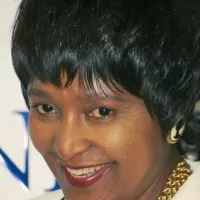
Winnie Madikizela-Mandela was a prominent South African anti-apartheid activist and...
India officially the Republic of India is a South Asian...
Trending
1 month ago Celebrities Stranded Following Emergency Plane Landing in Albuquerque
3 hours ago BYU Fans Roast Notre Dame And CJ Carr With Viral College GameDay Signs

3 hours ago Gunner Stockton Returns for Georgia Bulldogs Following Early Injury Scare

3 hours ago Paris Hilton Hosts UNSTOPPABLE Summit to Empower Neurodivergent Creators Regarding ADHD
3 hours ago Nicki Minaj Advocates for Persecuted Christians in Nigeria
3 hours ago Utah Jazz Claim Center Tony Bradley Off Waivers to Fill Final Roster Spot
Popular
Ilhan Omar is a prominent American politician currently serving as...

Ken Paxton is an American politician and lawyer serving as...

Michael Joseph Jackson the King of Pop was a highly...

Elon Musk is a visionary entrepreneur and engineer known for...

Jameis Winston is an American football quarterback currently playing for...
Cristiano Ronaldo widely considered one of the greatest footballers captains...