Lasting Legacy of Nelson Mandela: A Look at the Influence on History


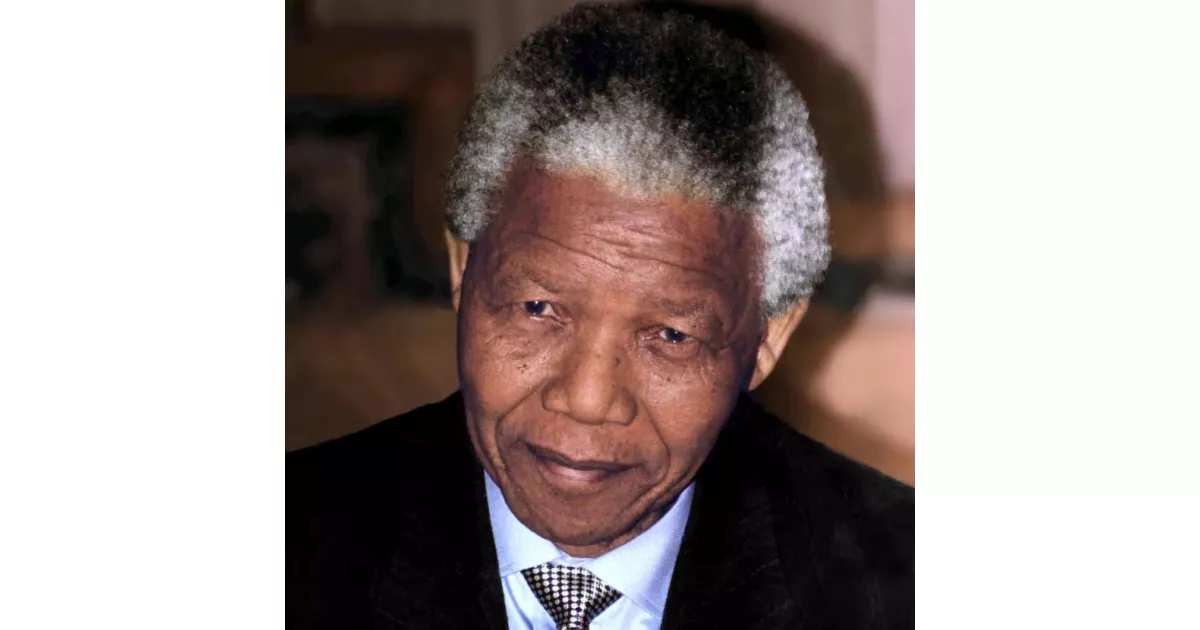
A closer look at the lasting mark left by Nelson Mandela—a timeline of influence.
Nelson Mandela was a pivotal South African anti-apartheid revolutionary, politician, and philanthropist. He served as South Africa's first Black president from 1994 to 1999, elected in the country's first fully representative democratic election. His presidency focused on dismantling apartheid's legacy, promoting racial reconciliation, and establishing a multiracial democracy. As a staunch African nationalist and socialist, he led the African National Congress (ANC) from 1991 to 1997, playing a crucial role in the transition from apartheid to a democratic society.
1956: Freedom Charter inspiration
In 1956, Mandela described the tenets of the Freedom Charter as "an inspiration to the people of South Africa".


July 1978: Mandela's 60th Birthday and Renewed International Interest
In July 1978, Nelson Mandela celebrated his 60th birthday, which renewed international interest in his plight.
1979: Awarded the Jawaharlal Nehru Award
In 1979, Nelson Mandela was awarded the Jawaharlal Nehru Award for International Understanding in India.
March 1980: "Free Mandela!" Campaign Begins
In March 1980, the slogan "Free Mandela!" was developed, sparking an international campaign that led the UN Security Council to call for his release.
1986: Mandela Characterized as "the embodiment of the struggle for liberation"
In 1986, Mandela's biographer characterized him as "the embodiment of the struggle for liberation" in South Africa. He was seen as a potent symbol of resistance to apartheid during the 1980s and gained mythical status internationally.
July 1988: Mandela's 70th birthday attracts international attention
In July 1988, Nelson Mandela's 70th birthday gained international attention. A tribute concert at London's Wembley Stadium was televised and watched by an estimated 200 million viewers. ANC leaders also informed him that Winnie had set herself up as head of a gang, the "Mandela United Football Club".
May 1994: Mandela elected as South Africa's first black chief executive
In May 1994, Mandela was formally elected as South Africa's first black chief executive. His inauguration took place in Pretoria on 10 May 1994, televised to a billion viewers globally. Mandela headed a Government of National Unity.
December 1994: Publication of Long Walk to Freedom
In December 1994, Mandela published "Long Walk to Freedom", his autobiography based on a manuscript he had written in prison. "Long Walk to Freedom" shares the story of Mandela's life, struggles, and eventual triumph over apartheid.

1994: First President of South Africa
In 1994, Nelson Mandela became the first president of South Africa. This marked a historic moment as he was the country's first Black head of state elected in a fully representative democratic election.
1995: Mandela promotes reconciliation through rugby
In 1995, as South Africa hosted the Rugby World Cup, Mandela encouraged black South Africans to support the national rugby team, the Springboks. He wore a Springbok shirt at the final against New Zealand, and after the Springboks won, Mandela presented the trophy to captain Francois Pienaar, an Afrikaner, an event widely seen as a major step in the reconciliation of white and black South Africans.
February 1996: Truth and Reconciliation Commission Dedicated
In February 1996, the Truth and Reconciliation Commission, chaired by Tutu, was dedicated to investigate crimes committed under apartheid by both the government and the ANC, granting amnesties in exchange for testimony.
May 1996: New Constitution of South Africa Agreed Upon and National Party Withdraws
In May 1996, the new Constitution of South Africa was agreed upon by parliament. De Klerk and the National Party withdrew from the coalition government in protest.
1996: Release of Mandela documentary
In 1996, the documentary "Mandela" was released, focusing on Nelson Mandela's life up to his inauguration as president.
1997: Publication of Martin Meredith's Biography
In 1997, Martin Meredith's biography of Nelson Mandela, titled "Mandela", was first published.
October 1998: Truth and Reconciliation Commission Issues Final Report
In October 1998, the Truth and Reconciliation Commission issued its final report after two years of hearings detailing rapes, torture, bombings, and assassinations. De Klerk and Mbeki appealed to have parts of the report suppressed, though only de Klerk's appeal was successful.
1998: Secretary-General of the Non-Aligned Movement
From 1998 to 1999, Nelson Mandela served as the secretary-general of the Non-Aligned Movement, taking on an international leadership role.
June 1999: Retirement and Foundation of Nelson Mandela Foundation
In June 1999, Mandela retired from the presidency, aiming for a quiet family life but soon engaged in a busy public life, founding the Nelson Mandela Foundation in 1999 to focus on rural development, school construction, and combating HIV/AIDS.
1999: Publication of Anthony Sampson's Biography
In 1999, Anthony Sampson's biography of Nelson Mandela, titled "Mandela", was published.
1999: Steps Down as President
In 1999, Nelson Mandela declined a second presidential term and was succeeded by Thabo Mbeki. He then focused on combating poverty and HIV/AIDS through the Nelson Mandela Foundation.
1999: End of Presidential Term
In 1999, Nelson Mandela's term as president of South Africa came to an end. During his presidency, he focused on dismantling apartheid and fostering racial reconciliation.
2000: Closing Address at International AIDS Conference
In 2000, Mandela gave the closing address at the XIII International AIDS Conference in Durban.
2002: Inauguration of Nelson Mandela Annual Lecture
In 2002, Nelson Mandela inaugurated the Nelson Mandela Annual Lecture.
2004: Johannesburg grants Mandela the Freedom of the City
In 2004, Johannesburg granted Nelson Mandela the Freedom of the City, honoring his contributions.
2004: Successful Campaign for 2010 FIFA World Cup
In 2004, Mandela successfully campaigned for South Africa to host the 2010 FIFA World Cup.
January 2005: Publicizing AIDS as Cause of Son's Death
In January 2005, Mandela publicly announced that AIDS was the cause of his son Makgatho's death, in order to challenge the stigma associated with discussing the disease.
2005: Founding of Nelson Mandela Legacy Trust
In 2005, Mandela founded the Nelson Mandela Legacy Trust and traveled to the United States to advocate for economic assistance to Africa.
2006: Publication of Tom Lodge's Biography
In 2006, Tom Lodge's biography of Nelson Mandela, also titled "Mandela", was published.
2007: Call for Mugabe to Resign and Formation of The Elders
In 2007, Mandela publicly called for Zimbabwean President Robert Mugabe to resign and convened a group of world leaders in Johannesburg to form The Elders, a group dedicated to addressing global issues.
July 2008: 90th Birthday Celebrations and Tribute Concert
In July 2008, Mandela's 90th birthday was celebrated across South Africa, including a tribute concert held in Hyde Park, London.
2008: Unveiling of Mandela statue
In 2008, a statue of Nelson Mandela was unveiled at the location where he was released from prison, commemorating his release and contributions.
November 2009: United Nations Proclaims "Mandela Day"
In November 2009, the United Nations General Assembly proclaimed Nelson Mandela's birthday, 18 July, as "Mandela Day", to mark his contributions to the anti-apartheid struggle and called on individuals to donate 67 minutes to doing something for others, commemorating the 67 years that Mandela had been a part of the movement.
2009: Release of Invictus film
In 2009, the feature film "Invictus" was released, focusing on specific events in Nelson Mandela's life.
2010: Final Public Appearance at FIFA World Cup Closing Ceremony
In 2010, despite maintaining a low profile due to ill health, Mandela made his final public appearance at the FIFA World Cup closing ceremony.
2010: Release of The 16th Man documentary
In 2010, the documentary "The 16th Man" was released, focusing on specific events in Nelson Mandela's life.
December 2013: Death of Nelson Mandela
In December 2013, Nelson Mandela passed away. He was a revered anti-apartheid activist and the first president of South Africa, remembered for his contributions to racial reconciliation and democracy.
December 2013: Death and National Mourning
In December 2013, specifically on December 5th, Nelson Mandela passed away at the age of 95, leading to a period of national mourning, a memorial service, and a state funeral.
2013: Release of Mandela: Long Walk to Freedom
In 2013, the feature film "Mandela: Long Walk to Freedom" was released, focusing on Nelson Mandela's adult life.
2013: Unveiling of bronze statue at Union Buildings
On the Day of Reconciliation in 2013, a bronze statue of Nelson Mandela was unveiled at Pretoria's Union Buildings.
2015: UN Names Amended Rules for Treatment of Prisoners as "the Mandela Rules"
In 2015, the UN General Assembly named the amended Standard Minimum Rules for the Treatment of Prisoners as "the Mandela Rules" to honor Nelson Mandela's legacy.
2017: Posthumous Publication of Autobiography Sequel
In 2017, Mandela's unfinished sequel to his autobiography, titled "The Presidential Years," was published posthumously.
2017: Release of Madiba miniseries
In 2017, the miniseries "Madiba" was released, covering Nelson Mandela's adult life.
2019: Start of the United Nations Nelson Mandela Decade of Peace
In 2019, the United Nations Nelson Mandela Decade of Peace began, lasting until 2028.
2028: End of the United Nations Nelson Mandela Decade of Peace
In 2028, the United Nations Nelson Mandela Decade of Peace will end, having started in 2019.
Mentioned in this timeline
Bill Clinton served as the nd U S President from...
George W Bush the rd U S President - is...
Elizabeth II reigned as Queen of the United Kingdom and...
The United States of America is a federal republic primarily...
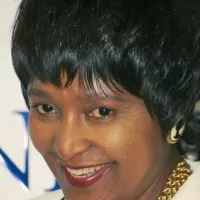
Winnie Madikizela-Mandela was a prominent South African anti-apartheid activist and...
India officially the Republic of India is a South Asian...
Trending

3 hours ago Maria Bartiromo Reportedly Rejected Donald Trump's Offer for White House Press Secretary Position

3 hours ago Rory McIlroy Seeks New Goals Amidst Shifting Dynamics with Rival Patrick Reed

1 day ago Sonay Kartal Advances to Wuhan Open Semi-Finals

4 hours ago Abdul El-Sayed Addresses Sister-in-Law's Terror Watchlist Lawsuit Ahead of Obama Visit

4 hours ago Maja Chwali?ska Competes for Major Career Success in Wuhan WTA Final
4 hours ago Netflix Renews 3 Body Problem for Seasons 2 and 3 Following Major Success
Popular
Ilhan Omar is a prominent American politician currently serving as...

Ken Paxton is an American politician and lawyer serving as...

Elon Musk is a visionary entrepreneur and engineer known for...

Michael Joseph Jackson the King of Pop was a highly...

Jameis Winston is an American football quarterback currently playing for...

Cristiano Ronaldo widely considered one of the greatest footballers captains...