Challenges in the Life of Nelson Mandela in a Detailed Timeline


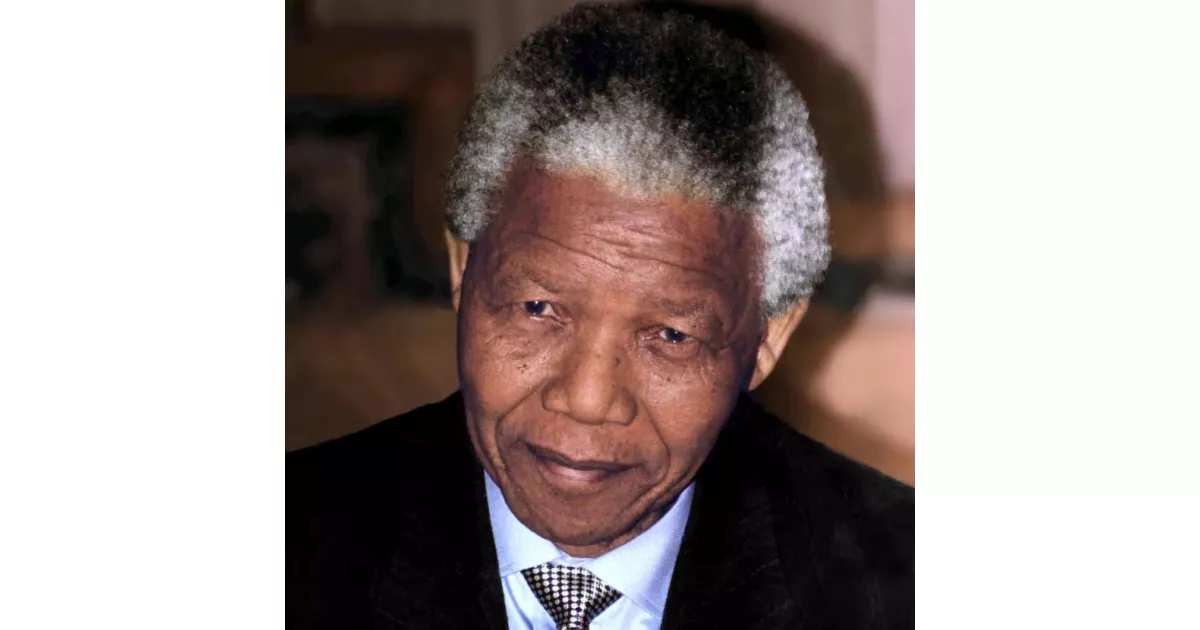
Resilience and perseverance in the journey of Nelson Mandela. A timeline of obstacles and growth.
Nelson Mandela was a pivotal South African anti-apartheid revolutionary, politician, and philanthropist. He served as South Africa's first Black president from 1994 to 1999, elected in the country's first fully representative democratic election. His presidency focused on dismantling apartheid's legacy, promoting racial reconciliation, and establishing a multiracial democracy. As a staunch African nationalist and socialist, he led the African National Congress (ANC) from 1991 to 1997, playing a crucial role in the transition from apartheid to a democratic society.
1939: Began BA Degree at University of Fort Hare
In 1939, with Jongintaba's support, Nelson Mandela began working towards a BA degree at the University of Fort Hare. He studied various subjects but was later suspended for participating in a student boycott.


August 1943: Marched in Support of Bus Boycott
In August 1943, Nelson Mandela participated in a march. The march supported a bus boycott aimed at reversing fare rises, demonstrating his growing political awareness.
1948: Afrikaner-dominated Herenigde Nasionale Party took power
In 1948, during the South African general election (in which only whites could vote), the Afrikaner-dominated Herenigde Nasionale Party, under Daniel François Malan, took power and united with the Afrikaner Party to form the National Party. This openly racialist party codified and expanded racial segregation through new apartheid legislation.
December 1949: Denied Degree
In December 1949, after devoting his time to politics, Mandela failed his final year at Witwatersrand three times and was ultimately denied his degree.
December 1951: Arguing against a racially united front
At the ANC national conference of December 1951, Mandela continued arguing against a racially united front, but was outvoted.
July 1952: Arrested under the Suppression of Communism Act
In July 1952, Mandela was arrested under the Suppression of Communism Act and stood trial as one of the 21 accused in Johannesburg. Found guilty of "statutory communism", his sentence of nine months' hard labor was suspended for two years.
1952: Involvement in the Defiance Campaign
In 1952, Nelson Mandela rose to prominence for his involvement in the Defiance Campaign. This campaign was a significant act of resistance against apartheid.
1952: Preparation for Defiance Campaign
In 1952, the ANC began preparation for a joint Defiance Campaign against apartheid with Indian and communist groups, founding a National Voluntary Board to recruit volunteers. The campaign was designed to follow the path of nonviolent resistance influenced by Mahatma Gandhi.
1953: Introduction of the Public Safety Act
In 1953, in response to further protests, the government introduced the Public Safety Act to permit martial law.
February 1955: Participated in unsuccessful protest in Sophiatown
In February 1955, Mandela took part in the unsuccessful protest to prevent the forced relocation of all black people from the Sophiatown suburb of Johannesburg, concluding that violent action would prove necessary to end apartheid and white minority rule.
1955: Involvement in the Congress of the People
In 1955, Nelson Mandela played a role in the Congress of the People. His involvement marked another step in his political career.
March 1956: Third ban on public appearances
In March 1956, Mandela received his third ban on public appearances, restricting him to Johannesburg for five years, but he often defied it.
December 1956: Arrested on charges of "high treason"
In December 1956, Mandela was arrested along with most of the ANC national executive and accused of "high treason" against the state.
1956: Prosecuted in the Treason Trial
In 1956, Nelson Mandela was prosecuted in the Treason Trial. Despite facing charges for seditious activities, he was not successfully convicted during this trial.
January 1957: Defence's refutation began
In January 1957, the defence's refutation in Mandela's treason trial began, overseen by defence lawyer Vernon Berrangé.
January 1958: Oswald Pirow appointed to prosecute
In January 1958, Oswald Pirow was appointed to prosecute Mandela's treason trial.
March 1958: Divorce from Evelyn Ntoko Mase
In March 1958, Mandela divorced Evelyn Ntoko Mase due to multiple strains including alleged adultery, constant absences, and her religious beliefs.
August 1958: Treason Trial began
In August 1958, the formal Treason Trial began in Pretoria.
April 1959: Founding of Pan-Africanist Congress (PAC)
In April 1959, Africanists dissatisfied with the ANC's united front approach founded the Pan-Africanist Congress (PAC). Mandela disagreed with the PAC's racially exclusionary views.
August 1960: State of Emergency
In August 1960, the government implemented state of emergency measures, declaring martial law and banning the ANC and PAC.
1960: Anti-pass campaign and Sharpeville massacre
In early 1960, both the ANC and PAC took part in an anti-pass campaign, in which Africans burned the passes that they were legally obliged to carry. One of the PAC-organised demonstrations was fired upon by police, resulting in the deaths of 69 protesters in the Sharpeville massacre.
1961: Co-founded uMkhonto we Sizwe
In 1961, Nelson Mandela co-founded the militant uMkhonto we Sizwe. This group led a sabotage campaign against the apartheid government, marking a shift towards more direct action.
1961: MK Publicly Announces its Existence
In 1961, soon after ANC leader Luthuli was awarded the Nobel Peace Prize, MK publicly announced its existence with 57 bombings on Dingane's Day (16 December), followed by further attacks on New Year's Eve.
August 1962: Mandela's Capture Near Howick
On August 5, 1962, Nelson Mandela and Cecil Williams were captured by police near Howick. The CIA had informed the South African police of his location. Mandela was jailed in Johannesburg and charged with inciting worker's strikes and leaving the country without permission.
July 1963: Police Raid on Liliesleaf Farm
On July 11, 1963, police raided Liliesleaf Farm, arresting those present and uncovering documents related to MK's activities that mentioned Mandela.
December 1963: Resumption of the Rivonia Trial
In December 1963, the Rivonia Trial resumed at Pretoria Supreme Court after the initial case was thrown out for insufficient evidence. The prosecution presented its new case, calling 173 witnesses and introducing thousands of documents until February 1964.
February 1964: Conclusion of the Rivonia Trial
In February 1964, the prosecution concluded its case in the Rivonia Trial, presenting evidence and witnesses against Mandela and his comrades.
June 1964: Sentencing at the Rivonia Trial
On June 12, 1964, Justice De Wet found Mandela and his co-accused guilty on all four charges at the Rivonia Trial. They were sentenced to life imprisonment.
1964: Transfer to Robben Island Prison
In 1964, Nelson Mandela and his co-accused were transferred from Pretoria to the prison on Robben Island, where he would remain for the next 18 years.
January 1965: Reassignment to Lime Quarry Work
In January 1965, the Rivonia Trial prisoners, including Mandela, were reassigned to work in a lime quarry on Robben Island.
1968: Death of Mandela's Mother
In 1968, Mandela's mother visited him at Robben Island and died shortly after. He was forbidden from attending her funeral.
1969: Escape Plan Abandoned
In 1969, an escape plan for Mandela was developed by Gordon Bruce, but it was abandoned after being infiltrated by an agent of the South African Bureau of State Security (BOSS).
1970: Change in Commanding Officer at Robben Island
In 1970, Commander Piet Badenhorst became commanding officer at Robben Island. After Mandela complained about abuse, Badenhorst was reassigned and replaced by Commander Willie Willemse, who improved prison standards.
December 1974: Visit from Jimmy Kruger
In December 1974, South African Minister of Justice Jimmy Kruger visited Mandela at Robben Island, but they did not get along.
1976: Soweto Uprising and Imprisonment of BCM Activists
Following the Soweto uprising of 1976, many Black Consciousness Movement (BCM) activists were imprisoned on Robben Island.
1977: Winnie Mandela Forcibly Settled in Brandfort
In 1977, Winnie Mandela was released from prison but forcibly settled in Brandfort and remained unable to see Nelson Mandela.
April 1982: Transfer to Pollsmoor Prison
In April 1982, Nelson Mandela, along with other senior ANC leaders, was transferred to Pollsmoor Prison in Tokai, Cape Town.
February 1985: Botha's Offer of Release Rejected
In February 1985, President Botha offered Mandela release from prison if he "unconditionally rejected violence as a political weapon". Mandela spurned the offer.
1985: Mandela underwent prostate surgery
In 1985, Nelson Mandela underwent surgery on an enlarged prostate gland before being given new solitary quarters.
1986: Mandela Characterized as "the embodiment of the struggle for liberation"
In 1986, Mandela's biographer characterized him as "the embodiment of the struggle for liberation" in South Africa. He was seen as a potent symbol of resistance to apartheid during the 1980s and gained mythical status internationally.
1986: ANC attacks escalate
In 1986, the anti-apartheid resistance, led by the ANC, escalated its attacks, committing 231 acts of violence.
1987: ANC attacks escalate further
In 1987, the ANC committed 235 attacks, marking a further escalation of violence in the anti-apartheid resistance.
May 1988: Government team organised negotiations with Mandela
In May 1988, Kobie Coetsee organised negotiations between Mandela and a team of four government figures. The team agreed to the release of political prisoners and the legalisation of the ANC under certain conditions.
July 1988: Mandela's 70th birthday attracts international attention
In July 1988, Nelson Mandela's 70th birthday gained international attention. A tribute concert at London's Wembley Stadium was televised and watched by an estimated 200 million viewers. ANC leaders also informed him that Winnie had set herself up as head of a gang, the "Mandela United Football Club".
1990: Planned poisoning of Mandela
In 1990, there was a plan to poison Mandela with thallium shortly before his release, as part of Project Coast during the Botha regime.
June 1991: Winnie Mandela found guilty
In June 1991, Winnie Mandela was found guilty in her trial for kidnapping and assault, and sentenced to six years in prison, which was later reduced to two on appeal.
September 1991: National peace conference in Johannesburg
In September 1991, a national peace conference was held in Johannesburg where Mandela, Buthelezi, and de Klerk signed a peace accord, though violence continued.
November 1991: Indictment in Pan Am Flight 103 Sabotage
In November 1991, Abdelbaset al-Megrahi and Lamin Khalifah Fhimah were indicted and accused of sabotaging Pan Am Flight 103.
December 1991: CODESA begins
In December 1991, the Convention for a Democratic South Africa (CODESA) began at the Johannesburg World Trade Centre, attended by 228 delegates from 19 political parties.
May 1992: CODESA 2 held, Mandela calls off negotiations
In May 1992, CODESA 2 was held, but after the Boipatong massacre of ANC activists by government-aided Inkatha militants, Mandela called off the negotiations.
June 1993: Afrikaner Weerstandsbeweging attacks Kempton Park World Trade Centre
In June 1993, the Afrikaner Weerstandsbeweging (AWB) attacked the Kempton Park World Trade Centre, threatening the democratic process.
January 1995: Mandela chastises de Klerk
In January 1995, Mandela heavily chastised de Klerk for awarding amnesty to 3,500 police officers just before the election, and later criticised him for defending former Minister of Defence Magnus Malan when the latter was charged with murder.
February 1996: Truth and Reconciliation Commission Dedicated
In February 1996, the Truth and Reconciliation Commission, chaired by Tutu, was dedicated to investigate crimes committed under apartheid by both the government and the ANC, granting amnesties in exchange for testimony.
March 1996: Divorce from Winnie Madikizela-Mandela
In March 1996, Mandela divorced Winnie Madikizela-Mandela, following reports of her affairs and involvement in political corruption and violence.
May 1996: New Constitution of South Africa Agreed Upon and National Party Withdraws
In May 1996, the new Constitution of South Africa was agreed upon by parliament. De Klerk and the National Party withdrew from the coalition government in protest.
1996: RDP replaced with GEAR policy
In 1996, the Reconstruction and Development Programme (RDP) was replaced with a new policy, Growth, Employment and Redistribution (GEAR), which maintained South Africa's mixed economy but emphasized economic growth through a framework of market economics and the encouragement of foreign investment.
July 1997: Mandela Urges Suharto to Withdraw from East Timor
During a July 1997 visit to Indonesia, Mandela privately urged Indonesian president Suharto to withdraw from the occupation of East Timor.
1997: Asian Financial Crisis Prevents Economic Relations
Inspired by the region's economic boom, in 1997, Mandela sought greater economic relations with East Asia, in particular with Malaysia, although this was prevented by the 1997 Asian financial crisis.
September 1998: Troops Ordered into Lesotho
In September 1998, South African troops were ordered into Lesotho to protect the government of Prime Minister Pakalitha Mosisili after a disputed election had prompted opposition uprisings. The action was authorised by Buthelezi, with the approval of Mandela and Mbeki.
October 1998: Truth and Reconciliation Commission Issues Final Report
In October 1998, the Truth and Reconciliation Commission issued its final report after two years of hearings detailing rapes, torture, bombings, and assassinations. De Klerk and Mbeki appealed to have parts of the report suppressed, though only de Klerk's appeal was successful.
April 1999: Trial Held for Pan Am Flight 103 Suspects
In April 1999, the trial governed by Scots law for the two Libyans accused of sabotaging Pan Am Flight 103 was held at Camp Zeist in the Netherlands, finding one of the two men guilty.
1999: High HIV/AIDS Rate and Crime Rate in South Africa
By 1999, 10% of South Africa's population were HIV positive and South Africa had one of the world's highest crime rates.
2002: Dr. Wouter Basson's trial
In 2002, witnesses during the trial of Dr. Wouter Basson revealed the plan to poison Mandela during the Botha regime.
2005: Legal Disputes Regarding Family Trusts Begin
From 2005, Mandela and his family were involved in legal disputes regarding money held in family trusts.
2008: Mandela removed from US terrorism watch-list
In 2008, the US government's State and Defense departments removed Nelson Mandela from their terrorism watch-list, despite having officially designated the ANC as a terrorist organization during the 1980s.
2013: Intra-Family Legal Dispute over Burial Place
In mid-2013, while Mandela was hospitalized, his descendants were involved in a legal dispute concerning the burial place of Mandela's children and ultimately Mandela himself.
Mentioned in this timeline
Bill Clinton served as the nd U S President from...
George W Bush the rd U S President - is...
Elizabeth II reigned as Queen of the United Kingdom and...
The United States of America is a federal republic primarily...
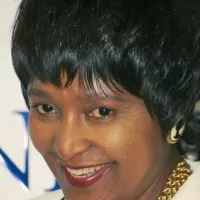
Winnie Madikizela-Mandela was a prominent South African anti-apartheid activist and...
India officially the Republic of India is a South Asian...
Trending
3 hours ago Heroic Intervention During Tragic Bend, Oregon Elementary School Shooting

1 day ago Alexander Bublik Faces Backlash After Racket Smashing Incident and Injury

4 hours ago Kendall Jenner Addresses Longstanding Dating Rumors Involving Cara Delevingne
4 hours ago Market Analysts Warn of Potential Bursting AI Industry Investment Bubble

5 hours ago Noah Centineo Stars in Street Fighter Movie Opening at $31 Million Box Office
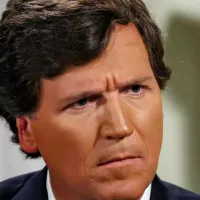
5 hours ago Controversy Surrounding Tucker Carlson and Recent NPR Coverage Sparks Public Debate
Popular

Ilhan Omar is a prominent American politician currently serving as...

Ken Paxton is an American politician and lawyer serving as...

Elon Musk is a visionary entrepreneur and engineer known for...

Michael Joseph Jackson the King of Pop was a highly...

Jameis Winston is an American football quarterback currently playing for...
Cristiano Ronaldo widely considered one of the greatest footballers captains...