Career Timeline of Sonia Sotomayor: Major Achievements and Milestones


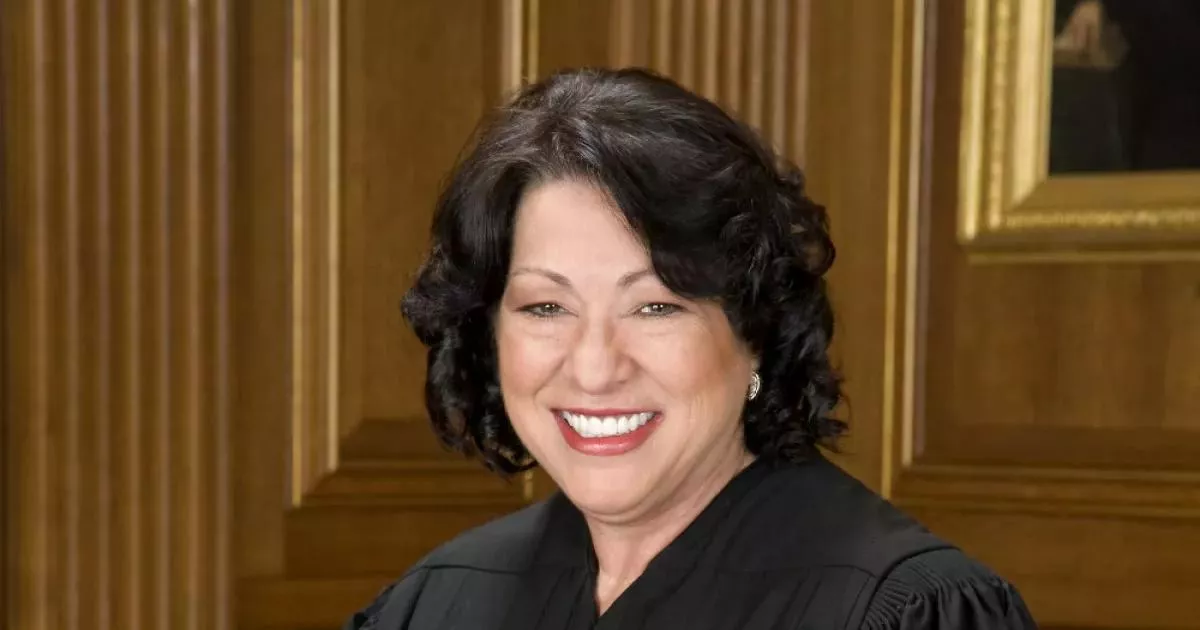
Discover the career path of Sonia Sotomayor, from the first major opportunity to industry-changing achievements.
Sonia Sotomayor is an American lawyer and jurist serving as an Associate Justice of the Supreme Court of the United States. Nominated by President Barack Obama on May 26, 2009, she assumed office on August 8, 2009. Sotomayor holds the distinction of being the first Hispanic and only the third woman to serve as a U.S. Supreme Court Justice.
1979: Hired as Assistant District Attorney
In 1979, Sonia Sotomayor was hired as an assistant district attorney under New York County District Attorney Robert Morgenthau, after graduating from law school.


1980: Service on the Board of the Puerto Rican Legal Defense and Education Fund
In 1980, Sotomayor began serving on the board of directors of the Puerto Rican Legal Defense and Education Fund. There, she worked with lawyers on issues like New York City hiring practices, police brutality, the death penalty, and voting rights.
1983: Conviction in the "Tarzan Murderer" Case
In 1983, Sonia Sotomayor helped convict Richard Maddicks, known as the "Tarzan Murderer", for robberies and shootings.
1984: Entry into Private Practice
In 1984, Sonia Sotomayor entered private practice after working as an assistant district attorney in New York for four and a half years.
1984: Joins Pavia & Harcourt
In 1984, Sonia Sotomayor joined the commercial litigation practice group Pavia & Harcourt in Manhattan as an associate, specializing in intellectual property litigation, international law, and arbitration.
1985: Service on the Board of the Maternity Center Association
In 1985, Sotomayor began her service on the board of the Maternity Center Association, a Manhattan-based nonprofit organization focused on improving maternity care.
1986: End of Solo Practice
In 1986, Sonia Sotomayor ended her informal solo practice, Sotomayor & Associates, which she had been running since 1983.
1986: "Fendi Crush" event
In 1986, Sonia Sotomayor successfully rounded up thousands of counterfeit accessories of Fendi goods, which was celebrated by "Fendi Crush", a destruction-by-garbage-truck event at Tavern on the Green.
1986: Service on the Board of the Maternity Center Association
In 1986, Sotomayor continued her service on the board of the Maternity Center Association, contributing to the organization's efforts to enhance maternity care in Manhattan.
1987: Appointment to the State of New York Mortgage Agency
In 1987, Governor Mario Cuomo appointed Sonia Sotomayor to the board of the State of New York Mortgage Agency.
1987: Federal Judicial Nomination Battles
In 1987, the history of federal judicial nomination battles, going back to the Robert Bork Supreme Court nomination, influenced the fervor with which conservatives and Republicans viewed Sotomayor's nomination.
1988: Appointment to the New York City Campaign Finance Board
In 1988, Ed Koch, the Mayor of New York City, appointed Sotomayor as one of the founding members of the New York City Campaign Finance Board. She served there for four years, helping to implement a voluntary scheme where local candidates received public funds in exchange for contribution limits, spending limits, and financial disclosure agreements.
1988: Becomes Partner at Pavia & Harcourt
In 1988, Sonia Sotomayor became a partner at the law firm Pavia & Harcourt.
November 27, 1991: Nomination to U.S. District Court
On November 27, 1991, President George H. W. Bush nominated Sotomayor to a seat on the U.S. District Court for the Southern District of New York.
1991: Nomination to U.S. District Court
In 1991, President George H. W. Bush nominated Sonia Sotomayor to the U.S. District Court for the Southern District of New York.
1991: Recommendation for Judgeship
In 1991, Senator Daniel Patrick Moynihan recommended Sotomayor for a judgeship, fulfilling a promise to appoint a Hispanic judge for New York. Senator Al D'Amato enthusiastically backed her.
June 1992: Senate Judiciary Committee Hearings
In June 1992, Sotomayor's Senate Judiciary Committee hearings went smoothly, with her pro bono activities earning praise and unanimous approval from the committee.
1992: End of Service at the State of New York Mortgage Agency
In 1992, Sonia Sotomayor concluded her service on the board of the State of New York Mortgage Agency.
1992: Leaves Pavia & Harcourt to Become a Judge
In 1992, Sonia Sotomayor left Pavia & Harcourt to become a judge.
1992: Confirmation to U.S. District Court
In 1992, Sonia Sotomayor was confirmed to the U.S. District Court for the Southern District of New York.
1992: End of Service on the Board of the Puerto Rican Legal Defense and Education Fund
In 1992, Sotomayor ended her service on the board of directors of the Puerto Rican Legal Defense and Education Fund, concluding a 12-year period of active involvement in policymaking and legal work on various social justice issues.
March 30, 1995: Preliminary Injunction Against Major League Baseball
On March 30, 1995, Sotomayor issued a preliminary injunction against Major League Baseball in Silverman v. Major League Baseball Player Relations Committee, Inc., preventing it from unilaterally implementing a new collective bargaining agreement. This ruling effectively ended the 1994 baseball strike.
1995: Dow Jones v. Department of Justice Ruling
In 1995, Sotomayor sided with the Wall Street Journal in Dow Jones v. Department of Justice, ruling that the public had a substantial interest in a photocopy of the last note left by Vince Foster and enjoining the Justice Department from blocking its release.
June 25, 1997: Nomination to U.S. Court of Appeals
On June 25, 1997, President Bill Clinton nominated Sotomayor to a seat on the U.S. Court of Appeals for the Second Circuit.
September 1997: Senate Judiciary Committee Hearing
During her September 1997 hearing before the Senate Judiciary Committee, Sotomayor faced strong questioning from Republican members about mandatory sentencing, gay rights, and her respect for Supreme Court Justice Clarence Thomas.
1997: Nomination to U.S. Court of Appeals
In 1997, President Bill Clinton nominated Sonia Sotomayor to the U.S. Court of Appeals for the Second Circuit.
1997: Castle Rock Entertainment, Inc. v. Carol Publishing Group Ruling
In 1997, Sotomayor ruled in Castle Rock Entertainment, Inc. v. Carol Publishing Group that a trivia book from the Seinfeld television program infringed on the copyright of the show's producer and did not constitute fair use. This ruling was upheld by the United States Court of Appeals for the Second Circuit.
1997: New York Times Co. v. Tasini Ruling
In 1997, Sotomayor ruled in New York Times Co. v. Tasini that the publisher had the right to license the work of freelance journalists in an electronic archival database. This decision was later reversed on appeal by the Supreme Court.
March 1998: Committee Approval of Nomination
In March 1998, the Senate Judiciary Committee approved Sotomayor's nomination, with two dissensions.
June 1998: Wall Street Journal Editorial Criticism
In June 1998, the Wall Street Journal editorial page criticized Sotomayor's district court rulings and urged further delay of her confirmation to the Second Circuit.
October 2, 1998: Confirmation to U.S. Court of Appeals
On October 2, 1998, Sotomayor was confirmed to the U.S. Court of Appeals for the Second Circuit by a 67–29 vote.
1998: Confirmation to U.S. Court of Appeals
In 1998, Sonia Sotomayor was confirmed to the U.S. Court of Appeals for the Second Circuit, after her nomination was slowed due to concerns about a potential Supreme Court nomination.
1998: Adjunct Professor at NYU School of Law
In 1998, Sotomayor began working as an adjunct professor at New York University School of Law, teaching trial and appellate advocacy and a federal appellate court seminar until 2007.
1998: Confirmation Questionnaire for the Court of Appeals
In 1998, as part of her confirmation questionnaire for the Court of Appeals, Sotomayor submitted a speech containing remarks that later became controversial, but they attracted little attention at the time.
1999: Lecturer in Law at Columbia Law School
In 1999, Sotomayor started as a lecturer in law at Columbia Law School in a paying, adjunct faculty position.
2000: Co-taught Federal Appellate Externship at Columbia Law School
In 2000, Sotomayor created and co-taught a class called the Federal Appellate Externship each semester at Columbia Law School, until her departure.
October 2001: Judge Mario G. Olmos Memorial Lecture
In October 2001, Sotomayor presented the annual Judge Mario G. Olmos Memorial Lecture at UC Berkeley School of Law, titled "A Latina Judge's Voice."
2002: Pappas v. Giuliani Dissent
In 2002, Sotomayor dissented in Pappas v. Giuliani, arguing that the First Amendment protected the speech of a New York Police Department employee who sent racist materials through the mail, even if that speech was "offensive, hateful, and insulting."
2002: Publication of "A Latina Judge's Voice"
In 2002, Sotomayor's lecture, "A Latina Judge's Voice", which she delivered in October 2001, was published in the Berkeley La Raza Law Journal.
2002: Center for Reproductive Law and Policy v. Bush Decision
In the 2002 decision Center for Reproductive Law and Policy v. Bush, Sotomayor upheld the Bush administration's implementation of the Mexico City Policy, which restricted funding to non-governmental organizations that perform or actively promote abortion as a method of family planning in other nations.
2005: Suggested as Supreme Court Nominee
In 2005, Senate Democrats suggested Sotomayor, among others, to President George W. Bush as an acceptable nominee to fill the seat of retiring Supreme Court Justice Sandra Day O'Connor.
2005: United States v. Quattrone Opinion
In 2005, Sotomayor wrote the opinion for the Second Circuit panel in United States v. Quattrone, striking down a district court's order barring the publication of jurors' names on First Amendment grounds. Frank Quattrone had been on trial on charges of obstructing investigations related to technology IPOs.
2006: Member of Princeton University's Board of Trustees
In 2006, Sotomayor became a member of Princeton University's Board of Trustees, concluding her term in 2011.
2007: End of time as adjunct professor at NYU School of Law
In 2007, Sotomayor concluded her time as an adjunct professor at New York University School of Law, where she had been teaching since 1998.
April 27, 2009: White House Contacted Sotomayor About Possible Nomination
On April 27, 2009, the White House first contacted Sotomayor about the possibility of her nomination to the Supreme Court.
April 30, 2009: Justice Souter's Retirement Plans Leaked
On April 30, 2009, Justice David Souter's retirement plans leaked to the press, and Sotomayor received early attention as a possible nominee for Souter's seat.
May 2009: Nomination to the Supreme Court
In May 2009, President Barack Obama nominated Sonia Sotomayor to the Supreme Court following Justice David Souter's retirement.
May 25, 2009: Obama Informs Sotomayor of His Choice
On May 25, 2009, Barack Obama informed Sotomayor of his choice for a Supreme Court nomination.
May 26, 2009: Nomination to Supreme Court
On May 26, 2009, President Barack Obama nominated Sonia Sotomayor to serve as an Associate Justice of the Supreme Court of the United States.
June 2, 2009: Seventh Circuit Agrees with Maloney v. Cuomo
On June 2, 2009, a Seventh Circuit panel, including judges Richard Posner and Frank Easterbrook, unanimously agreed with Maloney v. Cuomo, citing the case in their decision turning back a challenge to Chicago's gun laws, noting that Supreme Court precedents remain in force until altered by the Supreme Court itself.
July 13, 2009: Confirmation Hearings Before the Senate Judiciary Committee
On July 13, 2009, during Sotomayor's confirmation hearings before the Senate Judiciary Committee, she addressed her "wise Latina" remark, calling it a "rhetorical flourish that fell flat."
August 8, 2009: Sotomayor begins serving as Associate Justice
On August 8, 2009, Sonia Sotomayor began her service as an Associate Justice of the Supreme Court of the United States, becoming the first Hispanic justice and third woman to hold the position.
August 2009: Confirmation to the Supreme Court
In August 2009, Sonia Sotomayor's nomination to the Supreme Court was confirmed by the Senate with a vote of 68–31.
August 17, 2009: First Vote as Associate Supreme Court Justice
On August 17, 2009, Sotomayor cast her first vote as an associate Supreme Court justice in a stay of execution case.
2009: Perceptions of Sotomayor's Judicial Behavior
In 2009, the Almanac of the Federal Judiciary presented a wide range of reactions to Sotomayor, including comments on her vigorous and blunt behavior toward lawyers, extensive preparation, and "hot bench" approach.
2011: Conclusion of term on Princeton University's Board of Trustees
In 2011, Sotomayor concluded her term as a member of Princeton University's Board of Trustees, a position she had held since 2006.
2012: Arizona v. United States
In 2012, Sotomayor was part of a 5–3 majority in Arizona v. United States, holding that federal immigration statutes preempted several aspects of the Arizona SB 1070 anti-illegal immigration law.
2013: Missouri v. McNeely
In 2013, Sotomayor wrote the majority opinion in Missouri v. McNeely, holding that a warrant is required before police take a nonconsensual blood test of a motorist suspected of drunk driving.
2013: Administered Oath of Office to Joe Biden
In 2013, on January 20 and 21, Sotomayor administered the oath of office to Vice President Joe Biden for the inauguration of his second term.
2014: Dissent in Heien v. North Carolina and Utah v. Strieff
In 2014, Sotomayor dissented in Heien v. North Carolina and echoed the sentiment in Utah v. Strieff, arguing against evidence obtained from illegal police stops being admitted if the stopped person had an outstanding traffic warrant.
2014: Navarette v. California
In 2014, Sotomayor joined Justice Scalia's dissent in Navarette v. California, disagreeing with the opinion that found no Fourth Amendment violation from a traffic stop and drug seizure based solely on an anonymous tip submitted to 911.
2015: Mullenix v. Luna
In 2015, Sotomayor was the lone dissenter in Mullenix v. Luna, a case where the Court held that an officer who fired six shots at a fleeing fugitive in a high-speed car chase was entitled to qualified immunity.
January 2021: Sotomayor swore in Kamala Harris as Vice President
In January 2021, Sotomayor swore in Kamala Harris as Vice President of the United States, marking a historic moment.
January 20, 2021: Administered Oath of Office to Kamala Harris
On January 20, 2021, Sotomayor administered the oath of office to Kamala Harris for her inauguration as vice president, the first woman to ever hold the office.
2021: Dissenting opinion in Whole Woman's Health v. Jackson
In 2021, Sotomayor wrote a dissenting opinion, joined by Justices Breyer and Kagan, in the case of Whole Woman's Health v. Jackson, which regarded a Texas abortion law allowing private citizens to sue abortion providers. The Supreme Court upheld the Texas law by a 5–4 vote.
2022: Dobbs v. Jackson Women's Health Organization
In 2022, the Supreme Court decided Dobbs v. Jackson Women's Health Organization, which Sotomayor later referred to as the "eradication of the right to abortion" in her 2024 dissenting opinion in Department of State v. Muñoz.
2024: Dissenting opinion in Department of State v. Muñoz
In 2024, Sotomayor, in her dissenting opinion in Department of State v. Muñoz, referred to the 2022 Dobbs v. Jackson Women's Health Organization decision as the "eradication of the right to abortion".
Mentioned in this timeline
Barack Obama the th U S President - was the...

Bill Clinton served as the nd U S President from...

George W Bush the rd U S President - is...
Joe Biden served as the th President of the United...
Kamala Harris is an American politician and attorney She served...
The United States of America is a federal republic primarily...
Trending

4 hours ago UCLA Quarterback Nico Iamaleava Out for Season Following Knee Injury

5 hours ago Selma Blair Arrested Following Mid-Air Altercation with Flight Crew

5 hours ago Peggy Flanagan Maintains Lead Against Michele Tafoya in Competitive Minnesota U.S. Senate Race

5 hours ago Sean Combs Rushed to Hospital From Prison Following Medical Emergency

6 hours ago Packers Defensive Lineman Javon Hargrave Out for Season With Torn Achilles
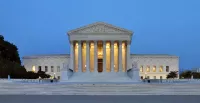
7 hours ago Supreme Court Reassesses Religious Rights and LGBTIQ Protections in Forthcoming Legal Battles
Popular

Ken Paxton is an American politician and lawyer serving as...

Jameis Winston is an American football quarterback currently playing for...

Cristiano Ronaldo widely considered one of the greatest footballers captains...

Michael Joseph Jackson the King of Pop was a highly...

Elon Musk is a visionary entrepreneur and engineer known for...
Marco Rubio is a prominent American politician serving as the...