Most Talked-About Controversies Linked to Winston Churchill


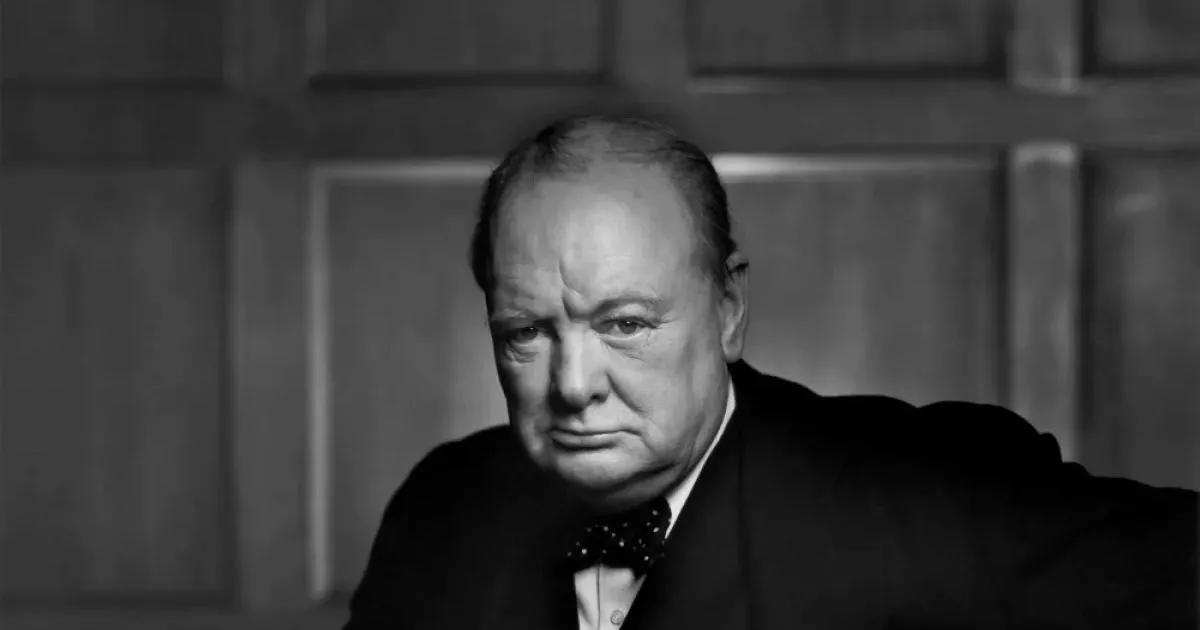
Controversies are a part of history. Explore the biggest scandals linked to Winston Churchill.
Winston Churchill was a prominent British statesman, military officer, and writer who served as Prime Minister of the United Kingdom during World War II (1940-1945) and again from 1951-1955. He was a Member of Parliament for 62 years, representing five constituencies. Ideologically aligned with economic liberalism and imperialism, he led the Conservative Party from 1940 to 1955, having previously been a member of the Liberal Party from 1904 to 1924. His leadership during WWII cemented his place as one of the most important figures in British history.
February 1910: Churchill's Letter on Sterilization
In February 1910, as Home Secretary, Churchill wrote a letter to Prime Minister H. H. Asquith supporting the forced sterilization of the "feeble minded,".


November 1910: Tonypandy riots
In November 1910, Churchill addressed the Tonypandy riots, where coal miners protested working conditions. Though troops were dispatched, Churchill prevented their deployment to avoid bloodshed, opting to send unarmed London police instead and offered the protesters an interview, and this incurred the long-term suspicion of the labour movement.
November 1910: Attacked by Hugh Franklin
In November 1910, the suffragist Hugh Franklin attacked Churchill with a whip.
January 1911: Siege of Sidney Street
In January 1911, Churchill was involved in the Siege of Sidney Street where he stood with the police and allowed the house where burglars were hiding to burn down rather than risk British lives.
1911: Churchill Supports Forced Sterilization
During his time as Home Secretary in 1910–1911, Churchill supported the forced sterilization of the "feeble minded."
April 1925: Restoration of the Gold Standard
In April 1925, Churchill controversially restored the gold standard at its 1914 parity in his first budget, against the advice of leading economists like John Maynard Keynes, a move that led to deflation and unemployment.
1926: Involvement in the General Strike
In 1926, during the General Strike, Churchill edited the British Gazette and later called for a legally binding minimum wage, also expressing his views on Irish unity.
January 1931: Resignation from Shadow Cabinet over India Policy
In January 1931, Churchill resigned from the Conservative Shadow Cabinet due to disagreement over granting Dominion Status to India, opposing Mohandas Gandhi.
November 1934: Radio Broadcast Denouncing Nazism
In November 1934, Churchill gave a radio broadcast denouncing the intolerance and militarism of Nazism, having already voiced his concerns in the House of Commons.
December 1934: Opposition to India Bill in Parliament
In December 1934, Churchill and 83 other Conservative MPs voted against the India Bill in Parliament.
February 1935: India Bill Passed Despite Churchill's Opposition
In February 1935, despite Churchill's opposition, the India Bill was passed in Parliament.
January 1936: Support for Edward VIII During Abdication Crisis
In January 1936, following Edward VIII's succession, Churchill supported the King during the abdication crisis, clashing with Baldwin and expressing regret over the abdication.
February 1938: Eden Resigns Over Appeasement Policy
In February 1938, Foreign Secretary Anthony Eden resigned over Chamberlain's appeasement policy towards Mussolini, which was being extended to Hitler.
December 1942: Food shortages prompt requests for grain imports
From December 1942, food shortages in Bengal prompted senior officials to ask London for grain imports.
1943: Bengal Famine
In 1943, a combination of factors, including the curtailment of essential rice imports from Burma, poor administration, wartime inflation and large-scale natural disasters such as flooding and crop disease led to the Bengal famine of 1943, in which an estimated 2.1–3.8 million people died.
February 1944: Churchill Cabled Wavell Regarding Grain Shipments
In February 1944, with Operation Overlord increasing demands on Allied shipping, Churchill cabled Wavell stating he would help but not with the impossible regarding grain shipment requests for India.
March 1944: Radio broadcast on post-war reforms
In March 1944, Churchill delivered a radio broadcast on post-war reforms, showing a lack of interest and coming across as a worn and petulant old man.
October 1944: Fourth Moscow Conference and Percentages Agreement
In October 1944, Churchill and Eden met with Stalin and Molotov at the fourth Moscow conference, resulting in the "Percentages agreement." This agreement effectively divided post-war control in the Balkans, with Russia gaining 90% control of Romania and 75% of Bulgaria, while the United Kingdom and the United States would have 90% control of Greece. Hungary and Yugoslavia would be 50% each.
February 1945: Bombing of Dresden
On the nights of February 13–15, 1945, British and US bombers attacked Dresden, resulting in a high number of civilian casualties. The attacks were part of an area bombing campaign initiated by Churchill with the aim of shortening the war. Churchill later regretted the bombing due to the excessive civilian casualties.
May 1945: Commissioning of Operation Unthinkable
In May 1945, Winston Churchill commissioned the Chiefs of Staff Committee to develop a plan for a potential military campaign against the USSR, code-named Operation Unthinkable, which involved a surprise attack on Soviet troops stationed in Germany.
July 1945: Hypothetical Start Date for Operation Unthinkable
The hypothetical start date for the Allied invasion of Soviet-held Europe as part of Operation Unthinkable, the proposed military campaign against the USSR, was set for July 1, 1945.
August 1946: Implementation of Operation Keelhaul
In August 1946, the Western Allies began implementing Operation Keelhaul, which involved the forcible repatriation of Soviet citizens, including prisoners of war, to the Soviet Union. This policy was later extended to Eastern European refugees, many of whom were anti-communist.
May 1947: Continuation of Operation Keelhaul
In May 1947, Operation Keelhaul continued, involving the forcible repatriation of Soviet citizens and Eastern European refugees to the Soviet Union, a policy that had begun in August 1946.
1947: India's Independence and Churchill's Stance
Following the independence of India in 1947, Churchill adopted a pragmatic stance towards empire, although he continued to use imperial rhetoric.
Mentioned in this timeline
John F Kennedy JFK was the th U S President...
Elizabeth II reigned as Queen of the United Kingdom and...
The White House located at Pennsylvania Avenue NW in Washington...
The Union of Soviet Socialist Republics USSR existed from to...

Sudan officially the Republic of the Sudan is a country...
India officially the Republic of India is a South Asian...
Trending
4 hours ago Sassuolo vs Lazio Serie A Match Preview and Streaming Information

4 hours ago Sauce Gardner Faces Criticism Following Difficult NFL Trade Deadline Performance

4 hours ago Trisha Paytas Breaks Silence Regarding Ethan Klein Amid Ongoing Cheating Scandal Allegations

4 hours ago Martín Landaluce Faces Alexander Zverev at ATP Vienna Tournament

4 hours ago Chicago Bears Weigh Options Regarding Khalil Mack Potential Trade
5 hours ago DeForest Buckner Faces Trade Speculation Amid Indianapolis Colts Struggles
Popular

Ilhan Omar is a prominent American politician currently serving as...

Ken Paxton is an American politician and lawyer serving as...

Elon Musk is a visionary entrepreneur and engineer known for...
William Franklin Graham III known as Franklin Graham is an...
Barack Obama the th U S President - was the...

Nicki Minaj born Onika Tanya Maraj-Petty is a highly influential...