Challenges in the Life of Winston Churchill in a Detailed Timeline


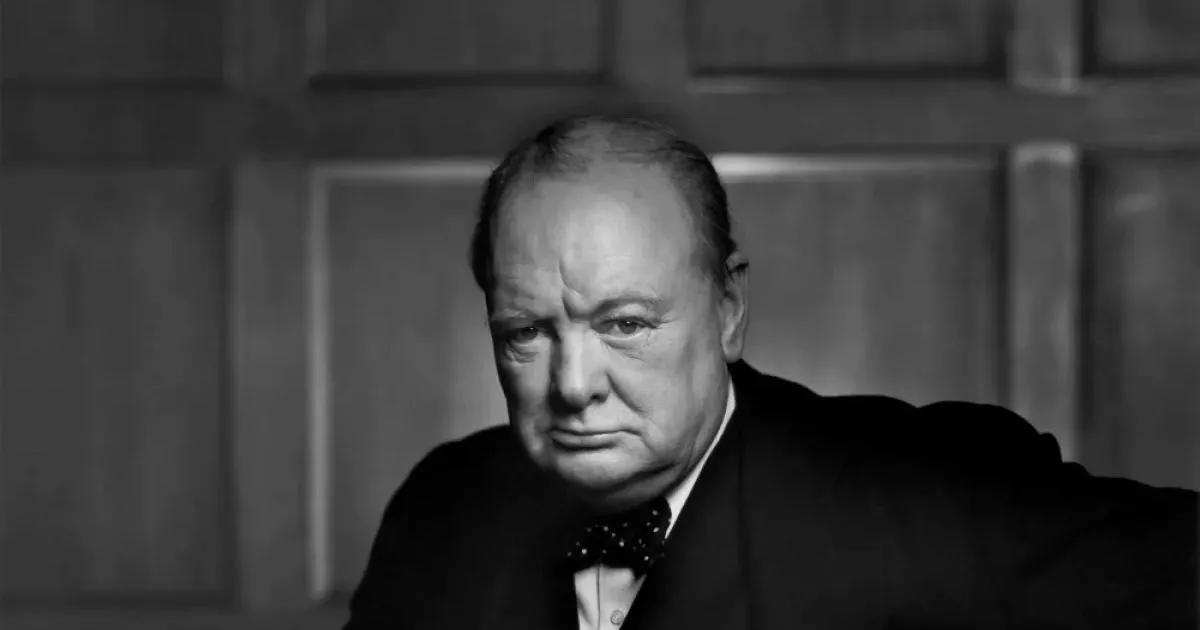
Life is full of challenges, and Winston Churchill faced many. Discover key struggles and how they were overcome.
Winston Churchill was a prominent British statesman, military officer, and writer who served as Prime Minister of the United Kingdom during World War II (1940-1945) and again from 1951-1955. He was a Member of Parliament for 62 years, representing five constituencies. Ideologically aligned with economic liberalism and imperialism, he led the Conservative Party from 1940 to 1955, having previously been a member of the Liberal Party from 1904 to 1924. His leadership during WWII cemented his place as one of the most important figures in British history.
October 1903: Announced protectionist legislation
In October 1903, Arthur Balfour's government announced protectionist legislation.


February 1910: Churchill's Letter on Sterilization
In February 1910, as Home Secretary, Churchill wrote a letter to Prime Minister H. H. Asquith supporting the forced sterilization of the "feeble minded,".
November 1910: Tonypandy riots
In November 1910, Churchill addressed the Tonypandy riots, where coal miners protested working conditions. Though troops were dispatched, Churchill prevented their deployment to avoid bloodshed, opting to send unarmed London police instead and offered the protesters an interview, and this incurred the long-term suspicion of the labour movement.
January 1911: Siege of Sidney Street
In January 1911, Churchill was involved in the Siege of Sidney Street where he stood with the police and allowed the house where burglars were hiding to burn down rather than risk British lives.
1911: Churchill Supports Forced Sterilization
During his time as Home Secretary in 1910–1911, Churchill supported the forced sterilization of the "feeble minded."
1912: Irish Home Rule Bill
In 1912, Churchill supported Asquith's government's introduction of the Home Rule Bill and opposed the Partition of Ireland, urging Ulster Unionists to accept it.
December 1913: Threat to resign
In December 1913, Churchill threatened to resign if his proposal for 4 new battleships in 1914–15 was rejected due to objections from some Liberals over his level of naval expenditure.
March 1915: Naval bombardment of Turkish defences
In March 1915, an Anglo-French task force attempted a naval bombardment of Turkish defenses in the Dardanelles, under Churchill's direction.
June 1918: Ending of a second strike
In June 1918, Churchill ended a second strike by threatening to conscript strikers into the army.
February 1922: Churchill speaks on Irish unity in the House of Commons
Speaking in the House of Commons on 16 February 1922, Churchill stated: "What Irishmen all over the world most desire is not hostility against this country, but the unity of their own".
September 1922: Chanak Crisis
In September 1922, the Chanak Crisis erupted as Turkish forces threatened to occupy the Dardanelles neutral zone. Churchill and Lloyd George favoured military resistance to any Turkish advance, but the Conservatives opposed it.
October 1922: Appendectomy and loss of seat
In October 1922, Churchill underwent an appendectomy. While he was in hospital, Lloyd George's coalition was dissolved, and in the general election, Churchill lost his Dundee seat.
March 1924: Defeat in Westminster Abbey By-Election
In March 1924, alienated by Liberal support for Labour, Churchill stood as an independent anti-socialist candidate in the Westminster Abbey by-election but was defeated.
1925: Chancellor of the Exchequer
In 1925, Churchill, as Chancellor of the Exchequer, returned sterling to the gold standard, impacting the UK economy.
October 1931: Victory in General Election but Exclusion from Ministerial Position
In October 1931, Churchill nearly doubled his majority in Epping during the Conservative landslide victory but was not given a ministerial position.
January 1932: Accident in New York
In January 1932, Churchill was struck by a car in New York, resulting in a head wound and neuritis, leading to convalescence in Nassau.
1932: Visit to Battlefields and Illness
In 1932, Churchill visited his ancestor's battlefields and met Ernst Hanfstaengl in Munich. He later suffered from paratyphoid fever, leading to hospitalization.
January 1933: Recognition of the Menace of Hitler's Regime
In January 1933, Churchill quickly recognized the menace of Hitler's regime and expressed alarm about British air force spending reductions.
February 1935: India Bill Passed Despite Churchill's Opposition
In February 1935, despite Churchill's opposition, the India Bill was passed in Parliament.
June 1935: Baldwin Succeeds MacDonald as Prime Minister
In June 1935, Baldwin succeeded MacDonald as prime minister, and led the Conservatives to victory in the general election, while Churchill remained outside the government.
April 1940: Delay of Operation Wilfred
In April 1940, Operation Wilfred, a plan to mine Norwegian waters, was delayed until the day before the German invasion of Norway.
September 1940: Start of the Blitz
From 7 September 1940, the Luftwaffe began the Blitz. In November, Churchill expressed confidence about Britain's ability to hold its own but recognized the need for American intervention.
1940: French predictions about Britain
In 1940, the French predicted that "Britain alone would have her neck wrung like a chicken".
June 1941: Hitler invades the Soviet Union
In June 1941, Hitler launched his invasion of the Soviet Union. Churchill, aware of the imminent attack since April 1941 from Enigma decrypts, had tried to warn Stalin, but Stalin distrusted him.
December 1941: Churchill Declares War on Japan and Seeks Irish Unity
In December 1941, following the Japanese attack on Pearl Harbor, Churchill declared war on Japan and offered Irish unity to Éamon de Valera in exchange for using Irish ports, but no meeting occurred. He also attended the Arcadia Conference in Washington with Roosevelt, prioritizing victory in Europe.
1941: German Support Requested by Mussolini
In early 1941, Mussolini requested German support, leading Hitler to send the Afrika Korps to Tripoli under Rommel.
January 1942: Rommel's Counter-Attack and Enigma Compromise
In January 1942, Rommel launched a surprise counter-attack, driving the Allies back, and the Kriegsmarine introduced its M4 4-rotor Enigma, compromising British success in the Battle of the Atlantic.
February 1942: Fall of Singapore and Channel Dash
In February 1942, Singapore fell to the Japanese, which Churchill called "the worst disaster and largest capitulation in British military history". The Kriegsmarine also pulled off its audacious "Channel Dash", sinking Churchill's morale to its lowest point of the war.
April 1942: Japanese Occupation of Burma
By the end of April 1942, the Japanese had occupied most of Burma.
October 1942: Severe Cyclone in Bengal
In October 1942, a severe cyclone devastated the Bengal region, contributing to disordered conditions.
December 1942: Food shortages prompt requests for grain imports
From December 1942, food shortages in Bengal prompted senior officials to ask London for grain imports.
1943: Bengal Famine
In 1943, a combination of factors, including the curtailment of essential rice imports from Burma, poor administration, wartime inflation and large-scale natural disasters such as flooding and crop disease led to the Bengal famine of 1943, in which an estimated 2.1–3.8 million people died.
February 1944: Churchill Cabled Wavell Regarding Grain Shipments
In February 1944, with Operation Overlord increasing demands on Allied shipping, Churchill cabled Wavell stating he would help but not with the impossible regarding grain shipment requests for India.
September 1944: Second Quebec Conference
In September 1944, Churchill met with Roosevelt at the Second Quebec Conference, where they agreed on the Morgenthau Plan for the Allied occupation of Germany, aimed at demilitarization and de-industrialization. However, the plan faced opposition from Eden and US Secretary of State Cordell Hull, who eventually persuaded Churchill and Roosevelt to disown it due to its infeasibility.
October 1944: Fourth Moscow Conference and Percentages Agreement
In October 1944, Churchill and Eden met with Stalin and Molotov at the fourth Moscow conference, resulting in the "Percentages agreement." This agreement effectively divided post-war control in the Balkans, with Russia gaining 90% control of Romania and 75% of Bulgaria, while the United Kingdom and the United States would have 90% control of Greece. Hungary and Yugoslavia would be 50% each.
February 1945: Malta Conference and Yalta Conference
In February 1945, Churchill and Roosevelt met for the Malta Conference leading up to the Yalta Conference from February 4 to 11. The Yalta Conference addressed the establishment of the United Nations Organisation and the post-war status of Poland. Churchill faced criticism regarding the agreement on Poland, but Jenkins argued that Churchill achieved the best possible outcome given Roosevelt's ill health.
February 1945: Bombing of Dresden
On the nights of February 13–15, 1945, British and US bombers attacked Dresden, resulting in a high number of civilian casualties. The attacks were part of an area bombing campaign initiated by Churchill with the aim of shortening the war. Churchill later regretted the bombing due to the excessive civilian casualties.
May 1945: Commissioning of Operation Unthinkable
In May 1945, Winston Churchill commissioned the Chiefs of Staff Committee to develop a plan for a potential military campaign against the USSR, code-named Operation Unthinkable, which involved a surprise attack on Soviet troops stationed in Germany.
July 1945: Hypothetical Start Date for Operation Unthinkable
The hypothetical start date for the Allied invasion of Soviet-held Europe as part of Operation Unthinkable, the proposed military campaign against the USSR, was set for July 1, 1945.
1945: Labour Party wins general election
In 1945, demand for reform led to the Labour Party's victory in the general election, as they were seen as the party that would deliver the Beveridge Report.
1945: Conservatives' Defeat
In 1945, the Conservative Party was defeated in the general election, leading to Churchill becoming Leader of the Opposition.
August 1946: Implementation of Operation Keelhaul
In August 1946, the Western Allies began implementing Operation Keelhaul, which involved the forcible repatriation of Soviet citizens, including prisoners of war, to the Soviet Union. This policy was later extended to Eastern European refugees, many of whom were anti-communist.
May 1947: Continuation of Operation Keelhaul
In May 1947, Operation Keelhaul continued, involving the forcible repatriation of Soviet citizens and Eastern European refugees to the Soviet Union, a policy that had begun in August 1946.
1948: Start of the Malayan Emergency
In 1948, the Malayan Emergency, a guerrilla war fought by Communist fighters against Commonwealth forces, began and continued until 1960. Churchill's government maintained the military response to the crisis.
1950: Labour Wins General Election
In 1950, the Labour Party won the general election, but with a significantly reduced majority.
December 1951: George VI's Concerns About Churchill's Health
By December 1951, George VI became concerned about Churchill's declining health and considered asking him to step down in favor of Eden. However, the King himself had health issues and died in February 1952.
January 1952: Transatlantic Visits and Relationship with Truman
From January 1952 to July 1954, Churchill made four official transatlantic visits, fostering a good relationship with Truman. Disagreements arose over the European Defence Community (EDC), as well as British interests in Egypt and the Middle East.
1952: Mau Mau Uprising in British Kenya
Churchill's government adopted a military strategy for the Mau Mau Uprising in British Kenya, which began in 1952 and continued until 1960.
March 1953: Death of Stalin and Churchill's Summit Proposal
After Stalin's death in March 1953, Churchill sought a summit meeting with the Soviets, but Eisenhower refused due to fears of Soviet propaganda.
June 1953: Serious Stroke and Recuperation
On the evening of June 23, 1953, Churchill suffered a serious stroke. The matter was kept secret, and Churchill went to Chartwell to recuperate. He had recovered by November.
July 1954: Transatlantic Visits and Relationship with Truman
From January 1952 to July 1954, Churchill made four official transatlantic visits, fostering a good relationship with Truman. Disagreements arose over the European Defence Community (EDC), as well as British interests in Egypt and the Middle East.
October 1954: Agreement on Evacuation of British Troops from Suez
In October 1954, much to Churchill's dismay, an agreement was reached on the phased evacuation of British troops from their Suez base. Britain also agreed to terminate its rule in Anglo-Egyptian Sudan by 1956.
1956: Termination of British Rule in Anglo-Egyptian Sudan
In 1956, Britain terminated its rule in Anglo-Egyptian Sudan as part of an agreement with Nasser, who abandoned Egyptian claims over the region. This was part of an agreement reached in October 1954.
June 1962: Hip Fracture in Monte Carlo
In June 1962, at the age of 87, Churchill had a fall in Monte Carlo and broke his hip. He was flown back to a London hospital and remained there for 3 weeks. According to Jenkins, Churchill was never the same after this incident.
Mentioned in this timeline
John F Kennedy JFK was the th U S President...
Elizabeth II reigned as Queen of the United Kingdom and...
The White House located at Pennsylvania Avenue NW in Washington...
The Union of Soviet Socialist Republics USSR existed from to...

Sudan officially the Republic of the Sudan is a country...

India officially the Republic of India is a South Asian...
Trending
4 hours ago Sassuolo vs Lazio Serie A Match Preview and Streaming Information

4 hours ago Sauce Gardner Faces Criticism Following Difficult NFL Trade Deadline Performance

4 hours ago Trisha Paytas Breaks Silence Regarding Ethan Klein Amid Ongoing Cheating Scandal Allegations

4 hours ago Martín Landaluce Faces Alexander Zverev at ATP Vienna Tournament

4 hours ago Chicago Bears Weigh Options Regarding Khalil Mack Potential Trade
5 hours ago DeForest Buckner Faces Trade Speculation Amid Indianapolis Colts Struggles
Popular

Ilhan Omar is a prominent American politician currently serving as...

Ken Paxton is an American politician and lawyer serving as...

Elon Musk is a visionary entrepreneur and engineer known for...

William Franklin Graham III known as Franklin Graham is an...
Barack Obama the th U S President - was the...

Nicki Minaj born Onika Tanya Maraj-Petty is a highly influential...