Winston Churchill's Success and Achievements in Timeline


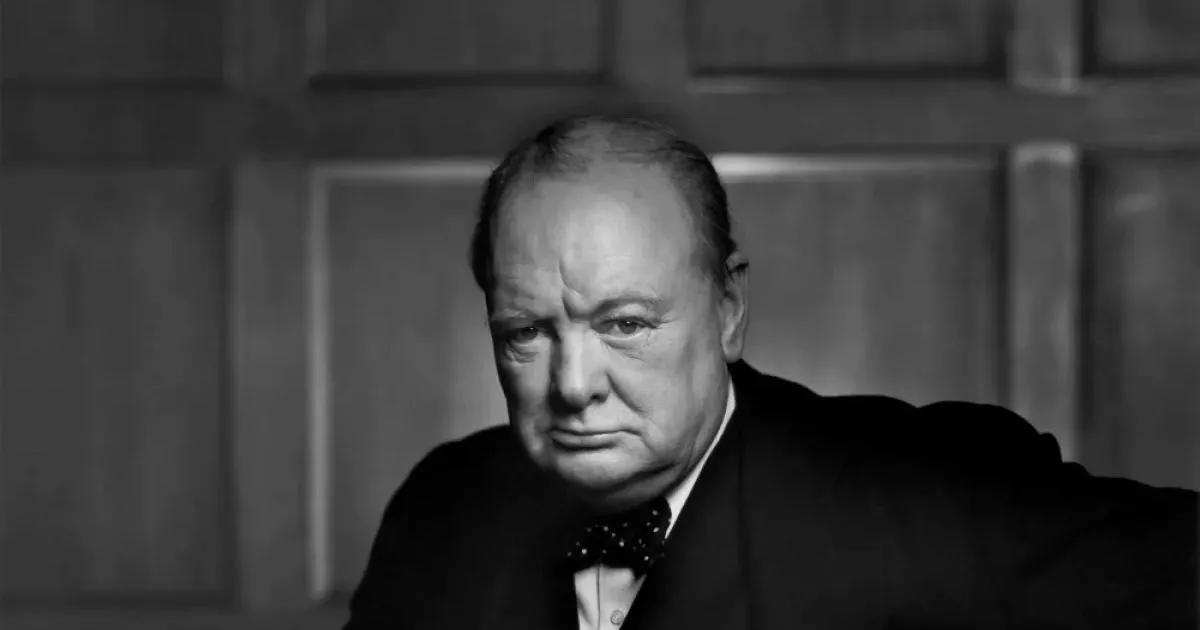
A success timeline featuring the most significant achievements of Winston Churchill.
Winston Churchill was a prominent British statesman, military officer, and writer who served as Prime Minister of the United Kingdom during World War II (1940-1945) and again from 1951-1955. He was a Member of Parliament for 62 years, representing five constituencies. Ideologically aligned with economic liberalism and imperialism, he led the Conservative Party from 1940 to 1955, having previously been a member of the Liberal Party from 1904 to 1924. His leadership during WWII cemented his place as one of the most important figures in British history.
March 1939: Calls for a National Coalition
Following the dismemberment of Czechoslovakia in March 1939, Churchill and his supporters called for the foundation of a national coalition.


September 1939: Reappointed as First Lord of the Admiralty
On 3 September 1939, the day Britain declared war on Germany, Chamberlain reappointed Churchill as First Lord of the Admiralty.
December 1939: Celebration of Battle of the River Plate
In December 1939, Churchill celebrated the victory in the Battle of the River Plate, congratulating the crews.
February 1940: Order to Board Altmark and Free British Seamen
On 16 February 1940, Churchill ordered Captain Philip Vian to board the German supply ship Altmark, freeing 299 British merchant seamen.
May 1940: Became Prime Minister
In May 1940, Churchill became Prime Minister of the United Kingdom, succeeding Neville Chamberlain.
1940: Prime Minister of the United Kingdom
In 1940, Winston Churchill became the Prime Minister of the United Kingdom, leading the country during the Second World War.
1940: Church bells rung in Great Britain
In 1940, church bells to be rung throughout Great Britain for the first time since 1940.
November 1942: Operation Torch Launched
In November 1942, Operation Torch, the invasion of French North Africa, was launched.
1942: Turning Tide of War and Mansion House Speech
As 1942 drew to a close, the tide of war began to turn with Allied victories. Churchill delivered his "end of the beginning" speech at Mansion House in London.
September 1943: Churchill orders grain transportation to alleviate Bengal famine
In September 1943, after realizing the full extent of the famine in Bengal, Churchill ordered the transportation of 130,000 tons of grain and the cabinet agreed to send 200,000 tons by the end of the year.
May 1944: Allies Overcome Monte Cassino
In May 1944, Monte Cassino was finally overcome, enabling the Allies to advance on Rome, which was taken on 4 June.
May 1945: Germany's Surrender and VE Day
On May 7, 1945, the Allies accepted Germany's surrender at SHAEF headquarters in Reims. The next day, May 8, was Victory in Europe Day (VE Day), and Churchill broadcast to the nation that Germany had surrendered and a final ceasefire would take effect. Churchill appeared on the balcony of Buckingham Palace with the Royal Family and addressed a large crowd in Whitehall.
October 1951: Conservative Victory and Return as Prime Minister
In October 1951, despite losing the popular vote, the Conservatives secured a majority of 17 seats in the general election, leading to Churchill's return as prime minister. Eden was appointed Foreign Affairs Minister.
April 1953: Knighthood and Order of the Garter
In spring 1953, Churchill accepted the Order of the Garter at Queen Elizabeth II's request, and on April 24, 1953, he was knighted as Sir Winston.
1953: Nobel Prize in Literature
In 1953, Churchill was awarded the Nobel Prize in Literature.
November 1954: 80th Birthday Portrait Presentation
On 30 November 1954, at a public ceremony in Westminster Hall celebrating Churchill's 80th birthday, the joint Houses of Parliament presented him with a full-length portrait painted by Graham Sutherland.
1956: Winston Churchill Range Renamed
In 1956, the mountain range northwest of Lake Louise in Alberta was renamed the Winston Churchill Range in honour of Winston Churchill.
1963: Honorary Citizenship of the United States
In 1963, US President John F. Kennedy proclaimed Churchill an honorary citizen of the United States, acting under authorization granted by an Act of Congress, but Churchill was unable to attend the White House ceremony.
1999: USS Winston S. Churchill Named
In 1999, the United States Navy honoured Winston Churchill by naming an Arleigh Burke-class destroyer the USS Winston S. Churchill.
2002: Greatest Briton BBC Poll
In a 2002 BBC poll, Churchill was voted the greatest-ever Briton, with Isambard Kingdom Brunel as his nearest rival.
Mentioned in this timeline
John F Kennedy JFK was the th U S President...
Elizabeth II reigned as Queen of the United Kingdom and...
The White House located at Pennsylvania Avenue NW in Washington...
The Union of Soviet Socialist Republics USSR existed from to...
Sudan officially the Republic of the Sudan is a country...
India officially the Republic of India is a South Asian...
Trending
4 hours ago Sassuolo vs Lazio Serie A Match Preview and Streaming Information

4 hours ago Sauce Gardner Faces Criticism Following Difficult NFL Trade Deadline Performance
4 hours ago Trisha Paytas Breaks Silence Regarding Ethan Klein Amid Ongoing Cheating Scandal Allegations

4 hours ago Martín Landaluce Faces Alexander Zverev at ATP Vienna Tournament
4 hours ago Chicago Bears Weigh Options Regarding Khalil Mack Potential Trade
5 hours ago DeForest Buckner Faces Trade Speculation Amid Indianapolis Colts Struggles
Popular
Ilhan Omar is a prominent American politician currently serving as...

Ken Paxton is an American politician and lawyer serving as...

Elon Musk is a visionary entrepreneur and engineer known for...
William Franklin Graham III known as Franklin Graham is an...
Barack Obama the th U S President - was the...
Nicki Minaj born Onika Tanya Maraj-Petty is a highly influential...