


The Xbox One, launched in 2013 by Microsoft, is the successor to the Xbox 360 and the third console in the Xbox series. Marketed as an "all-in-one entertainment system," it was an eighth-generation console that competed primarily with Sony's PlayStation 4 and Nintendo's Wii U (later the Switch). It marked the first Xbox release in China, initially within the Shanghai Free-Trade Zone.
1993: Description of Xbox One Design
In 1993 an artist described the Xbox One's design as a "1993 artist's rendering of 2013's technology".
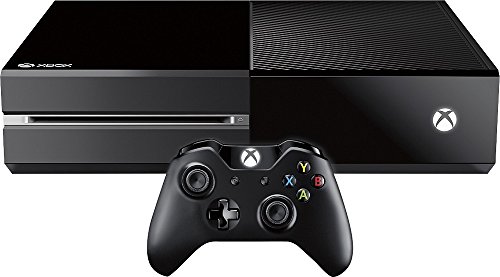


May 2011: Early Xbox 720 Development
In May 2011, initial hardware for the successor to the Xbox 360, commonly referred to as the "Xbox 720", was reportedly under development.
2012: Developer Kit Availability
In 2012, the official developer kit for the Xbox 720, codenamed Durango, appeared to be available to developers by mid-year.
April 2013: Adam Orth's Twitter Controversy
In April 2013, Microsoft Studios employee Adam Orth sparked controversy with a Twitter message defending an "always on" console concept, leading to backlash and his eventual departure from Microsoft.
May 2013: Criticism of Plan for an Always-On Console
Following criticism of its plan for an 'always on' console from the May 2013 announcement, Microsoft had to put significant effort to prepare the Xbox One software for a revised approach, and the backward compatibility development work was put on hold.
May 2013: Xbox One Unveiling and Criticism
In May 2013, the initial unveiling of the Xbox One led to criticism that resulted in significant changes to its digital rights management scheme. Features like instant switching were praised, but the communication of the console's ideas was considered lacking.
May 21, 2013: Xbox One Public Unveiling
On May 21, 2013, the new console was publicly unveiled under the name Xbox One and was presented as an all-in-one home entertainment device.
November 2013: Xbox One Initial Release
In November 2013, the Xbox One was first released in North America, parts of Europe, Australia, and South America.
2013: Hackers Steal Durango Development Kits
Between 2011 and 2013, using stolen access credentials, two of the hackers committed a physical theft by entering a secure building on Microsoft's Redmond Washington campus and carrying away three "Durango" development kits.
2013: Modest Reviews at Launch
In 2013, Upon the Xbox One's launch, it received modest reviews, praising the controller's improvements and Kinect's face recognition but criticizing the interface and missing features.
June 2014: Updated Xbox Development Kit Released
In June 2014, an updated Xbox Development Kit was released, enabling developers to disable motion tracking in games and access approximately 10% more GPU processing power by freeing resources previously reserved for Kinect skeletal tracking.
June 2014: USB Drive Support Update
Since the June 2014 software update, up to two USB drives can be connected to Xbox One to expand its capacity.
October 2014: Kinect 2.0 Released as Standalone Item
In October 2014, Kinect 2.0 was released as a standalone and optional item. It was bundled with a digital copy of Dance Central Spotlight.
November 2014: Cumulative Sales Figures for Xbox One
In November 2014, the last official cumulative sales figure for Xbox One was at 10 million units sold.
2014: Restart of Backward Compatibility Program
Following the release of the Xbox One and transition of Phil Spencer to the head of the Xbox division in 2014, he and software engineering vice president Kareem Choudhry restarted the backward compatibility program in relative secret within the company.
June 2015: Updated Xbox Wireless Controller Release
In June 2015, an updated revision of the Xbox Wireless Controller was released, which includes a 3.5-millimeter headphone jack and other minor changes.
September 2015: New Xbox One Experience Released to Preview Program Members
In September 2015, the 'New Xbox One Experience' was released to Xbox Preview Program members, replacing the original tile-based interface and removing Kinect motion controls on the dashboard.
October 2015: Microsoft Stops Publishing Sales Figures
In October 2015, Microsoft announced that it would no longer publish sales figures for any of their systems.
October 2015: Elite Wireless Controller Release
In October 2015, the Elite Wireless Controller was released, marketed as an elite controller for the elite gamer with interchangeable parts and software for remapping buttons.
November 12, 2015: Public Release of New Xbox One Experience
On November 12, 2015, the 'New Xbox One Experience' was publicly released as part of a system update, featuring a redesigned user interface.
November 2015: Xbox 360 Backward Compatibility Public Launch
In November 2015, Xbox 360 backward compatibility used 'Fission,' a software emulator within the system software; 104 Xbox 360 titles were supported at the feature's public launch, with more added in the following months.
2015: Backward Compatibility Program Announced at E3
In 2015, the backward compatibility program was announced at E3 with plans to have one hundred titles available by the end of 2015.
2015: Strong First-Party Titles and Improvements
In 2015, there was a strong lineup of first-party titles and further improvements to the Xbox One console's interface.
January 2016: Estimated Xbox One Sales Figures
In January 2016, CFO of Electronic Arts Blake Jorgensen reported that the Xbox One had sold "around 18 to 19 million" units.
December 2016: Addition of Clubs and Looking for Group Features
In December 2016, a software update added the new social networking feature 'Clubs', allowing users to join groups focused on specific interests or games, and 'Looking for group (LFG)', a system to help users locate players to join their party for multiplayer play.
2016: Future Xbox One Releases Simultaneously Available on Windows 10 PCs
In 2016, Microsoft began making future Xbox One-exclusive first-party releases simultaneously available on Windows 10 PCs, with digital cross-buy support via Microsoft Store under the branding Xbox Play Anywhere, thus making the games Microsoft platform exclusives rather than Xbox One exclusives.
2016: Cortana Added for Expanded Voice Command Functionality
In 2016, the voice assistant Cortana was added to Xbox One to provide expanded voice command functionality with natural language recognition.
February 2017: Introduction of Xbox Game Pass
In February 2017, Microsoft introduced an 'on-demand' subscription service known as Xbox Game Pass, separate from Xbox Live Gold, which allows users to download and play games from its library for the life of the subscription.
April 2017: UI Refresh with New Guide Sidebar
In April 2017, the Xbox One UI was refreshed, adding a new Guide sidebar and removing the ability to 'snap' apps for multitasking.
June 2017: Games Promoted with Icons Denoting Hardware Enhancement Compatibility
Since June 2017, games may be promoted with additional icons that denote compatibility with hardware enhancements found in newer Xbox One models, including support for high-dynamic-range (HDR) colors, native rendering at 4K resolution, and specific optimizations for Xbox One X.
October 2017: UI Revamp with Fluent Design Language
In October 2017, the Xbox One UI was revamped, adopting Windows 10's 'Fluent' design language and adding a light color option for the user interface.
October 25, 2017: Kinect for Xbox One Discontinued
On October 25, 2017, Kinect for Xbox One was officially discontinued, marking the end of its production and further development.
2017: Start of Microsoft Studios Realignment
Around 2017, Microsoft began a realignment of its first party studios then named Microsoft Studios.
2017: Copilot Feature Introduced
In 2017, the Copilot feature was introduced allowing multiple controllers to be used in tandem on behalf of a single player.
March 2018: Estimated Xbox One Sales Figures
Research firm IHS Markit estimated 39.1 million Xbox One units were sold by the end of March 2018.
January 2019: Estimated Xbox One Sales Figures
Video game industry analyst Daniel Ahmad estimated that approximately 41 million Xbox One units had been sold as of January 2019.
April 2019: Introduction of Xbox Game Pass Ultimate
In April 2019, Microsoft also introduced Xbox Game Pass Ultimate, which bundles Game Pass with an Xbox Live Gold subscription.
June 10, 2019: Winding Down Backward Compatibility for Successor Console
On June 10, 2019, Microsoft announced it was ending the addition of new titles to the Xbox One backward compatibility program to focus on the development of its successor, the Xbox Series X/S console.

2019: Firmware versions prior to 2019 impacted by update failures
In 2024, it was reported that original Xbox One models operating on firmware versions prior to 2019 were experiencing update failures, which led to the disablement of the majority of the console's functions due to mandatory online requirements.
July 2020: Shutdown of Mixer
Prior to its shutdown in July 2020, Xbox One supported streaming directly to the service Mixer, allowing users to stream footage and record video and audio narration.

November 2020: Release of Xbox Series X/S console
In November 2020, Microsoft released the Xbox Series X/S console, as they had announced on June 10, 2019 that they would wind down the addition of new titles to the backward compatibility program on Xbox One, to focus on the development of its successor.
2020: Xbox One Sales in Spain
2020: Estimated Xbox One Install Base
As of Q2 2020, market research from Ampere Analysis found that the Xbox One had an install base of 51 million consoles.
March 2021: Acquisition of ZeniMax Media
In March 2021, Microsoft acquired ZeniMax Media and its studios for $7.5 billion, with the intent of providing exclusive content for its Xbox Game Pass service.
May 2021: OneGuide Service Discontinued
In May 2021, the OneGuide service for Xbox One was discontinued, which previously provided an electronic program guide with show recommendations and integrated access to online video services.
November 15, 2021: Final Additions to Backward Compatibility Program
On November 15, 2021, Microsoft announced a final set of 76 titles being added to the Xbox backward compatibility program, as part of the 20th anniversary of Xbox. Microsoft stated that due to licensing, legal, and technical constraints, it anticipates this will be the last set of backward compatible titles it can add.
March 2022: PlayStation 4 Consoles Shipped
As of March 2022, Sony reported that 117.2 million PlayStation 4 consoles had been shipped.

August 2022: Comparison of PlayStation 4 and Xbox Console Sales
In an August 2022 antitrust filing, Microsoft stated that "more than twice as many" PlayStation 4 consoles were sold in comparison to Xbox consoles during the previous generation.
2024: Update Failures Lead to Function Disablement on Original Xbox One Models
In 2024, original Xbox One models running on firmware versions prior to 2019 experienced update failures, leading to the disablement of most console functions due to mandatory online requirements; Microsoft fixed the issue shortly after.
Mentioned in this timeline
PlayStation is a video game brand owned by Sony Interactive...
Xbox is a video gaming brand owned by Microsoft Gaming...

Sony is a Japanese multinational conglomerate based in Tokyo It...

Founded in by Bill Gates and Paul Allen Microsoft is...

Germany officially the Federal Republic of Germany is located in...
Japan is an East Asian island country located in the...
Trending

4 hours ago Borussia Dortmund Faces Union Berlin in Bundesliga Matchday Six Clash
4 hours ago Nicolas Jackson Provides Guidance to Chelsea Transfer Target Lamine Camara

4 hours ago Kaley Cuoco Welcomes Second Baby Girl Philomena with Fiancé Tom Pelphrey

4 hours ago Kylian Mbappé Becomes Youngest Player to Reach 100 Champions League Appearances
4 hours ago Tomas Soucek Agrees New Contract Extension With West Ham United Until 2028

4 hours ago Real Madrid and Adidas Launch Brazil-Inspired FARM Rio Collection
Popular
Ilhan Omar is a prominent American politician currently serving as...
Ken Paxton is an American politician and lawyer serving as...
Jameis Winston is an American football quarterback currently playing for...

Cristiano Ronaldo widely considered one of the greatest footballers captains...
Michael Joseph Jackson the King of Pop was a highly...
Elon Musk is a visionary entrepreneur and engineer known for...