


Dark money, especially in the US political context, signifies funds used to influence elections, policies, and political discussions without revealing the source of the money to the public. This lack of transparency raises concerns about accountability and potential undue influence by undisclosed donors on political processes and outcomes. The anonymity afforded by dark money makes it difficult to track who is funding specific campaigns or initiatives, potentially distorting the political landscape.
1910: Federal Corrupt Practices Act Passed
In 1910, the Federal Corrupt Practices Act, the first federal law requiring disclosure of campaign contributions, was passed in the United States.


1976: Buckley v. Valeo
In 1976, the United States Supreme Court case Buckley v. Valeo introduced "Eight Magic Words" to distinguish between electioneering and issue advocacy, exempting the latter from election finance laws, marking a significant entry point for dark money in United States politics.
2006: Rise in Dark Campaign Spending
In 2006, dark campaign spending was less than $5.2 million.
January 2010: State and Federal Disclosure Requirements
By January 2010, at least 38 states and the federal government required disclosure for all or some independent expenditures or electioneering communications, for all sponsors.
2010: Dark Money in the 2010 Election Cycle
According to OpenSecrets, dark money accounted for nearly 44% of outside spending in the 2010 election cycle, estimated at around $127 million.
2010: IRS Oversight Challenges Post Citizens United
Following the U.S. Supreme Court's decision in Citizens United v. Federal Election Commission in 2010, the IRS struggled to oversee 501(c)(4) groups, particularly in identifying organizations spending more than 50% of their budgets on political activities.
2010: Citizens United v. FEC & Increased Dark Money
In 2010, the Citizens United v. FEC Supreme Court case served as a turning point, leading to a surge in dark money contributions, with some political groups arguing they didn't need to register with the FEC.
2010: Sunlight Foundation and Ann Ravel on Dark Money
In 2010, the Sunlight Foundation first used the term "dark money" to describe undisclosed funds in the United States mid-term election. Former FEC Commissioner Ann Ravel noted that since 2010, over $800 million in dark money had been spent in competitive races.
2010: Citizens United v. FEC
In 2010, the rise of dark money groups was aided by the U.S. Supreme Court decision in Citizens United v. FEC, where the Court ruled that corporations and unions could spend unlimited amounts of money on political advocacy.
2010: Senate Republicans Blocked the DISCLOSE Act
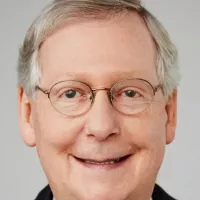
Since 2010, Senate Republicans, led by Mitch McConnell, have blocked earlier versions of the DISCLOSE Act.
August 2011: Academics Petition SEC for Political Spending Disclosure
In August 2011, nine academics petitioned the Securities and Exchange Commission (SEC) to develop rules requiring public companies to disclose the use of corporate resources for political activities to shareholders.
2011: Bradley A. Smith Defends Campaign Contribution Practices
In 2011, Bradley A. Smith, former FEC chairman and founder of the Center for Competitive Politics, argued that the practice of making campaign contributions in the name of another, while technically a violation of existing law, is not problematic.
March 30, 2012: District Court Ruling on Electioneering Communications
On March 30, 2012, a U.S. District Court ruled that groups spending money on electioneering communications must report donors giving over $1,000, though this was later overturned on appeal.
2012: Dark Money Spending Comparison
According to OpenSecrets, by October 2015, $4.88 million in dark money had already been spent for the 2016 election cycle, "more than 10 times the $440,000 that was spent at this point during the 2012 cycle."
2012: Freedom Partners' Spending in 2012
In 2012, Freedom Partners had the ninth-highest revenues among U.S. trade associations and acted as a conduit for campaign spending, allocating 99% of its $238 million to other groups.
2012: CCP Calculates Dark Money Spending in Federal Elections
In 2012, the Center for Competitive Politics (CCP) calculated the percent of money spent in federal elections by organizations that did not provide itemized disclosure of their donors as 4.3%.
2012: Dark Money Distribution in 2012
In the 2012 election cycle, according to OpenSecrets, more than $308 million in dark money was spent, with conservative groups spending 86%, liberal groups 11%, and other groups 3%.
2012: NOM Operated with Limited Donor Disclosure
In the 2012 election cycle, the National Organization for Marriage (NOM) used two non-profit arms that received millions from a few donors, which in turn funded several PACs. The PACs disclosed NOM as the source, but NOM's donors were not revealed.
2012: Dark Money in Presidential Cycle
In the 2012 presidential cycle, dark campaign spending increased to well over $300 million.
2013: IRS Targeting Controversy
In 2013, the IRS faced accusations of improper targeting when it began looking at nonprofit spending.
2014: Democrats Introduce the DISCLOSE Act
In 2014, Democrats in the United States Congress repeatedly introduced the DISCLOSE Act, legislation requiring disclosure of election spending by corporations, labor unions, super-PACs, and politically active nonprofits. The proposed legislation would require covered groups to reveal the source of election-spending donations of $10,000 or more.
2014: Freedom Partners as 'Poster Child'
In 2014, Freedom Partners was identified as the "poster child" for the rise of dark money. The Koch brothers' network accounted for about a quarter of dark money spending in 2012.
2014: Dark Money in Midterm Elections
In 2014, dark campaign spending was more than $174 million in the midterms, later amended to $216 million.
2014: Dark Money in Competitive Senate Seats in 2014
In 2014, dark money also played a role in other competitive Senate seats.
2014: CCP Calculates Dark Money Spending in Federal Elections
In 2014, the Center for Competitive Politics (CCP) calculated the percent of money spent in federal elections by organizations that did not provide itemized disclosure of their donors as 3.7%.
2014: Patriot Majority USA spending in 2014
In 2014, the Democratic Party-aligned dark money group Patriot Majority USA spent almost $13.7 million on "direct and indirect political campaign activities", airing 15,000 television ads in targeted Senate races. About half of the $30 million raised by the group came from five anonymous donors.
2014: Carolina Rising and Crossroads GPS
In North Carolina, the pro-Tillis group "Carolina Rising" received nearly all (98.7%) of its funds from Crossroads GPS. In the 2014 cycle, Crossroads GPS gave $5.25 million to the U.S. Chamber of Commerce, $2 million to the American Future Fund, and $390,000 to the Kentucky Opportunity Coalition.
2014: Kentucky Opportunity Coalition's Role in the 2014 Kentucky Election
In the 2014 Kentucky election, the "Kentucky Opportunity Coalition" supported Mitch McConnell and raised more than $21 million. They ran over 12,400 television advertisements that mentioned either McConnell or Grimes and relied heavily on political consultants linked to Karl Rove's Crossroads groups.
2014: Record Dark Money Spending in 2014
The 2014 election cycle saw the largest amount of dark money ever spent in a congressional election. Republican-leaning dark money groups dominated, with $94.6 million in expenditures. Karl Rove's dark money group Crossroads GPS alone spent over $47 million in the 2014 election cycle.
June 2015: Republican Presidential Candidates Raising Funds
By June 2015, at least four Republican presidential candidates were raising funds via 501(c)(4) organizations: Bobby Jindal's America Next, Rick Perry's Americans for Economic Freedom, John Kasich's Balanced Budget Forever, and Jeb Bush's Right to Rise.
October 2015: Dark Money Spending for the 2016 Election Cycle
According to OpenSecrets, by October 2015, $4.88 million in dark money had already been spent for the 2016 election cycle, with spending by conservative and liberal groups.
December 2015: Obama Administration Accedes to Dark-Money Provision
In December 2015, President Obama acceded to a rider in the 2015 omnibus spending bill, barring the IRS from clarifying the social-welfare tax exemption to combat dark money. This included provisions barring the SEC from requiring corporations to disclose campaign spending to shareholders, and a ban on the application of the gift tax to nonprofit donors.
2016: Early Dark Money Spending for 2016 election cycle
According to OpenSecrets, by October 2015, $4.88 million in dark money had already been spent for the 2016 election cycle, "more than 10 times the $440,000 that was spent at this point during the 2012 cycle." The money was spent by six groups – five conservative groups (including the U.S. Chamber of Commerce, which spent $3 million, and Americans for Prosperity, which spent $1.5 million) and one liberal group (Planned Parenthood, which spent just under $75,000).
2016: Increase in "Dark Money" Contributions via Shell LLCs
During the 2016 election cycle, contributions of "dark money" became more common through the use of shell LLCs. The Associated Press, Center for Public Integrity, and Sunlight Foundation reported dozens of donations ranging from $50,000 to $1 million funneled through non-disclosing LLCs to super PACs supporting presidential candidates such as Marco Rubio, Hillary Clinton, Ted Cruz, John Kasich, Jeb Bush, and Carly Fiorina.
2017: Review Article on Anonymous Political Expenditures
A 2017 review article in Business and Politics found that anonymous political expenditures are associated with negative ads. The article found that conservatives are more likely than liberals to purchase negative advertising with undisclosed funding, although conservatives and liberals are equally as likely to attack candidates.
September 2018: Supreme Court Ruling and Dark Money Spending
In September 2018, the Supreme Court ruled against a 40-year FEC dark money loophole, requiring "independent expenditure" groups to disclose donations. During the 2018 midterm elections, liberal groups accounted for about 54 percent of dark money spending.
2018: Anonymous Cash Domination
Approaching the 2018 midterm elections, as of mid-September, just 15 groups accounted for three-quarters of the anonymous cash.
2018: Limited Reporting Requirements for Non-Profits
Until 2018, non-profit groups, such as Planned Parenthood and Crossroads GPS, faced limited reporting requirements on their donors, due to not being classified as political committees under the Federal Election Campaign Act. This meant voters were largely unaware of who was funding these groups.
May 2019: NY Attorney General Sues Treasury and IRS
In May 2019, the Attorney General of New York, Letitia James, filed a lawsuit against the Treasury Department and the IRS for failing to respond to information requests about their guidance reducing donor disclosure requirements for certain tax-exempt groups.
2019: Mississippi Adopts Donor Disclosure Ban
In 2019, Mississippi followed Arizona's lead and adopted a similar ban on the disclosure of nonprofit donors' identities, further shielding PACs and campaigns from federal election laws.
2020: Democratic-Aligned Organizations Spending in 2020
A New York Times analysis found that in the 2020 election, 15 politically active Democratic-aligned organizations spent more than $1.5 billion, while 15 comparable Republican groups spent $900 million.
2020: The Sixteen Thirty Fund's Role in 2020
In 2020, The Sixteen Thirty Fund spent $410 million, largely focused on helping Democrats defeat President Donald Trump and win back control of the United States Senate. The group financed attack ads against Trump and vulnerable Republican senators. The Atlantic called the Sixteen Thirty Fund "the indisputable heavyweight of Democratic dark money."
2020: Utah, Oklahoma, and Virginia Enact Donor Disclosure Bans
In 2020, Utah, Oklahoma, and Virginia enacted bans on donor disclosure, mirroring similar measures in Arizona and Mississippi.
2020: Dark Money in Federal Elections
In 2020, dark campaign spending exceeded $1 billion in all federal elections.
2020: Dark Money Favoring Democrats and Republicans in 2020
In the 2020 election cycle, over $1 billion was spent in undisclosed funds, with $514 million supporting Democrats and $200 million aiding Republicans. The Democratic Party embraced dark money with fresh zeal, spending over $1.5 billion and outspending the Republican Party.
2020: Undisclosed Spending and Contributions in 2020
In the 2020 election cycle, there was more than $1 billion in undisclosed spending, with $514 million helping Democrats and $200 million helping Republicans. Joe Biden received $174 million in anonymous contributions, much more than Donald Trump's $25 million.
2021: Arkansas, Iowa, South Dakota, and Tennessee Enact Donor Disclosure Bans
In 2021, Arkansas, Iowa, South Dakota, and Tennessee joined other states in enacting bans on donor disclosure, continuing the trend of shielding PACs and campaigns from federal election laws.
2021: Barre Seid's Donation to Marble Freedom Trust
In 2021, Barre Seid donated stock worth $1.6 billion to Marble Freedom Trust, a conservative political group led by Leonard Leo. This donation was described as "among the largest single contributions ever to a politically focused nonprofit."
2022: OpenSecrets on Dark Money
As of 2022, OpenSecrets reported that dark money is "pouring" into U.S. elections, with neither the donors nor the total quantity of the dark money being disclosed.
2022: Senate Fails to Advance the DISCLOSE Act
Leading up to the 2022 midterm elections, Senate Democrats introduced the DISCLOSE Act, but the Senate failed to advance the Disclose Act on a 49-49 party line vote.
2023: Number of Local Newspapers in the U.S.
As of 2023, there were only 1,213 daily local newspapers in the U.S.
2024: NewsGuard Study on Partisan Outlets
In 2024, a NewsGuard study found that the number of partisan-backed outlets designed to look like impartial news outlets has officially surpassed the number of real, local daily newspapers in the U.S.
Mentioned in this timeline
Donald John Trump is an American politician media personality and...
Marco Rubio is a prominent American politician serving as the...
Hillary Diane Rodham Clinton is a prominent American politician lawyer...
Joe Biden served as the th President of the United...
Mitch McConnell is a prominent American politician and the longest-serving...
The United States of America is a federal republic primarily...
Trending
3 hours ago Dodgers Finalize Mookie Betts Lineup Decision Ahead of Crucial NLCS Game Two
3 hours ago Abner Uribe and Brewers Bullpen Dominate During 2026 MLB Postseason Run
6 months ago Jeopardy! Champ Jamie Ding Achieves Top 5, Michigan Contestants, and Victory Streaks Covered.
3 hours ago Matthew Stafford Leads Daughters' Flag Football Team to Championship Victory
29 days ago Myles Garrett to Undergo Knee Surgery and Head to Injured Reserve
3 hours ago Aaron Donald cleared to play for Rams in Monday Night Football against Bills
Popular

Ken Paxton is an American politician and lawyer serving as...
Jameis Winston is an American football quarterback currently playing for...

Michael Joseph Jackson the King of Pop was a highly...
Cristiano Ronaldo widely considered one of the greatest footballers captains...

Elon Musk is a visionary entrepreneur and engineer known for...
Marco Rubio is a prominent American politician serving as the...