


The 'deep state' refers to a hypothetical, clandestine network of government officials, military personnel, and intelligence agencies operating independently of a nation's elected political leadership. Proponents of the theory argue that these unelected actors pursue their own strategic agendas, effectively controlling state policy regardless of which administration is in power. The concept is often invoked to explain perceived systemic resistance to government initiatives or to suggest the existence of a 'shadow government' that influences national security and foreign policy. While the term originated in contexts like Turkey to describe genuine bureaucratic interference, it has evolved into a controversial political buzzword in Western discourse. Critics frequently dismiss it as a conspiracy theory, arguing it mischaracterizes the nature of complex, long-standing bureaucratic institutions, while others maintain that it highlights legitimate concerns regarding accountability and the overreach of unelected administrative power structures within democratic systems.
1917: The Russian Revolution and the Emergence of Deep State Narratives
In 1917, the collapse of the Russian Provisional Government and the subsequent rise of the Bolsheviks sparked intense speculation regarding secret orchestration. This period saw the birth of the 'Judeo-Bolshevik' conspiracy theory, which alleged that Jewish revolutionaries were secretly controlling global political structures. These events in 1917 fostered the persistent belief that communist movements were steered by an unaccountable, international deep state.


1934: The Night of the Long Knives
During 1934, the Nazi regime executed the Night of the Long Knives, a state-orchestrated purge presented to the public as a necessary defense against internal conspirators. In reality, the event served to solidify Adolf Hitler's authority by eliminating political rivals and consolidating power, marking a transition toward an openly repressive state apparatus unconstrained by law.
1944: Establishment of the Bretton Woods System
In 1944, the Bretton Woods system was established, laying the foundation for modern global economic governance. This framework led to the creation of institutions like the International Monetary Fund and the World Bank, which subsequently fueled theories regarding the existence of a deep state where financial elites allegedly operate with influence beyond the reach of democratic oversight.
1945: Cessation of the German Reich
The year 1945 marks the end of the German Reich, a period which serves as the foundational point for the Reichsbürger movement's ideology; members of this movement incorrectly assert that the government existing prior to 1945 remains the only legitimate authority in Germany.
1952: Establishment of military and intelligence influence
In 1952, the military and intelligence apparatus began to establish a significant influence over Egypt's political landscape, laying the foundational concept of what would later be described as the deep state.
1953: The Iranian Coup d'État
In 1953, a coup was carried out in Iran by the CIA and British intelligence, an event that became a cornerstone for arguments regarding the existence of hidden international interference in the governance of foreign nations.
1961: Public Articulation of the Military-Industrial Complex
In 1961, President Dwight D. Eisenhower publicly warned about the emergence of the military-industrial complex, describing the significant influence exerted by the intersection of government, the military, and the defense industry on public policy and geopolitical affairs.
1965: Beginning of the Indonesian Mass Killings
In 1965, a period of mass violence began in Indonesia, where military forces, with the backing of Western intelligence agencies, engaged in a campaign that resulted in widespread killings, fueling long-standing theories about covert foreign manipulation.
1966: Continuation of the Indonesian Mass Killings
By 1966, the orchestrated mass killings in Indonesia continued under the influence of Western-backed military forces, leaving a lasting mark on the historical discourse regarding national sovereignty and external subversion.
July 1976: Suspension of Propaganda Due Masonic Lodge
On 26 July 1976, the Grand Orient of Italy formally suspended the Masonic lodge known as Propaganda Due (P2) due to the activities conducted under the management of Licio Gelli.
January 1982: Dissolution of the P2 Lodge
On 25 January 1982, the Propaganda Due Masonic lodge was officially dissolved by the Italian government through the implementation of special law n. 17, following its designation as a subversive criminal organization.
2004: Establishment of the National Advisory Council
In 2004, the first United Progressive Alliance (UPA) government in India established the National Advisory Council (NAC) to provide guidance and policy advice to Prime Minister Manmohan Singh.
2005: Publication of NATO's Secret Armies by Daniele Ganser
In 2005, Daniele Ganser published the book 'NATO's Secret Armies: Operation Gladio and Terrorism in Western Europe,' which examines the history of clandestine paramilitary networks during the Cold War and their alleged involvement in political manipulation, contributing to the discourse on deep state activities in 2005.
2010: Publication of Pakistan: A Hard Country
In 2010, Victoria Schofield authored the book 'Pakistan: A Hard Country,' which explored the complex political landscape of Pakistan, including the significant influence of security institutions and the military on the nation's governance.
2011: Egyptian revolution and deep state resistance
Following the 2011 Egyptian revolution, opposition figures alleged that members of the bureaucracy and military were actively working to undermine the newly elected government led by the Muslim Brotherhood.
2011: The Egyptian Revolution
The 2011 Egyptian revolution serves as the historical backdrop for the emergence of deep state power struggles, as identified by Abdul-Azim Ahmed in 2013, involving remnants of the former regime within the Supreme Council of the Armed Forces who sought to maintain control over state resources.
2013: Military coup led by Abdel Fattah el-Sisi
In 2013, a military coup d'état led by Abdel Fattah el-Sisi occurred, which was widely viewed as a manifestation of the deep state's power, resulting in the military and intelligence agencies maintaining firm control over Egyptian governance.
2013: Abdul-Azim Ahmed Defines the Deep State
In 2013, author Abdul-Azim Ahmed provided a comprehensive definition of the deep state, characterizing it as a shorthand for embedded, anti-democratic power structures within a government that operate independently of political shifts and bureaucracy. He specifically noted how the term was being applied to the Egyptian military and security networks that hindered the country's democratic transition following the 2011 revolution.
2014: Dissolution of the National Advisory Council
The National Advisory Council, which had served as an advisory body to the Indian Prime Minister since its inception, was officially dissolved in 2014.
2016: Mainstream Proliferation of the Deep State Terminology
In 2016, following the United States presidential election, the term 'deep state' transitioned from a niche political science concept into a widely used pejorative, fueled by its promotion within conservative media and the Donald Trump administration as a mechanism to describe hidden networks of power.
2018: Steve Hilton's Testimony on Civil Service Resistance
In 2018, Steve Hilton, a former advisor to David Cameron, revealed remarks allegedly made by Tony Blair regarding the British Civil Service. Hilton recounted that Blair believed civil servants viewed themselves as the permanent guardians of the national interest, intentionally working to undermine and wait out elected politicians whom they considered temporary figures.
2019: Publication of We Need to Talk About Putin
In 2019, Mark Galeotti published the book "We Need to Talk About Putin: How the West Gets Him Wrong," which explores the influence of the siloviki—members of security and intelligence backgrounds—within the Russian political structure and their significant impact on governance under Vladimir Putin.
May 2020: Benjamin Netanyahu's Allegations of a Deep State in Israel
In May 2020, an article published in Haaretz reported that Prime Minister Benjamin Netanyahu frequently told associates that Israel was secretly controlled by a 'deep state' despite his repeated electoral victories. Netanyahu specifically alleged that his corruption trial, involving his relationship with Arnon Milchan, was a product of this deep state, citing the lack of indictment against Yair Lapid as evidence of political bias and institutional subversion.
December 2022: Foiling of the Reichsbürger Coup Plot
In December 2022, German authorities successfully intercepted and thwarted a planned coup d'état orchestrated by extremists linked to the Reichsbürger movement and QAnon ideology. The conspirators, led by Heinrich XIII Prinz Reuss, intended to forcibly topple the German government, establish a new cabinet, and reach out to Russia for support, though these plans were cut short by law enforcement intervention.
Mentioned in this timeline
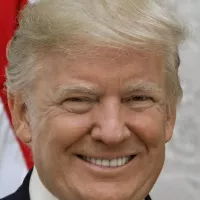
Donald John Trump is an American politician media personality and...
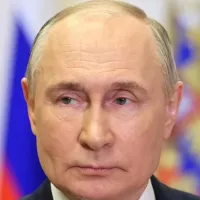
Vladimir Putin is a prominent Russian politician who has significantly...

Benjamin Netanyahu is a prominent Israeli politician who has served...
The United States of America is a federal republic primarily...

Steve Hilton is a British-American conservative political commentator and former...

India officially the Republic of India is a South Asian...
Trending
4 hours ago Vivek Ramaswamy's Nuclear Startup Atlas Atomics Reaches $1.9 Billion Valuation

4 hours ago José Mourinho Defends Kylian Mbappé Against Ridiculous Criticism at Real Madrid
4 hours ago Oregon QB Dante Moore Ruled Out Against UCLA; Dylan Raiola Named Starter

4 hours ago Robert Lewandowski's Team Secures Remarkable Comeback Win in Major League Soccer
4 hours ago Jimmy Kimmel Live Announces Star-Studded Guest Lineup for October 12-16

5 hours ago Marshall Manning Receives Multiple College Football Scholarship Offers
Popular

Ken Paxton is an American politician and lawyer serving as...

Cristiano Ronaldo widely considered one of the greatest footballers captains...

Michael Joseph Jackson the King of Pop was a highly...

Elon Musk is a visionary entrepreneur and engineer known for...

Shakira Isabel Mebarak Ripoll the Queen of Latin Music is...

Bernie Sanders is a prominent American politician and the senior...