


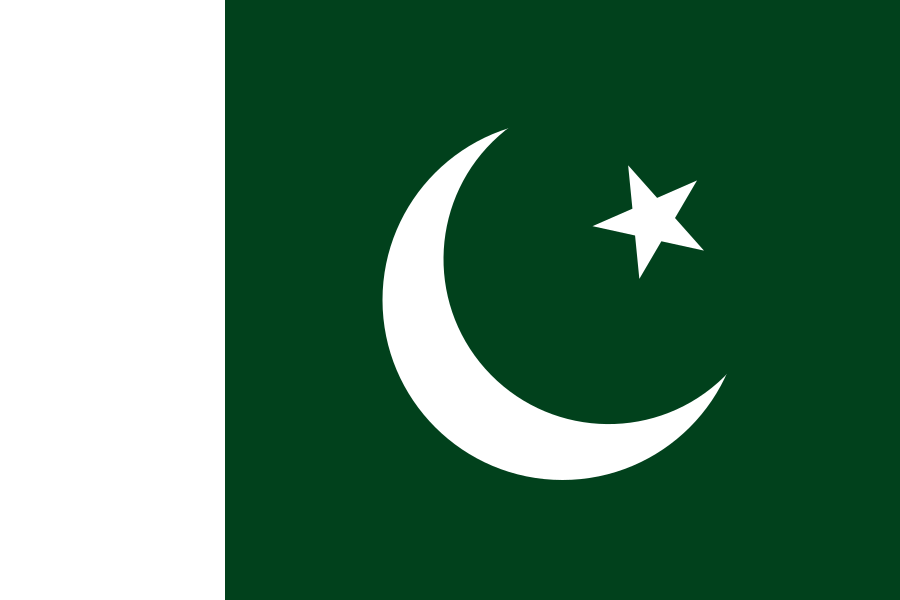
Pakistan, officially the Islamic Republic of Pakistan, is a South Asian country and the fifth-most populous globally, boasting over 241.5 million residents as of 2023. It holds the second-largest Muslim population worldwide. Islamabad serves as its capital, while Karachi is the largest city and financial hub. Pakistan ranks as the 33rd-largest country by area, bordered by the Arabian Sea to the south and sharing land borders with India, Afghanistan, Iran, and China. It also has a maritime border with Oman and is separated from Tajikistan by Afghanistan's Wakhan Corridor.
6 hours ago : Justin Greaves Sets Historic Five Wicket Maiden Record in WI vs PAK Test
West Indies bowler Justin Greaves achieves a historic feat by taking five wickets for zero runs in a single maiden over during the Test match against Pakistan.


1906: Establishment of the All-India Muslim League (1906)
In 1906, the All-India Muslim League was established, led by Sir Syed Ahmed Khan, advocating for the two-nation theory to counter the Hindu renaissance.
1919: End of Anglo-Afghan Wars
By 1919, the Anglo-Afghan Wars had concluded.
March 1929: Jinnah's Fourteen Points (March 1929)
In March 1929, Muhammad Ali Jinnah issued his fourteen points in response to the Nehru Report, including proposals to safeguard the interests of the Muslim minority in a united India.
December 1930: Allama Iqbal Advocates Amalgamation (December 1930)
On December 29, 1930, Allama Iqbal advocated the amalgamation of Muslim-majority states in North-West India.
January 1933: Coining of the Name Pakistan (January 1933)
In January 1933, Choudhry Rahmat Ali, a Pakistan Movement activist, coined the name Pakistan, publishing it as "Pakstan" in a pamphlet Now or Never.
1937: Neglect of Muslim League by Congress (1937-1939)
From 1937 to 1939, the perception that Congress-led British provincial governments neglected the Muslim League motivated Jinnah and other leaders to embrace the two-nation theory.
1939: Neglect of Muslim League by Congress (1937-1939)
From 1937 to 1939, the perception that Congress-led British provincial governments neglected the Muslim League motivated Jinnah and other leaders to embrace the two-nation theory.
1940: Adoption of the Lahore Resolution (1940)
In 1940, the Lahore Resolution, also known as the Pakistan Resolution, was presented by Sher-e-Bangla A.K. Fazlul Haque.
1946: Election Victories of All-India Muslim League (1946)
In 1946, the All-India Muslim League won key election victories, which spurred the Pakistan Movement, seeking a homeland for Muslims in British India.
1946: Muslim League Secures Seats (1946)
The 1946 elections saw the Muslim League secure 90 percent of the Muslim seats. Jinnah's emergence as the voice of the Indian Muslims, compelled the British to consider their stance.
June 1947: Declaration to Partition British India (June 1947)
On the evening of 3 June 1947, the formal declaration to partition British India into two independent dominions—Pakistan and India—was issued. The founder of Pakistan Muhammad Ali Jinnah concluded his address with the slogan Pakistan Zindabad.
August 1947: Partition of India and Kashmir Dispute
In August 1947, the Partition of India, including the autonomous princely state of Jammu and Kashmir, sparked a major territorial dispute between India and Pakistan, leading to conflicts over the Kashmir region.
August 1947: Establishment of Pakistan (August 1947)
On 14 August 1947, the modern state of Pakistan was established, amalgamating the Muslim-majority regions of British India.
1947: Jinnah Becomes Governor-General and Liaquat Ali Khan Becomes Prime Minister (1947)
After independence in 1947, Jinnah became Pakistan's first Governor-General and Liaquat Ali Khan became the nation's first Prime Minister.
1947: Pakistan under British Raj
Before 1947, the regions that compose the modern state of Pakistan were under the British Raj from 1858.
1947: End of British Indian Empire in Modern Pakistan
By 1947, all modern Pakistan was part of the British Indian Empire until independence.
1947: Migration Post-Partition
Even post-1947 partition, Muslims from India continued migrating to Pakistan, especially Karachi and Sindh province.
1947: Pakistan Gains Independence (1947)
In 1947, Pakistan gained independence after the partition of British India, which awarded separate statehood to its Muslim-majority regions. This event was accompanied by mass migration and loss of life.
1947: First War with India
In 1947, Pakistan was involved in its first war with India over Kashmir, which ended in a United Nations-mediated ceasefire, with Pakistan gaining control of one-third of the region.
1947: Establishment of ISI
In 1947, Pakistan's primary intelligence agency, the Inter-Services Intelligence (ISI), was established within a year of Pakistan's independence.
1947: Partition Riots (1947)
In 1947, riots accompanied the partition in Punjab Province, resulting in the deaths of between 200,000 and 2,000,000 people and the abduction and rape of tens of thousands of women from different religions. Around 6.5 million Muslims moved from India to West Pakistan and 4.7 million Hindus and Sikhs moved from West Pakistan to India.
1947: Establishment of Pakistan Armed Forces
In 1947, the armed forces of Pakistan were established and began to wield significant influence over national politics.
June 1948: British Intention to End Rule (June 1948)
As the Cabinet Mission failed, the British announced their intention to end rule by June 1948.
September 1948: Death of Jinnah (September 1948)
On 11 September 1948, Jinnah, Pakistan's first Governor-General and President-Speaker of the Parliament, died of tuberculosis.
1948: Indo-Pakistani War (1947-1948)
In 1947 and 1948, a dispute over the princely state of Jammu and Kashmir sparked the Indo-Pakistani War.
March 1949: Objectives Resolution
In March 1949, the Objectives Resolution marked the initial step towards defining the role of Islam in Pakistan, affirming God as the sole sovereign.
March 1949: Passage of the Objectives Resolution (March 1949)
In March 1949, the efforts of Jamaat-i-Islami and the ulama led to the passage of the Objectives Resolution, affirming that sovereignty belongs to God.
1949: Shabbir Ahmad Usmani Appointed Shaykh al-Islam (1949)
In 1949, Maulana Shabbir Ahmad Usmani, who held the position of Shaykh al-Islam in Pakistan, and Maulana Mawdudi played key roles in advocating for an Islamic constitution.
1949: UN Intervention and Ceasefire
In 1949, the United Nations intervened in the Kashmir conflict, leading to a ceasefire and the establishment of the Line of Control (LoC) as a de facto border between India and Pakistan.
1951: Pakistan's Population in 1951
In 1951, Pakistan's population was 33.7 million.
1956: Pakistan Becomes a Republic (1947-1956)
From 1947 to 1956, Pakistan was a monarchy within the Commonwealth of Nations, before becoming a republic.
1956: Adoption of Republican Constitution (1956)
In 1956, Pakistan adopted a republican constitution and became an Islamic republic with two geographically separate provinces, East Pakistan and West Pakistan.
1956: Inclusion as Preamble to the Constitutions
In 1956, The Objectives resolution was later included as a preamble to the constitutions of 1956.
1956: Adoption of First Constitution
Pakistan adopted its first constitution in 1956.
1958: Suspension of Constitution
In 1958, Ayub Khan suspended the constitution.
1962: Second Constitution
In 1962, Pakistan's second constitution was adopted.
1962: Inclusion as Preamble to the Constitutions
In 1962, The Objectives resolution was later included as a preamble to the constitutions of 1962.
1962: Adoption of Presidential System (1962)
In 1962, after adopting a presidential system, Pakistan witnessed significant growth.
1965: Ban on Bollywood Films
Bollywood films were banned from public cinemas in Pakistan from 1965 to 2008, but remained influential in popular culture.
1965: Second War with India
In 1965, territorial disputes led to another war between India and Pakistan.
1967: Widespread Public Discontent (1967)
In 1967, there was widespread public discontent in Pakistan.
1969: President Yahya Khan Consolidates Control (1969)
In 1969, President Yahya Khan consolidated control and faced a devastating cyclone in East Pakistan, resulting in 500,000 deaths.
1970: General Elections
After the 1970 general elections, the Parliament crafted the 1973 Constitution.
1970: First Democratic Elections (1970)
In 1970, Pakistan conducted its first democratic elections since independence. However, the military refused to transfer power after the East Pakistani Awami League won, leading to Operation Searchlight and the war of liberation.
1971: Pakistan Develops Atomic Weapons
Following the 1971 war with India, Pakistan hastily developed atomic weapons to deter foreign intervention.
1971: KANUPP-I Supplied by Canada
In 1971, Canada supplied KANUPP-I, Pakistan's first commercial nuclear power plant.
1971: Secession of East Pakistan (1971)
In 1971, East Pakistan seceded and became the new country of Bangladesh after a nine-month-long civil war.
1971: War Over East Pakistan
In 1971, India and Pakistan fought another war over East Pakistan, with Indian forces aiding its independence, leading to the creation of Bangladesh.
1971: Conventional War with India (1971)
In 1971, preemptive strikes on India by Pakistan's air force, navy, and marines sparked a conventional war that resulted in an Indian victory and East Pakistan gaining independence as Bangladesh.
1971: Marxist Thought in Philosophy
Post-1971, Marxist thought gained prominence in Pakistani philosophy through figures like Jalaludin Abdur Rahim.
1972: Simla Agreement
In 1972, India cited the Simla Agreement, stating that Kashmir is an "integral part" of India due to regional elections taking place regularly.
1972: Nuclear Program Development and Inauguration of First Nuclear Plant
In 1972, Pakistan initiated an ambitious nuclear deterrence program to prevent foreign invasions. Also in 1972, the country's first nuclear power plant was inaugurated.
1973: Inclusion as Preamble to the Constitutions
In 1973, The Objectives resolution was later included as a preamble to the constitutions of 1973.
1973: 1973 Constitution Declares Pakistan an Islamic Republic
The 1973 Constitution declared Pakistan an Islamic Republic, with Islam as the state religion, and mandated laws to comply with Islamic teachings laid down in the Quran and Sunnah and that no law repugnant to such injunctions could be enacted. Additionally, it established institutions like the Shariat Court and the Council of Islamic Ideology to interpret and apply Islam.
1973: 1973 Constitution
Under the leadership of Zulfikar Ali Bhutto, the 1973 constitution established a parliamentary system.
1974: India's Nuclear Test and Acceleration of Pakistan's Program
In 1974, India conducted its first nuclear test, providing Pakistan with further justification to accelerate its own nuclear program.
1974: Ahmadi Persecution
Since 1974, Ahmadis in Pakistan face persecution and are banned from calling themselves Muslims.
1975: Cessation of Karachi's Tramway Service
Karachi's tramway service ceased operations in 1975, with plans underway to resurrect it in collaboration with Austrian experts.
1976: Establishment of Kahuta Research Laboratories (KRL)
In 1976, Abdul Qadeer Khan established the Kahuta Research Laboratories (KRL), serving as its Director-General until 2001.
1977: Suspension Under Martial Law
In 1977, The 1973 constitution was suspended under Zia-ul-Haq's martial law.
1977: Military Coup
In 1977, a military coup ended democracy against the leftist PPP.
1978: Zia-ul-Haq Becomes President
In 1978, General Zia-ul-Haq became the president of Pakistan.
1981: Pakistan's Urban Population
Between 1981 and 2017, Pakistan's urban population more than tripled from 23.8 million to 75.7 million.
1985: Restoration of Constitution with Amendments
In 1985, The 1973 constitution was restored, with amendments.
1988: Economic Growth, Islamization, and Support for Afghan Mujahideen
From 1977 to 1988, under President Zia's corporatisation and economic Islamisation initiatives, Pakistan's economy grew rapidly. Pakistan also subsidized and distributed US resources to the Afghan mujahideen fighting against the USSR's intervention in Afghanistan.
1988: Death of Zia and Election of Benazir Bhutto
In 1988, President Zia died in a plane crash, and Benazir Bhutto was elected as the country's first female Prime Minister.
1989: Influx of Kashmiri Muslim Refugees
Since 1989, thousands of Kashmiri Muslim refugees fled to Pakistan, alleging rape and forced displacement by Indian soldiers.
1990: Urbanization Surge
From 1990 to 2008, city dwellers constituted 36% of Pakistan's population, making it South Asia's most urbanized nation, with over 50% living in towns of 5,000+ inhabitants.
1990: Pakistan Launches First Satellite
In 1990, Pakistan successfully launched its first satellite, becoming the first Muslim nation and second in South Asia to achieve this milestone.
1990: Pakistan's Share of Global Exports
Pakistan's share of global exports averaged 0.14% between 1990 and 2023.
1990: Islamic Law and Homosexuality
Since 1990, under Islamic law, male homosexuality in Pakistan is potentially punishable by stoning.
1990: Decline in Rail Track Length
The total rail track in Pakistan decreased from 8,775 kilometres (5,453 miles) in 1990–91 to 7,791 kilometres (4,841 miles) in 2011.
1992: Establishment of Jinnah Antarctic Research Station
In 1992, Pakistan established its Jinnah Antarctic Research Station and is the sole Muslim nation active in Antarctica research.
1993: UN Peacekeeping Mission in Somalia
In 1993, Pakistan played a major role in UN peacekeeping missions, including the rescue mission in Mogadishu, Somalia.
1993: Deregulation of Civil Aviation Industry
In 1993, Pakistan's civil aviation industry was deregulated, operating with a mix of public and private entities.
1995: Computer Literacy Initiatives
Government initiatives, including computer literacy since 1995, aimed to eradicate illiteracy.
1997: PML (N) Supermajority
In 1997, PML (N) secured a supermajority in the elections.
May 1998: Nuclear Testing Authorization
In May 1998, Nawaz Sharif authorized nuclear testing as a retaliation to India's second nuclear tests.
1998: Pakistan's Population Growth Rate
Between 1998 and 2017, the average annual population growth rate of pakistan stood at +2.40%.
1998: Migration of Bengalis and Rohingya
Migration of Bengalis and Rohingya to Pakistan started in the 1980s and continued till 1998. Karachi hosts a significant number of Bengali settlements, and large Rohingya migration made it one of their largest populations outside Myanmar.
1998: Pakistan's Underground Nuclear Tests
Tensions with India led to Pakistan's 1998 underground nuclear tests, making it the seventh country to possess such weapons.
1999: Kargil War and Military Coup by Pervez Musharraf
In 1999, military tension in the Kargil district led to the Kargil War, and General Pervez Musharraf took over through a bloodless coup d'état.
2000: Migration of Indo-European Aryans (2000 BCE)
Around 2000 BCE, following the decline of the Indus Valley Civilisation, semi-nomadic Indo-European Aryans migrated into the Indian subcontinent.
2001: Abdul Qadeer Khan's Retirement from KRL
Abdul Qadeer Khan retired from his position as the Director-General of the Kahuta Research Laboratories (KRL) in 2001.
2001: Musharraf as President
From 2001 to 2008 Musharraf governed Pakistan as chief executive from 1999 to 2002 and as president from 2001 to 2008
2001: Counterinsurgency Operations
Since 2001, the Pakistan military has been engaged in counterinsurgency and internal security operations in the Khyber Pakhtunkhwa province, primarily targeting Tehrik-e-Taliban Pakistan and associated militant groups.
2002: Musharraf as President
From 2001 to 2008 Musharraf governed Pakistan as chief executive from 1999 to 2002 and as president from 2001 to 2008
2004: Major non-NATO ally status
Although Pakistan was granted major non-NATO ally status by the U.S. in 2004, it faced accusations of supporting the Taliban insurgents in Afghanistan.
2005: The Guardian Highlights Tourist Sites
Following the 2005 Kashmir earthquake, The Guardian published an article highlighting "The top five tourist sites in Pakistan" to boost tourism, featuring destinations like Taxila, Lahore, the Karakoram Highway, Karimabad, and Lake Saiful Muluk.
2005: Sino-Pakistani Energy Security Plan Proposed
In 2005, Pakistan and China proposed a joint energy security plan, aiming for a generation capacity exceeding 160,000 MWe by 2030.
2005: Pakistan Hosts International Physics Seminar
In 2005, Pakistan hosted an international seminar on "Physics in Developing Countries" for the International Year of Physics.
2005: Pakistan's Wheat Production
In 2005, Pakistan's wheat production surpassed Africa's and nearly matched South America's, highlighting its agricultural significance.
2006: Free Trade Agreement with China
In 2006, Pakistan and China signed a Free Trade Agreement, with China making its largest investment in Pakistan's history through CPEC.
2006: Globalization Index Ranking
In 2006, Pakistan ranked 56th on the A.T. Kearney/FP Globalization Index due to increasing globalization.
2006: Increase in Scientific Productivity
Pakistan's scientific productivity began its surge from approximately 2,000 articles per year in 2006 to more than 9,000 articles in 2015.
November 2007: National Assembly Completes Term
On 15 November 2007, the National Assembly historically completed its first full five-year term.
2007: Pakistan's Port Infrastructure Quality Ratings
According to the WEF's Global Competitiveness Report, Pakistan's port infrastructure quality ratings rose from 3.7 to 4.1 between 2007 and 2016.
2007: English Medium Education
Since 2007, initiatives have made English medium education mandatory nationwide in Pakistan.
June 2008: Expansion of Chashma Nuclear Complex
In June 2008, the nuclear complex at Chashma in Punjab Province expanded with the installation of Chashma-III and Chashma–IV reactors.
August 2008: Musharraf's Resignation
On 18 August 2008, President Musharraf resigned and was succeeded by Asif Ali Zardari.
2008: Bollywood Film Ban Lifted
Bollywood films were banned from public cinemas in Pakistan from 1965 to 2008, but remained influential in popular culture.
2008: Urbanization Surge
From 1990 to 2008, city dwellers constituted 36% of Pakistan's population, making it South Asia's most urbanized nation, with over 50% living in towns of 5,000+ inhabitants.
2008: Musharraf as President
From 2001 to 2008 Musharraf governed Pakistan as chief executive from 1999 to 2002 and as president from 2001 to 2008
2008: Religious Minorities
In 2008, the Bahá'í Faith had 30,000 followers in Pakistan, followed by Sikhism, Buddhism, and Zoroastrianism, each with around 20,000 adherents, alongside a small Jain community.
November 2009: Inaugural Fashion Week
Pakistan's inaugural fashion week took place in November 2009.
2009: Increase in Remittances
From 2009 to 2010, remittances to Pakistan increased by over 100% from US$8.9 billion.
2009: Gilgit-Baltistan Empowerment and Self-Governance Order
In 2009, the constitutional assignment (the Gilgit–Baltistan Empowerment and Self-Governance Order) granted Gilgit-Baltistan semi-provincial status, providing it with self-government.
2010: Constitutional Amendments
In 2010, Constitutional amendments curtailed presidential powers, enhancing the role of the prime minister.
2010: Fifth Largest Hindu Population
In 2010, Pakistan had the fifth-largest Hindu population globally.
2011: Acid and Burn Crime Bill
In 2011, the Acid and Burn Crime Bill criminalised acid attacks, making them punishable by lengthy imprisonment and fines.
2011: Rail Track Length Reduction
In 2011, the total rail track in Pakistan was reduced to 7,791 kilometres (4,841 miles) from 8,775 kilometres (5,453 miles) in 1990-91.
June 2012: Gilani's Disqualification
In June 2012, clashes with the judicature prompted Gilani's disqualification from Parliament and as the Prime Minister.
2012: Non-Denominational Muslims
As of 2012, 12% of Pakistani Muslims self-identify as non-denominational Muslims.
2012: Malala Yousafzai Attack
Following a 2012 attack on activist Malala Yousafzai by the Taliban, she became the youngest Nobel laureate for her education advocacy.
2012: Atheist Identification
In 2012, 2% of Pakistan's population identified as atheist in a Gallup survey.
2012: Textile Exports to China
In 2012, China imported US$1.527 billion worth of textiles from Pakistan.
February 2013: Lahore Metrobus Becomes Operational
The Lahore Metrobus, the first of its kind in Pakistan, became operational in February 2013.
May 2013: First Successful Democratic Transition
In May 2013, Pakistan had its first successful democratic transition.
2013: Number of Airports and Airfields in Pakistan
As of 2013, Pakistan had approximately 151 airports and airfields, encompassing both military and civilian installations.
2013: Second Nuclear Complex Established in Karachi
In 2013, Pakistan established a second nuclear complex in Karachi with plans for additional reactors, similar to Chashma.
2013: Cement Exports
In 2013, Pakistan exported 7,708,557 metric tons of cement.
2013: Chinese Language Courses
In 2013, reforms mandated Chinese language courses in Sindh, reflecting China's growing influence.
2013: PML (N) Victory and Nawaz Sharif Elected as Prime Minister
In the general election held in 2013, the PML (N) achieved victory, following which Nawaz Sharif was elected as Prime Minister for the third time.
2014: Contribution of Services Sector to GDP
As of 2014–15, the services sector contributes 58.8% to GDP, serving as the main driver of economic growth in Pakistan.
June 2015: Rawalpindi-Islamabad Metrobus Commences Phase One
The Rawalpindi-Islamabad Metrobus, stretching 48.1 km, commenced its first phase in June 2015.
2015: Contribution of Agriculture to GDP
As of 2015, agriculture contributed only 20.9% of Pakistan's GDP, indicating a shift from agriculture to services in the Pakistani economy.
2015: Increase in Scientific Productivity
By 2015, Pakistan saw a fourfold increase in its scientific productivity with more than 9,000 articles, compared to approximately 2,000 articles per year in 2006.
2015: Increase in Remittances
From 2009-10 to 2015-16, remittances to Pakistan increased to US$19.9 billion.
2015: Literacy Rate Target
Government initiatives targeted an ~86% literacy rate by 2015, which was not fully achieved.
2015: Agreements and MOUs Signed with China
In 2015, Pakistan and China inked 51 agreements and Memorandums of Understanding (MoUs) for cooperative efforts.
2015: Pakistan's Ranking in Travel & Tourism Competitiveness Report
In 2015, the World Economic Forum ranked Pakistan 125th out of 141 countries in its Travel & Tourism Competitiveness Report.
February 2016: Initiation of Karachi's Green Line Metrobus Project
Karachi's Green Line Metrobus project, financed by the Government of Pakistan, was initiated in February 2016.
October 2016: Renewable Energy Production in Pakistan
Pakistan produced 1,135 megawatts of renewable energy for the month of October 2016.
2016: Pakistan's Port Infrastructure Quality Ratings Increase
According to the WEF's Global Competitiveness Report, Pakistan's port infrastructure quality ratings rose from 3.7 to 4.1 between 2007 and 2016.
2016: Remittances from Saudi Arabia
As of 2016, Saudi Arabia is the largest source of remittances to Pakistan, contributing $5.9 billion.
2016: Pakistan Lauded for Infrastructure Development
During the 2016 annual meetings of the IMF and World Bank, Pakistan was lauded as the top nation for infrastructure development in South Asia.
2016: Pakistan: 'Saudi Arabia of Coal'
In 2016, Daniel Fitzgerald Runde wrote in Forbes that Pakistan "could be the 'Saudi Arabia of Coal'" due to its untapped coal reserves.
2016: Mediation between Saudi Arabia and Iran
In 2016, Pakistan mediated between Saudi Arabia and Iran following the execution of Shia cleric Nimr al-Nimr, with visits to both countries by then Prime Minister Nawaz Sharif and the Chief of Army Staff, Raheel Sharif.
January 2017: Inauguration of Multan Metrobus
In January 2017, the Multan Metrobus was inaugurated, serving Multan with its rapid transit services.
2017: Pakistan's Urban Population
Between 1981 and 2017, Pakistan's urban population more than tripled from 23.8 million to 75.7 million.
2017: Pakistan's Population Growth Rate
Between 1998 and 2017, the average annual population growth rate of Pakistan stood at +2.40%.
2017: Pakistan's Population Demographics in 2017
The 2017 census recorded that 40.3% of Pakistan's population was under the age of 15, while only 3.7% of Pakistanis were aged 65 or more.
2018: Literacy Rate
As of 2018, Pakistan's literacy rate stands at 62.3%, with significant regional and gender disparities.
2018: PTI Victory and Imran Khan Elected as Prime Minister
In 2018, PTI won the general election and Imran Khan became the 22nd Prime Minister.
2018: Tourism Decline in Pakistan
In 2018, Pakistan's tourism sector saw a decline, attracting approximately 6.6 million foreign tourists, a decrease from the tourism peak of the 1970s.
2019: Pakistan as Arms Importer
Between 2019 and 2023, Pakistan was the 5th-largest recipient and importer of arms globally.
2019: Shia Population Estimate
In 2019, the Shia population in Pakistan was estimated at 42 million.
2019: Indefinite Ban on Bollywood Movies
In 2019, the screening of Bollywood movies faced an indefinite ban in Pakistan.
2019: Forest Landscape Integrity Index
Pakistan's 2019 Forest Landscape Integrity Index mean score was 7.42/10, ranking 41st globally out of 172 countries.
May 2020: Internet Users in Pakistan
As of May 2020, Pakistan has around 82 million internet users, ranking among the top ten globally.
August 2020: Inauguration of Peshawar's Bus Rapid Transit
In August 2020, Peshawar's Bus Rapid Transit was inaugurated, marking the fourth BRT system in Pakistan.
November 2020: Partial Revival of Karachi Circular Railway
The Karachi Circular Railway was partially revived in November 2020, offering public transit services in the Karachi metropolitan area.
May 2021: Pakistan's Nuclear Power Plants
As of May 2021, Pakistan operates six licensed commercial nuclear power plants overseen by the Pakistan Atomic Energy Commission (PAEC).
December 2021: Karachi's Green Line Metrobus Becomes Operational
Karachi's Green Line Metrobus became operational in December 2021, as part of a larger metrobus project.
2021: Forest Coverage
Approximately 4.8% or 36,845.6 square kilometres (3,684,560 ha) of Pakistan was forested in 2021.
2021: Federal Shariat Court Declares Vani Un-Islamic
In 2021, the Federal Shariat Court declared the practice of Vani (giving girls in marriage to settle disputes) un-Islamic and unconstitutional.
2021: Establishment of National Intelligence Coordination Committee
In 2021, the National Intelligence Coordination Committee was established to improve coordination among Pakistan's intelligence agencies, with the inaugural meeting attended by the heads of the ISI, IB, and FIA.
2021: Refugee Population in Pakistan
In mid-2021, the UNHCR estimated Pakistan to have the world's fourth-largest refugee population, with 1.4 million refugees.
April 2022: Shehbaz Sharif Elected as Prime Minister
In April 2022, Shehbaz Sharif was elected as prime minister, after Imran Khan lost a no-confidence vote.
2022: Pakistan's Cotton Production Ranking
As of 2022, Pakistan ranks seventh globally in cotton production, making it a major exporter of textile products in Asia.
2022: Pakistan's Fertility Rate in 2022
In 2022, Pakistan's fertility rate was estimated at 3.5.
October 2023: Expulsion of Undocumented Afghans
In October 2023, Pakistan ordered the mass expulsion of undocumented Afghans, citing national security risks.
2023: Troop Contribution to UN Peacekeeping Missions
According to a 2023 UN report, the Pakistani military was the fifth largest troop contributor to UN peacekeeping missions.
2023: National Census
According to the 2023 national census, the largest ethnolinguistic groups in Pakistan include the Punjabis (36.98%), Pashtuns (18.15%), Sindhis (14.31%), Saraikis (12%), Urdu speaking people (9.25%), Balochs (3.38%), Hindkowans/Hazarewals (2.32%), and Brahuis (1.16%).
2023: Hindu Population
According to the census in 2023, Hinduism is the second-largest religion in Pakistan, followed by 2.17% of the population, totaling 5,217,216 individuals.
2023: Pakistan's Population According to the 2023 Census
According to the final results of the 2023 census, Pakistan had a population of 241,499,431, including the country's four provinces and the Islamabad Capital Territory.
2023: Restrictions on Media Content
According to the journalist Raza Rumi, in 2023, TV channels in Pakistan faced suspensions and legal threats for airing content critical of the government or military, while online platforms also experienced temporary takedowns.
2023: Reported Acid Attacks
As of 2023, Pakistan has a high number of reported acid attacks, with about 200 incidents annually, most victims being women.
2023: Pakistan's Population and Muslim Majority (2023)
As of 2023, Pakistan is the fifth-most populous country in the world with over 241.5 million people and has the second-largest Muslim population.
2023: Pakistan's Population in 2023
Between 1951 and 2023, Pakistan's population expanded over sevenfold, from 33.7 million to 241.5 million.
2023: Pakistan as Arms Importer
Between 2019 and 2023, Pakistan was the 5th-largest recipient and importer of arms globally.
2023: Pakistan's Ranking in Scientific Papers
In 2023, Pakistan ranked 26th globally in published scientific papers.
2023: Pakistan's Export Economy and Trade Deficit
In 2023, Pakistan was the 66th-largest export economy, with a trade deficit of US$21.3 billion.
2023: Pakistan's Electricity Generation Capacity
In 2023, Pakistan's installed electricity generation capacity was approximately 45,885 MWt.
2023: Pakistan's Share of Global Exports
In 2023, Pakistan's share of global exports was 0.12%.
2024: Pakistan's GDP Growth Rate
Among South Asian countries, Pakistan's GDP growth rate of 2.5% in 2024 was the second lowest after Afghanistan.
2024: Pakistan's Armed Forces Size
As of 2024, Pakistan has the world's seventh-largest standing armed forces, comprising approximately 660,000 active-duty troops and 291,000 paramilitary personnel.
2024: Shehbaz Sharif Elected as Prime Minister for Second Term
During 2024 general election, PTI-backed independents became the largest bloc, but Shehbaz Sharif was elected prime minister for a second term, as a result of a coalition between PML (N) and PPPP.
2024: Corruption Perceptions Index Score
In 2024, Pakistan scored 27 out of 100 on the Corruption Perceptions Index, ranking 135th out of 180 countries in the assessment of perceived public-sector corruption.
2024: Remittances by Pakistani Diaspora
In fiscal year 2024–25, Pakistan's diaspora of around 10 million sent US$38.3 billion in remittances.
2024: Child Marriage Statistics
UN Women reported in 2024 that around one in six girls in Pakistan are married during childhood, with the country home to nearly 19 million child brides.
September 2025: Strategic Mutual Defence Agreement with Saudi Arabia
In September 2025, Pakistan and Saudi Arabia signed a Strategic Mutual Defence Agreement under which any aggression against one country is considered an aggression against both, formalising a defensive commitment that also extends Pakistan's nuclear umbrella to Saudi Arabia.
2025: Pakistan's Nominal GDP and Poverty Levels
As of 2025, Pakistan's nominal GDP stood at US$407.79 billion, and the CPI inflation rate was 4.5%.
2025: Law Setting Minimum Legal Age for Marriage
In 2025, Pakistan enacted a law setting the minimum legal age for marriage at 18 and introducing penalties for arranging underage marriages; the law is limited to the Islamabad Capital Territory and does not apply nationwide.
2025: Pakistan's Press Freedom Ranking
In 2025, Pakistan ranked 158 out of 180 countries in the Press Freedom Index by Reporters Without Borders, highlighting restrictions on freedom of the press.
2025: Renewable Energy Target
Pakistan expects to produce 10,000 megawatts of renewable energy by 2025.
2025: Pakistan's Global Innovation Index Ranking
Pakistan was ranked 99th in the Global Innovation Index by 2025.
2026: Pakistan's GDP (PPP)
In 2026, Pakistan's GDP (PPP) was US$1.8 trillion.
2030: Nuclear Energy Vision 2050 Goals
Pakistan's Nuclear Energy Vision 2050 targets a capacity of 40,000 MWe, with 8,900 MWe expected by 2030.
2050: Nuclear Energy Vision 2050
Pakistan's Nuclear Energy Vision 2050 targets a capacity of 40,000 MWe.
Mentioned in this timeline
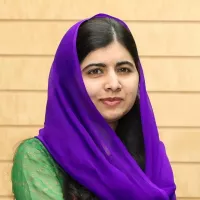
Malala Yousafzai is a Pakistani activist advocating for female education...
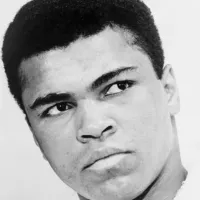
Muhammad Ali nicknamed The Greatest was an iconic American professional...
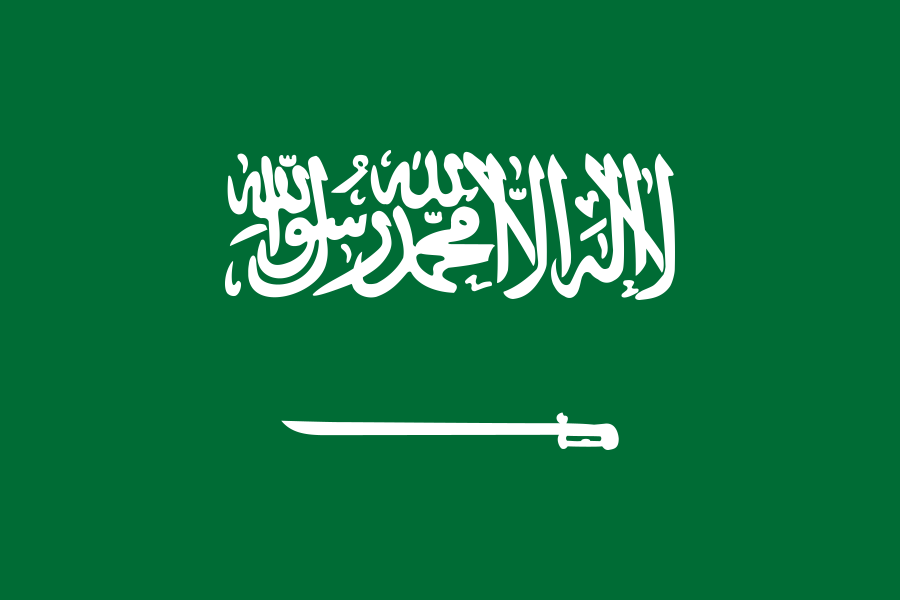
Saudi Arabia officially the Kingdom of Saudi Arabia KSA is...
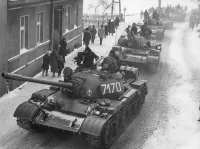
Martial law is the imposition of military rule in place...
India officially the Republic of India is a South Asian...

The Guardian is a British daily newspaper founded in as...
Trending

4 hours ago Alexandra Eala Competes in Mubadala DC Open Against Zheng Qinwen
4 hours ago Mike Flanagan Joins Henry Cavill for Amazon's Warhammer 40,000 Cinematic Universe
4 hours ago Trump Implements New Tariffs Impacting the American Economy
4 hours ago Jalen Carter Signs Massive Four-Year, $152 Million Contract Extension with Philadelphia Eagles

5 hours ago Madison Beer and Justin Herbert Announce Their Engagement
5 hours ago Kamil Majchrzak Faces Tommy Paul at ATP Washington Tennis Tournament
Popular

Nancy Grace is an American legal commentator and television journalist...
Lindsey Graham is a prominent American politician serving as the...

Johnny Depp is a highly successful American actor musician and...

LeBron James nicknamed King James is an American professional basketball...

Cristiano Ronaldo widely considered one of the greatest footballers captains...

Bernie Sanders is a prominent American politician and the senior...