Most Talked-About Controversies Linked to Tulsi Gabbard


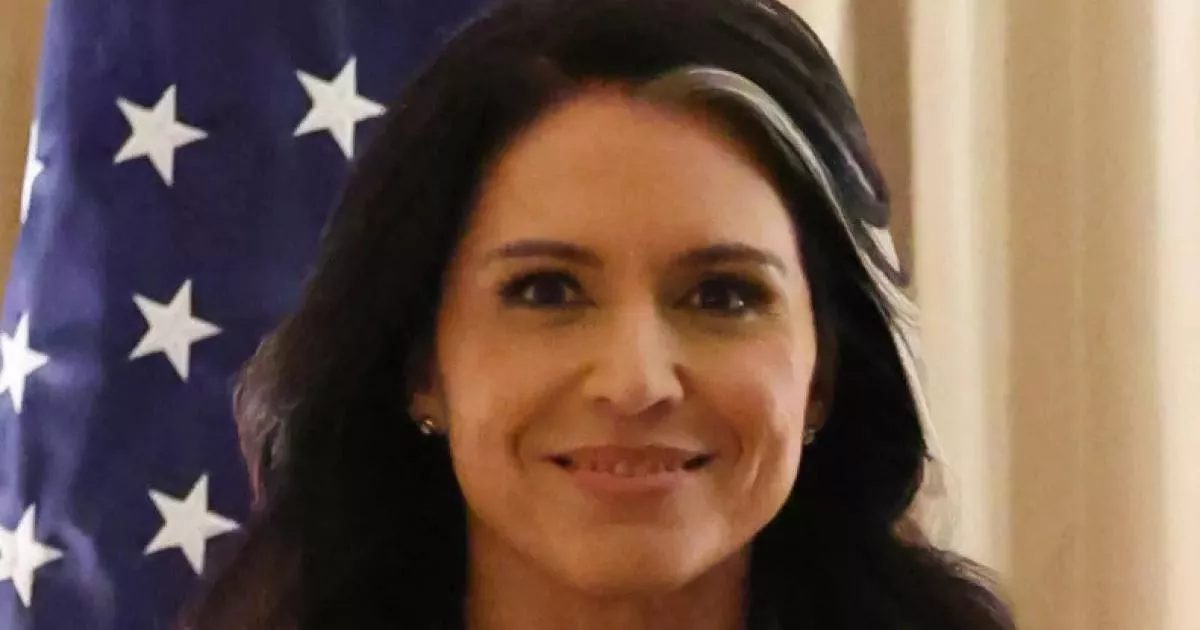
A closer look at the most debated and controversial moments involving Tulsi Gabbard.
Tulsi Gabbard is an American politician and U.S. military officer who served as the U.S. Representative for Hawaii's 2nd congressional district from 2013 to 2021 and in the Hawaii House of Representatives from 2002 to 2004. Previously a member of the Democratic Party, she became an independent before joining the Republican Party in 2024. She has also served as the eighth director of national intelligence (DNI) since 2025.
1998: Support for Father's Campaign on Marriage Amendment
In 1998, at the age of 17, Tulsi Gabbard supported her father's successful campaign to amend the Constitution of Hawaii. The amendment aimed to give lawmakers the power to "reserve marriage to opposite-sex couples". She also favored the Federal Marriage Amendment, which sought to prevent overriding state law regarding same-sex marriage.


2007: Nancy Pelosi's Visit to Syria
In January 2017, Tulsi Gabbard's visit to Syria was the first by a U.S. lawmaker since Nancy Pelosi's visit in 2007.
2011: Characterization of U.S. Involvement in Syria
In 2018, Tulsi Gabbard characterized the U.S. as waging a regime change war in Syria since 2011.
September 2015: Criticism of DNC chair Debbie Wasserman Schultz
In September 2015, Tulsi Gabbard criticized DNC chair Debbie Wasserman Schultz's decision to limit the number of debates in the 2016 Democratic primary.
October 2015: Reported request not to attend debate
Following her criticism of Debbie Wasserman Schultz, Tulsi Gabbard was reportedly asked not to attend the October 2015 debate in Las Vegas.
2015: Meeting with Egyptian Dictator 'Abd al-Fattah al-Sisi
In 2015, Tulsi Gabbard met with Egyptian dictator 'Abd al-Fattah al-Sisi in Cairo. Following the meeting, she praised Sisi for his "great courage and leadership" in his regime's war against "Islamist ideology". This engagement drew criticism due to Sisi's human rights record.
January 2017: Fact-Finding Mission to Syria and Lebanon
In January 2017, Tulsi Gabbard undertook a one-week "fact-finding mission" to Syria and Lebanon. During this trip, she met with various political and religious leaders from both countries, including two unplanned meetings with Syrian President Bashar al-Assad.
April 2017: Interview on CNN After Khan Shaykhun Chemical Attack
In April 2017, after the Khan Shaykhun chemical attack, Tulsi Gabbard stated that "What matters is the evidence and facts", expressing skepticism and calling for an independent investigation. She said she would denounce Assad if found responsible, but noted that the U.S. had not presented evidence to Congress. She drew parallels to the Iraq War, warning against repeating "a counterproductive regime war" without clear evidence and congressional consent.
2017: Statement on Rebels in Syria
Following her 2017 visit to Syria, Tulsi Gabbard stated, "There is no difference between "moderate" rebels and al-Qaeda (al-Nusra) or ISIS—they are all the same. This is a war between terrorists under the command of groups like ISIS and al-Qaeda and the Syrian government."
2017: Syria Trip
In 2017, Tulsi Gabbard addressed her trip to Syria with former Congressman Dennis Kucinich, clarifying its purpose and addressing concerns about statements made by Grand Mufti Ahmad Badreddin Hassoun.
2017: Gabbard expresses skepticism about chemical attacks in Syria
In 2017, Tulsi Gabbard expressed skepticism about incidents of chemical attacks in Syria, which were used as a justification for a U.S. military attack.
2017: Gabbard visits Armenia and Nagorno-Karabakh
In 2017, Tulsi Gabbard visited Armenia and the disputed region of Nagorno-Karabakh as part of a U.S. lawmaker delegation, leading to her being blacklisted by Azerbaijan.
2018: Characterization of U.S. Involvement in Syria
In 2018, Tulsi Gabbard characterized the U.S. as waging a regime change war in Syria since 2011.
February 2019: Reports on Skepticism Regarding Assad Regime
In February 2019, reports resurfaced highlighting Tulsi Gabbard's "skepticism" regarding the Assad regime's involvement in the Khan Shaykhun chemical attack. These reports reappeared during her presidential campaign and after her nomination for DNI.
March 10, 2019: Gabbard's statement on chemical warfare in Syria at CNN Townhall
On March 10, 2019, during a CNN Townhall, Tulsi Gabbard clarified her stance on the use of chemical weapons in Syria, stating that both the Syrian government and terrorist groups had used them. She explained that her previous skepticism pertained to the incidents in 2017.
August 2019: Comments on Brutal Dictators
In August 2019, Tulsi Gabbard stated that Assad is "a brutal dictator. Just like Saddam Hussein. Just like Gadhafi in Libya." She emphasized her opposition to regime-change wars, citing the human cost of war and its impact on service members.
August 2019: Tulsi 2020 campaign publishes "Reports on Chemical Attacks in Syria"
In August 2019, the Tulsi 2020 presidential campaign released "Reports on Chemical Attacks in Syria," a compilation of analyses and reports, primarily by scientist Theodore Postol, concerning two specific attacks. The document highlighted skepticism regarding the Khan Shaykhun and Douma chemical attacks, suggesting the possibility of rebel staging and raising concerns about over-reliance on unverified social media sources to justify military actions.
September 2019: Media Coverage of Gabbard's Presidential Campaign
In September 2019, media coverage of Tulsi Gabbard's presidential campaign was summarized as largely negative, with accusations of Russian ties.
October 2019: James Carden's article on McCarthyism and attacks on Gabbard
Also in October 2019, James Carden wrote that McCarthyism had gone mainstream in attacks against Tulsi Gabbard.
October 2019: Hillary Clinton's "Russian asset" suggestion
In October 2019, Hillary Clinton suggested that Tulsi Gabbard was a "Russian asset," leading to widespread condemnation and defense of Gabbard by other political figures.
December 2019: Saturday Night Live parody portraying Gabbard as a villain
After the December 2019 debate, Saturday Night Live's parody of the debates portrayed Tulsi Gabbard as a villain.
December 2019: Cast "present" vote on articles of impeachment of Donald Trump
In December 2019, Tulsi Gabbard cast a "present" vote on both articles of impeachment in the first impeachment of Donald Trump.
December 2019: House of Representatives Vote to Impeach President Trump
In December 2019, Tulsi Gabbard voted "present" during the House of Representatives vote to impeach President Trump. She cited The Federalist Papers essay No. 65, describing her vote as a protest against what she viewed as a "political zero-sum game". She also introduced H. Res. 766 to censure Trump, while leaving the decision of removing him from office to the voters. Later that month, she voiced concerns that the impeachment could hurt her party in the upcoming election.
2019: Gabbard affirms viewing Putin as a U.S. adversary.
In 2019, Tulsi Gabbard stated on MSNBC's Morning Joe that she views Vladimir Putin as an adversary of the United States.
2019: Apology for Past Anti-Gay Views After Presidential Campaign Launch
In 2019, after launching her presidential campaign, Tulsi Gabbard apologized for her past anti-gay views. She attributed the change in her views to her experience in the military with LGBTQ service members.
January 2020: Filing of defamation lawsuit against Hillary Clinton
In January 2020, Tulsi Gabbard filed a legal defamation lawsuit against Hillary Clinton over the "Russian asset" assertion.
September 2020: Conversion of presidential campaign committee and criticism of Netflix's Cuties
In September 2020, Tulsi Gabbard converted her presidential campaign committee, Tulsi Now, into Tulsi Aloha, a leadership PAC. That same month, she criticized Netflix over the film Cuties, arguing that it contributed to the exploitation of children.
2020: Gabbard criticizes Trump's approach to China during presidential campaign
During her 2020 presidential campaign, Tulsi Gabbard criticized President Donald Trump's confrontational approach towards China, advocating for a cooperative relationship to address global challenges and opposing his trade war.
2020: Gabbard accuses Turkey of inciting Nagorno-Karabakh conflict
In 2020, Tulsi Gabbard accused Turkey of encouraging the Nagorno-Karabakh conflict and co-signed a letter expressing concern over Azerbaijan's aggression and potential conflict with Armenia.
2020: Introduction of the Protect Women's Sports Act
In 2020, Tulsi Gabbard and Republican U.S. Representative Markwayne Mullin introduced the "Protect Women's Sports Act". The bill sought to define Title IX protections based on an individual's biological sex. This action led to condemnation from activists and LGBTQ organizations, including the Human Rights Campaign.
2020: Criticism of U.S. Military Airstrike in Baghdad
In 2020, Tulsi Gabbard criticized the U.S. military's Baghdad International Airport airstrike that killed Iranian general Qasem Soleimani, calling it an act of war by President Donald Trump and a violation of the U.S. Constitution.
2020: Shift in Political Positions
In 2020, Tulsi Gabbard, while running for president, held liberal domestic policy positions, but later, after 2020, she began to align more with Republican stances on social issues such as abortion, gun control, and transgender rights.
February 11, 2022: Gabbard suggests guarantee for Ukraine not joining NATO to prevent war with Russia
On February 11, 2022, as tensions escalated before Russia's invasion of Ukraine, Tulsi Gabbard suggested that President Biden could avert war by guaranteeing that Ukraine would not become a member of NATO.
March 9, 2022: Gabbard expresses concern over unsecured bio agents in Ukraine.
On March 9, 2022, Tulsi Gabbard voiced her concerns about the possibility of unsecured bio agents in Ukraine during an appearance on Tucker Carlson's show.
March 13, 2022: Mitt Romney accuses Gabbard of parroting Russian propaganda
On March 13, 2022, Senator Mitt Romney tweeted that Tulsi Gabbard was parroting false Russian propaganda about a U.S. funded covert biological weapons program in Ukraine.
April 4, 2022: Gabbard calls on Putin to withdraw forces from Ukraine.
On April 4, 2022, Tulsi Gabbard tweeted that Putin's attack on Ukraine was a huge geopolitical error.
2022: Endorsement of the Florida Parental Rights in Education Act
In 2022, Tulsi Gabbard endorsed the Florida Parental Rights in Education Act, which restricts classroom discussion or instruction on sexual orientation or gender identity in Florida public schools. She stated the bill prevents government indoctrination of "woke sexual values" and suggested it should apply to all grades.
2022: News organizations report Gabbard's stance on bioweapons laboratories in Ukraine
In 2022, following Trump's nomination of Gabbard for DNI, news organizations reported on Gabbard's past accusations regarding U.S.-run bioweapons laboratories in Ukraine, with some noting her clarification or retraction of these remarks.
December 2023: Gabbard questions the remilitarization of Japan
In December 2023, Tulsi Gabbard questioned whether the ongoing remilitarization of Japan was truly a good idea.
August 30, 2024: Dana Milbank claims Gabbard endorsed Russian propaganda
On August 30, 2024, Dana Milbank wrote an op-ed in the Washington Post claiming that Gabbard endorsed Russian propaganda.
November 2024: Reports on Skepticism Regarding Assad Regime
In November 2024, reports resurfaced highlighting Tulsi Gabbard's "skepticism" regarding the Assad regime's involvement in the Khan Shaykhun chemical attack. These reports reappeared during her presidential campaign and after her nomination for DNI.
2024: No evidence found connecting Gabbard to Russian agencies
In 2024, The New York Times reported that although some lawmakers accused Gabbard of taking foreign policy positions sympathetic to Russia, no evidence has emerged connecting Gabbard to any Russian agencies.
February 11, 2025: Senator Jack Reed references Romney's accusation during Gabbard's DNI nomination consideration
On February 11, 2025, during Senate consideration of Tulsi Gabbard's nomination for DNI, Senator Jack Reed quoted Mitt Romney's March 13, 2022 tweet accusing Gabbard of parroting false Russian propaganda regarding a covert US biological weapons program in Ukraine.
March 2025: Signal Group Chat Leak
In March 2025, Tulsi Gabbard was involved in a Signal group chat incident where journalist Jeffrey Goldberg was inadvertently added, leading to concerns about information security and leaked data being used to find her personal online accounts.
August 2025: ODNI Staff and Funding Cut
In August 2025, Tulsi Gabbard announced a significant reduction in the Office of the Director of National Intelligence (ODNI) staff and its annual funding, along with revoking security clearances of several U.S. officials.
December 2025: Accusations Against CAIR
In December 2025, at a Turning Point event, Tulsi Gabbard accused the Council on American-Islamic Relations (CAIR) of advocating for the implementation of sharia law in the U.S., sparking controversy and criticism.
January 2026: Presence at FBI Election Hub Search
In January 2026, Tulsi Gabbard was present during an FBI search warrant execution at the Fulton County, Georgia, Election Hub, focusing on possible foreign or malign interference in the 2020 election, at Trump's request.
March 2026: Statements on Iran's Ballistic Missile Program
In March 2026, Tulsi Gabbard stated that Iran posed a long-term threat due to its ballistic missile program and that assessing the imminence of the threat was at the President's discretion, leading to controversial statements from a Pakistani ex-diplomat.
Mentioned in this timeline
Bernie Sanders is a prominent American politician and the senior...
Donald John Trump is an American politician media personality and...
John F Kennedy JFK was the th U S President...
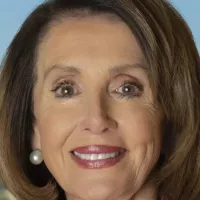
Nancy Pelosi is a prominent American politician notably serving as...
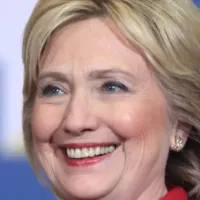
Hillary Diane Rodham Clinton is a prominent American politician lawyer...
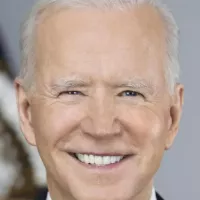
Joe Biden served as the th President of the United...
Trending
4 hours ago Gary Sanchez Teases Potential Return to New York Yankees in Free Agency
4 hours ago Sydney Sweeney Faces Public Backlash Over Controversial Dr. Seuss Themed Lingerie Advertising Campaign

4 hours ago Keegan Murray's Performance and Role Within the Sacramento Kings Rotation

4 hours ago Robert Williams III Trade Speculation Surrounds Potential Portland Trail Blazers Moves

2 days ago Cameron Boozer Prepares for Next Basketball Chapter as Solo Act

4 hours ago Stephon Castle Addresses Mentality Shifts Following Standout Scoring Performance for San Antonio Spurs
Popular
Ilhan Omar is a prominent American politician currently serving as...

Ken Paxton is an American politician and lawyer serving as...
Elon Musk is a visionary entrepreneur and engineer known for...

Michael Joseph Jackson the King of Pop was a highly...

Cristiano Ronaldo widely considered one of the greatest footballers captains...
Elizabeth Holmes is an American entrepreneur and the founder of...