


Armenia is a landlocked country located in the Armenian Highlands of West Asia, within the Caucasus region. It shares borders with Turkey, Georgia, Azerbaijan, and Iran, as well as the Azerbaijani exclave of Nakhchivan. Yerevan serves as its capital, largest city, and primary financial hub.
1908: Young Turk Revolution
In 1908, the Young Turk Revolution overthrew the government of Sultan Hamid.


April 1909: Adana Massacre
In April 1909, the Adana massacre occurred in the Adana Vilayet, resulting in the deaths of as many as 20,000–30,000 Armenians.
1912: Haykakan Sinema produced
In 1912, "Haykakan Sinema", which is the first Armenian film, was produced in Cairo by Armenian-Egyptian publisher Vahan Zartarian.
March 1913: Haykakan Sinema premiered
On 13 March 1913, "Haykakan Sinema", the first Armenian film, produced in 1912 by Armenian-Egyptian publisher Vahan Zartarian, premiered.
1914: Armenian Reform Package
In 1914, The Armenian reform package was presented as a solution by appointing an inspector general over Armenian issues.
April 1915: Arrest of Armenian Intellectuals
On 24 April 1915, Armenian intellectuals were arrested by Ottoman authorities.
May 1915: Tehcir Law
With the Tehcir Law (29 May 1915), a large proportion of Armenians living in Anatolia perished in what has become known as the Armenian genocide.
1915: Armenian Genocide Deportation
According to Arnold J. Toynbee's research, an estimated 600,000 Armenians died during deportation from 1915 to 1916.
May 1916: Report on Armenian Genocide Deportation
On 24 May 1916, a report was compiled, but it did not take into account those who died or were killed after the report was compiled
1917: Armenian Genocide
From 1915 to 1917, the events of the Armenian genocide, involving state-sponsored mass killings, occurred during which the able-bodied male population were killed. Also women, children, the elderly and infirm were deported on death marches leading to the Syrian desert.
1917: October Revolution
In 1917, the gains made in Western Armenia by the Imperial Russian Caucasus Army and Armenian volunteer units were lost with the October Revolution.
May 1918: Dissolution of Transcaucasian Democratic Federative Republic
In May 1918, the Transcaucasian Democratic Federative Republic dissolved, leading to Eastern Armenia declaring its independence as the First Republic of Armenia on May 28 under the leadership of Aram Manukian.
1918: First Republic of Armenia Declared Independence
In 1918, following the Russian Revolution, the First Republic of Armenia declared its independence.
August 1920: Treaty of Sèvres and Independence of Cilicia
In August 1920, the Treaty of Sèvres was signed, promising to maintain the existence of the Armenian republic and attach former territories of Western Armenia. Just days prior on August 5, Mihran Damadian declared the independence of Cilicia as an Armenian autonomous republic.
December 1920: Treaty of Alexandropol
In December 1920, hostilities concluded with the Treaty of Alexandropol, forcing Armenia to disarm and cede former Ottoman territory. Simultaneously, the 11th Red Army entered Yerevan and the Armenian republic collapsed.
1920: Armenia Incorporated into the Soviet Union
In 1920, Armenia was incorporated into the Soviet Union as the Armenian Soviet Socialist Republic.
1920: Turkish Invasion of Armenia
In 1920, Turkish nationalist forces invaded Armenia, leading to Turkish military control over Kars, Ardahan, and Surmalu.
March 1922: Armenia Enters the USSR
In March 1922, Soviet Armenia officially entered the USSR as part of the Transcaucasian SFSR (TSFSR).
1922: Azerbaijanis second largest population in the country
In 1922, Azerbaijanis were the second-largest population in Armenia, numbering 76,550.
April 1923: Cinema in Armenia officially established
Cinema in Armenia was officially established on 16 April 1923, with the founding of the Armenian State Committee of Cinema by a decree of the Soviet Armenian government.
March 1924: Armenfilm established in Yerevan
In March 1924, the first Armenian film studio, Armenfilm, was established in Yerevan, beginning with the documentary film "Soviet Armenia".
1925: Namus directed by Hamo Beknazarian
In 1925, "Namus," directed by Hamo Beknazarian and based on Alexander Shirvanzade's 1885 novel, became the first Armenian silent black-and-white film. It tells the story of two lovers whose engagement is thwarted due to violations of "namus".
1933: National Polytechnic University of Armenia is operating
The National Polytechnic University of Armenia is operating since 1933.
1935: Pepo directed by Hamo Beknazarian
In 1935, the first Armenian sound film, "Pepo," was directed by Hamo Beknazarian.
December 1936: Dissolution of TSFSR
In December 1936, the TSFSR split into three separate republics: the Armenian SSR, the Azerbaijan SSR, and the Georgian SSR.
1936: Death of Aghasi Khanjian and Start of Great Purge
In 1936, the popular Soviet Armenian leader Aghasi Khanjian died, marking the beginning of Stalin's Great Purge, during which many Armenians suffered greatly.
1941: Formation of Military Divisions
In 1941, six special military divisions were formed in Armenia to participate in the Great Patriotic War of World War II.
1952: Hrant Shahinyan won two golds and two silvers
In the 1952 Summer Olympics in Helsinki, Hrant Shahinyan won two golds and two silvers in gymnastics, marking the first medal won by an Armenian in modern Olympic history.
1953: Death of Stalin
In 1953, after the death of Stalin, Armenia experienced a new period of liberalization under Nikita Khrushchev's Thaw.
March 1954: Mikoyan Calls for Rehabilitation
In March 1954, Anastas Mikoyan called for the rehabilitation of Charents and the republication of the writers Raphael Patkanian and Raffi.
1955: Revival of the Armenian Church
In 1955, the Armenian Church, which was limited under Stalin, was revived when Catholicos Vazgen I assumed the duties of his office.
1960: Literacy rate of 100% reported
A literacy rate of 100% was reported in Armenia as early as 1960.
1962: Removal of Stalin Statue
In 1962, the massive statue of Stalin that towered over Yerevan was pulled down from its pedestal by troops.
1965: Mass Demonstrations
In 1965, mass demonstrations took place on the tragic event's fiftieth anniversary.
1967: Memorial to Victims of Armenian Genocide
In 1967, a memorial to the victims of the Armenian genocide was built at the Tsitsernakaberd hill above the Hrazdan gorge in Yerevan.
1973: FC Ararat Yerevan team won the Soviet Cup and Soviet Top League
The FC Ararat Yerevan team won the Soviet Cup in 1973 and the Soviet Top League in 1973.
1975: FC Ararat Yerevan team won the Soviet Cup
In 1975 the FC Ararat Yerevan team won the Soviet Cup.
1988: Karabakh Movement and Earthquake
In 1988, the Karabakh movement arose, with Armenians demanding unification with Soviet Armenia. Additionally, a devastating earthquake occurred. Violence against Armenians erupted in Sumgait.
1988: Students in specialized secondary or higher education
In the 1988 school year, 301 students per 10,000 were in specialized secondary or higher education in Armenia.
1988: Spitak earthquake
The effects of the 1988 Spitak earthquake, which killed more than 25,000 people and made 500,000 homeless, are still being felt.
1989: Azerbaijanis form about 2.5% of the population
In 1989, Azerbaijanis formed about 2.5% of Armenia's population, before virtually all of them emigrated from Armenia to Azerbaijan due to the Nagorno-Karabakh conflict.
1989: Percentage of Armenians with completed secondary education
In 1989, approximately 58% of Armenians over age fifteen had completed their secondary education, and 14% had a higher education.
1989: Shutdown of the nuclear power plant
Shutdown of the nuclear power plant in 1989 led to the Armenian energy crisis of 1990s.
January 1990: Pogrom in Baku
In January 1990, a major pogrom against Armenians in Baku forced almost all of the 200,000 Armenians in the Azerbaijani capital to flee to Armenia.
August 1990: Armenia Declares Sovereignty
On August 23, 1990, Armenia declared its sovereignty amidst growing disillusionment with Gorbachev's policies and a rising desire for independence.
1990: Hectares of forest in 1990
In 1990, Armenia had 334,730 hectares (ha) of forest.
1990: Students attending primary and secondary schools
In the 1990 school year, an estimated 1,307 primary and secondary schools in Armenia were attended by 608,800 students.
March 1991: Armenia Boycotts Soviet Union Referendum
On March 17, 1991, Armenia, along with the Baltic states, Georgia, and Moldova, boycotted a nationwide referendum where 78% of voters favored retaining the Soviet Union in a reformed state.
September 1991: Armenia Declares Statehood
On September 21, 1991, Armenia officially declared its statehood following the failed August coup in Moscow.
October 1991: Levon Ter-Petrosyan Elected President
In October 1991, Levon Ter-Petrosyan was popularly elected as the first president of the newly independent Republic of Armenia.
December 1991: Soviet Union Dissolves, Armenia's Independence Recognized
In December 1991, the Soviet Union formally dissolved after the Belovezha Accords, and Armenia's independence was recognized.
1991: Agriculture's role before Soviet Union Dissolution
Before the dissolution of the Soviet Union in 1991, agriculture accounted for less than 20% of net material product and total employment in Armenia.
1991: Healthcare changes since independence
Healthcare in Armenia has undergone significant changes since independence in 1991. Initially, the Soviet healthcare system was highly centralized and provided free medical assistance to all citizens.
1991: Republic of Artsakh secedes from Azerbaijan
In 1991, The Republic of Artsakh (Nagorno-Karabakh) seceded from Azerbaijan.
1991: Turkey Recognizes Republic of Armenia
In 1991, Turkey was one of the first countries to recognize the Republic of Armenia after its independence from the USSR.
1991: Republic of Armenia Declared Independence
In 1991, during the dissolution of the Soviet Union, today's Republic of Armenia became independent.
1991: Formation of Armenian Military after Soviet Union collapse
In 1991, following the dissolution of the Soviet Union, the Armenian military was formed.
1991: Changes to the centralised and regimented Soviet system
In the early 1990s, Armenia made substantial changes to the centralised and regimented Soviet system. By the end of 1991, many schools that had taught in Russian closed and Armenian became the dominant language of instruction.
March 1992: Armenia Joins United Nations
On March 2, 1992, Armenia became a member of the United Nations, and is a signatory to a number of its organisations and other international agreements.
July 1992: Armenia ratified Treaty on Conventional Armed Forces
In July 1992, the Armenian parliament ratified the Treaty on Conventional Armed Forces in Europe, setting limits on military equipment categories.
1992: Armenia first participated at the 1992 Summer Olympics
Armenia first participated at the 1992 Summer Olympics in Barcelona under a unified CIS team, winning three golds and one silver in weightlifting, wrestling and sharp shooting.
1992: Yerevan State University had eighteen departments
In 1992, Yerevan State University in Armenia had eighteen departments, including ones for social sciences, sciences, and law, with a faculty of about 1,300 teachers and a student population of about 10,000 students.
1992: Establishment of the Ministry of Defence
In 1992, the Ministry of Defence was established in Armenia.
1992: Armenians would participate in the Olympics representing the USSR
Prior to 1992, Armenians would participate in the Olympics representing the USSR.
1992: Armenian national football team was formed
The Armenian national football team was formed in 1992 after the split of the Soviet Union.
March 1993: Armenia signed Chemical Weapons Convention
In March 1993, Armenia signed the multilateral Chemical Weapons Convention, which calls for the elimination of chemical weapons.
July 1993: Armenia acceded to Nuclear Non-Proliferation Treaty (NPT)
In July 1993, Armenia acceded to the Nuclear Non-Proliferation Treaty (NPT) as a non-nuclear weapons state.
1993: Turkey Joins Blockade Against Armenia
In 1993, Turkey joined Azerbaijan in a blockade against Armenia, further crippling Armenia's economy, which was already suffering due to an Azerbaijani-imposed railway and air blockade.
1993: Introduction of the dram
In 1993, the national currency of Armenia, the dram, suffered hyperinflation for the first years after its introduction.
1993: Loans to Armenia since 1993
Loans to Armenia since 1993 exceed $1.1 billion.
June 1994: Liberal foreign investment law
In June 1994, a liberal foreign investment law was approved.
1994: Ceasefire in Nagorno-Karabakh conflict
In 1994, the ceasefire in the Nagorno-Karabakh conflict helped the economy.
1994: End of First Karabakh War
In 1994, the first Karabakh war ended with a Russian-brokered ceasefire, leaving Karabakh Armenian forces in control of the former NKAO territory and adjacent districts of Azerbaijan. By 1994, the conflict had resulted in an estimated 30,000 deaths and over a million displaced people.
1994: Armenia has participated as an independent nation
Since the 1994 Winter Olympics in Lillehammer, Armenia has participated as an independent nation.
1995: Strong economic growth since 1995
Armenia has had strong economic growth since 1995.
1995: Legislative Power Vested in National Assembly
Since 1995, legislative power has been vested in the Azgayin Zhoghov or National Assembly, a unicameral parliament consisting of 105 members.
1995: Reopening of the nuclear power plant
The GDP resumed robust growth after the power plant was reopened in 1995.
1997: Law on privatization
In 1997, a law on privatisation was adopted, as well as a programme of state property privatisation.
1998: Crude birth rates slightly increased
Crude birth rates in Armenia slightly increased from 13.0 (per 1000 people) in the year 1998 to 14.2 in 2015.
1998: Djokaeff and Boghossian won the 1998 FIFA World Cup
In 1998, Djokaeff and Boghossian won the FIFA World Cup with France.
January 2002: European Parliament Notes Potential EU Entry
In January 2002, the European Parliament noted that Armenia may enter the EU in the future.
February 2003: Armenia joined the WTO
On 5 February 2003, Armenia joined the WTO.
2005: Armenians Favor EU Membership
A 2005 survey reported that 64% of Armenians favored joining the EU.
2005: Cycling centre was opened in Yerevan
In 2005, a cycling centre was opened in Yerevan with the aim of helping produce world class Armenian cyclists.
2006: Share of agriculture in GDP
As the economic situation stabilised and growth resumed, the share of agriculture in Armenia's GDP dropped to slightly over 20% (2006 data), although the share of agriculture in employment remained more than 40%.
2006: Calculation began for The Economist Democracy Index
In 2006, Calculation began for The Economist Democracy Index.
2006: Teymourian competed in the 2006 World Cup for Iran
In 2006, Teymourian competed in the World Cup for Iran.
2006: Primary care services free of charge
Primary care services have been free of charge in Armenia since 2006, following healthcare system reforms after independence.
2006: First Fragile States Index Report
Since its first report in 2006, the Fragile States Index has consistently ranked Armenia better than all its neighboring countries (with one exception in 2011).
2007: Communities in Armenia
As of 2007, Armenia includes 915 communities, of which 49 are considered urban and 866 are considered rural. The capital, Yerevan, also has the status of a community.
October 2009: Armenia and Turkey Sign Protocols
On October 10, 2009, Armenia and Turkey signed protocols on the normalisation of relations, setting a timetable for restoring diplomatic ties and reopening their joint border, but the process stalled due to preconditions from Turkey.
2009: Mayor of Yerevan Elected
Since 2009, the chief executive (mayor) in Yerevan is elected.
May 2010: Government issued a resolution
In May 2010, the government issued a resolution on Science and Technology Development Priorities for 2010–2014.
2010: Discovery at Areni-1 cave complex
In 2010, archaeological surveys at the Areni-1 cave complex resulted in the discovery of the world's earliest known leather shoe, skirt, and wine-producing facility.
2010: Research spending averaging
Research spending is low in Armenia, averaging 0.25% of GDP over 2010–2013.
May 2011: The Law on the National Academy of Sciences was adopted
In May 2011, The Law on the National Academy of Sciences was adopted.
June 2011: Action Plan was approved
Based on this strategy, the accompanying Action Plan was approved by the government in June 2011.
September 2011: Armenia achieve 44th position in the FIFA World Rankings
In September 2011 the Armenia national football team achieved 44th position in the FIFA World Rankings.
2011: Armenia has been very successful in chess
Armenia won the World Champion in 2011 in chess.
2011: Strategy for the Development of Science
Armenia's Strategy for the Development of Science 2011–2020 was introduced.
2011: Exception in Fragile States Index Ranking
In 2011, Armenia was ranked as worse than one of its neighboring countries in the Fragile States Index.
2011: Discovery at Areni-1 cave complex
In 2011, archaeological surveys at the Areni-1 cave complex resulted in the discovery of the world's earliest known leather shoe, skirt, and wine-producing facility.
2012: Emigration levels have declined
In the past years emigration levels have declined and some population growth is observed since 2012.
April 2013: Freedom of panorama for 3D works of art
On 13 April 2013, the Armenian government announced a change in law to allow freedom of panorama for 3D works of art.
2013: Survey about knowledge of Russian and English
According to a 2013 survey, 95% of Armenians said they had some knowledge of Russian (24% advanced, 59% intermediate) compared to 40% who said they knew some English (4% advanced, 16% intermediate and 20% beginner).
2013: Armenia Joins Eurasian Economic Union
In 2013, Armenia opted not to finalize an Association Agreement with a Deep and Comprehensive Free Trade Area with the EU and instead joined the Eurasian Economic Union.
2013: Research spending averaging
Research spending is low in Armenia, averaging 0.25% of GDP over 2010–2013.
2014: National Programme for Educational Excellence
In 2014, the National Programme for Educational Excellence in Armenia began creating the Araratian Baccalaureate, an internationally competitive educational program, and focused on increasing the importance of teachers.
2014: Life expectancy at birth at 74.8 years
In 2014, the life expectancy at birth in Armenia was 74.8 years, the 4th-highest among the Post-Soviet states.
2014: Government issued a resolution
In May 2010, the government issued a resolution on Science and Technology Development Priorities for 2010–2014.
2015: Crude birth rates slightly increased
Crude birth rates in Armenia slightly increased from 13.0 (per 1000 people) in 1998 to 14.2 in 2015; this timeframe also showed a similar trajectory in the crude death rate, which grew from 8.6 to 9.3.
2015: Forest Area under Public Ownership
For the year 2015, 100% of the forest area was reported to be under public ownership.
2015: Gross enrollment in tertiary education at 44%
In 2015, gross enrollment in tertiary education in Armenia was at 44%, surpassing peer countries of the South Caucasus but remaining below the average for Europe and Central Asia.
2015: Unemployment rate in Armenia
In 2015, the unemployment rate in Armenia was 18.5%.
2016: Armenia's biocapacity
In 2016, Armenia had 0.8 global hectares of biocapacity per person within its territory, much less than the world average of 1.6 global hectares per person and Armenia used 1.9 global hectares of biocapacity per person.
November 2017: Armenia-EU Agreement Finalized
On November 24, 2017, Armenia and the EU finalized the Armenia-EU Comprehensive and Enhanced Partnership Agreement (CEPA), enhancing the relationship between Armenia and the EU to a new partnership level.
2017: Armenia has one of the highest migrant acceptance rates
According to Gallup research conducted in 2017, Armenia has one of the highest migrant acceptance (welcoming) rates in eastern Europe.
2017: Armenia ranked in the Human Freedom Index
In 2017, Armenia ranked 29th for economic freedom and 76th for personal freedom among 159 countries in the Human Freedom Index published by the Cato Institute.
2017: Armenia's economy growth
In 2017, Armenia's economy grew by 7.5% due to rising copper prices.
March 2018: Armen Sarkissian Elected President
In March 2018, Armen Sarkissian was elected as the new President of Armenia by the Armenian parliament, leading to the implementation of controversial constitutional reforms.
April 2018: End of Semi-Presidential Republic
Until April 2018, the Armenian constitution adhered to the model of a semi-presidential republic.
May 2018: Armenian Revolution
From April to May 2018, Armenia experienced anti-government protests, known as the Armenian Revolution, which led to Serzh Sargsyan's resignation. Nikol Pashinyan, who led the movement, termed it a "velvet revolution".
May 2018: Nikol Pashinyan Elected Prime Minister
In May 2018, opposition leader Nikol Pashinyan was elected as the new prime minister by parliament, following the resignation of Serzh Sargsyan due to widespread anti-government demonstrations.
2018: Press freedom rose considerably
Armenia's press freedom rose considerably following the 2018 Velvet Revolution.
2018: Armenia Hosts Francophonie Summit
In 2018, Armenia hosted the biennial Francophonie summit due to its historical ties to France.
2018: Environmental Performance Index Ranking
In 2018, Armenia ranked 63rd out of 180 countries on the Environmental Performance Index (EPI). Its Environmental Health subindex ranking was 109, while its Ecosystem Vitality subindex ranking was 27th best in the world.
2018: Data used by Freedom House to classify Armenia as Partly Free
In 2018, Data was used by Freedom House to classify Armenia as "partly free" in the 2019 report.
2018: Nuclear Plant Modernization
In 2018, the existing nuclear plant in Armenia was scheduled for modernisation to enhance its safety and increase power production by about 10%.
2019: Armenia Improves in World Press Freedom Index
In 2019, Armenia showed unprecedented progress in the World Press Freedom Index, published by Reporters Without Borders, improving its position by 19 points and ranking 61st.
2019: Armenia Classified as Partly Free in Freedom House Report
In 2019, Armenia was classified as "partly free" in the Freedom House report (with data from 2018), receiving a score of 51 out of 100.
2019: Healthcare became free for citizens under 18
In 2019, healthcare became free for all citizens under the age of 18 in Armenia, and the number of people receiving free or subsidized care under the Basic Benefits Package was increased.
2019: World's largest Yazidi temple completed
In 2019, the world's largest Yazidi temple, Quba Mêrê Dîwanê, was completed in the village of Aknalich.
2019: Most Recent Fragile States Index Report
Until its most recent report in 2019, the Fragile States Index has consistently ranked Armenia better than all its neighboring countries (with one exception in 2011).
September 2020: Full-Scale War Erupts in Nagorno-Karabakh
On September 27, 2020, a full-scale war erupted due to the unresolved Nagorno-Karabakh conflict, resulting in military and civilian casualties for both Armenia and Azerbaijan. The resulting ceasefire agreement was largely seen as a defeat for Armenia.
2020: Strategy for the Development of Science
Armenia's Strategy for the Development of Science 2011–2020 envisions that 'by 2020, Armenia is a country with a knowledge-based economy and is competitive within the European Research Area with its level of basic and applied research.'
2020: Biggest issue facing press freedom
As of 2020, the biggest issue facing press freedom in Armenia is judicial harassment of journalists, specifically defamation suits and attacks on journalists' right to protect sources, as well as excessive responses to combat disinformation spread by social media users.
2020: Armenia ranks 61st in the 2020 Press Freedom Index
In 2020, Armenia ranked 61st in the Press Freedom Index report compiled by Reporters Without Borders, between Georgia and Poland.
2020: Forest Cover Statistics
In 2020, forest cover in Armenia was around 12% of the total land area, equivalent to 328,470 hectares (ha) of forest.
2020: Violation of 2020 ceasefire agreement
In September 2023, the European Parliament considered the Azerbaijani military offensive against Artsakh a violation of the 2020 ceasefire agreement.
2020: Territory controlled by Armenian forces until 2020
Until 2020, Armenian-backed forces remained in control of almost all of the territory captured during the First Nagorno-Karabakh War.
June 2021: Pashinyan's Party Wins Early Election
On June 20, 2021, Nikol Pashinyan's Civil Contract party won an early parliamentary election, and he was subsequently re-appointed as Prime Minister.
January 2022: Armenian President Resigns
In January 2022, Armenian President Armen Sarkissian resigned, citing insufficient constitutional powers.
March 2022: Vahagn Khachaturyan Elected President
On March 3, 2022, Vahagn Khachaturyan was elected as the fifth president of Armenia.
March 2022: IMF's preliminary forecast
The IMF's preliminary forecast as of March 2022 predicted growth of 1.5% for the year.
2022: Armenia's ranking in the Human Freedom Index
In 2022, Armenia was ranked 26th in the Human Freedom Index, published by the American CATO Institute and Canada's Fraser Institute.
2022: Data for Armenia's score on The Economist Democracy Index
In 2022, Armenia's data was used for The Economist Democracy Index, scoring 5.63.
2022: Ethnic Armenians make up 98.1% of the population.
In 2022, ethnic Armenians constitute the vast majority (98.1%) of Armenia's population, with Yazidis being the largest minority at 1.1% and Russians at 0.5%. Other smaller groups include Assyrians, Ukrainians, Greeks, Kurds, Georgians, Belarusians, Jews, Vlachs, Mordvins, Ossetians, Udis, Tats, Poles, and Caucasus Germans. The Yazidi population numbers 31,077 as of 2022.
January 2023: Armenia's score on The Economist Democracy Index
In January 2023, Armenia scored 5.63 on The Economist Democracy Index (data for 2022).
September 2023: Azerbaijan Launches Large-Scale Military Offensive
Between September 19 and 20, 2023, Azerbaijan launched a large-scale military offensive against the self-declared breakaway state of Artsakh, amidst an escalating crisis caused by Azerbaijan blockading Artsakh, which resulted in significant scarcities of essential supplies such as food, medicine, and other goods in the affected region.
October 2023: Armenians fled to Armenia
Approximately 139,000 Armenians lived in the de facto independent country Republic of Artsakh where they formed a majority before 1 October 2023, when almost the entire population of the region had fled to Armenia.
October 2023: Armenia ratified signing the Rome statute
In October 2023, Armenia ratified signing the Rome statute, making it a full member of the International Criminal Court.
2023: Deterioration of relations with Russia
Following the 2023 Azerbaijani offensive in Nagorno-Karabakh, Armenia's relations with Russia started to deteriorate.
2023: Azerbaijan reincorporates Nagorno-Karabakh
In 2023, Azerbaijan reincorporated the Republic of Artsakh (Nagorno-Karabakh), which had seceded from Azerbaijan in 1991, through a siege and military offensive.
February 2024: Pashinyan Criticizes CSTO
In February 2024, Armenian Prime Minister Nikol Pashinyan stated that the CSTO "hasn't fulfilled its security obligations towards Armenia" and that "in practice we have basically frozen our participation in the CSTO".
March 2024: Armenia Expels Russian Border Guards
In March 2024, Armenia officially expelled Russian border guards from the Zvartnots International Airport in Yerevan.
March 2024: Armenia to apply for EU membership
In March 2024, Armenian Prime Minister Nikol Pashinyan indicated Armenia would apply for EU membership, initially suggesting it would occur within a month, then by Autumn 2024. Foreign Minister Ararat Mirzoyan noted Armenia's shift towards the West amid strained relations with Russia, emphasizing the exploration of opportunities like EU membership.
February 2025: Armenia's parliament approved a bill officially endorsing Armenia's EU accession
In February 2025, Armenia's parliament approved a bill officially endorsing Armenia's EU accession. This decision was reported as the initial step in Armenia's accession process to the European Union.
August 2025: Armenia and Azerbaijan Sign Peace Deal
On August 8, 2025, Armenian Prime Minister Nikol Pashinyan and Azerbaijani President Ilham Aliyev signed a joint declaration at the White House, committing to a peace deal to end nearly four decades of conflict between the two countries.
2025: Armenia was ranked in the Global Innovation Index
Armenia was ranked 59th in the Global Innovation Index in 2025.
2025: Armenia's Population
As of 2025 Armenia has a population of 3,081,100 and is the third most densely populated of the former Soviet republics.
Mentioned in this timeline
The White House located at Pennsylvania Avenue NW in Washington...
Azerbaijan officially the Republic of Azerbaijan is a transcontinental landlocked...
The Union of Soviet Socialist Republics USSR existed from to...
An earthquake is a sudden intense shaking of the Earth's...
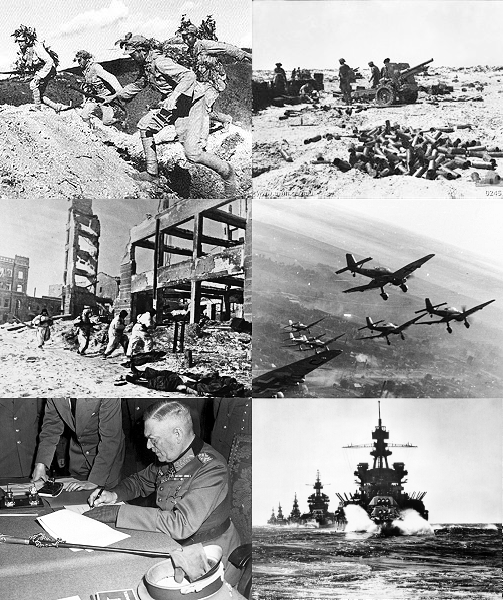
World War II - was a global conflict between the...
FIFA or the F d ration Internationale de Football Association...
Trending
3 hours ago Reid Scott's Chase Scene Strategy Revealed on Law & Order

3 hours ago Corey Seager Undergoes Elbow Surgery Following Challenging Season with Texas Rangers

3 hours ago Jake Bauers Delivers Key RBI Double for Brewers Against Dodgers

3 hours ago Deion Sanders Prepares Colorado Buffaloes for Challenging Upcoming Football Game Against Utah Utes

3 hours ago Andre Drummond Makes Impact With Knicks Through Scoring And Communication
3 hours ago Selena Gomez Honors Martin Short's Late Daughter at Rare Impact Fund Gala
Popular

Ilhan Omar is a prominent American politician currently serving as...
Ken Paxton is an American politician and lawyer serving as...

Jameis Winston is an American football quarterback currently playing for...

Elon Musk is a visionary entrepreneur and engineer known for...
Michael Joseph Jackson the King of Pop was a highly...

Cristiano Ronaldo widely considered one of the greatest footballers captains...