


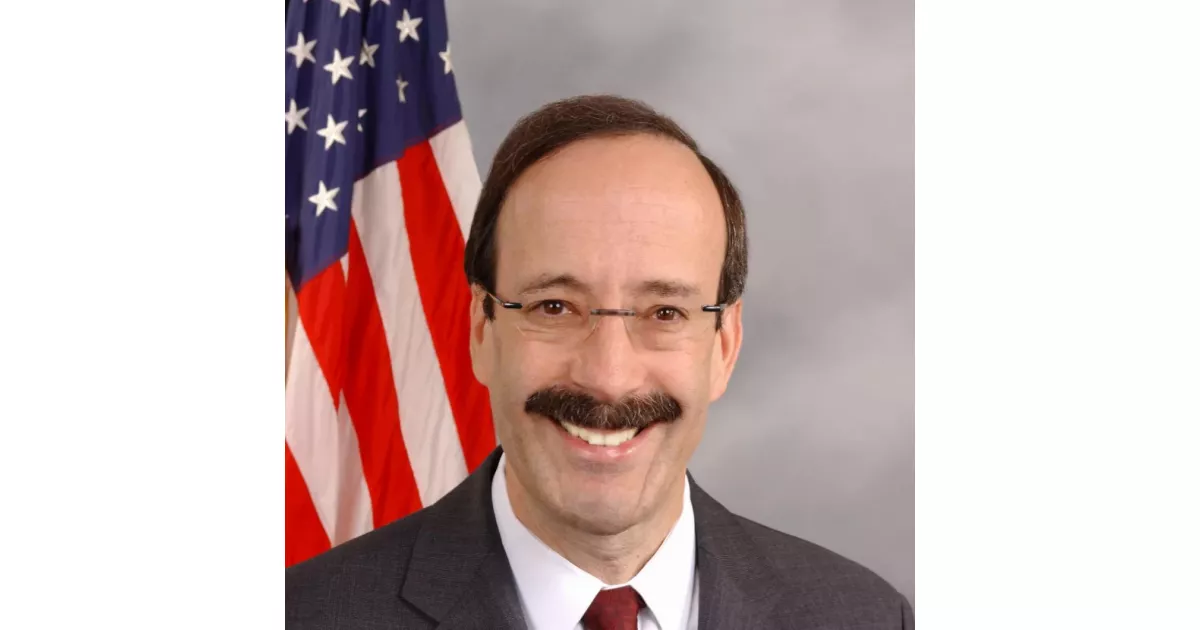
Eliot Lance Engel is a former American politician affiliated with the Democratic Party. He served as a U.S. representative for New York from 1989 to 2021, representing a district that encompassed parts of the north Bronx and southern Westchester County.
February 18, 1947: Birth of Eliot Lance Engel
Eliot Lance Engel was born on February 18, 1947.


1968: Enactment of the Gun Control Act
The Gun Control Act of 1968, which included a provision authorizing a ban on the import of foreign assault weapons, was enacted.
1969: Eliot Engel Graduates from Hunter College
Eliot Engel graduated from Hunter College's Bronx campus in 1969 with a Bachelor of Arts degree in history.
1972: Mario Biaggi's Dual Party Candidacy
Mario Biaggi, a significant figure in Eliot Engel's political journey, ran for office on both the Republican and Democratic lines starting in 1972.
1973: Eliot Engel Earns Master's Degree
In 1973, Eliot Engel obtained a Master of Science degree in guidance and counseling from Lehman College, formerly known as Hunter College.
1976: Eliot Engel's Teaching Career
Eliot Engel taught at Intermediate School 52 from 1969 to 1976 and later at Intermediate School 174, contributing to education in the New York City School District.
March 1, 1977: Eliot Engel's Victory in New York State Assembly Special Election
On March 1, 1977, Eliot Engel won the special election for a seat in the New York State Assembly as the Liberal Party nominee, defeating Democratic nominee Ted Weinstein and Republican nominee Arlene Siegel by a narrow margin.
1977: Eliot Engel's Tenure in the New York State Assembly Begins
Eliot Engel's service in the New York State Assembly commenced in 1977, marking the beginning of his legislative career.
February 1987: Eliot Engel Earns Juris Doctor
Eliot Engel received his Juris Doctor degree from New York Law School in February 1987.
1988: Criticism from Christopher Hagedorn Begins
Eliot Engel began facing criticism from publisher Christopher Hagedorn in 1988. Hagedorn, through his Bronx weekly newspapers, alleged Engel's involvement in a failed eviction attempt against one of his publications during Engel's time as an assemblyman.
1988: End of Eliot Engel's Tenure in the New York State Assembly
Eliot Engel's time in the New York State Assembly concluded in 1988.
1988: Eliot Engel's Congressional Run and Primary Victory
In 1988, Eliot Engel ran for the U.S. House of Representatives in New York's 19th congressional district, ultimately winning the Democratic primary against ten-term incumbent Democrat Mario Biaggi.
1989: Eliot Engel Elected to the U.S. House of Representatives
Eliot Engel won his first congressional election in 1989, defeating Mario Biaggi, who did not actively campaign. This marked the start of his career as a U.S. Representative for New York.
1989: Eliot Engel's Tradition of Shaking Hands at State of the Union Addresses
Upon his arrival in Congress in 1989, Eliot Engel established a tradition of shaking hands with the President during televised State of the Union addresses.
1990: Increasing Importance of Democratic Primaries
From 1990 onwards, the Democratic primary election became increasingly crucial in determining the outcome of congressional races, including Eliot Engel's, highlighting the evolving political dynamics.
1993: Redistricting Changes in New York
New York's congressional districts underwent redistricting in 1993, with Eliot Engel's district becoming the 17th.
1994: Eliot Engel's Primary Victory Against Willie Colón
Eliot Engel faced musician Willie Colón in the 1994 Democratic primary, emerging victorious with 62% of the vote.
1994: Engel's Law Investigates Disappearances in Cyprus
In 1994, Engel's dedication to resolving the cases of missing Americans during the Turkish invasion of Cyprus led to the enactment of a law enabling the State Department to investigate their disappearances, ultimately leading to the recovery of one individual's remains.
1995: Response to Hagedorn's Criticism
In 1995, Eliot Engel's communications director, Greg Howard, responded to Christopher Hagedorn's continued criticisms, stating that they did not consider Hagedorn a legitimate journalist and accused him of using his newspaper for personal attacks.
1996: Engel's Support for Kosovo
By 1996, The Washington Post recognized Engel as a leading voice in Congress championing the cause of Kosovo, a testament to his early advocacy for the region.
1996: Engel Calls for Demilitarization of Cyprus
In 1996, Engel demonstrated his commitment to peace and stability in the eastern Mediterranean by authoring a resolution advocating for the demilitarization of Cyprus, reflecting his long-standing involvement in the region's affairs.
1998: Support for the Good Friday Agreement
Engel's longstanding commitment to resolving the conflict in Northern Ireland was evident in his support for the 1998 Good Friday Agreement, a landmark achievement in the peace process.
2000: Hagedorn's Continued Criticism and Endorsements
Christopher Hagedorn continued his criticism of Eliot Engel and endorsed his Democratic opponent, Larry Seabrook, in the 2000 election. Despite this, Engel was re-elected to Congress.
2000: Eliot Engel's Primary Victory Against Larry Seabrook
In the 2000 Democratic primary, Eliot Engel triumphed over State Senator Larry Seabrook, securing 50% of the vote and highlighting the competitiveness of these elections.
2001: Engel Condemns Taliban's Treatment of Hindus
In early 2001, Engel authored a House resolution condemning the Taliban's imposition of distinctive markings on Hindu citizens, drawing parallels to the Nazi regime's persecution of Jews and highlighting his commitment to religious freedom.
2002: Human Rights Campaign Recognition
Eliot Engel received a 100% Perfection in the Pursuit of Equality rating from the Human Rights Campaign in 2002.
2002: Engel Votes for Iraq War Resolution
In 2002, Engel voted in favor of the resolution authorizing President Bush to use military force in Iraq, a decision he later expressed regret for, reflecting the evolving understanding of the conflict's complexities.
December 12, 2003: Syria Accountability and Lebanese Sovereignty Restoration Act Signed into Law
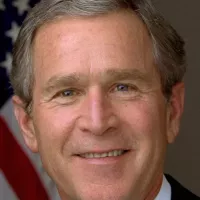
On December 12, 2003, the Syria Accountability and Lebanese Sovereignty Restoration Act, authored by Engel, was signed into law by President George W. Bush. This act imposed penalties and restrictions on U.S. relations with Syria due to its occupation of Lebanon and support for terrorist organizations.
2003: Vote Against Firearm Manufacturer Immunity Bill
Eliot Engel voted against a bill in 2003 that aimed to provide immunity to firearm manufacturers and dealers from civil liability in cases of gun misuse.
2003: Regret Over Iraq War Support
Following the 2003 invasion of Iraq and the subsequent challenges that emerged, Engel openly acknowledged his remorse over supporting the use of force, highlighting his willingness to re-evaluate his positions in light of new information.
2004: Shifting Political Landscape in New York
By 2004, the political landscape in New York, particularly in Eliot Engel's district, had shifted, reflecting broader trends in the Bronx.
2005: Positive Ratings from Drum Major Institute and Environmental Groups
Eliot Engel received an A grade on the Drum Major Institute's 2005 Congressional Scorecard for his support of middle-class issues. He also garnered positive ratings from environmental organizations like the League of Conservation Voters and the Sierra Club.
2005: Introduction of the Fuel Choices for American Security Act
In 2005, Eliot Engel, in collaboration with Congressman Jack Kingston, introduced the Fuel Choices for American Security Act (H.R. 4409). This bill aimed to reduce the United States' dependence on foreign oil by promoting the use of alternative fuels and advanced vehicle technologies.
2005: Drum Major Institute Recognition
In both 2005 and 2008, Eliot Engel was awarded an A on the Drum Major Institute's Congressional Scorecards for his consistent support of policies that benefit the middle class.
May 17, 2007: Engel Receives George Paraskevaides Award
On May 17, 2007, Engel was honored with the George Paraskevaides Award, recognizing his commitment to Hellenic values and contributions to Cyprus, America, and the Hellenic community.
December 19, 2007: Enactment of the Energy Independence and Security Act
On December 19, 2007, the Energy Independence and Security Act, incorporating key provisions from the DRIVE Act, was signed into law (Public Law No. 110-140). This landmark legislation mandated a significant increase in fuel efficiency standards for vehicles, aiming to raise them from 25 miles per gallon to 35 miles per gallon by 2020. Additionally, it established energy efficiency improvements for appliances, lighting, and buildings, along with provisions for developing domestically produced biofuels such as cellulosic ethanol, biodiesel, and biobutanol.
2007: Introduction of the DRIVE Act
Building on their previous efforts, Engel and Kingston reintroduced a modified version of the Fuel Choices for American Security Act in 2007. This new bill, named the DRIVE Act (Dependence Reduction through Innovation in Vehicles and Energy Act), garnered bipartisan support with over 80 cosponsors. The DRIVE Act aimed to enhance national security and economic stability by lessening reliance on foreign oil through clean alternative fuels and advanced vehicle technologies, including provisions for increased tire efficiency to improve fuel economy.
2007: Introduction of the Social Investment and Economic Development Act for the Americas
Eliot Engel introduced the Social Investment and Economic Development Act for the Americas in 2007. This bill aimed to promote social and economic progress in the Americas.
2007: Healthcare and Equality Awards
Eliot Engel received the National Association of Public Hospitals Safety Net Award in 2007, largely due to his introduction of The Public and Teaching Hospital Preservation Act. He was also recognized with The AIDS Institute National HIV/AIDS Care and Treatment Award in the same year.
2007: Engel Becomes Co-Chair of Irish Affairs Committee
In 2007, Engel assumed a prominent role in Irish-American relations by becoming Co-Chair of the Congressional Ad Hoc Committee on Irish Affairs, signifying his dedication to addressing the concerns of the Irish community and promoting peace in Ireland.
July 2008: Introduction of the Securing our Borders and Our Data Act
In July 2008, Engel introduced the Securing our Borders and Our Data Act (HR 6702). This legislation aimed to protect travelers entering the United States by prohibiting border agents from searching or seizing their electronic devices and data without proper justification.
2008: American Farm Bureau Federation Recognition
Eliot Engel was recognized as a Friend of the Farm Bureau in 2008 by the American Farm Bureau Federation and the New York Farm Bureau for his support of agricultural issues. He also received an A grade on the Drum Major Institute's Congressional Scorecard that year for supporting middle-class concerns.
2008: Eliot Engel Authors the ALS Registry Act and Paul D. Wellstone Muscular Dystrophy Act
In 2008, Eliot Engel demonstrated his commitment to healthcare by authoring two significant pieces of legislation: the ALS Registry Act (P.L. 110–373) and the Paul D. Wellstone Muscular Dystrophy Act (P.L. 110–361).
2008: Community Health Recognition
In 2008, Eliot Engel was named the Distinguished Community Health Superhero by the National Association of Community Health Centers.
2008: Support for US-Brazil Racial Equality Plan
In 2008, Engel authored a resolution commending the U.S.-Brazil Joint Action Plan to Promote Racial and Ethnic Equality, demonstrating his dedication to addressing racial disparities and promoting social justice on a global scale.
March 2009: Maryland Tax Credit Controversy
In March 2009, Eliot Engel was reported to have been claiming a tax credit on his Maryland residence for at least a decade, despite not claiming Maryland as his primary residence. The credit, intended for primary residents, was revoked by Maryland officials, and the matter was reviewed by the Office of Congressional Ethics.
June 26, 2009: Passage of the American Clean Energy and Security Act in the House
On June 26, 2009, the American Clean Energy and Security Act (HR 2454), a bill aimed at economic revitalization, job creation, reduced dependence on foreign oil, and greenhouse gas emission reduction, passed in the House of Representatives. Eliot Engel played a key role in negotiating this legislation. However, the bill did not receive a vote in the Senate during the 111th Congress.
December 8, 2009: Western Hemisphere Drug Policy Commission Act Introduced
On December 8, 2009, the US House of Representatives passed the bi-partisan Western Hemisphere Drug Policy Commission Act, sponsored by Eliot Engel. The bill aimed to re-evaluate the United States' counter-narcotics strategies both domestically and internationally. However, it failed to pass in the Senate.
2009: Letter to President Obama Urging Reinstatement of Assault Weapons Ban
In 2009, Eliot Engel was among the 53 members of Congress who signed a letter to President Barack Obama, urging the reinstatement of the ban on importing foreign assault weapons. This ban, authorized by the Gun Control Act of 1968, had been enforced during the presidencies of George H.W. Bush and Bill Clinton but was not being enforced at the time.
2009: Re-introduction of the Social Investment and Economic Development Act
The Social Investment and Economic Development Act for the Americas was reintroduced in 2009. However, the legislation did not progress beyond the committee stage.
December 22, 2010: Enactment of the Truth in Caller ID Act
On December 22, 2010, President Barack Obama signed the Truth in Caller ID Act into law, a measure aimed at combating caller ID spoofing, a tactic used by criminals to deceive people into disclosing personal information. The law, which closely mirrored a bill previously introduced by Engel, aimed to empower law enforcement agencies in their fight against identity theft.
2010: Eliot Engel Authors the Partnering to Improve Maternity Care Quality Act and Gestational Diabetes Act
Eliot Engel authored the Partnering to Improve Maternity Care Quality Act and the Gestational Diabetes Act in 2010, both focusing on improving maternal and newborn health.
2010: Eliot Engel's Support for Affordable Care Act
Eliot Engel emerged as a strong supporter of the Affordable Care Act in 2010 after successfully securing provisions to protect New York from potential penalties related to its generous health benefits.
2010: Support for LGBTQ+ Rights and Military Service
Engel consistently advocated for LGBTQ+ rights, sponsoring a bill supporting the Day of Silence, opposing the Defense of Marriage Act, and voting to repeal "Don't Ask, Don't Tell" in 2010, demonstrating his commitment to equality and inclusion.
2010: Opposition to Ban on Private Transfer Fees
In 2010, Eliot Engel voiced his opposition to the Federal Housing Finance Agency's (FHFA) plan to ban private transfer fees on cooperative apartment sales. Engel argued that while the system had been misused by some developers and investors, transfer fees could serve as a valuable tool for funding projects and maintaining affordability for owners and developers when used responsibly.
2010: Engel Helps Joe Byrne Return to US
In 2010, Engel played a key role in facilitating the return of Joe Byrne to the United States after being detained in Ireland due to bureaucratic issues, demonstrating his commitment to assisting constituents facing difficulties abroad.
November 11, 2011: Honorary Citizen of Peje, Kosovo
On November 11, 2011, Eliot Engel was bestowed with the title of Honorary Citizen of Peje by the Municipality of Pejë, Kosovo.
2011: Introduction of the Drug Testing Integrity Act
In 2011, Engel introduced the Drug Testing Integrity Act. This bill aimed to combat fraudulent practices by prohibiting the sale of products designed to help individuals cheat on drug tests.
2011: FHFA Decides Against Ban on Private Transfer Fees
In 2011, the FHFA decided not to proceed with its plan to ban private transfer fees on cooperative apartment sales.
2012: Introduction of the Social Network Online Protection Act (SNOPA)
Eliot Engel introduced SNOPA, the Social Network Online Protection Act, in 2012. This bill aimed to safeguard online privacy by preventing employers and educational institutions from using individuals' personal data as leverage in hiring, employment, or enrollment decisions. SNOPA proposed prohibiting these entities from requesting or requiring usernames or passwords to social media accounts during these processes.
2012: Introduction of the Open Fuel Standards Act
Eliot Engel, along with Congressmen Kingston, Steve Israel, and Bob Inglis, introduced the Open Fuel Standards Act. This bill proposed that 50 percent of new cars sold in the United States by 2012 be flexible-fuel vehicles capable of running on a combination of ethanol, methanol, or gasoline.
2012: Howard Berman's Re-election Defeat
Howard Berman lost his re-election bid in 2012, leading to Eliot Engel's appointment as the ranking member of the House Foreign Affairs Committee.
2013: Further Redistricting Changes in New York
Another round of redistricting took place in New York in 2013, leading to Eliot Engel's district becoming the 16th.
2013: Eliot Engel Becomes Ranking Member of the House Foreign Affairs Committee
Eliot Engel became the ranking member of the House Foreign Affairs Committee in 2013, succeeding Howard Berman who lost his re-election bid in 2012.
August 2015: Engel Announces Opposition to Iran Nuclear Deal
In August 2015, Engel declared his opposition to the Iran nuclear deal, citing concerns that it would not effectively prevent Iran from acquiring nuclear weapons and could potentially destabilize the Middle East.
2015: Proposed Target for Increased Flexible-Fuel Vehicle Sales
The Open Fuel Standards Act proposed an increase in the required percentage of flexible-fuel vehicles sold in the United States to 80 percent by 2015.
2016: Vote Against Banning Cluster Bomb Sales
In 2016, Engel was among a minority of Democrats who opposed a measure to halt the sale of cluster bombs to Saudi Arabia, despite the ongoing conflict in Yemen.
January 2017: Engel Condemns UN Resolution 2334
In January 2017, Engel introduced a House resolution to denounce UN Security Council Resolution 2334, which declared Israeli settlements in Palestinian territories as a breach of international law.
2017: Eliot Engel Breaks Tradition, Declines Handshake with President Trump
Breaking his long-standing tradition, Eliot Engel chose not to shake hands with then-President Donald Trump at the 2017 State of the Union address.
November 2018: Engel on Saudi Crown Prince
Following the CIA's confirmation of Saudi Crown Prince Mohammed bin Salman's involvement in the assassination of journalist Jamal Khashoggi in November 2018, Engel expressed his view against punishing the Crown Prince.
2018: Eliot Engel Reintroduces the Gestational Diabetes Act
Eliot Engel reintroduced the Gestational Diabetes Act in the 115th Congress in 2018, demonstrating his continued dedication to addressing this health concern.
2018: Engel Condemns Rohingya Genocide
In 2018, Engel condemned the genocide of the Rohingya Muslim minority in Myanmar, calling for a stronger international response to address the humanitarian crisis and hold perpetrators accountable.
2018: Democratic Gains in the Election
The Democratic Party experienced significant gains in the 2018 elections, impacting various political positions, including Eliot Engel's trajectory in the House Foreign Affairs Committee.
2018: Continuation of Competitive Democratic Primaries
The trend of competitive Democratic primaries persisted until 2018, shaping the political landscape and influencing the trajectories of candidates like Eliot Engel.
March 2019: Engel Urges Tougher Stance on China
In March 2019, Engel led a group of lawmakers in urging the Trump administration to take a tougher stance against China's human rights abuses against the Uyghur Muslim minority in Xinjiang, calling for sanctions and accountability for those responsible.
December 2019: Trump Adopts Jerusalem Policy
In December 2019, President Donald Trump officially recognized Jerusalem as the undivided capital of Israel, a stance previously advocated by Eliot Engel and contrary to long-standing American foreign policy.
2019: Eliot Engel Becomes Chairman of the House Foreign Affairs Committee
In 2019, Eliot Engel assumed the role of Chairman of the House Foreign Affairs Committee, following Democratic gains in the 2018 elections.
January 2020: John Bolton's Suggestion
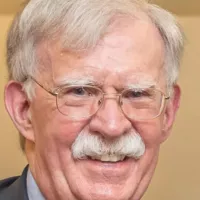
In January 2020, Eliot Engel revealed that former National Security Adviser John Bolton suggested that the Foreign Affairs Committee, chaired by Engel, should investigate the recall of Ambassador Marie Yovanovitch.
April 2020: COVID-19 Absence Controversy
In April 2020, Eliot Engel faced criticism after claiming he participated in COVID-19 related events in his district, only to later confirm that he had not returned to New York since March.
June 2020: George Floyd Press Conference Comment
During a June 2020 press conference addressing the unrest following George Floyd's murder, Eliot Engel's comment about not caring if he didn't have a primary election drew criticism.
June 2020: Engel Criticizes Polish President's LGBTQ+ Stance
In June 2020, Engel publicly criticized Polish President Andrzej Duda and the ruling Law and Justice party for their homophobic and anti-LGBTQ+ rhetoric and policies, reaffirming his commitment to human rights and equality.
June 30, 2020: Counting of Absentee Ballots in Engel-Bowman Race
Absentee ballots in the closely contested Engel-Bowman race were scheduled to be counted on June 30, 2020.
July 17, 2020: Jamaal Bowman Declared Winner of the Primary Election
The race was officially called for Jamaal Bowman on July 17, 2020, marking a significant shift in the district's representation.
August 6, 2020: Certification of Election Results
The New York State Board of Elections officially certified the results of the election on August 6, 2020, solidifying Bowman's victory.
September 2020: Concerns Expressed Over External Influence in Nagorno-Karabakh Conflict
Eliot Engel voiced his concern in September 2020 regarding the involvement of external forces, particularly Turkey, in the Nagorno-Karabakh conflict, describing their interference as "reckless meddling."
2020: Eliot Engel Defeated in Democratic Primary
After serving 16 terms in office, Eliot Engel was defeated in the 2020 Democratic primary by Jamaal Bowman, a middle school principal.
2020: Eliot Engel Faces Primary Challenge from Jamaal Bowman
Eliot Engel faced a significant challenge in the 2020 Democratic primary from Jamaal Bowman, a progressive candidate who positioned himself to Engel's left.
2020: Target Date for Increased Fuel Efficiency Standards
The year 2020 marked the target date set by the Energy Independence and Security Act of 2007 for achieving a significant increase in fuel efficiency standards for vehicles, raising them to 35 miles per gallon.
2021: End of Eliot Engel's Tenure as U.S. Representative
Eliot Engel's tenure as a U.S. representative ended in 2021 after serving from 1989 to 2021.
Mentioned in this timeline
Donald John Trump is an American politician media personality and...
Barack Obama the th U S President - was the...
Bill Clinton served as the nd U S President from...
George W Bush the rd U S President - is...
The Affordable Care Act ACA also known as Obamacare is...
John Bolton is an American attorney diplomat and political commentator...
Trending
3 hours ago Florida Faces Hazardous Weekend Weather With Strong Winds and Dangerous Surf
3 hours ago Food Network Reveals New Announcements and Updates on Popular Baking and Kitchen Shows
4 hours ago Taylor Fritz Overcomes Scary Fall to Secure Crucial Victory at the Lyon Open

6 hours ago Stefanos Tsitsipas Advances to Almaty Open Semifinals

5 hours ago Anna Wintour Faces Social Media Buzz Following Harry Styles Concert Appearance
5 hours ago Gina Hinojosa Campaigns Across Texas Ahead of 2026 Gubernatorial Race
Popular
Ilhan Omar is a prominent American politician currently serving as...

Ken Paxton is an American politician and lawyer serving as...
Elon Musk is a visionary entrepreneur and engineer known for...

Michael Joseph Jackson the King of Pop was a highly...
Elizabeth Holmes is an American entrepreneur and the founder of...
Cristiano Ronaldo widely considered one of the greatest footballers captains...