Rise to Success: Career Highlights of Elvis Costello


From career breakthroughs to professional milestones, explore how Elvis Costello made an impact.
Elvis Costello, born Declan Patrick MacManus, is a highly acclaimed English singer-songwriter, producer, author, and television host. Renowned for his literate and lyrical approach, he's often compared to Bob Dylan and Van Morrison, infused with punk energy. Costello's songwriting is characterized by dense wordplay and a diverse range of musical styles. His achievements include multiple Grammy and Ivor Novello Awards, along with inductions into both the Rock and Roll Hall of Fame and the Songwriters Hall of Fame.
1951: Ross MacManus moves to London
In 1951, Ross MacManus moved to London, where he transitioned to playing trumpet and singing in modern jazz bands.


1955: Featured singer in Joe Loss Orchestra
From 1955 to 1968, Ross MacManus was a featured singer in the Joe Loss Orchestra.
1968: End of time with Joe Loss Orchestra
From 1955 to 1968, Ross MacManus was a featured singer in the Joe Loss Orchestra, ending in 1968.
1969: Ross MacManus begins solo cabaret act
From 1969 through the 1990s, Ross MacManus had a solo cabaret act.
1972: Completed Formal Education
In 1972, Elvis Costello completed his formal education and sought a job to earn a steady wage while pursuing a music career.
1972: Joined folk rock band Rusty
In early 1972, Elvis Costello joined Allan Mayes's folk rock band Rusty.
1973: Briefly Worked as Bank Clerk
For a few months in 1973, Elvis Costello worked as a clerk at the Midland Bank Putney branch.
1973: Returned to Greater London
In early 1973, Elvis Costello arranged to transfer to the Putney branch in Greater London. Costello moved into the same Twickenham flat where he had lived with his mother a few years earlier.
1973: Formed Flip City
Later in 1973, Elvis Costello formed the band Flip City with fellow folk rock fans.
1974: Recorded Demos with Flip City
From mid-1974 until mid-1975, Elvis Costello recorded demos with Flip City at several sessions, to get live bookings or a recording contract.
1975: Shopped Solo Demos
Even before disbanding Flip City in late 1975, Costello shopped solo demos to music publishers and record companies, hoping to be hired as a songwriter or recording artist.
1975: Recorded Demos with Flip City
From mid-1974 until mid-1975, Elvis Costello recorded demos with Flip City at several sessions, hoping to secure a recording contract or sell songs.
February 1976: Solo Act as D.P. Costello
In February 1976, Costello began performing solo in clubs under the name D.P. Costello, using his initials and a family nickname. He focused on developing his singing, guitar playing, and stage presence, debuting songs like "Mystery Dance" and "Wave a White Flag", though he still played for small audiences. He sent a demo tape to Charlie Gillett, who played some of his songs later that year.
August 1976: Signing with Stiff Records
In August 1976, Elvis Costello signed with the independent label Stiff Records, marking a significant step in his early career.
September 1976: Test Session at Pathway Studios
In mid-September 1976, after a successful test-session at Pathway Studios in North London, Stiff Records agreed to finance more sessions for Costello with Clover as the backing band, leading to the recording of his album.
1976: Move to Heathrow and Awareness of Punk
Sometime in 1976, financial constraints forced Costello, his wife, and son to move in with relatives near Heathrow Airport. During this period, he commuted past the Hoover Building and began noticing the emerging punk movement. He wrote songs like "Hoover Factory" and "Radio Sweetheart" during this time.
February 1977: Given the Stage Name Elvis
In February 1977, Jake Riviera and Dave Robinson, Costello's managers, gave him the stage name Elvis, referencing Elvis Presley to attract attention. They also developed his image, particularly with the large black glasses.
March 1977: Release of "Less Than Zero"
At the end of March 1977, Costello's first single, "Less than Zero", was released. Although it received mixed reviews and sold few copies, Costello began receiving more prominent, positive coverage in the British music press.
June 1977: Auditions for a Backing Band
In mid-June 1977, Costello held auditions for a bassist and keyboardist to form a backing band for his 'My Aim Is True' tour. Pete Thomas became the drummer, and Bruce Thomas and Steve Nieve were chosen as the bassist and keyboardist, respectively. This band would soon be named The Attractions.
July 1977: Worked as Computer Operator until Album Release
Elvis Costello worked full-time as a computer operator until a few weeks before his first album was released in July 1977.
July 1977: Release of 'My Aim Is True'
In July 1977, 'My Aim Is True' was released in the UK. Its release was delayed due to Stiff Records' priorities and legal issues. The album received extensive, favorable coverage in the UK music press and reached number 14 on the UK Albums Chart.
August 1977: Interview with Nick Kent
In August 1977, Elvis Costello stated in an interview with Nick Kent that the only things that mattered to him were "revenge and guilt." This phrase became associated with him throughout his career and contributed to his early public image.
November 1977: Recording 'This Year's Model'
From November 1977 through January 1978, Costello recorded his second album, 'This Year's Model', with The Attractions during short breaks from touring. The album was produced by Nick Lowe.
December 1977: Performance on Saturday Night Live
On December 17, 1977, Elvis Costello and the Attractions appeared on Saturday Night Live as last-minute replacements for the Sex Pistols. Costello started playing "Less Than Zero" but then switched to "Radio Radio" mid-performance, angering the show's producer, Lorne Michaels, and potentially jeopardizing his future appearances on American television. Costello was later invited back to Saturday Night Live in 1989 and 1991.
1977: Move to Radar Records
By late 1977, Costello moved from Stiff Records to Radar Records, a new label founded by an associate of Jake Riviera. For the next year and a half, Costello's records were released on Radar in Britain.
1977: Debut Album Release
In 1977, Elvis Costello released his debut album, 'My Aim Is True', which featured the song "Alison" but did not produce any hit singles.
March 1978: Release of '(I Don't Want to Go to) Chelsea'
In early March 1978, '(I Don't Want to Go to) Chelsea' was released as the first single from the album 'This Year's Model', reaching number 16 on the UK singles chart. 'This Year's Model' entered the UK Albums Chart at number 4 upon release in March.
July 1978: Performance at Roskilde Festival
In July 1978, Costello performed at the Danish Roskilde Festival, topping the bill with three other artists, as he and The Attractions continued touring through Britain, Europe, and North America.
September 1978: Recording 'Armed Forces'
From August to September 1978, Costello and the Attractions recorded his third album, 'Armed Forces', at Eden Studios. The album, produced by Nick Lowe, was influenced by various artists and genres.
October 1978: Release of 'Radio Radio'
In October 1978, "Radio Radio" was released as a non-album single in the UK, where it reached number 29. It was later included on the US version of 'This Year's Model'.
1978: Springsteen writes darker songs
In 1978, Bruce Springsteen stated that Elvis Costello's critical comments about Springsteen's early songs influenced him to write darker songs for his album Darkness on the Edge of Town.
1978: Release of 'This Year's Model'
In 1978, Elvis Costello released the album 'This Year's Model', which helped define the new wave genre.
January 1979: Release of Armed Forces
In early January 1979, Elvis Costello released his third album, 'Armed Forces', which debuted at number two on the UK Albums Chart and spent 28 weeks on the chart.
1979: Release of 'Armed Forces' and Hit Single
In 1979, Elvis Costello released the album 'Armed Forces', which helped define the new wave genre. Also in 1979, Costello had his biggest hit "Oliver's Army".
1979: Covered "(What's So Funny 'Bout) Peace, Love, and Understanding"
In 1979, Elvis Costello's version of "(What's So Funny 'Bout) Peace, Love, and Understanding", originally by Nick Lowe's group Brinsley Schwarz, gained popularity.
1979: George Harrison praises Costello
In 1979, George Harrison praised Elvis Costello, noting his good melodies and chord changes and expressing pleasure in Costello's success.
1980: Release of Get Happy!! Album
Costello's 1980 Get Happy!! album featured a sound based on vintage American soul music, marking a shift from his earlier angry tone to a more upbeat manner. His only North American appearance in 1980 was at the Heatwave festival near Toronto.
1980: Singles Reached UK Top 30
From late 1977 until early 1980, Elvis Costello had all of his singles reached the UK Top 30.
January 1981: Release of 'Trust'
In January 1981, Costello released 'Trust', amidst growing tensions within the Attractions. He also co-produced Squeeze's 1981 album East Side Story and performed backing vocals on the group's hit 'Tempted'.
1981: Release of Almost Blue
In 1981, Elvis Costello released Almost Blue, a cover album of country music. The album received mixed reviews but spawned a UK hit single with a version of Jerry Chesnut's "Good Year for the Roses".
1982: Release of Imperial Bedroom
In 1982, Costello released Imperial Bedroom, featuring lavish production by Geoff Emerick. Despite critical acclaim, it failed to produce hit singles. Costello also collaborated with Chris Difford to write the song "Boy With a Problem".
1982: 'Imperial Bedroom' Voted Best Album
In 1982, the album 'Imperial Bedroom' by Elvis Costello was voted the best album of the year by The Village Voice's Pazz & Jop critics' poll.
1983: Release of Punch the Clock
In 1983, Costello released Punch the Clock, featuring Afrodiziak and the TKO Horns. Clive Langer provided the melody for "Shipbuilding," which featured a trumpet solo by Baker and commentary on the Falklands War.
1989: Musical Guest on Saturday Night Live Again
Elvis Costello appeared as a musical guest on Saturday Night Live again in 1989, after having been told in 1977 that he would never appear on American television again.
1989: Biggest US Hit Single
In 1989, Elvis Costello's biggest US hit single, "Veronica", reached number 19 on the Billboard Hot 100.
1991: Musical Guest on Saturday Night Live Again
Elvis Costello appeared as a musical guest on Saturday Night Live again in 1991.
2003: Guest Hosting "Late Show with David Letterman"
In 2003, Elvis Costello substituted for David Letterman as the host of "Late Show with David Letterman". This made him the only musical guest to serve as guest host. His performance led to interest in developing a music-oriented talk show with him as the host.
2003: Inducted into the Rock and Roll Hall of Fame
In 2003, Elvis Costello was inducted into the Rock and Roll Hall of Fame.
2008: Hosted 'Spectacle: Elvis Costello with...'
From 2008, Elvis Costello hosted a television show called 'Spectacle: Elvis Costello with...', where he interviewed other musicians.
2008: Production of "Spectacle: Elvis Costello with..."
In 2008, Elvis Costello began production on "Spectacle: Elvis Costello with...", a show where he interviewed and performed songs with other musicians. Elton John served as executive producer and appeared as a guest along with other notable figures. The show was received favorably in the US and won a Gemini Award in Canada.
2010: Continued Airing of "Spectacle: Elvis Costello with..."
In 2010, "Spectacle: Elvis Costello with...", the show where Elvis Costello interviewed and performed songs with other musicians, continued to air. The series ran for 20 episodes over two seasons from 2008 through 2010.
2010: End of 'Spectacle: Elvis Costello with...'
In 2010, Elvis Costello's television show 'Spectacle: Elvis Costello with...' ended.
2010: Cancellation of Concerts in Israel
In early 2010, Elvis Costello was invited to perform his first concert in Israel on June 30. However, two weeks later, he announced the cancellation of the concerts due to the "grave and complex" sensitivities of the Israeli-Palestinian conflict. This decision was met with mixed reactions, including criticism and praise from various political and cultural organizations.
2012: Peter Blake features Costello
In 2012, Peter Blake prominently featured Elvis Costello in his reworking of the cover for the Beatles' Sgt. Pepper's Lonely Hearts Club Band.
2013: Collaboration with Questlove and reflection on racist remarks
In 2013, Elvis Costello collaborated with Questlove of The Roots. During this time, Costello reflected on the racist remarks he made in 1979. He expressed remorse and said he was sorry for his past behavior.
2015: Publication of "Unfaithful Music & Disappearing Ink"
In 2015, Elvis Costello published his memoir, "Unfaithful Music & Disappearing Ink", which explored his life in music and drew parallels with his musician father and grandfather. The book received positive reviews but was also criticised for its structure and lack of focus. The book reached number seven on the New York Times Best Seller list and was nominated for a Grammy Award and shortlisted for the Penderyn Music Book Prize.
2016: Inducted into the Songwriters Hall of Fame
In 2016, Elvis Costello was inducted into the Songwriters Hall of Fame.
October 2017: Benefit Concert for Musician Treatment Foundation
In October 2017, Elvis Costello performed a benefit concert for the Musician Treatment Foundation, which helps under- and uninsured professional musicians receive free orthopaedic care for upper limb injuries.
July 2018: Cancer Treatment and Tour Cancellation
In July 2018, Elvis Costello announced that he had been successfully treated for a cancerous growth but had to cancel the remaining six dates of his European tour to continue recovering from the surgery.
September 2018: Resumption of Performances
In September 2018, Elvis Costello resumed performing after recovering from surgery for a cancerous growth.
2019: Appointed Officer of the Order of the British Empire
In 2019, Elvis Costello was appointed an Officer of the Order of the British Empire for his services to music.
December 2022: Benefit Concert for Musician Treatment Foundation
In December 2022, Elvis Costello performed a benefit concert for the Musician Treatment Foundation, which helps under- and uninsured professional musicians receive free orthopaedic care for upper limb injuries.
Mentioned in this timeline
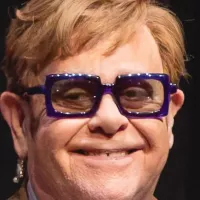
Sir Elton John is a highly successful British singer songwriter...
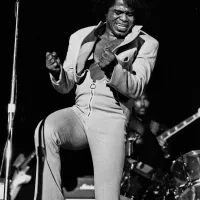
James Brown an iconic American singer songwriter dancer and musician...

Elvis Presley the King of Rock and Roll was a...
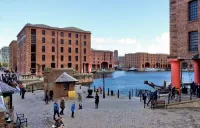
Liverpool is a major city and metropolitan borough in Merseyside...
The Billboard Hot is the premier music chart in the...
Bruce Springsteen nicknamed the Boss is an influential American singer...
Trending
3 hours ago Robert Downey Jr. Linked to Doctor Doom Role in Upcoming Avengers: Doomsday Movie
3 hours ago Alexander Bublik Smashes Racket and Injures Himself During Shanghai Masters Match
4 hours ago Blueface and Chrisean Rock Spark Fresh Pregnancy Speculation Following Recent Reunion

3 hours ago Trump Announces Energy Ceasefire Between Russia and Ukraine Amid Criticism
3 hours ago Shanghai Masters Tennis Tournaments and Predictions Update

3 hours ago Rafael Jódar Faces Jiri Lehecka at the ATP Shanghai Masters
Popular

Ken Paxton is an American politician and lawyer serving as...
Jameis Winston is an American football quarterback currently playing for...

Cristiano Ronaldo widely considered one of the greatest footballers captains...

Michael Joseph Jackson the King of Pop was a highly...

Elon Musk is a visionary entrepreneur and engineer known for...
Bernie Sanders is a prominent American politician and the senior...