History of FIFA in Timeline


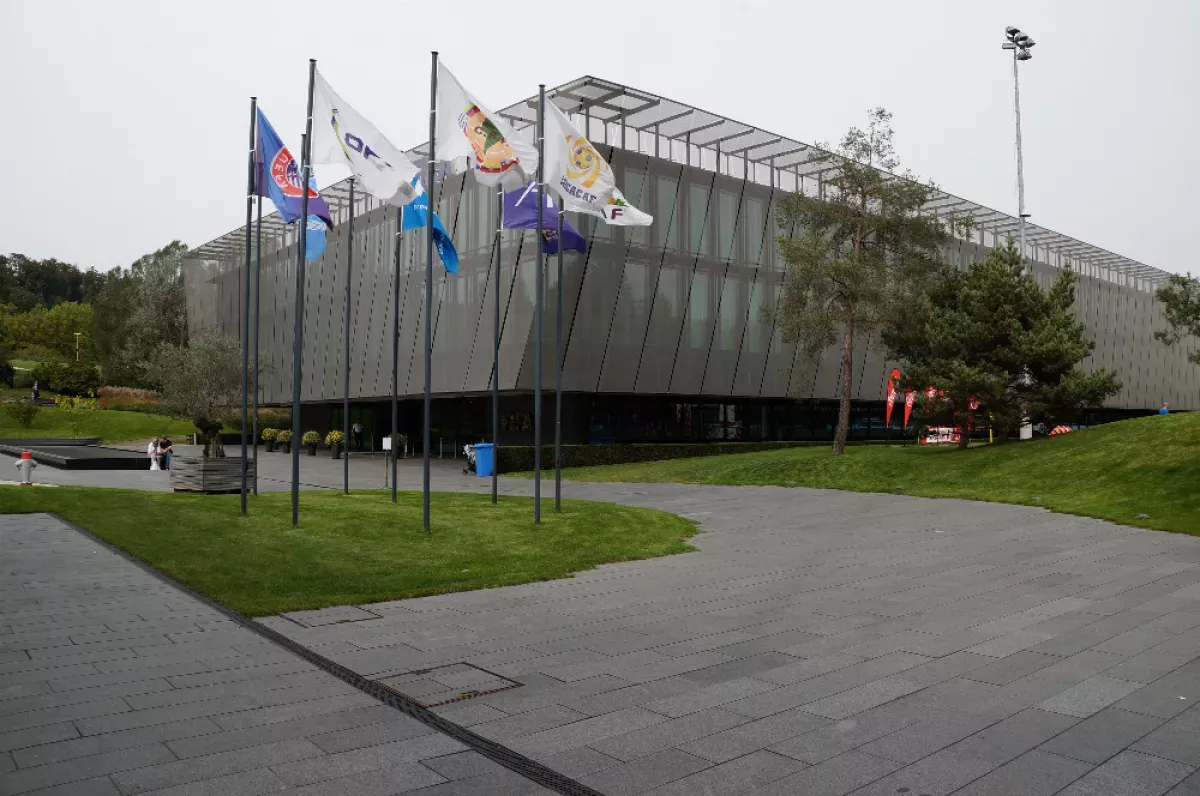
FIFA, or the Fédération Internationale de Football Association, is the international governing body for association football, beach soccer, and futsal. Founded in 1904, it was created to supervise international competition between national football associations. From its headquarters in Zurich, Switzerland, FIFA's membership has grown to include 211 national associations. These associations are also members of one of FIFA's six regional confederations, covering Africa, Asia, Europe, North/Central America and the Caribbean, Oceania, and South America.


1906: Daniel Burley Woolfall's Presidency Begins
In 1906, Daniel Burley Woolfall began his presidency of FIFA, a role he held until 1918.
1906: Daniel Burley Woolfall Replaces Robert Guérin
In 1906, Daniel Burley Woolfall from England replaced Robert Guérin as the president of FIFA.
1908: FIFA's First Tournament: 1908 Olympics
In 1908, FIFA staged its first tournament with the association football competition for the London Olympics, which proved more successful than previous Olympic football events.
1909: South Africa Joins FIFA
In 1909, South Africa became a member of FIFA, marking an expansion beyond Europe.
1912: Argentina Joins FIFA
In 1912, Argentina became a member of FIFA, marking an expansion beyond Europe.
1912: Spalding Athletic Library "Official Guide"
In 1912, the Spalding Athletic Library "Official Guide" included information on the 1912 Olympics, AAFA, and FIFA.
1913: Canada and Chile Join FIFA
In 1913, Canada and Chile became members of FIFA, marking an expansion beyond Europe.
1914: United States Joins FIFA
In 1914, the United States became a member of FIFA, marking an expansion beyond Europe.
1918: End of Daniel Burley Woolfall's Presidency
In 1918, Daniel Burley Woolfall's presidency of FIFA came to an end.
1930: First World Cup
In 1930, FIFA organized the first World Cup tournament, marking a major milestone in promoting association football internationally.
1970: IFAB Request on Slow-Motion Playbacks
In 1970, the International Football Association Board (IFAB) requested television authorities to refrain from slow-motion play-backs that might reflect adversely on referee decisions.
1989: Alleged start of bribery period by ISL to FIFA officials
Between 1989 and 1999, three senior FIFA officials, Nicolas Leoz, Issa Hayatou, and Ricardo Teixeira, were allegedly paid bribes by ISL. These allegations were highlighted in a November 2010 Panorama exposé, claiming they appeared on a list of 175 bribes totaling approximately $100 million.
1991: Inaugural Women's World Cup
In 1991, FIFA commenced the Women's World Cup, expanding its major international tournaments to include women's association football.
1994: Adoption of FIFA Anthem
Since the 1994 FIFA World Cup, FIFA has adopted an anthem composed by Franz Lambert, which is played at official FIFA sanctioned matches and tournaments.
1997: Allegation of João Havelange accepting a $1 million 'bung' from ISL
In 1997, FIFA honorary president João Havelange allegedly accepted a $1 million 'bung' from ISL. This allegation became the subject of an inquiry by the International Olympic Committee in June 2011, following a Panorama exposé.
1998: Extraordinary Congress Sessions Held Annually
Since 1998, FIFA Congress has held extraordinary sessions once a year to make decisions related to FIFA's governing statutes and their implementation.
1999: Alleged end of bribery period by ISL to FIFA officials
Between 1989 and 1999, three senior FIFA officials, Nicolas Leoz, Issa Hayatou, and Ricardo Teixeira, were allegedly paid bribes by ISL. These allegations were highlighted in a November 2010 Panorama exposé, claiming they appeared on a list of 175 bribes totaling approximately $100 million.
2000: FIFA presents Club and Player of the Century awards
In 2000, FIFA presented two awards, FIFA Club of the Century and FIFA Player of the Century, to decide the greatest football club and player of the 20th century. Real Madrid was awarded the Club of the Century, while Diego Maradona and Pelé were jointly awarded the Player of the Century.
May 2006: Release of "Foul! The Secret World of FIFA"
In May 2006, British investigative reporter Andrew Jennings' book, "Foul! The Secret World of FIFA: Bribes, Vote-Rigging, and Ticket Scandals" by HarperCollins, detailed an alleged international cash-for-contracts scandal following the collapse of FIFA's marketing partner International Sport and Leisure (ISL) and revealed how some football officials had been urged to secretly repay the sweeteners they received. The book also alleged vote-rigging in Sepp Blatter's continued control of FIFA as president.

June 2006: BBC Panorama exposé investigates Blatter and FIFA
Shortly after the May 2006 release of "Foul!", a BBC Panorama exposé by Jennings and BBC producer Roger Corke, screened on 11 June 2006, reported that Blatter was being investigated by Swiss police over his role in a secret deal to repay more than £1m worth of bribes pocketed by football officials. Lord Triesman, the former chairman of the English Football Association, described FIFA as an organisation that "behaves like a mafia family", highlighting the organisation's "decades-long traditions of bribes, bungs, and corruption".
2007: FIFA Ruling on Player Registration
In 2007, FIFA introduced a ruling limiting players to be registered with a maximum of three clubs and appear in official matches for a maximum of two in a year, leading to controversy and subsequent modification.
2007: Broadcast Partners Required to Use FIFA Anthem
Since 2007, FIFA has required most of its broadcast partners to use short sequences including the FIFA Anthem at the beginning and end of FIFA event coverage and for break bumpers to help promote FIFA's sponsors.
2008: Blatter's Stance on Referee Errors
In 2008, FIFA president Sepp Blatter expressed his opposition to the use of technology in football, stating that errors should be left in the game and decisions should be made by human referees.
November 2010: Panorama exposé alleges bribery by FIFA officials
In November 2010, a Panorama exposé alleged that three senior FIFA officials, Nicolas Leoz, Issa Hayatou, and Ricardo Teixeira, had been paid huge bribes by ISL between 1989 and 1999. Andrew Jennings claimed they appeared on a list of 175 bribes paid by ISL, totalling about $100 million. The program also alleged that another current official, Jack Warner, has been repeatedly involved in reselling World Cup tickets to touts.
November 2010: FIFA executive members banned for allegedly offering to sell votes
In November 2010, two members of FIFA's executive committee were banned from all football-related activity for allegedly offering to sell their votes to undercover newspaper reporters.
2010: Expectation for reform after bribery scandal
After being re-elected as president of FIFA, Sepp Blatter responded to the allegations by promising to reform FIFA in wake of the bribery scandal, with Danny Jordaan, CEO of the 2010 FIFA World Cup in South Africa, saying there is great expectation for reform.
2010: Incident during the 2010 FIFA World Cup
During a second-round game in the 2010 FIFA World Cup between England and Germany, a shot by Englishman Frank Lampard, crossed the line but was not seen to do so by the match officials, which led FIFA officials to declare that they would re-examine the use of goal-line technology.
2010: Use of African Music for Bumpers
During the 2010 FIFA World Cup, an original piece of African music was used for bumpers, representing an exception to the standard practice of using the FIFA Anthem.
2010: Secret Bonuses Paid After World Cup
Following the 2010 FIFA World Cup in South Africa, leaked documents indicated that $4.4 million in secret bonuses had been paid to the FIFA committee members.
2010: Fresh allegations of corruption against FIFA surface
In light of fresh allegations of corruption by FIFA in late 2010, both Andrew Jennings and Mel Brennan remain highly critical of FIFA. Brennan has called directly for an alternative to FIFA to be considered by the stakeholders of the sport worldwide.
May 2011: Whistle-blower claims of Qatari payments to FIFA executive members
In May 2011, a whistle-blower claimed that FIFA executive committee members Issa Hayatou and Jacques Anouma were paid $1.5 million to vote for Qatar. Blatter did not rule out reopening the 2022 vote if corruption could be proved, but urged taking the matter "step by step".
May 2011: British parliamentary inquiry told of alleged Qatari payments
In early May 2011, a British parliamentary inquiry into why England failed to secure the 2018 finals was told by a member of parliament, Damian Collins, that there was evidence from The Sunday Times newspaper that Issa Hayatou of Cameroon and Jacques Anouma of Ivory Coast were paid by Qatar. Qatar has categorically denied the allegations, as have Hayatou and Anouma.
May 2011: FIFA opens investigation into officials regarding ethics violations
On 25 May 2011, FIFA announced that it had opened an investigation to examine the conduct of four officials—Mohamed Bin Hammam and Jack Warner, along with Caribbean Football Union (CFU) officials Debbie Minguell and Jason Sylvester—in relation to claims made by executive committee member, Chuck Blazer, alleging violations of the FIFA code of ethics.
May 2011: Fred Lunn reports being offered cash for FIFA presidential vote
On 30 May 2011, Fred Lunn, vice-president of the Bahamas Football Association, reported that he was given $40,000 in cash as an incitement to vote for FIFA presidential candidate, Mohamed bin Hammam.
May 2011: The Sunday Times agrees to bring whistle-blower to FIFA
As of 23 May 2011, FIFA president Blatter said that the British newspaper The Sunday Times has agreed to bring its whistle-blowing source to meet senior FIFA officials, who will decide whether to order a new investigation into alleged World Cup bidding corruption.
June 2011: IOC starts inquiry against FIFA honorary president João Havelange
In June 2011, it was revealed that the International Olympic Committee had started inquiry proceedings against FIFA honorary president João Havelange into claims of bribery. Panorama alleged that Havelange accepted a $1 million 'bung' in 1997 from ISL. The IOC stated it "takes all allegations of corruption very seriously".
June 2011: Louis Giskus alleges receiving cash for Bin Hammam vote
On 11 June 2011, Louis Giskus, president of the Surinamese Football Association, alleged that he was given $40,000 in cash for "development projects" as an incentive to vote for Bin Hammam.
October 2011: Dick Pound criticizes FIFA's governance
In October 2011, Dick Pound criticized FIFA, saying it has fallen far short of demonstrating that it recognizes the many problems it faces, that it has the will to solve them, that it is willing to be transparent about what it is doing and what it finds, and that its conduct in the future will be such that the public can be confident in the governance of the sport.
2011: Management Committee Compensation
In 2011, the total compensation for FIFA's management committee, consisting of 35 people, was 30 million Swiss francs. Sepp Blatter, the only full-time member, earned approximately two million Swiss francs.
July 2012: Sanctioning the use of goal-line technology
In early July 2012 FIFA sanctioned the use of goal-line technology, subject to rules specified by the International Football Association Board (IFAB).
July 2012: FIFA appoints chairmen to Ethics Committee chambers
On 17 July 2012, in the wake of announced anti-corruption reforms by Sepp Blatter, FIFA appointed US lawyer Michael J. Garcia as the chairman of the investigative chamber of the FIFA Ethics Committee, while German judge Hans-Joachim Eckert was appointed as the chairman of the Ethics Committee's adjudication chamber.
2013: Start of period of US financial misconduct charges
Between 2013 and 2015 four individuals, and two sports television rights corporations pleaded guilty to United States financial misconduct charges. The pleas of Chuck Blazer, José Hawilla, Daryan Warner, Darrell Warner, Traffic Group and Traffic Sports USA were unsealed in May 2015.
June 2014: Salary Increase for Committee Members
In June 2014, a report in The Sunday Times revealed that the salaries of FIFA committee members had doubled from $100,000 to $200,000 during the year.
September 2014: Garcia delivers report on 2018 and 2022 World Cup bidding
In September 2014, Garcia delivered his 350-page report on the investigation of the 2018 and 2022 FIFA World Cup bidding process. The report was not made public for legal reasons.
December 2014: Garcia's appeal dismissed, Garcia resigns
In December 2014, FIFA's Appeal Committee dismissed Garcia's appeal against the Eckert summary. Garcia resigned from his role as FIFA ethics investigator in protest of FIFA's conduct, citing a "lack of leadership" and lost confidence in Eckert's independence.
2014: Dave Zirin's criticism of FIFA's corruption and structure
In a 2014 interview, American sportswriter Dave Zirin said that corruption is endemic to FIFA leadership and that the organisation should be abolished for the game's good. He suggested separating the organizational bodies responsible for monitoring corruption and marketing the sport.
May 2015: Arrests of FIFA officials on corruption charges
In May 2015, 14 people were arrested, including nine FIFA officials, after being accused of corruption.
May 2015: Arrest of FIFA officials in Switzerland on bribery suspicion
In May 2015, FIFA's top officials were arrested at a hotel in Switzerland on suspicion of receiving bribes totaling $100m (£65m). The US Department of Justice stated that nine FIFA officials and four executives of sports management companies were arrested and accused of over $150m in bribes.
May 2015: US Department of Justice indicts FIFA officials and marketing executives
In May 2015, fourteen FIFA officials and marketing executives were indicted by the United States Department of Justice. The officials were arrested in Switzerland and are in the process of extradition to the US. Specific charges include wire fraud, racketeering, and money laundering.
May 2015: Arrest of FIFA Officials
On May 27, 2015, several high-ranking FIFA officials were arrested by Swiss authorities amidst allegations of corruption, bribery, and vote-rigging related to the 2018 and 2022 World Cup awards. The U.S. Department of Justice also indicted these officials on charges including racketeering, wire fraud, and money laundering.
May 2015: FIFA Corruption Scandal Exposed
On May 27, 2015, the U.S. Department of Justice indicted 14 FIFA officials and marketing executives, charging them with receiving approximately $150 million in bribes over two decades. The scandal implicated over two dozen FIFA officials and associates and led to the arrest of several high-ranking officials and the resignation of Sepp Blatter.
May 2015: Unsealing of guilty pleas in US financial misconduct charges
The guilty pleas of Chuck Blazer, José Hawilla, Daryan Warner, Darrell Warner, Traffic Group, and Traffic Sports USA to United States financial misconduct charges were unsealed in May 2015.
June 2015: Swiss authorities claim report was of "little value"
In June 2015, Swiss authorities claimed that Garcia's report was of "little value".
September 2015: Blatter suggests pre-planned awards for 2018 and 2022 World Cups
On 28 September 2015, Sepp Blatter suggested that the 2018 World Cup being awarded to Russia was planned before the voting, and that the 2022 World Cup would have then been awarded to the United States. However, this plan changed after the election ballot, and the 2022 World Cup was awarded to Qatar instead of the US.
February 2016: Gianni Infantino Elected FIFA President
On February 26, 2016, Gianni Infantino was elected as the president of FIFA at an extraordinary FIFA Congress session, following the suspension of former president Sepp Blatter.
2016: The Best FIFA Football Awards established
Since 2016, FIFA holds an annual awards ceremony, The Best FIFA Football Awards, recognizing individual and team achievements in international association football. Key awards include The Best FIFA Men's Player, The Best FIFA Women's Player, The Best FIFA Football Coach, and FIFA FIFPRO World 11.
May 2017: Removal of Ethics Committee Chairmen
On May 9, 2017, the FIFA Council, following a proposal by Gianni Infantino, decided not to renew the mandates of Cornel Borbély and Hans-Joachim Eckert, the chairmen of the ethics committee. In addition to the chairmen, 11 of 13 committee members were removed.
March 2018: Video Assistant Referees Approved
On March 3, 2018, the IFAB officially wrote video assistant referees (VARs) into the Laws of the Game permanently, marking a shift in FIFA's stance on video evidence during matches. Their use remains optional for competitions.
2018: Allegations against FIFA officials made to UK Parliament
David Triesman, the former head of England's bid and the English Football Association, told the UK Parliament in 2011 that four long-standing FIFA executive committee members—Jack Warner, Nicolás Leoz, Ricardo Teixeira and Worawi Makudi—engaged in "improper and unethical" conduct in the 2018 bidding, which was won by Russia. All six FIFA voters have denied wrongdoing.
2018: Criticism of awarding 2018 World Cup to Russia
FIFA's choice to award the 2018 World Cup to Russia has been widely criticized by media. It has been alleged that some FIFA inside sources insist that the Russian kickbacks of cash and gifts given to FIFA executive members were enough to secure the Russian 2018 bid weeks before the result was announced.
2018: Accusations of Bribery Related to 2018 World Cup
In 2018 accusations were made regarding bribery related to the awarding of hosting rights for the 2018 World Cup to Russia.
2018: FIFA revises code of ethics
In 2018, FIFA revised its code of ethics to remove corruption as one of the enumerated bases of ethical violations, but retained bribery, misappropriation of funds and manipulation of competitions as offences, while adding a statute of limitation clause that those offences could not be pursued after a ten-year period.
2018: 2018 World Cup Controversy
In 2018, allegations surfaced regarding corruption, bribery, and vote-rigging in connection with the awarding of the 2018 World Cup to Russia.
2018: British parliamentary inquiry into England's failure to secure the 2018 finals
In early May 2011, a British parliamentary inquiry into why England failed to secure the 2018 finals was told by a member of parliament, Damian Collins, that there was evidence from The Sunday Times newspaper that Issa Hayatou of Cameroon and Jacques Anouma of Ivory Coast were paid by Qatar. Qatar has categorically denied the allegations, as have Hayatou and Anouma.
2018: Blatter suggests pre-planned awards for 2018 World Cups
On 28 September 2015, Sepp Blatter suggested that the 2018 World Cup being awarded to Russia was planned before the voting, and that the 2022 World Cup would have then been awarded to the United States. However, this plan changed after the election ballot, and the 2022 World Cup was awarded to Qatar instead of the US.
2018: Swiss authorities open criminal investigation into FIFA's 2018 World Cup bid
Swiss authorities say they have opened a separate criminal investigation into FIFA's operations pertaining to the 2018 and 2022 World Cup bids.
2018: Criticism of timing of Panorama broadcast before 2018 World Cup host decision
UK Prime Minister David Cameron and Andy Anson, head of England's World Cup bid, criticized the timing of the Panorama broadcast three days before FIFA decided on the host for the 2018 FIFA World Cup, as it might damage England's bid. The voters included officials accused by the program.
2019: Start of Financial Cycle
In 2019, FIFA began a financial cycle that concluded in 2022, during which it generated substantial revenue and maintained significant cash reserves.
April 2022: FIFA launches FIFA+ streaming service
In April 2022, FIFA launched FIFA+, an OTT service providing up to 40,000 live matches per year, including 11,000 women's matches. FIFA+ would also offer archival content, including every FIFA World Cup and FIFA Women's World Cup match recorded on camera, alongside original documentary content. Eleven Sports was later reported to be responsible for populating the FIFA+ platform with live matches.
November 2022: FIFA officials warn players against political involvement in Qatar
In November 2022, FIFA officials instructed players to refrain from engaging in political matters and to concentrate on sports while in Qatar.
2022: Al Jazeera's alleged $400 million offer to FIFA for broadcasting rights
According to leaked documents seen by The Sunday Times, Qatari state-run television channel Al Jazeera secretly offered $400 million to FIFA for broadcasting rights, just 21 days before FIFA announced that Qatar would hold the 2022 World Cup.
2022: Criticism of awarding 2022 World Cup to Qatar
FIFA's choice to award the 2022 World Cup to Qatar has been widely criticized by media.
2022: FIFA Suspends Russia After Invasion of Ukraine
Following the 2022 Russian invasion of Ukraine and a recommendation by the International Olympic Committee (IOC), FIFA suspended Russia's participation in competitions. The Russian Football Union's appeal to the Court of Arbitration for Sport was unsuccessful.
2022: Accusations of Bribery Related to 2022 World Cup
In 2022 accusations were made regarding bribery related to the awarding of hosting rights for the 2022 World Cup to Qatar.
2022: FIFA Revenue
In 2022, FIFA reported revenues of over US$5.8 billion, concluding the 2019–2022 cycle with a net positive of $1.2 billion and cash reserves of over $3.9 billion.
2022: 2022 World Cup Controversy
In 2022, allegations surfaced regarding corruption, bribery, and vote-rigging in connection with the awarding of the 2022 World Cup to Qatar.
2022: Possible reopening of 2022 vote if corruption proved
In May 2011, in light of whistle-blower claims of Qatari payments to FIFA executive members, Blatter did not rule out reopening the 2022 vote if corruption could be proved, but urged taking the matter "step by step".
2022: Blatter suggests pre-planned awards for 2022 World Cups
On 28 September 2015, Sepp Blatter suggested that the 2018 World Cup being awarded to Russia was planned before the voting, and that the 2022 World Cup would have then been awarded to the United States. However, this plan changed after the election ballot, and the 2022 World Cup was awarded to Qatar instead of the US.
2022: Swiss authorities open criminal investigation into FIFA's 2022 World Cup bid
Swiss authorities say they have opened a separate criminal investigation into FIFA's operations pertaining to the 2018 and 2022 World Cup bids.
2023: FIFA+ broadcasts youth World Cups and Women's World Cup
In 2023, FIFA+ broadcast all matches of the youth World Cups in both genders, starting with the 2023 FIFA U-20 World Cup. FIFA+ also showed the 2023 FIFA Women's World Cup live in selected regions such as Japan, Brazil, Indonesia, and Thailand.
October 2024: Allegations against FIFA for unpaid player sums
In October 2024, allegations surfaced against FIFA by players from several countries, claiming the organization failed to pay them agreed sums, totaling up to £3 million. According to reports, 420 players did not receive the payments as agreed with FIFA.
October 2024: Female footballers demand FIFA to end sponsor deal with Aramco
In October 2024, more than 100 female footballers sent an open letter to FIFA demanding the organisation to end its sponsor deal with Saudi oil company Aramco, due to the continuous human rights violations, women's rights abuses and criminalisation of homosexuality in Saudi Arabia.
May 2025: FIFA+ coverage of competitions
As of 16 May 2025 FIFA+ covers the following competitions:
November 2025: FIFA announces creation of Peace Prize
On 6 November 2025, the International Federation of Football Associations announced the creation of its FIFA Peace Prize, intended as "an award to recognize exceptional actions for peace and unity... bestowed on behalf of all football-loving people from all around the world".
December 2025: Inaugural FIFA Peace Prize presented to Donald Trump
At the 2026 World Cup draw in Washington, D.C. on 5 December 2025, the inaugural FIFA Peace Prize was presented to Donald Trump, president of the United States, by head of FIFA Gianni Infantino.
2026: FIFA Peace Prize awarded at World Cup draw
At the 2026 World Cup draw in Washington, D.C. in December 2025, the inaugural FIFA Peace Prize was presented to Donald Trump, president of the United States, by head of FIFA Gianni Infantino.
Mentioned in this timeline
Ukraine is a country in Eastern Europe the second-largest on...
Diego Maradona was an Argentine professional football player and manager...

Qatar is a country located on the Qatar Peninsula in...
Germany officially the Federal Republic of Germany is located in...
Suriname located in northern South America and sometimes considered part...
News encompasses current events communicated through various media including word...
Trending
11 months ago Israeli Strike Kills Aid Worker, Red Crescent Staff in Gaza Amid Starvation Crisis.
Chase Infiniti Payne is an American actress recognized for her roles in 'Presumed Innocent' and 'One Battle After Another' She...
1 month ago Prince William's FIFA World Cup US Visit: George possibility and Harry meeting?
3 months ago Will Ferrell, Olivia Rodrigo, and Matt Damon to Close Out SNL Season 51
3 months ago Pulisic aims to end drought, USMNT considers tactics for World Cup boost.
1 year ago Colin Farrell Lauds Rhenzy Feliz; Interviews Danny DeVito About Penguin Roles.
Popular

Cristiano Ronaldo widely considered one of the greatest footballers captains...
Peter Thiel is a German-American entrepreneur venture capitalist and conservative...
Buc-ee's is an American chain of large country stores gas...
Barack Obama the th U S President - was the...
Sir Keir Starmer is a British politician and lawyer currently...
Neymar J nior is a Brazilian professional footballer renowned for...