History of Italy in Timeline


Italy, officially the Italian Republic, is a country in Southern and Western Europe characterized by its peninsular shape extending into the Mediterranean Sea, bordered by the Alps. It includes nearly 800 islands, such as Sicily and Sardinia. It shares land borders with France, Switzerland, Austria, Slovenia, Vatican City, and San Marino. Italy is the tenth-largest country in Europe by area and the third-most populous EU member, with approximately 59 million residents. Rome is its capital and largest city, followed by Milan, Naples, Turin, and others.
3 hours ago : Ranieri expresses interest in managing the Italian national team amidst their current crisis.
Claudio Ranieri has declared his availability for the Italy national team manager position. He stated he is free and would accept a call, willing to lead the team through its current challenges. Ranieri open to the job to help the team.


1900: Economy at lowest point since 1944
In 1944, per capita income was at its lowest point since 1900.
1906: Giosuè Carducci Nobel Prize
Nationalist poet Giosuè Carducci received the Nobel laureate in 1906.
1913: Adoption of male universal suffrage
In 1913, male universal suffrage was adopted.
1914: Peak Years of Italian Diaspora
Between 1898 and 1914, the peak years of Italian diaspora, approximately 750,000 Italians emigrated annually.
1914: Release of Cabiria
Cabiria, the most famous Italian silent film, was released in 1914.
1915: Italy takes part in World War I
From 1915 to 1918, Italy joined World War I with the Entente against the Central Powers.
October 1918: Victory at the Battle of Vittorio Veneto
In October 1918, the Italians launched a massive offensive, culminating in victory at the Battle of Vittorio Veneto.
1918: Italy in World War I
From 1915 to 1918, Italy took part in World War I with the Entente against the Central Powers.
1919: Treaty of Saint-Germain-en-Laye
The Treaty of Saint-Germain-en-Laye in 1919 allowed for annexation of Trentino and South Tyrol, the Julian March, Istria, the Kvarner Gulf, and the Dalmatian city of Zara.
1920: Treaty of Rapallo
The Treaty of Rapallo in 1920 allowed for annexation of Trentino and South Tyrol, the Julian March, Istria, the Kvarner Gulf, and the Dalmatian city of Zara.
1921: Giovanni Giolitti as prime minister
Giovanni Giolitti served as prime minister five times between 1892 and 1921.
1921: Italian Grand Prix of Formula One held
Since 1921, the Italian Grand Prix of Formula One has been held, primarily at Autodromo Nazionale Monza.
October 1922: March on Rome coup
In October 1922, the Blackshirts of the National Fascist Party organised a mass demonstration and the "March on Rome" coup.
1922: Establishment of the Italian fascist dictatorship
In 1922, the Italian fascist dictatorship was established.
1923: Establishment of the Italian Air Force
The Italian Air Force was founded as an independent service arm in 1923 by King Victor Emmanuel III as the Regia Aeronautica ('Royal Air Force').
1924: Treaty of Rome
The Treaty of Rome in 1924 led to annexation of Fiume by Italy.
1926: Grazia Deledda Nobel Prize
Realist writer Grazia Deledda received the Nobel laureate in 1926.
1930: Rome Masters founded
In 1930, the Rome Masters, a prestigious tennis tournament, was founded.
1932: Venice Film Festival held
Since 1932, the Venice Film Festival, awarding the Golden Lion, has been held.
1935: Invasion of Ethiopia
In 1935, Mussolini invaded Ethiopia and founded Italian East Africa, resulting in international isolation.
1936: Luigi Pirandello Nobel Prize
Modern theatre author Luigi Pirandello received the Nobel Prize in 1936.
1940: Italy during World War II
During World War II, Italy was first part of the Axis until an armistice with the Allied powers (1940–1943).
July 1943: Allied invasion of Sicily and collapse of Fascist regime
In July 1943, an Allied invasion of Sicily began, leading to the collapse of the Fascist regime on 25 July and Mussolini being deposed and arrested.
1943: Italy during World War II
During World War II, Italy was a co-belligerent of the Allies during the Italian resistance and liberation of Italy from German occupation and the collaborationist RSI from 1943–1945.
1944: Economy at lowest point since 1900
In 1944, per capita income was at its lowest point since 1900.
April 1945: End of hostilities
Hostilities ended on 29 April 1945, when the German forces in Italy surrendered.
April 1945: Execution of Mussolini
In April 1945, with defeat looming, Mussolini attempted to escape north, but was captured and summarily executed by partisans.
1945: Liberation of Italy
During World War II, Italy was a co-belligerent of the Allies during the Italian resistance and liberation of Italy from German occupation and the collaborationist RSI from 1943–1945.
1946: Establishment of Unitary Parliamentary Republic
In 1946, Italy became a unitary parliamentary republic, and the monarchy was abolished.
1946: Birth of the Italian Republic
In 1946, the Italian Republic was born, commemorated by the Festa della Repubblica on 2 June.
1946: Monarchy replaced by a republic
In 1946, the monarchy was replaced by a republic and the country made a strong recovery.
1946: Il Canto degli Italiani becomes the national anthem
In 1946, the song "Il Canto degli Italiani" became the national anthem.
1946: Revival of Italian republicanism
In the aftermath of the war there was a revival of Italian republicanism, leading to the 1946 Italian institutional referendum.
1946: Italy becomes a republic
Italy became a republic after the 1946 referendum held on 2 June, a day celebrated since as Festa della Repubblica. This was the first time women voted nationally.
1946: Formation of the Army
The Army in Italy was formed in 1946, when Italy became a republic, from what remained of the "Royal Italian Army".
1948: Christian Democrats win victory
In 1948, the Christian Democrats, under Alcide De Gasperi, won a landslide victory due to fears of a Communist takeover.
1948: Constitution of Italy
In 1948, the Constitution of Italy was established as the highest source of law.
1948: Scuderia Ferrari competing since 1948
Since 1948, the Italian Scuderia Ferrari has been competing in Grand Prix racing.
1948: Republican Constitution approved
The Republican Constitution was approved in 1948.
1949: Italy becomes a member of NATO
In 1949 Italy became a member of NATO.
1950: Italian Economic Miracle
The 1950s marked the beginning of the Italian economic miracle which resulted in large-scale internal migration.
1955: Admitted to the United Nations
In 1955, Italy was admitted to the United Nations.
1956: Italy hosted the Winter Olympics
In 1956, Italy hosted the Winter Olympics.
1959: Salvatore Quasimodo
In 1959, poet Salvatore Quasimodo was recognized.
1960: Italy hosted the Summer Olympics
In 1960, Italy hosted the Summer Olympics.
1960: Italo Calvino
In 1960, short story writer Italo Calvino was recognized.
1963: Vajont Dam Flood
In 1963, Italy experienced the Vajont Dam flood due to deforestation, illegal building, and poor land-management policies leading to significant erosion.
1963: Operation of Nuclear Reactors
In 1963, Italy operated nuclear reactors.
1964: Gigliola Cinquetti Eurovision Win
Gigliola Cinquetti won Eurovision in 1964.
1973: Oil crisis
From the late 1960s until the early 1980s, the country experienced the Years of lead, characterised by economic difficulties, especially after the 1973 oil crisis; social conflicts; and terrorist massacres.
1976: Italian players won the Davis Cup
In 1976, Italian players won the Davis Cup for the first time.
1978: Universal Public Healthcare System
Since 1978, Italy has run a universal public healthcare system.
1980: Italian Grand Prix of Formula One held at Imola
In 1980, the Italian Grand Prix of Formula One was held at Imola.
1983: Italy men's basketball team won gold at EuroBasket
In 1983, the Italy men's basketball team achieved their best result by winning gold at the EuroBasket tournament.
1985: End of Catholicism as State Religion
Since 1985, Catholicism is no longer the state religion of Italy.
1986: Chernobyl Disaster
The Chernobyl disaster occurred in 1986, which later influenced Italy's decision to abandon nuclear power after the 1987 referendums.
1987: Abandonment of Nuclear Power
After the 1987 referendums, in the wake of the 1986 Chernobyl disaster, Italy abandoned nuclear power.
1990: Italy men's volleyball team won World Championships
In 1990, Italy's men's national volleyball team won the World Championships, marking the first of three consecutive wins.
1990: Termination of Nuclear Programme
In 1990, after the Chernobyl disaster and referendums, Italy's nuclear programme was terminated.
1991: Discovery of Ötzi
In 1991, a natural mummy, Ötzi, dated 3400–3100 BC, was discovered in the Similaun glacier.
1992: Terror attacks by the Sicilian Mafia
Between 1992 and 1993, Italy faced terror attacks perpetrated by the Sicilian Mafia as a consequence of new anti-mafia measures by the government.
1993: Terror attacks by the Sicilian Mafia
Between 1992 and 1993, Italy faced terror attacks perpetrated by the Sicilian Mafia as a consequence of new anti-mafia measures by the government.
1994: Italy men's volleyball team won World Championships
In 1994, Italy's men's national volleyball team won the World Championships for the second consecutive time.
1995: Record Low Fertility Rate
In 1995, Italy's total fertility rate (TFR) reached an all-time low of 1.2 children per woman.
1997: Dario Fo Nobel Prize
In 1997, satirist and theatre author Dario Fo was recognized.
1998: Italy men's volleyball team won World Championships
In 1998, Italy's men's national volleyball team completed a three-peat, winning the World Championships for the third consecutive time.
1998: Sarno Ecological Disaster
In 1998, Sarno experienced an ecological disaster in Italy due to deforestation, illegal building, and poor land-management policies leading to significant erosion.
1999: Italy men's basketball team won gold at EuroBasket
In 1999, the Italy men's basketball team won gold at EuroBasket.
2000: WHO Healthcare Ranking
According to a 2000 World Health Organization research, Italy had the second best healthcare system in the world.
2000: Decline in Farms
Between 2000 and 2010, there was a 32% decrease in the number of farms in Italy.
2000: Daily Smokers Proportion
In 2000, the proportion of daily smokers in Italy was 24%.
2002: Road Network
In 2002, Italy had 668,721 km of serviceable roads, including 6,487 km of motorways.
2002: Adoption of the Euro
Italy joined the common European currency, the euro, in 2002.
2003: Support for Operation Enduring Freedom (OEF)
From 2003, Italy deployed over 2,000 troops to Afghanistan in support of Operation Enduring Freedom (OEF).
2004: EU Enlargement
In 2004, the European Union enlarged to include additional member states.
2004: Italy men's basketball team won silver at the Olympics
In 2004, the Italy men's basketball team won silver at the Olympics.
2004: Major Seaports
In 2004, there were 43 major seaports in Italy, including Genoa.
2005: Vascular plant species in Italy recorded
As of 2005, 6,759 vascular plant species are recorded in the Data bank of Italian vascular flora.
2005: Civilian Air and Merchant Fleets
In 2005, Italy maintained a civilian air fleet of about 389,000 units and a merchant fleet of 581 ships.
2005: Vehicle Circulation
In 2005, about 34,667,000 cars and 4,015,000 goods vehicles circulated on the Italian road network.
2005: Voluntary Military Service
Since 2005, military service in Italy has been voluntary.
2005: Smoking Restrictions
Since 2005, smoking in public places in Italy has been restricted to "specially ventilated rooms".
August 2006: Troop Deployment for UNIFIL
In August 2006, Italy deployed about 2,450 troops for the United Nations Interim Force in Lebanon.
2006: Italian players won the Billie Jean King Cup
In 2006, Italian players won the Billie Jean King Cup for the first time.
2006: Italy hosted the Winter Olympics
In 2006, Italy hosted the Winter Olympics.
2007: EU Enlargement: Romania and Bulgaria
In 2007, the European Union enlarged with the addition of Romania and Bulgaria.
2008: Slight Increase in Fertility Rate
In 2008, Italy's total fertility rate climbed slightly to 1.4.
2008: Estimated Illegal Immigrants
In 2008, it was estimated that there were 670,000 illegal immigrants in Italy.
2008: Government Overturned Nuclear Programme Termination
In 2008, the Italian government overturned the decision to terminate the nuclear program, planning to build up to four nuclear power plants.
2008: Financial Crisis
Italy was hit by the 2008 financial crisis, which exacerbated structural problems.
2008: Great Recession
The effects of the Great Recession that began in 2008 had a significant impact on Italy's economy and public finances, leading to austerity measures.
2009: Mafia Presence Report
A 2009 report identified 610 comuni with a strong Mafia presence, where 13 million Italians live and 15% of GDP is produced.
2009: Italian players won the Billie Jean King Cup
In 2009, Italian players won the Billie Jean King Cup.
2009: Messina Mudslides
In 2009, Messina experienced mudslides in Italy due to deforestation, illegal building, and poor land-management policies leading to significant erosion.
2010: Agricultural Census
According to the agricultural census in 2010, there were 1.6 million farms in Italy.
2010: Catholic Population
Around 2010, Italy had the world's fifth-largest Catholic population and the largest in Europe.
2010: Italian players won the Billie Jean King Cup
In 2010, Italian players won the Billie Jean King Cup.
2010: Leading producer of renewable energy
In 2010, Italy ranked as the fourth largest provider of installed solar energy capacity and sixth largest of wind power capacity.
2010: Italian Military Personnel
In 2010, the Italian military had 293,202 personnel on active duty, of which 114,778 were Carabinieri.
2010: Completion of Montalto di Castro Photovoltaic Power Station
In 2010, the Montalto di Castro Photovoltaic Power Station, the largest photovoltaic power station in Italy, was completed.
2010: Foreign-Born Population Origins
In 2010, the foreign-born population in Italy came from Europe (54%), Africa (22%), Asia (16%), the Americas (8%), and Oceania (0.06%).
2011: Air Transport Passengers
In 2011, Italy was fifth in Europe by number of passengers using air transport, with about 148 million passengers.
2011: Minority Christian Faiths
In 2011, minority Christian faiths in Italy included an estimated 1.5 million Orthodox Christians.
2012: Most Common Mother Tongues
According to the Italian National Institute of Statistics, in 2012 Romanian was the most common mother tongue among foreign residents: almost 800,000 people speak Romanian as their first language.
2012: Inland Waterways Network
In 2012, the national inland waterways network in Italy had a length of 2,400 km for commercial traffic.
2012: Daily Smokers Proportion
In 2012, the proportion of daily smokers in Italy was 22%.
2013: Italian players won the Billie Jean King Cup
In 2013, Italian players won the Billie Jean King Cup.
2013: Financing of Palestinian Authority
In 2013, Italy contributed €60 million to the Palestinian Authority.
2013: Troop Deployment Abroad
In 2013, Italy had 5,296 troops deployed abroad, engaged in 33 UN and NATO missions in 25 countries.
2013: UNESCO included Italian festivals and pasos among the intangible cultural heritage
In 2013, UNESCO recognized Italian festivals and pasos, such as the Varia di Palmi, the Macchina di Santa Rosa in Viterbo, and faradda di li candareri in Sassari, as intangible cultural heritage.
2013: Mediterranean Diet UNESCO Recognition
In 2013, UNESCO, prompted by Italy, added the Mediterranean diet to the Representative List of the Intangible Cultural Heritage of Humanity.
2013: EU Enlargement: Croatia
In 2013, the European Union enlarged with the addition of Croatia.
2013: Global Fashion Capital Rankings
In the 2013 Top Global Fashion Capital Rankings, Rome was ranked sixth and Milan twelfth.
2014: EU Council Presidency
In 2014, Italy held the rotating presidency of the EU Council.
2014: Solar Energy Production
In 2014, solar energy production accounted for 9% of Italy's electricity, making it the country with the highest contribution from solar energy in the world.
2014: Navy Operations
In 2014, the Italian Navy operated 154 vessels in service, including minor auxiliary vessels.
2014: Travel and Tourism Income
In 2014, the income from travel and tourism was EUR163 billion, representing 10% of Italy's GDP, with 1,082,000 jobs directly related to the industry.
2014: Population Decline
Since 2014, Italy's overall population has been falling steadily.
2015: Life Expectancy
In 2015, Italy's life expectancy was 80.5 years for men and 84.8 years for women, ranking 5th in the world.
2015: Sergio Mattarella Becomes President
In 2015, Sergio Mattarella became the president of Italy.
2015: Automotive Industry Contribution to GDP
In 2015, the Italian automotive industry contributed 9% to GDP with over 144,000 firms and almost 485,000 employees.
2016: Academy Awards for Best Foreign Language Film
As of 2016, Italian films have won 12 Palmes d'Or, 11 Golden Lions, and 7 Golden Bears.
2016: Italian Citizenship Acquired
In 2016, about 201,000 people became Italian citizens.
2016: Referendum rejects institutional reforms
In 2016, institutional reforms intended to streamline the political system and strengthen the executive branch were rejected by a referendum.
2017: G7 Presidency
In 2017, Italy held the rotating presidency of the G7.
2017: Rome Tourism
In 2017, Rome was the third most visited city in Europe and 12th in the world, with 9.4 million arrivals.
2018: Organization for Security and Co-operation in Europe Presidency
In 2018, Italy held the rotating presidency of the Organization for Security and Co-operation in Europe (OSCE).
2018: Secondary Education Evaluation
In 2018, Italy's secondary education was evaluated as being below the average among OECD countries.
2018: Youth Unemployment Rate
In 2018, the youth unemployment rate in Italy was 32%.
2019: University Rankings
In 2019, 33 Italian universities were ranked among the world's top 500.
2020: Foreign Citizen Distribution
In 2020, 61% of foreign citizens in Italy lived in the north, 24% in the centre, 11% in the south, and 4% on the islands.
2020: Healthcare Spending
In 2020, healthcare spending in Italy accounted for 10% of GDP.
2020: Renewable energy consumption
In 2020, renewable energy provided approximately 37% of Italy's energy consumption.
2020: COVID-19 pandemic
The COVID-19 pandemic, which began in 2020, severely affected Italy's public health and economic performance.
2021: Foreign Residents in Italy
In 2021, Italy had about 5.2 million foreign residents, making up 9% of the population.
2021: Italian Air Force Combat Jets
In 2021, the Italian Air Force operated 219 combat jets.
2021: Median Disposable Income
In 2021, the median disposable income in Italy was $27,949 per year (PPP).
2021: ITA Airways
Since 2021, Italy's flag carrier has been ITA Airways, which took over from Alitalia.
2022: General Election
During the 2022 general election, the Brothers of Italy, Democratic Party, and Five Star Movement and their coalitions won 357 of the 400 seats in the Chamber of Deputies, and 187 of 200 in the Senate.
2022: Giorgia Meloni becomes prime minister
In 2022, Giorgia Meloni was sworn in as Italy's first female prime minister.
2022: Civil Airports
In 2022, there were 45 civil airports in Italy, including the hubs of Milan Malpensa Airport and Rome Fiumicino Airport.
2023: Italian players won the Davis Cup
In 2023, Italian players won the Davis Cup.
2023: Record Low Number of Births
In 2023, Italy recorded a record low of 379,000 births, the fewest since 1861.
2023: Italy's Rank as Largest Exporter
Italy was the world's 9th-largest exporter in 2023.
2024: Trade surplus
As of 2024, Italy exported €612 billion in goods and had a trade surplus of €46 billion.
2024: Italian players won the Davis Cup and the Billie Jean King Cup
In 2024, Italian players won the Davis Cup and the Billie Jean King Cup.
2024: Population Estimate
In 2024, Italy's population is estimated to have fallen just below 59 million, representing a loss of more than 1.36 million people in one decade.
2024: Railway Network
In 2024, Italy's railway network totalled 16,879 km, of which 12,277 km is electrified.
August 2025: Strait of Messina Bridge Approval
In August 2025, the Meloni government gave final approval for the planned Strait of Messina Bridge, with construction scheduled to start in the autumn of 2025.
2025: Italy Population
As of 2025, Italy has 58,915,561 inhabitants with a population density of 195 inhabitants per square kilometre.
2025: Italian players won the Davis Cup and the Billie Jean King Cup
In 2025, Italian players won the Davis Cup and the Billie Jean King Cup.
2025: Global Innovation Index Ranking
In 2025, Italy was ranked 28th in the Global Innovation Index.
2026: Italy to host the Winter Olympics
In 2026, Italy is hosting the Winter Olympics in Milan and Cortina d'Ampezzo.
Mentioned in this timeline
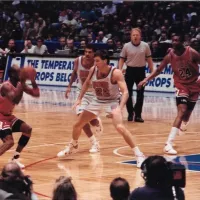
Basketball is a team sport played on a rectangular court...
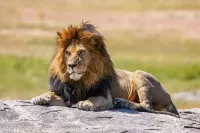
The lion Panthera leo is a large cat species native...

Giorgia Meloni is the current Prime Minister of Italy the...
Morocco a North African country in the Maghreb region boasts...
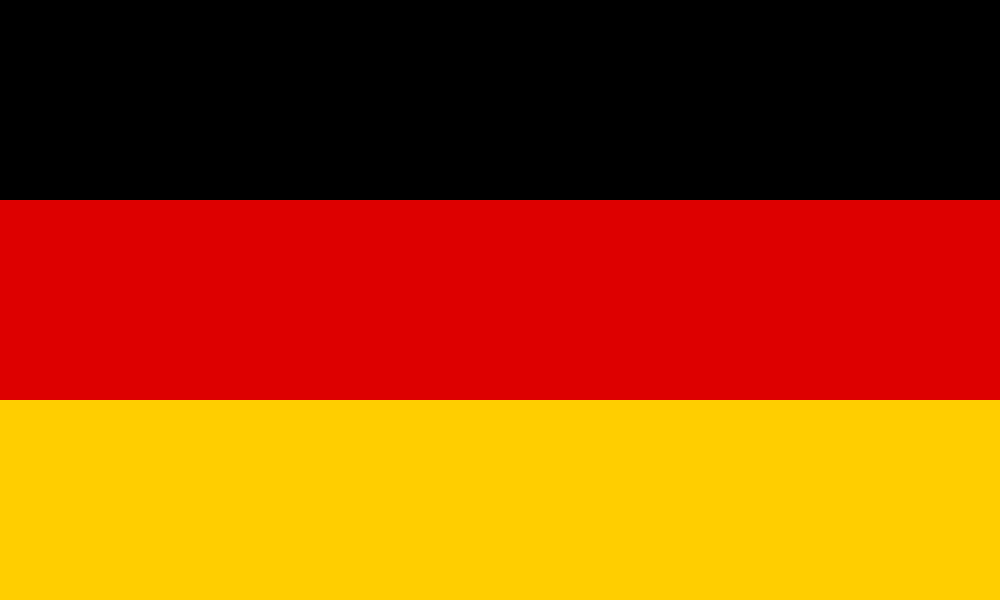
Germany officially the Federal Republic of Germany is located in...
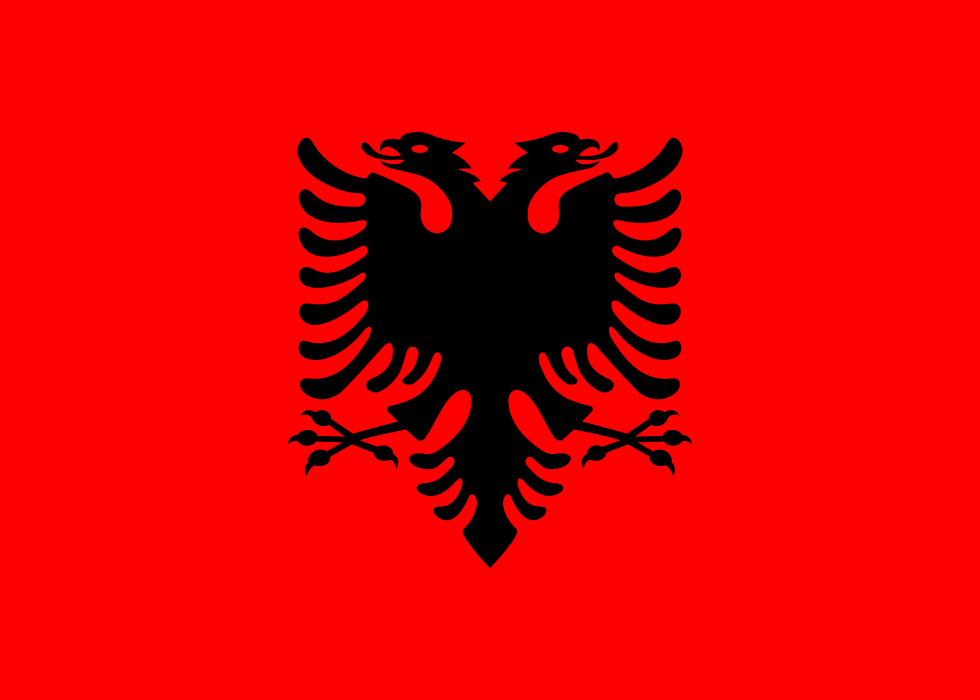
Albania officially the Republic of Albania is a country in...
Trending
8 minutes ago Madison Keys shifts focus to WTA 125 Paris after Italian Open loss.
9 minutes ago 85-year-old French widow details her detention in Trump's immigration crackdown: A harrowing experience.
1 hour ago Trump claimed the White House's pre-renovation state and Melania's reaction to MAGA makeover.
1 hour ago Benedict Kisdy wins Killeen ISD school board seat; Incumbents retain positions.

2 hours ago Zverev Advances in Rome: Predictions and Match Analysis Against Darderi Highlighted
3 hours ago Ranieri expresses interest in managing the Italian national team amidst their current crisis.
Popular
Ted Turner is an American entrepreneur and media mogul best...

Michael Joseph Jackson the King of Pop was a highly...
William Franklin Graham III known as Franklin Graham is an...
Graham Cunningham Platner is an American oyster farmer and Marine...
Marco Rubio is an American politician and diplomat currently serving...
John F Kennedy JFK was the th U S President...