History of Mexico–United States border wall in Timeline


The Mexico–United States border wall is a series of barriers erected along the border to deter illegal immigration from Mexico into the United States. These barriers are not continuous and are classified as either fences or walls.
1909: Construction of the first U.S. border barrier begins
Between 1909 and 1911, the U.S. constructed its first border barrier, a barbed-wire fence intended to prevent cattle movement, in Ambos Nogales.


1910: Rise in U.S.-Mexico tensions; First international bridge built
In 1910, tensions between the U.S. and Mexico began to rise due to the Mexican Revolution and World War I, increasing concerns about weapons smuggling and espionage. That same year, the Brownsville & Matamoros International Bridge was built, becoming the first international bridge between the two countries.
1911: Construction of the first U.S. border barrier completed
Between 1909 and 1911, the U.S. constructed its first border barrier, a barbed-wire fence intended to prevent cattle movement, in Ambos Nogales.
1918: Mexico builds its first border barrier
In 1918, Mexico erected its first border barrier in Ambos Nogales, a 6-foot (1.8 m)-tall wire fence designed to direct the flow of people.
1929: Expansion of the U.S. border barrier in Ambos Nogales
In 1929, the initial barbed-wire fence in Ambos Nogales was expanded with a "six foot-high chain-link fence", increasing the physical barrier along the border.
1972: Lowest level border apprehensions
Border apprehensions in 2010 were at their lowest level since 1972.
1978: U.S. Congress approves funding for border fence construction
In 1978, the U.S. Congress approved a $4.3 million request from the Immigration and Naturalization Service to build a fence along the border, replacing a 27-mile fence near San Ysidro, California, and El Paso, Texas, and adding 6 miles of new fence. Anchor Post Products was contracted to build the new fence.
February 1979: Proposed border wall raises tensions with Mexico
In February 1979, the proposed border wall, described as a "razor-sharp wall" by Anchor Post Products, faced criticism and was dubbed the "Tortilla Curtain". It was condemned by Mexican politicians, including President José López Portillo, and was discussed during President Jimmy Carter's state visit to Mexico. The constructed fencing had a limited length and lacked razor wire.
1993: Initial border fence construction overseen by President Clinton
In 1993, President Bill Clinton oversaw the initial construction of the border fence along the U.S.-Mexico border. Construction was completed by the end of the year.
1994: Further barrier construction as part of Operations Gatekeeper, Hold-the-Line, and Safeguard
Starting in 1994, under President Clinton's administration, further barriers were built as part of Operations Gatekeeper in California, Operation Hold-the-Line in Texas, and Operation Safeguard in Arizona, aiming to reduce illegal drug transportation and immigration.
1996: Clinton signs Illegal Immigration Reform and Immigrant Responsibility Act
In 1996, President Bill Clinton signed the Illegal Immigration Reform and Immigrant Responsibility Act, authorizing additional barriers and reinforcement of the existing border fence.
May 2004: Increase in Migrant Deaths in Sonoran Desert
Between 43 and 61 people died trying to cross the Sonoran Desert from October 2003 to May 2004, three times as of the same period the previous year.
October 2004: Border Patrol Reports Deaths
In October 2004, the Border Patrol announced that 325 people had died crossing the entire border during the previous 12 months.
May 11, 2005: President Bush signs Real ID Act into law
On May 11, 2005, President George W. Bush signed the Real ID Act into law.
November 3, 2005: Duncan Hunter proposes reinforced fence along entire U.S.-Mexico border
On November 3, 2005, U.S. Representative Duncan Hunter of California proposed constructing a reinforced fence and a 100-yard border zone along the entire United States–Mexico border.
December 15, 2005: Hunter's amendment for mandatory fencing passes in the House
On December 15, 2005, Congressman Duncan Hunter's amendment to the Border Protection, Anti-terrorism, and Illegal Immigration Control Act of 2005 (H.R. 4437), which called for mandatory fencing along 698 miles of the border, passed in the House. The bill did not pass in the Senate.
2005: High in border apprehensions
In 2005 border apprehensions reached 1,189,000.
May 17, 2006: Senate proposes Comprehensive Immigration Reform Act
On May 17, 2006, the U.S. Senate proposed the Comprehensive Immigration Reform Act of 2006 (S. 2611), including 370 miles of triple-layered fencing and a vehicle fence, but the bill died in committee.
October 26, 2006: Secure Fence Act of 2006 signed into law
On October 26, 2006, President George W. Bush signed the Secure Fence Act of 2006 into law, authorizing and partially funding the potential construction of 700 miles of physical fence/barriers along the Mexican border. Secretary of Homeland Security Michael Chertoff announced that a virtual fence test would precede any physical barrier construction.
2006: Secure Fence Act enacted
The double-layered fencing on the border that was enacted by Congress in 2006.
January 27, 2008: Removal of International Boundary Obelisks Reported
On January 27, 2008, a Native American human rights delegation reported the removal of the official International Boundary obelisks of 1848 by the U.S. Department of Homeland Security in the Las Mariposas, Sonora-Arizona sector of the Mexico–U.S. border, as part of the project of installing the 18-foot steel barrier wall. The obelisks were moved southward approximately 20 meters.
April 1, 2008: Secretary Chertoff waives environmental laws for border fencing
On April 1, 2008, Secretary Chertoff waived environmental laws, including the Endangered Species Act and the Clean Water Act, to extend triple fencing through the Tijuana River National Estuarine Research Reserve near San Diego.
April 2008: Department of Homeland Security waives laws to speed construction
In April 2008, the Department of Homeland Security announced plans to waive over 30 environmental and cultural laws to accelerate the construction of the border barrier. Critics in Arizona, New Mexico, and Texas raised concerns about the fence's impact on endangered species and fragile ecosystems along the Rio Grande.
May 2008: The Real ID Act went into effect.
In May 2008, the Real ID Act went into effect.
August 2008: Surveying of Southern Border Completed
By August 2008, over 90% of the southern border in Arizona and New Mexico had been surveyed, along with 80% of the California-Mexico border. Concerns were raised that around 100 species of plants and animals, including the jaguar, ocelot, Sonoran pronghorn, Mexican wolf, pygmy owl, thick-billed parrot, and Quino checkerspot butterfly, are threatened by the wall's construction.
August 20, 2008: UT-Brownsville requests bids for construction of border fence
On August 20, 2008, UT-Brownsville sent out a request for bids for the construction of a 10-foot high barrier that incorporates technology security for its segment of the border fence project.
October 15, 2008: U.S. Border Patrol Tucson Sector saves migrants
On October 15, 2008, U.S. Border Patrol Tucson Sector reported that its agents were able to save 443 illegal immigrants from certain death after being abandoned by their smugglers. The agents also reduced the number of deaths by 17%: from 202 in 2007 to 167 in 2008. Border enhancements like the wall have allowed the Tucson Sector agents to reduce the number of apprehensions at the borders by 16% compared with 2007.
2008: Opposition to Border Wall Expressed by Scientists
In 2008, The Southwestern Association of Naturalists, representing 791 scientists, published a resolution opposing the border wall due to its harmful impact on rare, threatened, and endangered species such as the jaguar, ocelot, jaguarondi, and Sonoran pronghorn.
2008: Border apprehensions decline
In 2008, border apprehensions declined 61% from 1,189,000 in 2005 to 723,842.
January 16, 2009: DHS pledges additional funding for environmental mitigation
On January 16, 2009, DHS announced it was pledging an additional $50 million for environmental mitigation related to the border fence, and signed an agreement with the U.S. Department of the Interior for use of the additional funding.
March 16, 2010: DHS halts expansion of virtual fence; Redirects funding to other border security measures
On March 16, 2010, DHS announced a halt to the expansion of the virtual fence beyond two pilot projects in Arizona due to delays and cost overruns by contractor Boeing Corporation. The remaining $50 million would be used for mobile surveillance devices, sensors, and radios. DHS had spent $3.4 billion on border fences and built 640 miles of fences and barriers.
2010: Border apprehensions at their lowest level since 1972
In 2010, 97% of border apprehensions occurred at the southwest border. Total apprehensions decreased to 463,000, the lowest level since 1972, influenced by U.S. economic conditions and border enforcement.
May 2011: Obama states the wall is basically complete
In May 2011, President Barack Obama stated that the wall was "basically complete", with 649 miles (1,044 km) of 652 planned miles of barrier constructed. Of this, vehicle barriers comprised 299 miles and pedestrian fence 350 miles.
May 2011: DHS reports 649 miles of barriers in place
In May 2011, the Department of Homeland Security (DHS) reported that it had 649 miles (1,044 km) of barriers in place along the Mexico-United States border, utilizing a "virtual fence" of sensors and cameras to detect crossings.
2012: Republican Party calls for completion of double-layered border fencing
The Republican Party's 2012 platform stated that "The double-layered fencing on the border that was enacted by Congress in 2006, but never completed, must finally be built."
2013: High cost of Secure Fence Act compliance cited as reason for incomplete fulfillment
In 2013, The Washington Office on Latin America noted that the cost of complying with the Secure Fence Act's mandate was the reason that it had not been completely fulfilled.
2013: Bloomberg Government analysis estimates cost to seal the border
In 2013, a Bloomberg Government analysis estimated that it would cost up to $28 billion (~$37.1 billion in 2024) annually to seal the border.
2014: Border wall expansion concept developed by Trump advisors
In 2014, Sam Nunberg and Roger Stone, advisors to Donald Trump's presidential campaign, developed the concept for expanding the border wall as a talking point to link Trump's business experience to his immigration policy proposals.
January 2015: Public airing of border wall expansion idea at Iowa Freedom Summit
In January 2015, the idea for expanding "the Wall" was first aired publicly at the Iowa Freedom Summit, hosted by Citizens United and Steve King.
June 2015: Trump proposes border wall expansion and claims Mexico will pay for it
During his candidacy announcement in June 2015, Donald Trump proposed expanding the border wall and asserted that Mexico would pay for its construction.
August 19, 2015: Rasmussen Reports poll indicates support for building border wall
On August 19, 2015, a Rasmussen Reports poll found that 51% of respondents supported building a wall on the border, while 37% opposed it.
2015: The fence completion by 2015
A 2016 report by the Government Accountability Office confirmed that the government had completed the fence by 2015.
2016: Government Accountability Office confirms fence completion by 2015
A 2016 report by the Government Accountability Office confirmed that the government had completed the fence by 2015.
2016: Concept of the proposed expansion of the border wall
The concept for the proposed expansion of the border wall was developed in 2014 by Donald Trump's 2015–2016 presidential campaign advisers Sam Nunberg and Roger Stone.
2016: Trump calls for construction of a much larger and fortified border wall
Throughout the 2015–2016 presidential campaign, Trump called for the construction of a much larger and fortified border wall, claiming that if elected, he would "build the wall and make Mexico pay for it".
2016: Conflicting cost estimates for border wall during Trump's campaign
While campaigning for the presidency in early 2016, Trump claimed the border wall would be a one-time cost of only $8 billion, while Republican House speaker Paul Ryan and Senate majority leader Mitch McConnell said $15 billion.
January 2017: Condemnation of wall proposal at Latin American and Caribbean States summit
At the annual summit of the Community of Latin American and Caribbean States in January 2017, representatives from Latin American and Caribbean countries condemned the wall proposal.
January 2017: Executive Order 13767 signed; US-Mexico relations strained
In January 2017, President Donald Trump's signing of his Executive Order 13767 soured relations between the U.S. and Mexico. Mexican president Peña Nieto condemned the executive order and reiterated that Mexico would not pay for the wall's construction, leading to the cancellation of a planned meeting.
January 2017: Pew Research Center Study on Border Wall Support
In January 2017, a Pew Research Center study indicated that 39% of Americans considered building a U.S.-Mexico border wall an "important goal for U.S. immigration policy." The survey also highlighted a significant partisan divide, with 67% of Republicans supporting the wall's construction compared to only 16% of Democrats.
January 25, 2017: Trump administration directs construction of border wall
On January 25, 2017, the Trump administration signed Executive Order 13767, formally directing the U.S. government to begin attempting to construct a border wall using existing federal funding, though construction did not immediately commence due to the absence of a formal budget.
February 2017: Pew Research Center study on public opinion of the border wall
In February 2017, a Pew Research Center study revealed that 62% of Americans opposed building a wall along the entire U.S.-Mexico border, while 35% were in favor. The study also found that 43% believed the wall would not significantly impact illegal immigration. 70% of those surveyed believed the U.S. would ultimately pay for the wall. Public opinion was largely divided along party lines.
March 2017: Mexican Congressman Climbs Border Fence in Protest
In March 2017, Mexican congressman Braulio Guerra illegally climbed an existing 30-foot border fence on American soil, dividing San Diego and Tijuana, to protest the wall's ineffectiveness.
April 2017: Lawsuit Filed Over Environmental Impact of Wall
In April 2017, the Center for Biological Diversity and U.S. representative Raúl Grijalva filed a lawsuit in federal court, arguing that the government's wall construction plans failed to comply with the National Environmental Policy Act. They sought to compel the government to conduct an environmental impact study and produce an environmental impact statement (EIS) before building the wall, specifically analyzing the impact on rivers, plants, and endangered species.
September 12, 2017: Homeland Security waives laws for wall construction
On September 12, 2017, the Department of Homeland Security issued a notice that Acting Secretary Elaine Duke would waive certain laws and regulations to start construction of the new wall near Calexico, California. This waiver allowed the Department to bypass numerous acts, including the National Environmental Policy Act, Endangered Species Act, and Clean Water Act.
2017: Additional layers of fencing deployed behind primary border fencing
A 2017 report noted that Customs and Border Protection had deployed additional layers of pedestrian fencing behind the primary border fencing, including 37 miles of secondary fencing and 14 miles of tertiary fencing.
2017: Trump Revives Condemnation Litigation
In 2017, President Trump revived condemnation litigation against landowners that had been dormant for years, which is part of the process of the federal government acquiring land through purchase or seizure (eminent domain) to build any border wall.
2017: DHS internal estimate for border wall cost and construction time
In early 2017, shortly after Trump took office, the Department of Homeland Security's internal estimate was that his proposed border wall would cost $21.6 billion and take 3.5 years to build.
2017: Total apprehensions for 2017
Total apprehensions for 2017 reached 415,517.
February 2018: Oral Arguments Heard in Environmental Impact Lawsuit
In February 2018, oral arguments were heard by Judge Gonzalo P. Curiel in the consolidated case regarding the environmental impact of the border wall, within the U.S. District Court for the Southern District of California.
March 2018: Trump Administration Secures Funding
In March 2018, the Trump administration secured $1.6 billion from Congress for border wall projects involving new and replacement walls.
June 3, 2018: San Diego Wall Construction Begins
On June 3, 2018, wall construction began in the San Diego section, marking a significant step in the border wall project.
August 1, 2018: Santa Ana National Wildlife Refuge Selected for Initial Construction
On August 1, 2018, the chief of the Border Patrol's Rio Grande Valley sector indicated that although Starr County was his priority for a wall, Hidalgo County's Santa Ana National Wildlife Refuge had been selected instead for initial construction, because its land was owned by the government.
December 2018: Supreme Court Denies Petition for Review
In December 2018, the U.S. Supreme Court denied the petition for writ of certiorari by the Sierra Club, Defenders of Wildlife, and the Animal Legal Defense Fund, allowing Judge Curiel's decision in favor of the government to stand. The lower court had cited that the Department of Homeland Security has waivers that allow it to bypass the EIS statement.
December 2018: Challenge to wall construction rejected by Supreme Court
In early December 2018, a challenge to wall construction at the National Butterfly Center was rejected by the U.S. Supreme Court, allowing the administration to bypass 28 federal laws.
December 22, 2018: Government Shutdown Begins
From December 22, 2018, the federal government was partially shut down due to President Trump's intention to veto any spending bill that did not include $5 billion in funding for the border wall.
2018: CBS poll on border wall support
In 2018, a CBS poll conducted on June 21 and 22 indicated that 51% of respondents supported the border wall, while 48% were opposed.
2018: Scientists Oppose Border Wall
In 2018, over 2500 scientists from 43 countries released a statement opposing the Border Wall, stating it will have "significant consequences for biodiversity" and is reducing the area, quality, and connectivity of plant and animal habitats. The scientists also affirmed the wall is compromising over a century of binational investment in conservation.
2018: Total apprehensions for 2018
Total apprehensions for 2018 reached 521,090.
January 25, 2019: Government Shutdown Ends
On January 25, 2019, the partial federal government shutdown that began on December 22, 2018, ended; the shutdown was triggered by disagreements over funding for the border wall.
February 6, 2019: Hearing on Building Wall on Church Grounds
On February 6, 2019, at a hearing in McAllen, Texas, U.S. district judge Randy Crane stated that the Roman Catholic Diocese of Brownsville must allow surveyors onto the grounds of La Lomita Chapel in Mission, Texas. The diocese planned to assert its rights under the Religious Freedom Restoration Act if the government did not reconsider.
February 2019: Lawsuits Filed Against Trump Administration
In February 2019, following Trump's executive order to build the border wall, two lawsuits were filed in the United States District Court of the Northern District of California. These lawsuits alleged the Trump administration exceeded its authority by authorizing funds without Congressional approval. One case was filed by California and 19 other states, and the other by the American Civil Liberties Union for the Sierra Club and the Southern Border Communities Coalition.
March 2019: Pope Francis criticizes border wall
In a March 2019 interview, Pope Francis criticized the border wall project, stating that "If you raise a wall between people, you end up a prisoner of that wall that you raised."
April 2019: Trump Schedules Visit to Calexico Section
In April 2019, then-President Trump scheduled a visit to the Calexico, California section of the border wall, which was commemorated in October 2018, to inspect the progress of the wall.
May 17, 2019: Department of Justice Argues for Fund Use
On May 17, 2019, the U.S. Department of Justice argued that the administration could spend funds not expressly appropriated for border security because Congress had not explicitly prohibited it. Douglas Letter, representing the House of Representatives, countered that funds must be explicitly appropriated by Congress.
May 24, 2019: Federal Judge Blocks Trump Administration's Funding
On May 24, 2019, federal judge Haywood Gilliam issued a preliminary injunction preventing the Trump administration from redirecting funds under the national emergency declaration to fund the border wall, limiting construction projects in El Paso and Yuma.
July 3, 2019: Ninth Circuit Court Temporarily Upheld Gilliam's Decision
On July 3, 2019, the Ninth Circuit Court temporarily upheld Judge Gilliam's decision on appeal, preventing the Trump administration from redirecting funds under the national emergency declaration for wall construction.
July 26, 2019: Supreme Court Allows Wall Construction to Proceed
On July 26, 2019, the Supreme Court issued a stay to Gilliam's ruling in a 5-4 decision, permitting wall construction to continue while litigation proceeded. The majority indicated that the suing groups may not have the standing to challenge the executive order.
September 12, 2019: Trump Administration Plans for Border Fencing
As of September 12, 2019, the Trump administration planned to construct between 450 and 500 miles of fencing along the border by the end of 2020, with an estimated cost of $18.4 billion.
December 3, 2019: Judge Orders Halt to Construction by 'We Build the Wall'
On December 3, 2019, a Hidalgo County judge ordered the group 'We Build the Wall' to temporarily halt construction due to plans to build near the Rio Grande, creating a potential flooding risk.
2019: Total apprehensions for 2019
Total apprehensions for 2019 reached 977,509.
January 8, 2020: Federal Appeals Court Frees Funds for Border Wall
On January 8, 2020, a federal appeals court granted a stay of a previous ruling, freeing $3.6 billion for the border wall, reversing a decision from December 2019.
January 9, 2020: Federal Judge Lifts Injunction Against Wall Construction
On January 9, 2020, a federal judge lifted an injunction, allowing a construction firm to move forward with a 3-mile border wall project along the Rio Grande, ending a month-long court battle.
June 23, 2020: Trump Visits Yuma for Wall Commemoration
On June 23, 2020, President Trump visited Yuma, Arizona, for a campaign rally to commemorate the completion of 200 miles of the wall, almost all of which was confirmed as replacement fencing.
June 26, 2020: Ninth Circuit Affirms Funds Were Transferred Illegally
On June 26, 2020, the Ninth Circuit affirmed that the funds for constructing the wall were transferred illegally against the Appropriations Clause, in rulings for both the states' and environmental groups' cases.
July 31, 2020: Supreme Court Refuses to Lift Stay on Wall Construction
On July 31, 2020, the Supreme Court, in a 5-4 order, refused to lift their stay based on the Ninth Circuit's decision, effectively allowing wall construction to continue despite the Ninth Circuit's ruling. Justices Ginsburg, Breyer, Kagan, and Sotomayor dissented.
August 7, 2020: Department of Justice Petitions Supreme Court
On August 7, 2020, the U.S. Department of Justice petitioned the Supreme Court challenging the Ninth Circuit's ruling in both the California and Sierra Club cases, addressing questions of standing and the legality of the appropriations transfer.
August 2020: Wall Sections Constructed by 'We Build the Wall' in Danger of Collapsing
By August 2020, the portions of the border wall constructed by the organization 'We Build the Wall' were in serious danger of collapsing due to erosion, raising concerns about the project's long-term viability.
September 2020: Appeals Court Reverses Dismissal of House Lawsuit
In September 2020, a unanimous panel of the U.S. Court of Appeals for the District of Columbia Circuit reversed the dismissal, finding that expenditures made without the approval of the House of Representatives are an injury for which the House has standing to sue.
October 19, 2020: Supreme Court to Hear Border Wall Case
On October 19, 2020, the Supreme Court announced that it would hear the case regarding the legality of the border wall construction.
December 2020: Total Funding Given for New Fencing Reached $15 Billion
As of December 2020, the total funding allocated for new fencing along the border reached approximately $15 billion, with a significant portion taken from the military budget under President Trump's orders.
2020: Federal complaint filed against Sullivan Land Services Co.
In 2020, two contractors providing security for wall construction for Sullivan Land Services Co. filed a federal complaint. The complaint alleged illegal acts such as hiring undocumented workers and building a dirt road to expedite illegal border crossings to sites in San Diego, alleging that the construction vehicles were used to block security cameras, with approval from an unnamed supervisor at the Army Corps of Engineers.
January 20, 2021: Biden orders pause on border wall construction
On January 20, 2021, President Joe Biden signed an executive order to pause all border wall construction, with the order taking effect no later than January 27, 2021.
January 27, 2021: Pause in border wall construction
No later than January 27, 2021, President Joe Biden's executive order took effect, pausing all construction of the border wall.
March 2021: Review of Trump Wall Finds Limited New Barriers
A March 2021 review of the Trump administration's border wall project revealed that only 47 miles of new barriers were constructed where none previously existed.
March 2021: Senate Opportunity Fund poll on border wall completion
In March 2021, a poll by the Senate Opportunity Fund showed that 53% of respondents supported finishing the construction of the border wall, while 38% opposed it.
April 2021: University of Arizona report on migrant deaths in Southern Arizona
An April 2021 report by the University of Arizona's Binational Migration Institute said the remains of 3,356 migrants were found in Southern Arizona between 1990 and 2020.
June 2021: Texas Announces Plans to Build Its Own Border Wall
In June 2021, Texas Governor Greg Abbott announced plans to build a border wall in Texas, allocating $250 million in state funds and soliciting public donations for the project.
December 2021: Border wall construction contracts cancelled
By December 2021, following President Biden's executive order, many contracts related to the border wall construction had been cancelled.
December 2021: Biden Administration Cancels Contracts
By December 2021, the Biden administration had cancelled many border wall construction contracts, including one requiring possession of land owned by a family represented by the Texas Civil Rights Project.
July 28, 2022: Biden Administration to fill border wall gaps in Arizona
On July 28, 2022, the Biden administration announced plans to fill four wide gaps in the border wall in Arizona, specifically near Yuma, an area known for high illegal crossing activity.
August 2022: Arizona Orders Erection of Shipping Container Wall
In August 2022, Arizona Governor Doug Ducey ordered the erection of a makeshift border wall made of shipping containers in Cochise County, Arizona, sparking controversy and legal challenges.
October 2023: Biden Announces Restart of Wall Construction
In October 2023, President Biden announced the restart of border wall construction due to a surge in migrant crossings, while acknowledging his belief that a border wall is not effective.
October 2023: Biden restarts border wall construction in some areas
In October 2023, President Biden announced the resumption of border wall construction on certain sections of the border due to a surge in migrant crossings, with plans to construct an additional 20 miles (32 km) of border wall.
2024: Bloomberg Government analysis estimates cost to seal the border
In 2013, a Bloomberg Government analysis estimated that it would cost up to $28 billion (~$37.1 billion in 2024) annually to seal the border.
January 2025: Trump pledges to finish border wall in second term
In January 2025, after being re-elected, President Donald Trump pledged to complete the border wall during his second term in office.
January 2025: Trump Pledges to Finish the Wall
In January 2025, re-elected President Donald Trump pledged to finish the border wall during his second term and declared a national emergency to resume construction, directing resources from the State and Defense departments.
March 15, 2025: First border wall contract awarded
On March 15, 2025, U.S. Customs and Border Protection (CBP) announced the award of the first border wall contract of President Trump’s second term, for approximately seven miles of new border wall in Hidalgo County, Texas. This contract was funded with CBP’s Fiscal Year 2021 funds.
June 2025: Additional wall barrier construction permitted
In early June 2025, the Department of Homeland Security permitted 36 miles of wall to be built across Arizona and New Mexico, with additional wall barrier to be built following waivers of environmental regulations.
July 3, 2025: One Big Beautiful Bill Act passed
On July 3, 2025, the Republican-controlled Congress passed the One Big Beautiful Bill Act, which includes $46.5 billion to complete construction of the wall on the United States–Mexico border.
October 10, 2025: New construction contracts announced
On October 10, 2025, U.S. Customs and Border Protection announced that 10 new construction contracts totaling approximately $4.5 billion were awarded in September 2025. These contracts were funded by President Trump's One Big Beautiful Bill Act.
December 2025: Border Patrol averaging two miles of wall installed per week
As of mid-December 2025, United States Customs and Border Patrol was averaging two miles of wall installed per week, and it intended to increase this to 10 miles per week, according to CBP Chief Mike Banks.
February 10, 2026: DHS on track to complete border wall by January 2028
In a February 10, 2026 interview, then-Department of Homeland Security (DHS) Secretary Kristi Noem stated that DHS is on track to complete border wall construction by January 2028.
February 11, 2026: Smart Wall Map webpage paused updates
Due to the 2026 United States Government Shutdowns, the Smart Wall Map webpage paused issuing weekly construction updates on February 11, 2026. However, border wall construction continues unaffected by the Shutdown and CBP is expected to resume updates to the webpage after the Shutdown is resolved.
February 17, 2026: Parsons Government Services Inc. to oversee border wall construction
On February 17, 2026 the Department of Homeland Security announced that Parsons Government Services Inc. will oversee and manage the completion of border wall construction.
January 2028: Targeted completion date for the border wall
In a February 10, 2026 interview on The Dan Bongino Show, then-Secretary Kristi Noem stated that DHS is on track to complete border wall construction by January 2028.
January 2028: Target completion date for border wall construction
Then-Department of Homeland Security (DHS) Secretary Kristi Noem stated that DHS is on track to complete border wall construction by January 2028.
Mentioned in this timeline
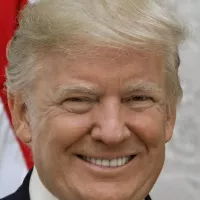
Donald John Trump is an American politician media personality and...
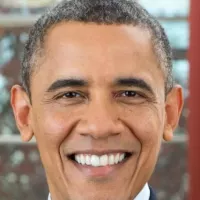
Barack Obama the th U S President - was the...
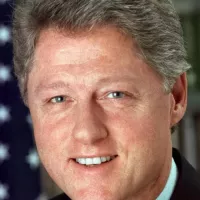
Bill Clinton served as the nd U S President from...
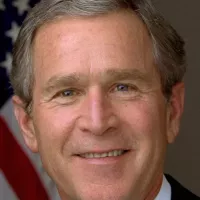
George W Bush the rd U S President - is...
Joe Biden served as the th President of the United...

Pope Francis served as the head of the Catholic Church...
Trending
3 hours ago Debating the Influence of Digital Culture on Modern Societal Intelligence and Reading Habits

4 hours ago SpaceX Disrupts Telecommunications Industry with Major Low-Band Spectrum Acquisition Plans

4 hours ago Mirra Andreeva Advances to China Open Semifinals After Victory Over Alexandrova

4 hours ago ATP Shanghai Tennis Tournament Schedule and Round Two Match Predictions

3 hours ago OpenAI and AI Leaders Develop Crisis Response Strategies for Potential Catastrophic Events
4 hours ago Nintendo President Discusses Potential GTA 6 Integration for Upcoming Switch 2 Console
Popular

Ken Paxton is an American politician and lawyer serving as...

Cristiano Ronaldo widely considered one of the greatest footballers captains...

Michael Joseph Jackson the King of Pop was a highly...

Elon Musk is a visionary entrepreneur and engineer known for...

Jameis Winston is an American football quarterback currently playing for...

Shakira Isabel Mebarak Ripoll the Queen of Latin Music is...