History of Cold War in Timeline


The Cold War was a period of geopolitical tension between the United States and the Soviet Union and their respective allies, the Western and Eastern Blocs, from the end of WWII to the dissolution of the USSR in 1991. Characterized by the absence of direct military conflict between the superpowers, it involved proxy wars, ideological and economic competition, and an arms race. Other manifestations included technological rivalries like the Space Race, espionage, propaganda, embargoes, and sports diplomacy.
4 hours ago : Cold War echoes: Vampire folklore, China-Silicon Valley split, Meta AI deal blocked.
A Cold War operation utilized vampire folklore against Philippine insurgents. The division between China and Silicon Valley intensified. China's blocked Meta AI deal raised security concerns, highlighting ongoing geopolitical tech tensions.


October 1945: George Orwell coins the term "cold war"
In October 1945, writer George Orwell used the term "cold war" in his essay "You and the Atomic Bomb", published October 19, 1945, contemplating a world living in the shadow of nuclear warfare.

1945: End of World War II
In 1945, the Second World War ended, during which the US and USSR were allies. The end of the war set the stage for the emergence of Cold War tensions between the two superpowers.
February 1946: George F. Kennan's "Long Telegram"
In February 1946, George F. Kennan's "Long Telegram" from Moscow to Washington articulated the US government's hard line against the Soviets, forming the basis for US strategy toward the Soviet Union.
September 1946: Novikov telegram and Byrnes speech
In September 1946, the Soviet side produced the Novikov telegram, portraying the US as preparing for world supremacy. On September 6, 1946, James F. Byrnes delivered a speech repudiating the Morgenthau Plan and warning the Soviets that the US intended to maintain a military presence in Europe indefinitely.
February 1947: Truman Doctrine Unveiled
In February 1947, the British government announced it could no longer afford to finance the Kingdom of Greece in its civil war. Also in February, Stalin conducted the rigged 1947 Polish legislative election. The US government responded by adopting a policy of containment. Truman then delivered a speech calling for intervention and unveiled the Truman Doctrine.
April 1947: Bernard Baruch speech popularizing the term "cold war"
On April 16, 1947, Bernard Baruch, an advisor to Democratic presidents, delivered a speech proclaiming, "we are today in the midst of a cold war."
June 1947: Marshall Plan Enacted
In June 1947, in accordance with the Truman Doctrine, the United States enacted the Marshall Plan, a pledge of economic assistance for all European countries willing to participate.
1947: National Security Act
In 1947, Truman signed the National Security Act, creating the Department of Defense, the Central Intelligence Agency (CIA), and the National Security Council (NSC), which became key institutions for US defense policy in the Cold War.
1947: Truman Doctrine declared
In 1947, the US declared the Truman Doctrine, initiating a policy of containment of communism as a response to perceived Soviet expansionism.
April 1948: Truman signs Marshall Plan
On April 3, 1948, President Harry S. Truman signed the Marshall Plan, providing economic assistance to Western European countries.
1948: Communist Coup in Czechoslovakia
In 1948, Czech Communists executed a coup d'état in Czechoslovakia, resulting in the formation of the Czechoslovak Socialist Republic. The event influenced support for the Marshall Plan in the United States Congress.
1948: Marshall Plan Launched and Berlin Blockade
In 1948, the US launched the Marshall Plan to assist Western Europe's economic recovery after World War II. The Berlin Blockade also began in 1948, marking an early confrontation in the Cold War.
January 1949: Molotov Plan Institutionalized
In January 1949, the Soviet Union's alternative to the Marshall Plan, which was purported to involve Soviet subsidies and trade with central and eastern Europe, became known as the Molotov Plan. The Molotov Plan was institutionalized as the Council for Mutual Economic Assistance.
1949: Formation of West and East Germany
In 1949, the London Six-Power Conference resulted in the formation of the Federal Republic of Germany and the German Democratic Republic.
1949: USSR's Satellite Governments, First Nuclear Weapon, and Alliance with China; NATO Formation
In 1949, the USSR installed satellite governments in Eastern Europe and North Korea, furthering the political division of Europe. The USSR also tested its first nuclear weapon. Additionally, the USSR allied with the newly founded People's Republic of China. In response, the US founded the NATO military alliance in 1949.
1949: Formation of NATO
In 1949, the United States and its Western European allies formed NATO, a defensive alliance, to strengthen their bonds and use the policy of containment against Soviet influence.
1950: Korean War began
In 1950, the Korean War began, marking a significant proxy conflict between the US and Soviet Union and their allies.
1953: Korean War ends in stalemate
In 1953, the Korean War ended in a stalemate, highlighting the limitations of direct military confrontation between the superpowers.
1955: Formation of the Warsaw Pact
In 1955, the Soviet Union countered NATO by forming the Warsaw Pact with the Eastern Bloc countries.
1955: Warsaw Pact formed
In 1955, the Soviet Union formed the Warsaw Pact as a response to NATO, solidifying the division of Europe into opposing military alliances.
1956: Dissent Appears in Communist Parties
In 1956, dissent began to appear in European and American Communist parties after initial unconditional support to the Western alliance. The dissent came after the parties adhered to Moscow's line.
1956: Hungarian Revolution
In 1956, the USSR solidified its domination of Eastern Europe by crushing the Hungarian Revolution.
1961: Construction of the Berlin Wall
In 1961, Soviet-allied East Germany constructed the Berlin Wall to prevent citizens of East Berlin from fleeing to West Berlin.
1961: Sino-Soviet split
In 1961, relations between the USSR and China broke down, leading to the Sino-Soviet split.
1962: Cuban Missile Crisis
In 1962, the Cuban Missile Crisis occurred after the deployment of US missiles in Europe and Soviet missiles in Cuba, bringing the world to the brink of nuclear war.
1968: Warsaw Pact invasion of Czechoslovakia
In 1968, the Warsaw Pact invaded Czechoslovakia, further solidifying Soviet control over Eastern Europe.
1969: Sino-Soviet Border Tensions Peak
In 1969, tensions between China and the Soviet Union reached a peak along their border, leading the Soviet Union to plan a large-scale nuclear strike against China. U.S. President Richard Nixon intervened.
1972: Era of "Peaceful Coexistence"
In 1972, Nixon and Brezhnev proclaimed a new era of "peaceful coexistence" and established the policy of détente between the superpowers.
1972: Nixon's Visit to China
In 1972, President Richard Nixon's visit to China began the shift in the balance of power towards the West by starting a policy of rapproachment with China.
1972: US diplomatic contacts with China and Détente
In 1972, the US initiated diplomatic contacts with China, and the US and USSR signed a series of treaties limiting their nuclear arsenals during a period known as détente.
1973: Nixon Seeks Most Favored Nation Trade Status
In 1973, Nixon announced his administration's commitment to seeking most favored nation trade status with the USSR, which was later challenged by Congress.
1973: Soviet Union Signs International Covenant on Civil and Political Rights
In 1973, the Soviet Union signed the International Covenant on Civil and Political Rights; although a legally binding document, it was not widely accessible nor taken seriously by the Communist authorities.
1974: Agreements for Increased Trade
Between 1972 and 1974, the U.S. and the Soviet Union agreed to strengthen their economic ties, including agreements for increased trade.
1974: Jackson-Vanik Amendment Attached to Trade Act
In 1974, the Jackson-Vanik Amendment was attached to the Trade Act, linking the granting of most-favored-nation status to the USSR to the right of persecuted Soviet Jews to emigrate.
1975: Helsinki Accords Signed
In 1975, the Helsinki Accords were signed at the Conference on Security and Co-operation in Europe, stabilizing the situation in Europe.
1975: Helsinki Accords and Soviet Concessions
In 1975, the Soviets signed the Helsinki Accords, promising to grant free elections in Europe, which was seen as a major concession for peace. However, the Soviet government curbed civil liberties and the rule of law.
September 1979: Assassination of President Nur Muhammad Taraki
In September 1979, Khalqist President Nur Muhammad Taraki was assassinated in a coup within the PDPA orchestrated by fellow Khalq member Hafizullah Amin, who assumed the presidency.
December 1979: Operation Storm-333 and Installation of Babrak Karmal
In December 1979, Soviet special forces assassinated Hafizullah Amin during Operation Storm-333, and installed Babrak Karmal as his successor, directly involving the Soviets in the Afghan war.
1979: U.S. Covert Aid to Mujahideen
By mid-1979, the United States had started a covert program to assist the mujahideen in Afghanistan.
1979: Signing of the Joint Communiqué
In 1979, President Carter and Chinese Communist Party leader Deng Xiaoping signed the Joint Communiqué on the Establishment of Diplomatic Relations, marking a culmination of the rapproachment between the U.S. and China.
1979: SALT II Agreement Undermined
In 1979, President Jimmy Carter's efforts to limit the arms race with a SALT II agreement were undermined by the Iranian Revolution, the Nicaraguan Revolution, and the Soviet coup in Afghanistan.
1979: Soviet war in Afghanistan
In 1979, the Soviet Union invaded Afghanistan to support its puppet regime, leading to a prolonged conflict. Muslim guerrillas, backed by the US, China, Britain, Saudi Arabia, and Pakistan, resisted the invasion, resulting in a costly and ultimately disastrous quagmire for the Soviets.
1980: Carter's Response to Soviet Invasion
In 1980, President Carter responded to the Soviet invasion of Afghanistan by withdrawing the SALT II treaty, imposing embargoes, increasing military spending, and boycotting the Moscow Olympics.
1980: Reagan Wins Presidential Election
In 1980, Ronald Reagan won the presidential election, vowing to increase military spending and confront the Soviets.
1980: US State Department Prediction on Afghanistan Invasion Outcome
In 1980, a senior US State Department official predicted the outcome of the Soviet invasion of Afghanistan.
1980: Armand Hammer's Influence on Trade
In 1980, according to the Christian Science Monitor, Armand Hammer had more or less single-handedly laid the groundwork for the state of Western trade with the Soviet Union.
December 1981: Martial Law in Poland and Economic Sanctions
In December 1981, Poland's Wojciech Jaruzelski imposed martial law, leading to Reagan imposing economic sanctions on Poland.
1981: Military Buildup
In 1981, President Carter started massively building up the United States military, a policy that was then accelerated by the Reagan administration.
1982: Reagan Impedes Soviet Gas Line
In 1982, Reagan tried to cut off Moscow's access to hard currency by impeding its proposed gas line to Western Europe, impacting the Soviet economy and causing ill will among European allies.
September 1983: Shooting Down of Korean Air Lines Flight 007
On 1 September 1983, the Soviet Union shot down Korean Air Lines Flight 007, a Boeing 747, killing all 269 people aboard. The incident increased support for military deployment.
November 1983: Able Archer 83 Exercise
In November 1983, the Able Archer 83 exercise, a realistic simulation of a coordinated NATO nuclear release, became a dangerous moment as the Soviet leadership feared an imminent nuclear attack.
1983: "Cold War II" Begins
In 1983, the American-Soviet tensions were defined by some as the start of "Cold War II".
November 1985: Geneva Summit
In November 1985, the first summit between Reagan and Gorbachev was held in Geneva, Switzerland, focusing on economic issues and arms reduction.
1985: Development of the Reagan Doctrine
By early 1985, Reagan's anti-communist stance had developed into the Reagan Doctrine, which formulated an additional right to subvert existing communist governments.
1985: Gorbachev becomes General Secretary
In 1985, Mikhail Gorbachev became General Secretary of the Soviet Union. The Soviet economy was stagnant and facing a sharp fall in foreign currency earnings due to falling oil prices.
1985: Mikhail Gorbachev becomes leader of the USSR
In 1985, Mikhail Gorbachev became the leader of the USSR and initiated political reforms, contributing to the end of the Cold War.
1985: Soviets select Mikhail Gorbachev
In 1985, the Soviets turned to the next generation and selected Mikhail Gorbachev to be the next leader.
October 1986: Reykjavík Summit
In October 1986, the second summit between Reagan and Gorbachev took place in Reykjavík, Iceland. Negotiations faltered over Reagan's Strategic Defense Initiative (SDI), which Gorbachev wanted eliminated.
1986: Peak of Military Spending
By 1986, the military spending reached 6.5 percent of GNP, the largest peacetime defense buildup in United States history.
June 1987: Gorbachev announces Perestroika
In June 1987, Mikhail Gorbachev announced perestroika, a program of economic reform. Perestroika relaxed production quotas, allowed cooperative ownership of small businesses, and paved the way for foreign investment, aiming to shift resources from military spending to civilian sectors.
December 1987: Washington Summit and INF Treaty
From 8-10 December 1987, the Washington Summit led to a breakthrough with the signing of the Intermediate-Range Nuclear Forces Treaty (INF). The INF treaty eliminated all nuclear-armed, ground-launched ballistic and cruise missiles with ranges between 500 and 5,500 kilometers (310 and 3,420 mi) and their infrastructure.
May 1988: Moscow Summit
In May 1988, George H. W. Bush and Gorbachev met at the Moscow Summit, discussing various issues.
December 1988: Governors Island Summit
In December 1988, George H. W. Bush and Gorbachev met at the Governors Island Summit, continuing discussions on international relations.
1988: USSR abandoned its war in Afghanistan
In 1988, the USSR abandoned its war in Afghanistan and began to withdraw its forces.
August 1989: Pan-European Picnic Triggers Exodus
In August 1989, the Pan-European Picnic in Hungary triggered a mass exodus of East Germans, leading to the fall of the Iron Curtain due to the hesitant behavior of East Germany and the non-interference of the Soviet Union.
August 1989: Pan-European Picnic and Eastern Bloc Collapse
In August 1989, the standstill of the Soviet Union at the Pan-European Picnic set a peaceful chain reaction in motion, leading to the collapse of the Eastern Bloc.
November 1989: Fall of the Berlin Wall
In November 1989, the Berlin Wall fell, symbolizing the collapse of European communist governments and graphically ending the Iron Curtain divide of Europe. The 1989 revolutionary wave swept across Central and Eastern Europe.
1989: Soviet Alliance System on Brink of Collapse
By 1989, the Soviet alliance system was on the brink of collapse, and communist leaders of the Warsaw Pact states were losing power due to lack of Soviet military support. Grassroots organizations gained ground.
1989: Russian SFSR Convened Congress of People's Deputies
In 1989, the Russian SFSR convened a newly elected Congress of People's Deputies. Boris Yeltsin was elected its chairman.
1989: Revolutions of 1989 in the Eastern Bloc
In 1989, the revolutions in the Eastern Bloc, fueled by Gorbachev's reforms, led to the collapse of communist regimes.
February 1990: Gorbachev Agrees to German Reunification Treaty
In February 1990, Gorbachev agreed to the US-proposed Treaty on the Final Settlement with Respect to Germany, paving the way for German reunification.
March 1990: Lithuania Declares Independence
On 11 March 1990, Lithuania declared its independence restored, citing the illegality of the Soviet occupation of the Baltic states. Soviet forces attempted to halt the secession, resulting in casualties.
April 1990: Law passed allowing republics to secede
On 7 April 1990, a law was passed allowing a republic to secede from the USSR if more than two-thirds of its residents voted for it in a referendum.
June 1990: Russia Declares Sovereignty
On 12 June 1990, the Congress declared Russia's sovereignty over its territory and proceeded to pass laws that attempted to supersede some of the Soviet laws.
August 1990: Gulf War Begins
In August 1990, the Gulf War against Iraq began, marking a period where the former adversaries, the US and the Soviet Union, acted as partners.
September 1990: Treaty on the Final Settlement with Respect to Germany Signed
On 12 September 1990, the Treaty on the Final Settlement with Respect to Germany was signed, solidifying the path to German reunification.
February 1991: Gulf War Ends
In February 1991, the Gulf War ended, signifying continued cooperation between the US and the Soviet Union.
March 1991: Referendum for preservation of the USSR
On 17 March 1991, a referendum for the preservation of the USSR was held in nine republics, with the majority voting for preservation. This gave Gorbachev a minor boost.
July 1991: Yeltsin elected President of Russia
In July 1991, Boris Yeltsin was elected President of Russia, challenging Gorbachev's authority.
July 1991: START I Treaty Signed
In July 1991, during the final summit in Moscow, Gorbachev and Bush signed the START I arms control treaty, further reducing nuclear arsenals.
August 1991: August Coup and collapse of Gorbachev's Power
In August 1991, the New Union Treaty signing was interrupted by the August Coup, an attempted coup by hardline members. The coup's collapse strengthened Yeltsin's position, and Gorbachev's power was effectively ended. Latvia and Estonia declared independence.
December 1991: Dissolution of the USSR
In December 1991, the USSR dissolved. Fifteen states emerged, with the Russian Federation taking full responsibility for the USSR's rights and obligations, including its UN membership, nuclear stockpile, and armed forces.
1991: Dissolution of the Soviet Union
In 1991, the Cold War concluded with the dissolution of the Soviet Union, marking the end of a decades-long period of geopolitical rivalry between the US and the USSR.
1991: Collapse of the USSR
In 1991, the USSR collapsed, marking the end of the Cold War and the end of geopolitical rivalry.
February 1992: Bush and Yeltsin Declare New Era
In February 1992, US President George H. W. Bush and Russian President Boris Yeltsin met, declaring a new era of "friendship and partnership".
January 1993: START II Agreement
In January 1993, Bush and Yeltsin agreed to START II, providing for further nuclear arms reductions.
2016: Marshall Plan worth $189 Billion in 2016
In 2016, it was estimated that the US government gave over $13 billion in 1948 (equivalent to $189 billion in 2016) to Western European countries.
Mentioned in this timeline
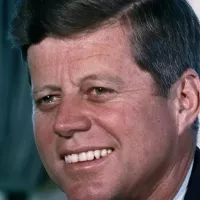
John F Kennedy JFK was the th U S President...
Ukraine is a country in Eastern Europe the second-largest on...
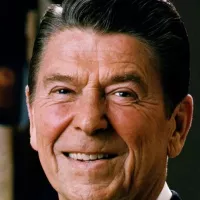
Ronald Reagan the th U S President - was a...
The United States of America is a federal republic of...
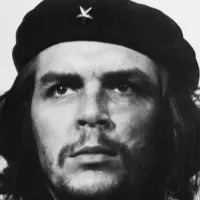
Ernesto Che Guevara was a prominent Argentine Marxist revolutionary physician...
Saudi Arabia officially the Kingdom of Saudi Arabia KSA is...
Trending

7 minutes ago Emma Chamberlain stuns in hand-painted gown at Met Gala 2026: A canvas of art.

7 minutes ago Heidi Montag dreamed of pop stardom, attended Billboard Awards; Keke Palmer performed.
1 hour ago Melanoma Monday highlights skin cancer risks and importance of mole checks.
1 hour ago Union Pacific and Norfolk Southern consider merger to improve US rail transport.

2 hours ago Tyrod Taylor Signs with Packers as Backup QB Following Ridder's Release
3 hours ago Lazio faces Cremonese: Sarri's comments, Cardone's skepticism, team motivation and player updates.
Popular

Michael Joseph Jackson the King of Pop was a highly...
Graham Cunningham Platner is an American oyster farmer and Marine...

Melania Trump is a Slovenian-American former model who served as...

Candace Owens is an American conservative political commentator author and...
Elizabeth Warren is a prominent American politician currently serving as...
Rudy Giuliani is an American politician and disbarred lawyer best...