History of Jacqueline Kennedy Onassis in Timeline


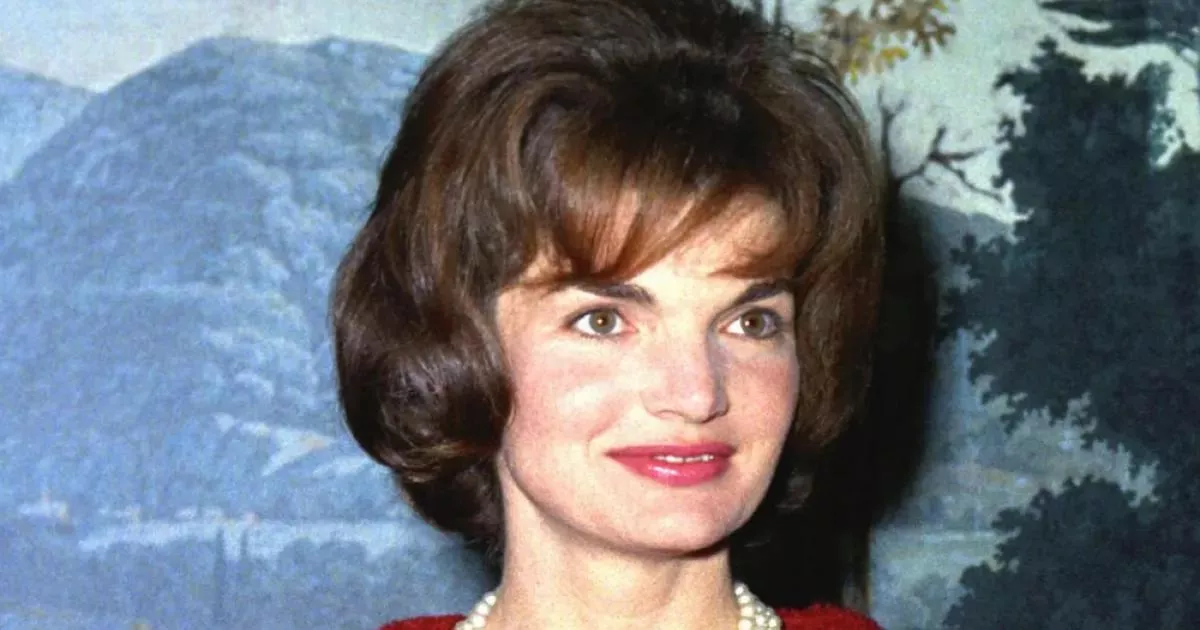
Jacqueline Kennedy Onassis, known as Jackie Kennedy and later Jackie O, was the First Lady of the United States from 1961 to 1963 during John F. Kennedy's presidency. She was considered a global icon due to her distinctive fashion sense and role as a cultural ambassador for the U.S. Her impact extended beyond politics, solidifying her place in popular culture and history.


1929: Financial Difficulties after Wall Street Crash
Following the Wall Street Crash of 1929, the Bouvier family experienced financial difficulties, which added strain to the marriage.
1929: Baptism and Confirmation
In 1929, Jacqueline Kennedy Onassis was baptized at the Church of St. Ignatius Loyola, the same Catholic parish where she was later confirmed as a teenager.
March 3, 1933: Birth of Caroline Lee Bouvier
On March 3, 1933, Caroline Lee Bouvier, Jacqueline's younger sister, was born four years after Jacqueline.
1936: Separation of Parents
In 1936, the marriage of Jacqueline Bouvier's parents was strained by her father's alcoholism and extramarital affairs. They separated.
1941: Jacqueline visits the White House as a tourist
In 1941, Jacqueline Kennedy visited the White House as a grade-school tourist. This was one of the two occasions Kennedy had visited the White House before becoming First Lady.
1942: Attendance at Holton-Arms School
From 1942 to 1944, Jacqueline Bouvier attended the Holton-Arms School in Northwest Washington, D.C.
1944: Attendance at Miss Porter's School
From 1944 to 1947, Jacqueline Bouvier attended Miss Porter's School in Farmington, Connecticut. She chose this school to distance herself from the Auchinclosses and for its emphasis on college preparatory classes.
1945: Birth of Step-Sister Janet Jennings Auchincloss
In 1945, Janet Jennings Auchincloss, one of Jacqueline Bouvier's step-sisters, was born after her mother remarried to Hugh D. Auchincloss Jr.
1947: Graduation from Miss Porter's School
In 1947, Jacqueline Bouvier graduated among the top students of her class from Miss Porter's School, receiving the Maria McKinney Memorial Award for Excellence in Literature.
1947: Birth of Step-Brother James Lee Auchincloss
In 1947, James Lee Auchincloss, one of Jacqueline Bouvier's step-brothers, was born after her mother remarried to Hugh D. Auchincloss Jr.
1947: Entry into Vassar College
In the fall of 1947, Jacqueline Bouvier entered Vassar College in Poughkeepsie, New York. She participated in the school's art and drama clubs and wrote for its newspaper.
1951: Graduation from George Washington University
In 1951, Jacqueline Bouvier graduated from George Washington University in Washington, D.C., with a Bachelor of Arts degree in French literature.
1951: Graduation and Career Beginnings
In 1951, Jacqueline Bouvier graduated from George Washington University with a Bachelor of Arts in French literature. She then started working as an inquiring photographer for the Washington Times-Herald.
January 1952: Engagement to John Husted
In January 1952, Jacqueline Bouvier and John Husted published their engagement announcement in The New York Times. However, after three months, she called off the engagement.
May 1952: Meeting John F. Kennedy
In May 1952, Jacqueline Bouvier met U.S. representative John F. Kennedy at a dinner party hosted by journalist Charles L. Bartlett. The pair had several commonalities and were attracted to each other.
June 25, 1953: Official Engagement Announcement
On June 25, 1953, Jacqueline Bouvier and John F. Kennedy officially announced their engagement. She was 24 and he was 36.
September 12, 1953: Marriage to John F. Kennedy
On September 12, 1953, Jacqueline Bouvier married then-congressman John F. Kennedy in Newport, Rhode Island. The couple's wedding was a significant social event.
1954: Hairstyle Created by Mr. Kenneth
In 1954, Mr. Kenneth started working for Jacqueline Kennedy creating her influential bouffant hairstyle, which was described as a "grown-up exaggeration of little girls' hair."
1954: John Kennedy's Spinal Operation
In late 1954, John Kennedy underwent a near-fatal spinal operation due to chronic back pain, which had been exacerbated by a war injury.
1955: Miscarriage
In 1955, Jacqueline Kennedy suffered a miscarriage, which added to the personal setbacks faced by the couple.
August 1956: Birth of Stillborn Daughter Arabella
In August 1956, Jacqueline Kennedy gave birth to a stillborn daughter, Arabella, adding to the personal challenges faced by the couple.
November 27, 1957: Birth of Daughter Caroline
On November 27, 1957, Jacqueline Kennedy gave birth to her daughter Caroline.
April 21, 1958: Life Magazine Cover
On April 21, 1958, Jacqueline Kennedy, her husband John F. Kennedy, and their infant daughter Caroline appeared on the cover of Life magazine.
November 1958: John Kennedy's Re-election to the Senate
In November 1958, John Kennedy was reelected to a second term in the Senate, and he credited Jacqueline's visibility as vital in securing his victory.
July 1959: Arthur M. Schlesinger Jr.'s Visit
In July 1959, historian Arthur M. Schlesinger Jr. visited the Kennedy Compound and had his first conversation with Jacqueline Kennedy. He noted her "tremendous awareness, an all-seeing eye and a ruthless judgment".
January 2, 1960: John F. Kennedy Announces Presidential Candidacy
On January 2, 1960, John F. Kennedy announced his candidacy for the presidency at the Russell Senate Office Building.
September 26, 1960: Jacqueline watches the first televised presidential debate
On September 26, 1960, Jacqueline Kennedy watched the nation's first televised presidential debate between her husband, John F. Kennedy, and Republican candidate Richard Nixon from Hyannis Port. Marian Cannon, wife of Arthur Schlesinger, watched the debate with her.
September 29, 1960: The Kennedys' joint interview on Person to Person
On September 29, 1960, Jacqueline Kennedy and John F. Kennedy appeared together for a joint interview on Person to Person, interviewed by Charles Collingwood.
November 8, 1960: John F. Kennedy wins the U.S. presidential election
On November 8, 1960, John F. Kennedy narrowly defeated Republican opponent Richard Nixon in the U.S. presidential election.
1960: Becoming a Fashion Icon
In 1960, Jacqueline Kennedy became a global fashion icon after her husband's election. She commissioned Oleg Cassini to design her wardrobe for her appearances as First Lady.
1960: John F. Kennedy elected to the presidency
In 1960, John F. Kennedy was elected to the presidency, making Jacqueline Kennedy the First Lady of the United States. During this time, Jacqueline was known for her highly publicized restoration of the White House and emphasis on arts and culture as well as for her style.
January 1961: Gift from JFK
In January 1961, French jeweler Jean Schlumberger for Tiffany & Co. designed the "berry brooch", which President Kennedy gifted to Jacqueline Kennedy several days prior to his inauguration.
January 20, 1961: John F. Kennedy's inauguration
On January 20, 1961, John F. Kennedy was sworn in as president, making Jacqueline Kennedy the First Lady at the age of 31. She was the third youngest woman to serve as first lady, and the first Silent Generation first lady.
June 1961: Kennedy's visit to Buckingham Palace
In June 1961, the Kennedy couple visited Buckingham Palace. This event is covered in the eighth episode of the second season of Netflix's 'The Crown'.
1961: Dressed by Cassini
From 1961, Oleg Cassini designed many ensembles for Jacqueline Kennedy, including her Inauguration Day fawn coat and Inaugural gala gown, and outfits for visits to Europe, India, and Pakistan. In 1961, Kennedy spent $45,446 more on fashion than the $100,000 annual salary her husband earned as president.
1961: The Kennedys' first official visit to France
In 1961, Jacqueline Kennedy and President Kennedy made their first official visit to France. Before arriving in the country, a television special was shot in French with the First Lady on the White House lawn. Jacqueline Kennedy impressed the public with her ability to speak French, as well as her extensive knowledge of French history.
February 14, 1962: Jacqueline Kennedy's White House tour on television
On February 14, 1962, Jacqueline Kennedy, accompanied by Charles Collingwood of CBS News, gave American television viewers a tour of the White House. The film was watched by 56 million television viewers in the United States, and was later distributed to 106 countries.
1962: TIME Woman of the Year
In 1962, Jacqueline Kennedy was named Time magazine's Woman of the Year for her efforts in uplifting American history and art.
October 17, 1963: Jacqueline Kennedy returns from Greece
On October 17, 1963, Jacqueline Kennedy returned to the United States from Aristotle Onassis' yacht in Greece. She had been recuperating from the loss of her newborn son, Patrick. She expressed regret for being away so long, admitting she had been melancholy.
November 29, 1963: Interview with Life Magazine
On November 29, 1963, one week after President Kennedy's assassination, Jacqueline Kennedy gave an interview to Theodore H. White of Life magazine in Hyannis Port. During the interview, she compared the Kennedy administration to King Arthur's Camelot, stating that the President often played the title song from Lerner and Loewe's musical recording before bed and quoted Queen Guinevere to express her feelings of loss. This interview led to the era of Kennedy's presidency being referred to as the "Camelot Era."
1963: Withdrawal from Public View
In 1963, after her husband's assassination and funeral, Jacqueline Kennedy and her children largely withdrew from public view to grieve privately.
1963: Jacqueline Kennedy gives birth to Patrick Bouvier Kennedy
In early August 1963, five weeks ahead of her due date, Jacqueline Kennedy gave birth to a boy, Patrick Bouvier Kennedy, via emergency Caesarean section at Otis Air Force Base. Patrick Kennedy's lungs were not fully developed, and he died two days after birth.
January 14, 1964: Televised appearance thanking the public
On January 14, 1964, Jacqueline Kennedy made a televised appearance from the office of the attorney general to thank the public for the support and messages she had received after President Kennedy's assassination. She expressed that she had been sustained by America's affection for her late husband.
1964: Jacqueline Kennedy donates pink suit to National Archives
In 1964, Jacqueline Kennedy donated the pink suit she wore during the assassination of JFK to the National Archives and Records Administration. The suit, unlaundered and stained with blood, became a symbol of her husband's assassination and will not be placed on public display before 2103.
1964: Supports Robert Kennedy's Senate Run
In 1964, Jacqueline Kennedy supported Robert F. Kennedy's campaign for United States Senator from New York, after convincing him to stay in politics.
1965: International Best Dressed List Hall of Fame
In 1965, Jacqueline Kennedy was named to the International Best Dressed List Hall of Fame.
December 1966: Lawsuit to block publication
In December 1966, Jacqueline Kennedy and Robert Kennedy sued publishers Harper & Row in an attempt to block the publication of William Manchester's authorized account of President Kennedy's death, titled "The Death of a President."
November 1967: Travels to Cambodia as 'America's Unofficial Roving Ambassador'
In November 1967, Jacqueline Kennedy, along with David Ormsby-Gore, traveled to Cambodia during the Vietnam War. Life magazine dubbed her "America's unofficial roving ambassador." They visited Angkor Wat with Chief of State Norodom Sihanouk, which helped improve Cambodian-US relations.
1967: Settlement of lawsuit
In 1967, Jacqueline Kennedy and Robert Kennedy's lawsuit against Harper & Row was settled. The settlement required William Manchester to remove passages from "The Death of a President" that detailed President Kennedy's private life.
January 1968: Encourages Robert Kennedy to run for president
In January 1968, following the Tet Offensive, Jacqueline Kennedy encouraged Robert Kennedy to enter the upcoming presidential race, reversing her previous advice to him. Despite her private concerns about his safety, she supported his campaign.
April 1968: Attends Martin Luther King Jr.'s Funeral
In April 1968, Jacqueline Kennedy attended the funeral services of Martin Luther King Jr. in Atlanta, Georgia. She initially hesitated to attend due to concerns about the crowds and the reminders of President Kennedy's death.
June 5, 1968: Robert Kennedy Shot
Just after midnight PDT on June 5, 1968, Robert Kennedy was mortally wounded by Sirhan Sirhan in Los Angeles, shortly after celebrating his victory in the California Democratic presidential primary. Jacqueline Kennedy traveled to Los Angeles to be with his family at Good Samaritan Hospital.
October 20, 1968: Marries Aristotle Onassis
On October 20, 1968, Jacqueline Kennedy married Aristotle Onassis, a Greek shipping magnate, on his private island of Skorpios. She took the legal name Jacqueline Onassis, which resulted in the loss of her Secret Service protection. The marriage was controversial and brought her adverse publicity, including speculation about excommunication from the Roman Catholic Church and condemnation as a "public sinner."
1968: Suffers relapse of depression
After Robert Kennedy's death in 1968, Jacqueline Kennedy suffered a relapse of depression similar to what she experienced after her husband's assassination. She feared for the safety of herself and her children and expressed a desire to leave the country.
1968: Marriage to Aristotle Onassis
In 1968, Jacqueline Kennedy married Greek shipping magnate Aristotle Onassis, a decision that stirred controversy.
1968: Vice President of Newport Restoration Foundation
In 1968, Jacqueline Onassis was appointed as the vice president of the Newport Restoration Foundation by Doris Duke, and publicly championed the foundation.
1968: 'The Kennedys: After Camelot' focuses on Jackie's life after 1968
The 2017 miniseries 'The Kennedys: After Camelot' focuses on Jacqueline Kennedy's life after 1968.
1973: Death of Aristotle Onassis's son
In 1973, Aristotle Onassis's health began to deteriorate rapidly following the death of his son Alexander in a plane crash.
March 15, 1975: Aristotle Onassis Death
On March 15, 1975, Aristotle Onassis died of respiratory failure in Paris at the age of 69. Jacqueline Onassis eventually accepted a settlement of $26 million from his daughter, Christina Onassis, after a legal dispute.
1975: Consulting editor at Viking Press
In 1975, after the death of her second husband, Jacqueline Onassis returned to the United States permanently and became a consulting editor at Viking Press, a position she held for two years.
1975: Career as a Book Editor
In 1975, following Onassis's death, Jacqueline Kennedy began a career as a book editor in New York City, working first at Viking Press and then at Doubleday.
1976: Attends Democratic National Convention
In 1976, Jacqueline Onassis attended the Democratic National Convention after almost a decade of avoiding participation in political events. Her appearance in the visitors' gallery stunned the assembled delegates.
1977: Resigns from Viking Press
In 1977, Jacqueline Onassis resigned from Viking Press after John Leonard of The New York Times suggested she was partially responsible for the publication of Jeffrey Archer's novel Shall We Tell the President?, which depicted an assassination plot against Ted Kennedy.
1980: Relationship with Maurice Tempelsman begins
From 1980, Jacqueline Onassis maintained a close relationship with Maurice Tempelsman, a Belgian-born industrialist and diamond merchant who was her companion and personal financial adviser.
1981: Jacqueline Bouvier Kennedy
In 1981, Jaclyn Smith portrays Jacqueline Kennedy in the television film Jacqueline Bouvier Kennedy, depicting her life until the end of the JFK presidency.
1982: Siena College Research Institute Survey
In the 1982 Siena College Research Institute survey, Onassis had been ranked the lowest in the criteria of integrity. The initial disapproving view of her integrity may have been due to sentiments towards her marriage to Aristotle Onassis.
1982: Recognition as Highly Regarded First Lady
Since 1982, surveys of historians conducted periodically by the Siena College Research Institute have consistently found Kennedy Onassis to rank among the most highly regarded First Ladies.
1983: Kennedy Miniseries
In 1983, Blair Brown portrays Jacqueline Kennedy in the miniseries Kennedy, set during the Kennedy presidency.
1984: Maurice Tempelsman Separates from Wife
In 1984, Maurice Tempelsman separated from his wife Lilly, though he remained legally married to her throughout his relationship with Jacqueline Onassis.
1986: Hairstyle Created by Mr. Kenneth
Until 1986, Mr. Kenneth worked for Jacqueline Kennedy creating her influential bouffant hairstyle, which was described as a "grown-up exaggeration of little girls' hair."
1988: First Grandchild Born
In 1988, Jacqueline Onassis became a first-time grandmother when her daughter Caroline gave birth to a daughter named Rose.
1988: Tempelsman moves into Onassis's Fifth Avenue home
In 1988, Maurice Tempelsman moved into Jacqueline Onassis's Fifth Avenue home, though this fact was not publicly known until after her death.
1989: Tempelsman as 'public escort and private companion'
In 1989, Maurice Tempelsman was described as Jacqueline Onassis's "public escort and private companion" who only "stayed several nights a week in Onassis's Fifth Avenue Apartment" rather than living there full time.
1990: Second Grandchild Born
In 1990, Jacqueline Onassis's daughter Caroline gave birth to her second daughter, Tatiana Celia.
1991: A Woman Named Jackie
In 1991, Marianna Bishop, Sarah Michelle Gellar, and Roma Downey portray Jacqueline Kennedy Onassis in the miniseries A Woman Named Jackie, covering her entire life until the death of Aristotle Onassis.
1992: Emmy Award
In 1992, the miniseries A Woman Named Jackie won the Emmy Award for Outstanding Miniseries.
1992: Love Field Film
Rhoda Griffis portrays Jacqueline Kennedy in the 1992 film Love Field, set shortly before and in the aftermath of JFK's assassination.
November 1993: Hospitalized after fall from horse
In November 1993, Jacqueline Onassis was hospitalized after being thrown from her horse during a fox hunt in Middleburg, Virginia. A swollen lymph node was discovered and initially diagnosed as an infection. The fall contributed to her deteriorating health.
1993: Third Grandchild Born
In 1993, Jacqueline Onassis's daughter Caroline gave birth to her third child, John Bouvier.
January 1994: Diagnosed with non-Hodgkins lymphoma
In January 1994, Jacqueline Onassis was diagnosed with non-Hodgkins lymphoma after developing new symptoms, including a stomach ache and swollen lymph nodes. She began chemotherapy and publicly announced the diagnosis.
May 1994: Death of Jacqueline Onassis
In May 1994, after Jacqueline Onassis's death, details of her romance with Maurice Tempelsman received media coverage. He had been "quietly at her side" even toward the end of her life and didn't go "public" until afterwards.
May 18, 1994: Last Trip Home
On May 18, 1994, Jacqueline Kennedy Onassis made her final trip home from New York Hospital–Cornell Medical Center.
May 19, 1994: Jacqueline Kennedy Onassis' Death
On May 19, 1994, Jacqueline Kennedy Onassis died. She was later buried at Arlington National Cemetery alongside President Kennedy and two of their children.
July 11, 1994: Details of the Relationship revealed
In the July 11, 1994 edition of People magazine, it was revealed that Maurice Tempelsman had been living in Jacqueline Onassis's Fifth Avenue home since 1988; by this time, Onassis had in fact been living a more private life.
1994: Death and Burial
In 1994, Jacqueline Kennedy Onassis died and was buried at Arlington National Cemetery alongside President Kennedy and two of their children.
1995: Encourages Dorothy West to complete 'The Wedding'
In 1995, Jacqueline Onassis encouraged Dorothy West, to complete her novel "The Wedding", a story about race, class, wealth, and power in the U.S.
1998: 'The Wedding' adapted as a miniseries
In 1998, the novel "The Wedding" by Dorothy West, which Jacqueline Onassis encouraged the author to complete, was adapted into a miniseries starring Halle Berry and Lynn Whitfield, produced by Oprah Winfrey's Harpo Productions.
1999: Gallup's Most-Admired Women of the 20th century
In 1999, Jacqueline Kennedy Onassis was placed on the list of Gallup's Most-Admired Men and Women of the 20th century.
2000: Jackie Bouvier Kennedy Onassis Miniseries
In 2000, Sally Taylor-Isherwood, Emily VanCamp, and Joanne Whalley portray Jacqueline Kennedy Onassis in the television miniseries Jackie Bouvier Kennedy Onassis, covering chronologically her entire life.
2000: Thirteen Days Film
In 2000, Stephanie Romanov portrays Jacqueline Kennedy in the film Thirteen Days, taking place during the Cuban Missile Crisis.
2001: Jackie, Ethel, Joan: The Women of Camelot
In 2001, Jill Hennessy portrays Jacqueline Kennedy in the television film Jackie, Ethel, Joan: The Women of Camelot.
2001: Exhibition at the Metropolitan Museum of Art
In 2001, pieces from Jacqueline Kennedy's collection were exhibited at the Metropolitan Museum of Art in New York. The exhibition, titled "Jacqueline Kennedy: The White House Years", focused on her time as a first lady.
2003: America's Prince: The John F. Kennedy Jr. Story
In 2003, Jacqueline Bisset portrays Jacqueline Kennedy in the film America's Prince: The John F. Kennedy Jr. Story.
2003: Completion of Time Warner Center
In 2003, the Time Warner Center, a large twin-towered skyscraper at Columbus Circle, was completed despite protests, including those led by Jacqueline Onassis, who opposed the project due to its shadows on Central Park.
2003: Siena Research Institute Survey
In the 2003 survey, Onassis made the top-five in half of the categories, being ranked 1st-highest in background, 5th-highest in intelligence, 4th-highest in courage, 4th-highest in value to the country, and 1st-highest in public image.
2008: Siena Research Institute Survey
In the 2008 Siena Research Institute survey, Onassis was ranked in the top-five of all criteria, ranking the 2nd-highest in background, 4th-highest in intelligence, 2nd-highest in value to the country, 4th-highest in being her "own woman", 4th-highest in integrity, 5th-highest in her accomplishments, 2nd-highest in courage, 4th-highest in leadership, 1st in public image, and 3rd-highest in her value to the president.
2009: Grey Gardens Film
In 2009, Jeanne Tripplehorn portrays Jacqueline Kennedy in the film Grey Gardens for a single scene.
2011: Katie Holmes portrays Jacqueline Kennedy in 'The Kennedys'
In 2011, Katie Holmes portrayed Jacqueline Kennedy in the miniseries 'The Kennedys', which is set during the Kennedy presidency.
2012: TIME 100 Fashion Icons
In 2012, Time magazine included Jacqueline Kennedy Onassis on its All-TIME 100 Fashion Icons list.
2013: Ginnifer Goodwin portrays Jacqueline Kennedy in 'Killing Kennedy'
In 2013, Ginnifer Goodwin portrayed Jacqueline Kennedy in the television film 'Killing Kennedy'. Goodwin used intimate photos to better portray Jacqueline Kennedy and was concerned to do her justice.
2013: Minka Kelly portrays Jacqueline Kennedy in 'The Butler'
In 2013, Minka Kelly portrayed Jacqueline Kennedy in the film 'The Butler'. She gives the film's protagonist one of her husband's neckties after his assassination. Kelly admitted to having difficulty with perfecting Kennedy's voice.
2014: Siena Research Institute Survey
In the 2014 Siena Research Institute survey, in the rankings of 20th and 21st century American first ladies in additional survey questions, Onassis was ranked 2nd-highest for management of family life, 4th-highest for advancement of women's issues, 3rd-greatest as a political asset, 4th-strongest public communicator, and 2nd-highest for creation of a lasting legacy. In the 2014 survey, Onassis and her first husband were also ranked the 6th-highest out of 39 first couples in terms of being a "power couple".
2016: Forbes Fashion Icons List
In 2016, Forbes included Jacqueline Kennedy Onassis on the list "10 Fashion Icons and the Trends They Made Famous".
2016: Kim Allen portrays Jacqueline Kennedy in 'LBJ'
In 2016, Kim Allen portrayed Jacqueline Kennedy in the film 'LBJ'. It was noted that Allen was in a non-speaking role.
2016: Natalie Portman portrays Jacqueline Kennedy in 'Jackie'
In 2016, Natalie Portman portrayed Jacqueline Kennedy in the film 'Jackie'. The movie is set during the JFK presidency and the immediate aftermath of the assassination. Portman was nominated for Best Actress by Academy Awards, AACTA Awards, AWFJ, AFCA, and BSFC, and won the category by the Online Film Critics Society.
2017: Jodi Balfour portrays Jacqueline Kennedy in 'The Crown'
In 2017, Jodi Balfour portrayed Jacqueline Kennedy in the eighth episode of the second season of Netflix's 'The Crown', titled "Dear Mrs. Kennedy".
2017: Katie Holmes reprises her role in 'The Kennedys: After Camelot'
In 2017, Katie Holmes reprised her role as Jacqueline Kennedy in 'The Kennedys: After Camelot', which focused on her life after 1968. Holmes stated that reprising the role was a "bigger challenge".
2020: TIME 100 Women of the Year
In 2020, Time magazine included Jacqueline Kennedy Onassis's name on its list of 100 Women of the Year.
2025: Death of Granddaughter Tatiana Celia
In 2025, Jacqueline Onassis's Granddaughter Tatiana Celia died.
Mentioned in this timeline
Oprah Winfrey is an influential American talk show host television...
John F Kennedy JFK was the th U S President...
Martin Luther King Jr was a pivotal leader in the...
The United States of America is a federal republic primarily...
California is a U S state on the Pacific Coast...
The White House located at Pennsylvania Avenue NW in Washington...
Trending

3 hours ago Breece Hall Remains Sidelined for Jets as Injury Recovery Continues
4 hours ago Stephen Curry Continues To Receive NBA Top-10 Recognition and High Praise

3 hours ago Fraser Minten and James Hagens Linked to Potential Boston Bruins Roster Changes
3 hours ago Sonay Kartal Faces Belinda Bencic at WTA Wuhan Open 2026

4 hours ago Austin Reaves Discusses Lakers Preseason Issues and Friendship With Luka Doncic
4 hours ago Otega Oweh Poised for Breakout Season with OKC Thunder
Popular

Ken Paxton is an American politician and lawyer serving as...

Ilhan Omar is a prominent American politician currently serving as...

Jameis Winston is an American football quarterback currently playing for...
Cristiano Ronaldo widely considered one of the greatest footballers captains...

Elon Musk is a visionary entrepreneur and engineer known for...

Michael Joseph Jackson the King of Pop was a highly...