History of John Wooden in Timeline


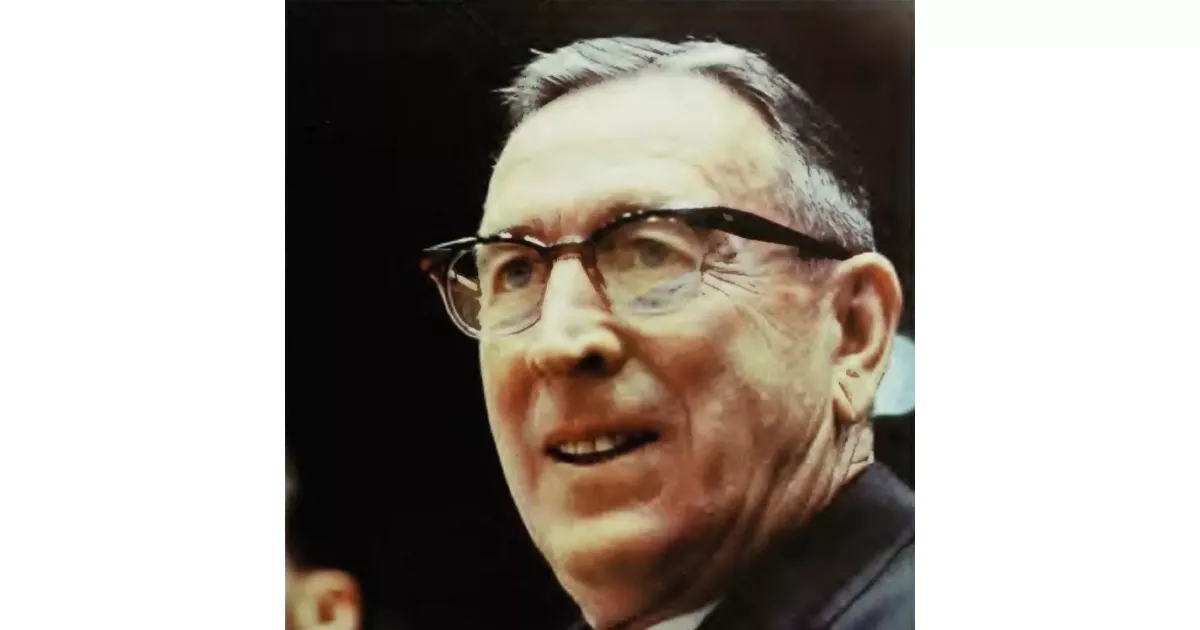
John Wooden, nicknamed "the Wizard of Westwood," was a highly successful American basketball coach and player, most notably known for his tenure as head coach for the UCLA Bruins. He led UCLA to win ten NCAA national championships over a 12-year period, including a record seven consecutive titles. Wooden's teams also achieved a record 88-game winning streak. He received the Henry Iba Award as national coach of the year a record seven times and won the Associated Press award five times, solidifying his legacy as one of basketball's greatest coaches.
8 hours ago : John Wooden's UCLA Legacy: Dominance in College Basketball Championships and Rankings
John Wooden's UCLA teams are celebrated for their unparalleled dominance in college basketball. Their numerous championships and top rankings solidify Wooden's legacy. Other teams are also listed.


October 14, 1910: John Wooden's Birth
On October 14, 1910, John Robert Wooden was born. He later became a famous basketball coach and player.
1918: Family Move to Centerton
In 1918, John Wooden moved with his family to a small farm in Centerton, Indiana.
1919: Start of UCLA Basketball
In 1919, the UCLA basketball program began.
1919: The Franklin Wonder Five
Starting in 1919, Fuzzy Vandivier of the Franklin Wonder Five dominated Indiana high school basketball until 1922, becoming Wooden's role model.
1922: The Franklin Wonder Five
Until 1922, Fuzzy Vandivier of the Franklin Wonder Five dominated Indiana high school basketball since 1919, becoming Wooden's role model.
1927: State Tournament Title
In 1927, John Wooden led his high school team to a state tournament title.
1927: Southern California Intercollegiate Athletic Conference
Since winning the Southern California Intercollegiate Athletic Conference in 1927, UCLA had not won a conference title of any sort until John Wooden's arrival.
1928: Attendance at Purdue University
In 1928, John Wooden began attending Purdue University and was coached by Ward "Piggy" Lambert.
1930: All-Big Ten and All-Midwestern Honors
From 1930 to 1932, John Wooden was named All-Big Ten and All-Midwestern while at Purdue.
1932: Graduation from Purdue and Honors
In 1932, John Wooden graduated from Purdue with a degree in English, was named All-Big Ten and All-Midwestern, was a three-time consensus All-American, and was awarded the Big Ten Medal of Honor.
1932: All-American and National Champion
In 1932, John Wooden was named an All-American for the third time, and his Purdue team was retroactively recognized as the pre-NCAA tournament national champion.
1937: All-NBL First Team Selection
For the 1937–38 season, John Wooden was named to the All-NBL First Team.
1942: Enlistment in the United States Navy
In 1942, John Wooden joined the United States Navy during World War II.
1944: Goaltending Rule Instituted
In 1944, the goaltending rule was instituted to counter George Mikan's dominant defensive play near the basket.
1946: Coaching at Indiana State Teachers College
In 1946, John Wooden began coaching at Indiana State Teachers College (later Indiana State University).
1946: Departure from the Navy
In 1946, John Wooden left the United States Navy, having served as a lieutenant during World War II.
1946: Wooden's 1946-47 Indiana State Team
John Wooden coached the Indiana State team in 1946-47. In 2008, members of this team participated in the ceremony where the floor at the Hulman Center was named The Nellie and John Wooden Court.
1947: Double Eagle and Hole in One
In 1947, Golf Digest lists John Wooden as one of four people to score both a double eagle and a hole in one in the same round of golf.
1947: NAIB Tournament Refusal
In 1947, John Wooden's basketball team won the Indiana Intercollegiate Conference title but refused the NAIB National Tournament invitation due to its policy banning black players. One of Wooden's players, Clarence Walker, was a black man.
1947: Wooden's 1947-48 Indiana State Team
John Wooden coached the Indiana State team in 1947-48. In 2008, members of this team participated in the ceremony where the floor at the Hulman Center was named The Nellie and John Wooden Court.
1948: NAIB National Tournament Appearance
In 1948, John Wooden again led Indiana State to the conference title. He coached his team to the NAIB National Tournament final, losing to Louisville, after the NAIB reversed its policy banning black players. Clarence Walker became the first black player to play in any post-season intercollegiate basketball tournament.
1948: Wooden Arrives at UCLA
In 1948, John Wooden arrived at UCLA to begin coaching, inheriting a little-known program that played in a cramped gym.
1948: Coaching Baseball and Serving as Athletic Director
In 1948, John Wooden coached baseball at Indiana State (7-7 record) and served as athletic director, while teaching and completing his master's degree.
1948: Contract Offer from UCLA
In 1948, John Wooden was offered a three-year contract from UCLA, but before accepting it, he was pursued for the head coaching position at the University of Minnesota.
1948: Three-Year Commitment
In 1948, UCLA officials reminded John Wooden that he had insisted upon a three-year commitment during negotiations.
1949: Early Years at UCLA
By 1949, John Wooden was in his early years as the coach at UCLA.
1950: Death of Joshua Wooden
In 1950, John Wooden's father, Joshua Wooden, passed away.
1950: Conference Title at UCLA
In 1950, John Wooden's team won their second division title and overall conference title with a 24-7 record.
1950: Dissuaded from Returning to Purdue
In 1950, UCLA officials dissuaded John Wooden from returning to Purdue after Mel Taube left because Wooden had insisted on a three-year commitment to UCLA.
1955: Undefeated PCC Conference Title
By the 1955-56 season, John Wooden guided UCLA to its first undefeated PCC conference title.
1956: End of Winning Streak and NCAA Tournament Win
In 1956, UCLA's 17-game winning streak ended, losing to the University of San Francisco team that eventually won the NCAA tournament.
1957: Jerry Norman Coaches Under Wooden
From 1957 to 1968, Jerry Norman coached under John Wooden. He recalls that Sam Gilbert began to come around the program right when he was ready to leave.
1959: Death of Roxie Wooden
In 1959, John Wooden's mother, Roxie Wooden, passed away.
1959: California Golden Bears Win NCAA Tournament
In 1959, the Pete Newell-coached California Golden Bears won the NCAA tournament, further delaying UCLA's chances.
1960: Enshrinement in the Basketball Hall of Fame
In 1960, John Wooden was enshrined in the Basketball Hall of Fame for his achievements as a player.
1960: Naismith Memorial Basketball Hall of Fame Induction as Player
In 1960, John Wooden was inducted into the Naismith Memorial Basketball Hall of Fame as a player.
1961: Return to the Top of the Conference
By the 1961-1962 season, John Wooden returned his team to the top of the conference after the probation was lifted.
1962: First Final Four Appearance
In 1962, UCLA reached the Final Four of the NCAA tournament for the first time in school history, losing a semi-final game against Cincinnati.
1964: USBWA and NABC Coach of the Year
In 1964, John Wooden received both the USBWA Coach of the Year award and the NABC Coach of the Year award, marking the beginning of numerous coaching accolades throughout his career.
1964: First NCAA National Championship
In 1964, UCLA won its first basketball national championship and had its first undefeated season, beating Duke 98-83 in the final with a score of 98-83.
1964: Loss to Illinois
In the 1964-1965 campaign, the defending NCAA champions got off to an ominous start when UCLA lost to Illinois by 27 points in its opening game.
November 27, 1965: Pauley Pavilion Christened
On November 27, 1965, Pauley Pavilion was christened in Westwood with a special game between the UCLA varsity and the UCLA freshmen, including Lew Alcindor. The freshmen team won 75-60, foreshadowing future success.
1965: Repeat as National Champions
In 1965, UCLA repeated as national champions, defeating Michigan 91-80 in the finals of the NCAA tournament.
1966: Denied Chance at Triple Crown
In 1966, UCLA was denied a chance at a triple crown, finishing second to Oregon State and becoming ineligible to play in the NCAA tournament.
1967: Wooden's Teams Win Seven Consecutive NCAA Titles
From 1967 to 1973, John Wooden's UCLA teams won seven consecutive NCAA titles.
1967: Coaching Awards in 1967
In 1967, John Wooden was recognized as coach of the year by USBWA, UPI, AP, and NABC.
1967: Gilbert's Involvement Begins
In 1967, Sam Gilbert's involvement with the UCLA basketball program began when UCLA stars Alcindor and Lucius Allen were considering transferring to Michigan State. They approached former UCLA star Willie Naulls, who introduced them to Gilbert. Gilbert met with the two players, and both remained at UCLA.
1967: Reclaiming Conference and National Titles
In 1967, UCLA reclaimed not only the conference title but also the national crown, achieving another 30-0 season.
1967: Dunk Shot Outlawed
In 1967, the dunk shot was outlawed primarily because of Lew Alcindor's dominance. This rule was reinstated in the 1976-1977 season, shortly after Wooden's retirement. This was in reaction to the domination of a superstar player.
1968: Jerry Norman Coaches Under Wooden
From 1957 to 1968, Jerry Norman coached under John Wooden. He recalls that Sam Gilbert began to come around the program right when he was ready to leave.
1968: UCLA Defeated by Houston in the Game of the Century
In January 1968, UCLA's 47-game winning streak ended with a 71-69 loss to Houston in the Game of the Century. Despite the defeat, UCLA went on to win the NCAA tournament, defeating Houston in a rematch. Edgar Lacy quit the team because he was benched.
1969: Coach of the Year Honors in 1969
In 1969, John Wooden was awarded Coach of the Year by USBWA, UPI, AP, NABC, and The Sporting News.
1969: Alcindor Wins Third Consecutive National Championship
In 1969, Lew Alcindor finished his career at UCLA, securing his third consecutive national championship with a 92-72 victory over Purdue. He also earned his third consecutive MVP award in the tournament.
1970: Andy Hill on NCAA championship Bruin teams
From 1970 to 1972, Andy Hill was on three Bruin teams under Coach Wooden that won NCAA championships.
1970: Sportsman of the Year
In 1970, John Wooden was named The Sporting News Sportsman of the Year and was awarded Coach of the Year by UPI, AP, and NABC.
1970: UCLA Wins Fourth Consecutive NCAA Title
In 1970, UCLA, led by Sidney Wicks, Henry Bibby, Curtis Rowe, John Vallely, and Kenny Booker, won their fourth consecutive NCAA title, defeating Jacksonville 80-69. Wicks and Rowe shut down Jacksonville's offense.
1971: UCLA Wins NCAA Championship
In 1971, UCLA won the NCAA championship, with Steve Patterson outscoring Howard Porter of Villanova. The final score was 68-62.
1972: Andy Hill on NCAA championship Bruin teams
From 1970 to 1972, Andy Hill was on three Bruin teams under Coach Wooden that won NCAA championships.
1972: Wooden's comments on Sam Gilbert
In 1972, John Wooden expressed his awareness of Sam Gilbert's close relationships with his players. Wooden stated that while he believed Gilbert was trying to be helpful, his actions sometimes contradicted Wooden's preferences, particularly in Gilbert's association with minority players.
1972: Sports Illustrated Sportsman of the Year
In 1972, John Wooden shared Sports Illustrated magazine's "Sportsman of the Year" award with Billie Jean King. Wooden was also awarded Coach of the Year by USBWA, UPI, AP, and NABC.
1972: UCLA Wins NCAA Championship
In 1972, UCLA secured a close victory against Florida State, winning 81-76 to claim the NCAA title.
1972: Memorable Season for UCLA Basketball
The 1972-1973 season was memorable for UCLA basketball as freshmen became eligible again. The Bruins had won the championship in 1972.
1973: Wooden's Teams Win Seven Consecutive NCAA Titles
From 1967 to 1973, John Wooden's UCLA teams won seven consecutive NCAA titles.
1973: Naismith Memorial Basketball Hall of Fame Induction as Coach
In 1973, John Wooden was inducted into the Naismith Memorial Basketball Hall of Fame as a coach, becoming the first person to be inducted as both a player and a coach.
1973: Coach of the Year Awards
In 1973, John Wooden was recognized as coach of the year by USBWA, UPI, AP, and The Sporting News.
1973: UCLA Wins NCAA Championship
In 1973, UCLA went 30-0 and won the NCAA tournament, defeating Memphis State 87-66 in the final. Bill Walton made 21 of 22 field goal attempts. Walton and Wooden were named Player and Coach of the Year.
1973: Richard Washington Chooses UCLA
In 1973, freshman center Richard Washington told The New York Times the reason he'd chosen UCLA: "I took a dip in Sam Gilbert's pool and it cooled me off and that was the convincer."
1973: UCLA's Winning Streak Ends
In January 1973, UCLA's winning streak ended at 88 games with a 71-70 loss to Notre Dame.
1974: UCLA Lost Semifinals
In 1974, UCLA lost in the semifinals in double overtime to eventual national champion North Carolina State.
1974: UCLA Loses in NCAA Tournament Semifinals
In March 1974, North Carolina State defeated UCLA 80-77 in double overtime in the NCAA tournament semifinals, ending their hopes for another championship.
March 1, 1975: Wooden Coaches Final Game at Pauley Pavilion
On March 1, 1975, John Wooden coached his final game in Pauley Pavilion, resulting in a 93-59 victory over Stanford.
1975: Criticism over Relationship with Sam Gilbert
After John Wooden's retirement in 1975, criticism arose regarding the UCLA program's relationship with booster Sam Gilbert, who had close financial ties with the players.
1975: Retirement After NCAA Championship
Immediately following the 1975 NCAA championship, John Wooden retired.
1975: Wooden's Last Game
In 1975, John Wooden recounts walking off the court after his last game as a coach, having just won his tenth title, only to have a UCLA fan walk up and say, "Great win coach, this makes up for letting us down last year".
1975: Wooden's Salary and Retirement Gift
In 1975, the year he won his 10th national championship, John Wooden's salary was no more than $35,000 a year. He was given a Bruin powder blue Mercedes as a retirement gift that season.
1975: Wooden's 1975 National Championship Team
In 2003, Andre McCarter, who was on Wooden's 1975 National Championship team, began a three-year campaign for John Wooden to receive the Presidential Medal of Freedom.
1976: Bartow's First Season
In 1976, Gene Bartow, Wooden's successor at UCLA, went 28–5. His team was defeated twice by Bob Knight's Indiana Hoosiers, the second time being in the Final Four.
1976: Golden Plate Award
In 1976, John Wooden received the Golden Plate Award of the American Academy of Achievement, recognizing his contributions to sports and society.
1976: Dunk Shot remained outlawed
In 1976, the dunk shot remained outlawed, following its initial ban in 1967 due to Alcindor's dominance.
1977: Loss in West Region Semifinals
In 1977, UCLA, coached by Gene Bartow, lost 76–75 in the West Region semifinals to Idaho State.
1977: Dunk Shot Reinstated
In the 1976-1977 season, shortly after Wooden's retirement, the dunk shot was reinstated. It had been outlawed in 1967 due to Alcindor's dominance.
1977: Creation of the John R. Wooden Award
Since 1977, the John R. Wooden Award has been the most coveted college basketball player-of-the-year award, considered the equivalent of football's Heisman Trophy, presented at the Los Angeles Athletic Club.
1978: NCAA Investigator Testifies on Gilbert's Activities
In 1978, NCAA field investigator J. Brent Clark testified that he was told to back off investigating Sam Gilbert's activities, suggesting that the NCAA was hesitant to take action against UCLA while Wooden was there.
1980: UCLA Loses Title Game
In 1980, Larry Brown coached UCLA into the title game, where the Bruins lost to Louisville, coached by Denny Crum, who had played for Wooden at UCLA.
1981: Larry Farmer Directs UCLA Program
In 1981, Larry Farmer started directing the UCLA program.
1981: Wooden's Trust and Crookedness
In 1981, Wooden said he chose to trust his players rather than distrust them, even concerning Sam Gilbert. Wooden referenced Abraham Lincoln by saying that he would rather trust and be disappointed than distrust and be miserable all the time. He admitted that maybe he trusted too much.
1981: Los Angeles Times Investigation on Sam Gilbert's Involvement
In 1981, a Los Angeles Times investigation revealed the extent of Sam Gilbert's involvement with the UCLA basketball program, stating that his involvement began in 1967, when UCLA stars Alcindor and Lucius Allen were considering transferring to Michigan State. Gilbert provided players with goods and services and allegedly arranged abortions.
1981: NCAA Investigation and Sanctions
In 1981, following Wooden's retirement, an NCAA investigation sanctioned UCLA for its association with Sam Gilbert. The program was placed on probation for two seasons and ordered to disassociate from Gilbert. Three players at other universities alleged that Gilbert offered them cars to commit to UCLA.
February 3, 1984: Induction into Indiana State University Athletic Hall of Fame
On February 3, 1984, John Wooden was inducted into the Indiana State University Athletic Hall of Fame, honoring his contributions as a player and coach at the university.
March 21, 1985: Nellie Wooden's death
On March 21, 1985, John Wooden's wife, Nellie "Nell" Riley, died from cancer at the age of 73.
1985: National Invitation Tournament Win
In 1985, Walt Hazzard's team won the National Invitation Tournament.
1986: Outstanding Alumnus Award
In 1986, John Wooden was honored as an Outstanding Alumnus of the School of Liberal Arts at Purdue University, the first year the award was given.
1987: Gilbert's Indictment and Death
In 1987, Sam Gilbert was indicted in Florida on charges of conspiracy, racketeering, and money laundering related to a drug smuggling scheme. However, he died of heart failure before he could be prosecuted. Trial testimony later revealed that Gilbert used Miami drug money to build The Bicycle Hotel & Casino in Bell Gardens, California.
1988: Walt Hazzard Ends Directing the UCLA program
In 1988, Walt Hazzard ended directing the UCLA program.
1991: Bartow's concerns about Gilbert
In 1991, Gene Bartow, Wooden's successor, expressed concerns about Sam Gilbert, fearing Gilbert's potential danger and involvement in recruiting violations. Bartow thanked an NCAA official for suppressing an investigation into Gilbert, as Bartow believed Gilbert was mafia-related and capable of hurting people. He thought that Gilbert would have felt that Bartow had reported them and Bartow would have been in possible danger.
1993: NBA Record
In 1993, Micheal Williams made 97 consecutive free throws, setting the NBA record. At the time, John Wooden already had a professional record of 134 consecutive free throws.
1995: UCLA wins national championship
In 1995, 20 years after John Wooden's retirement, UCLA won another national championship under coach Jim Harrick, with Ed O'Bannon as the star player, defeating Arkansas 89–78.
1998: Coach Wooden "Keys to Life" Award Created
In 1998, the Coach Wooden "Keys to Life" Award was created to be given to a former player or coach who exemplifies character, leadership and faith. This Award is presented at the Legends of the Hardwood Breakfast.
2000: Lombardi Award of Excellence
In 2000, John Wooden received the "Lombardi Award of Excellence" from the Vince Lombardi Cancer Foundation, recognizing his embodiment of Coach Lombardi's spirit.
2001: Publication of 'Be Quick—But Don't Hurry!'
In 2001, Andy Hill co-authored the book 'Be Quick—But Don't Hurry! Finding Success in the Teachings of a Lifetime' with John Wooden. The book details the application of Wooden's coaching style to the business world.
July 23, 2003: Presidential Medal of Freedom
On July 23, 2003, John Wooden was awarded the Presidential Medal of Freedom, the nation's highest civilian honor, presented by President George W. Bush.
2003: Steve Lavin Fired from UCLA
In 2003, Steve Lavin was fired from UCLA. Following this, he said, "The mythology and pathology of UCLA basketball isn't going to change" due to Wooden's legacy and believes that every basketball coach will eventually be fired or forced out from UCLA.
2003: Dedication of Nell & John Wooden Court at UCLA
In 2003, UCLA dedicated the basketball court in Pauley Pavilion in honor of John and Nell Wooden, naming it the "Nell & John Wooden Court."
May 17, 2004: Ambassador Award of Excellence
On May 17, 2004, John Wooden was awarded the Ambassador Award of Excellence by the LA Sports & Entertainment Commission at the Riviera Country Club, recognizing his role in promoting sports and entertainment in Los Angeles.
2004: Wooden Expresses Interest in Assistant Coaching Role
In 2004, at the age of 93, John Wooden stated that he would be open to returning as an assistant coach to help players with practices and other light duties.
2005: High School Renamed in Wooden's Honor
In 2005, a high school in the Los Angeles Unified School District was renamed to John R. Wooden High School to honor his legacy.
April 3, 2006: Wooden hospitalized for diverticulitis
On April 3, 2006, John Wooden was hospitalized for three days in Los Angeles for treatment of diverticulitis.
November 17, 2006: National Collegiate Basketball Hall of Fame
On November 17, 2006, John Wooden was recognized as a member of the founding class of the National Collegiate Basketball Hall of Fame for his impact on college basketball.
2006: UCLA reaches national championship game
In 2006, Ben Howland led UCLA back to the national championship game for the first time since 1995, but they were defeated 73–57 by the Florida Gators.
2006: Coach John Wooden Post Office
In 2006, on John Wooden's 96th birthday, a post office in Reseda, California was renamed the Coach John Wooden Post Office.
2007: Wooden hospitalized for colon bleeding
In 2007, John Wooden was hospitalized for bleeding in the colon, with his daughter reporting that he was "doing well" upon his release.
2007: Allen Comments on Gilbert's Actions
In a 2007 documentary, Lucius Allen stated that Sam Gilbert's actions were not within the rules, despite Gilbert's claims.
March 1, 2008: Wooden breaks wrist and collarbone
On March 1, 2008, John Wooden was hospitalized after a fall at home in which he broke his left wrist and collarbone but remained in good condition.
November 8, 2008: Indiana State Names Court
On November 8, 2008, Indiana State officially named the floor at the Hulman Center The Nellie and John Wooden Court in honor of the legendary coach and his late wife, Nellie. The ceremony included taped comments from Coach Wooden and the participation of members of his 1946–47 and 1947–48 teams.
February 2009: Wooden hospitalized with pneumonia
In February 2009, John Wooden was hospitalized for four weeks due to pneumonia.
2009: Wooden describes himself as a "liberal"
In 2009, John Wooden described himself politically as a "liberal", noting that he had voted for some Republican presidential candidates.
2009: Missouri Valley Conference Hall of Fame Induction
In 2009, John Wooden was inducted into the Missouri Valley Conference Athletics Hall of Fame in St. Louis, recognized for his lifetime achievements in basketball. He was the ninth honouree in the Missouri Valley Conference's Lifetime Achievement category.
2009: John Wooden Ethics in Leadership Award Established
In 2009, the Ukleja Center for Ethical Leadership at California State University, Long Beach established the John Wooden Ethics in Leadership Award, with Wooden being the inaugural recipient.
May 26, 2010: Wooden admitted to UCLA Medical Center
On May 26, 2010, John Wooden was admitted to the Ronald Reagan UCLA Medical Center after suffering from dehydration.
June 4, 2010: John Wooden's Death
On June 4, 2010, John Robert Wooden passed away, marking the end of his life.
June 2010: Death of John Wooden
In June 2010, following his death, all UCLA sports teams wore a patch or helmet sticker with the initials "JRW" inside a black pyramid for the remainder of the basketball season, in honor of his philosophy.
July 2010: Street Named After Wooden at Purdue
In July 2010, John Wooden's alma mater, Purdue University, named a street on campus after him to honor his legacy and contributions.
October 14, 2010: John Wooden Day Celebration at UCLA
On October 14, 2010, UCLA held a "John Wooden Day Celebration" to honor Wooden's 100th birthday and his contributions to the university.
October 26, 2012: Bronze Statue Dedication
On October 26, 2012, a bronze statue of John Wooden by sculptor Blair Buswell was dedicated at the newly renovated Pauley Pavilion, honoring his legacy at UCLA.
2012: Exhibition of Wooden's Legacy
In 2012, Wooden's Legacy, a public artwork statue by Jeffrey Rouse, was exhibited in Indianapolis, Indiana, commemorating his contributions to basketball and leadership.
2017: Jabbar Writes 'Coach Wooden and Me'
In 2017, Kareem Abdul-Jabbar (formerly Lew Alcindor) authored the book 'Coach Wooden and Me', which chronicles the long-standing friendship between Jabbar and Coach Wooden.
2019: Men's basketball team continues to wear memorial patch
As of 2019, the UCLA men's basketball team continues to wear the patch with the initials "JRW", though not in black, in honor of John Wooden.
February 2024: First Class Forever Postage Stamp
In February 2024, the United States Postal Service honored John Wooden with a first class forever postage stamp, unveiled at UCLA with former students such as Kareem Abdul-Jabar and Jamaal Wilkes reminiscing on Wooden's accomplishments.
Mentioned in this timeline
Basketball is a team sport played on a rectangular court...
George W Bush the rd U S President - is...
Ronald Reagan the th U S President - was a...
The United States of America is a federal republic located...
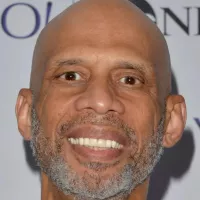
Kareem Abdul-Jabbar a Naismith Memorial Basketball Hall of Famer is...
California is a U S state on the Pacific Coast...
Trending
3 minutes ago Steve Martin and Godzilla's US Arrival Celebrated on 70th Anniversary.

4 minutes ago Las Vegas Approves Tiny Home Community Addressing Affordable Housing Crisis for $1K Rent
1 hour ago Jon Jones faces road rage claims; Gable Steveson nears UFC debut.

1 hour ago Wagner Moura joins Kristen Stewart in A24's 'Flesh of the Gods' vampire thriller.

1 hour ago Kate Beckinsale accuses Mark Ruffalo of ignoring her after Agent Firing Controversy.
2 hours ago Jared Leto embodies Skeletor in Amazon's 'Masters of the Universe' live-action trailer.
Popular
William Franklin Graham III commonly known as Franklin Graham is...

Paula White-Cain is a prominent American televangelist and key figure...
XXXTentacion born Jahseh Dwayne Ricardo Onfroy was a controversial yet...

George Soros is a Hungarian-American investor and philanthropist with a...
Sir David Attenborough is a highly influential British broadcaster biologist...
Walter Elias Disney was a highly influential American animator film...